Choosing the right powered mixer for passive speakers can simplify your setup and make live sound easier to manage. The best models combine enough amplification, useful EQ, and flexible inputs without adding unnecessary complexity.
In this roundup, we focus on options that work well for small venues, rehearsals, karaoke, and mobile PA rigs, with an eye toward value, reliability, and real-world usability.
Best 10 Powered Mixer for Passive Speakers Picks for 2026
Compact 4-Channel Power
Rockville RPM45 1800W Mixer Amp
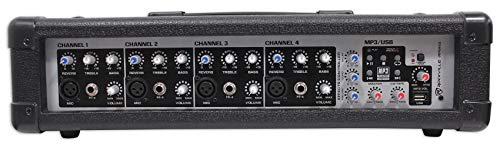
- 1800W peak output for small to medium venues
- 4 XLR and 4 TRS inputs with USB and RCA AUX
- Echo, delay, reverb, and +15V phantom power
Best For: Small venues, karaoke, and portable live sound
Ultra-Compact Rack Power
Behringer PMP1680S 1600W Powered Mixer

- 2 x 800W stereo power or 1600W bridged mode
- 10-channel mixer with 6 mono and 2 stereo channels
- Dual 24-bit FX processors with 100 presets
Best For: Rack-mounted gigs and portable live sound
All-in-One Venue Mixer
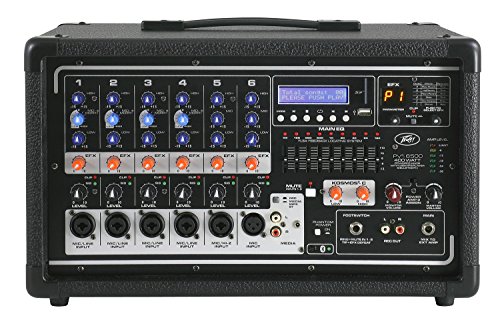
- 5-channel powered mixer for small venue use
- FLS feedback locating system and master mute
- XLR/1/4-inch combo inputs with effects defeat
Best For: Karaoke, churches, and small live events
High-Input Power Control
Rockville RPM80BT 8-Channel Mixer Amp

- 500W RMS and 2400W peak output
- 8 XLR and 8 TRS inputs with Bluetooth and USB
- 5-band EQ plus reverb, echo, and delay
Best For: Busier live setups that need more inputs and control
Compact Studio-Style Mixer
8-Channel Bluetooth Mixer with USB Recording

- 8 channels with combo XLR inputs
- Bluetooth, USB playback, and recording
- 48V phantom power plus 16-bit DSP FX
Best For: Small gigs, streaming, and compact studio setups
True Powered PA Workhorse
12-Channel Powered Mixer with 600W RMS per Side

- 600W x 2 RMS for passive speakers
- 12 channels with 8 mic preamps
- Bluetooth, USB/SD, and 24 effects
Best For: Larger PA rigs and live events
Portable PA Solution
4-Channel Powered Mixer with Bluetooth and Effects

- 1800W peak with 225W x 2 RMS
- Bluetooth and USB playback support
- 4 channels with echo, delay, and phantom power
Best For: Portable small-venue PA and rehearsal use
High-Channel Flexibility
Rockville RPM870 8-Channel Powered Mixer
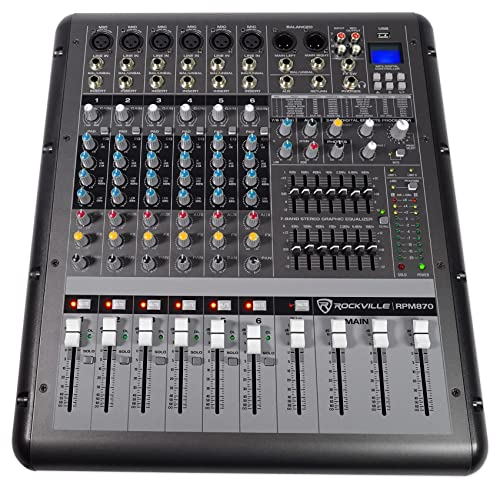
- 8 channels with dual 7-band EQ
- USB playback/recording and Bluetooth streaming
- 6 XDR2 mic preamps with phantom power
Best For: Users who want broad input options and detailed control for passive speakers
Compact Performance Pick
Rockville RPM85 8-Channel Powered Mixer

- 300W x 2 RMS at 4 ohms
- Bluetooth, USB/SD, and dual outputs
- 5-band EQ with echo/delay controls
Best For: Small to medium live setups needing a compact powered mixer
Large Venue Power
Rockville RPM1470 14-Channel Powered Mixer

- 750W RMS x 2 at 4 ohms
- 14 XDR2 mic preamps with phantom power
- USB/SD recording and Bluetooth streaming
Best For: Larger events that need high output and many inputs
Compact 4-Channel Power – Rockville RPM45 1800W Mixer Amp
If you need a powered mixer for passive speakers in a small venue, the Rockville RPM45 is built around straightforward power and flexible input options. With 1800W peak output, 4 XLR and 1/4" TRS channels, USB, RCA AUX, and onboard echo/delay/reverb, it suits users who want one compact box to handle mics, media, and live vocals.
Best For: Musicians, karaoke setups, and small event spaces that need a portable powered mixer for passive speakers with basic effects and phantom power.
Pros:
- 1800W peak output with 225W x 2 RMS at 8 ohms for small to medium venues
- 4 XLR and 4 TRS inputs plus USB and RCA AUX for flexible hookups
- Echo, delay, reverb, and per-channel bass/treble/volume controls
- +15V phantom power and fan cooling for extended use
Cons:
- Only 4 channels, so it is not ideal for larger input counts
- Best suited to compact rigs rather than larger touring systems
The RPM45 makes sense if you want a practical, all-in-one powered mixer for passive speakers without a lot of rack-space or setup complexity. It balances portability with useful live-sound controls, though it is clearly aimed at smaller applications.
Ultra-Compact Rack Power – Behringer PMP1680S 1600W Powered Mixer
The Behringer EUROPWER PMP1680S is a strong pick if you want a powered mixer for passive speakers with rack-friendly packaging and high output in a lightweight design. It combines 10 mixer channels, 2 x 800W stereo power, and dual 24-bit FX processors, making it a practical single-unit solution for live sound jobs that need power without a lot of bulk.
Best For: Users who want a lightweight powered mixer for passive speakers with enough channels and effects for small to mid-size gigs.
Pros:
- 2 x 800W stereo power, or 1600W bridged mode, for flexible output
- Ultra-compact, rack-mountable design with lower weight and depth
- 10-channel mixer section with 6 mono and 2 stereo channels
- Dual 24-bit stereo FX processors with 100 presets
Cons:
- Uses a compact design that may not suit users wanting a larger control surface
- Details focus on built-in processing, but not on extensive connectivity options
This model stands out for balancing power and portability, especially if rack mounting matters. For buyers comparing a powered mixer for passive speakers, it offers useful channel count and effects in a form factor that should be easier to transport than many conventional units.
All-in-One Venue Mixer – Peavey PVi 6500 Powered Mixer
If you want a powered mixer for passive speakers that is aimed at straightforward live use, the Peavey PVi 6500 is designed for small venues, karaoke nights, and church events. Its 5-channel layout, combination XLR/1/4" input jacks, and built-in feedback tools make it a practical console for users who need simple routing and everyday reliability.
Best For: Small venues, houses of worship, and karaoke setups that need an easy-to-use powered mixer for passive speakers.
Pros:
- Built-in FLS feedback locating system for easier control in live settings
- Master mute for channels 1-5 and foot-switchable effects defeat
- Combination XLR and 1/4" input jacks for flexible mic and line connections
- Compact dimensions make it suitable for portable use
Cons:
- 5 channels may feel limiting for larger input setups
- 90-day warranty is shorter than some alternatives
The PVi 6500 focuses on simplicity and live-event utility rather than high-end feature density. For buyers who need a dependable powered mixer for passive speakers at smaller events, its feedback tools and straightforward controls are the main selling points.
High-Input Power Control – Rockville RPM80BT 8-Channel Mixer Amp
The Rockville RPM80BT is a feature-rich powered mixer for passive speakers when you need more channels and wireless convenience. With 8 XLR inputs, 8 TRS inputs, Bluetooth, USB, RCA AUX, and a 5-band master EQ, it is built for users who want a single powered unit that can handle multiple microphones and playback sources.
Best For: Larger small-venue setups, DJs, rehearsals, and karaoke systems that need more inputs in a powered mixer for passive speakers.
Pros:
- 500W RMS output and 2400W peak power for stronger speaker drive
- 8 XLR and 8 TRS inputs for higher channel capacity
- Bluetooth, USB, RCA AUX, and RCA REC output for broad connectivity
- 5-band master EQ plus per-channel bass, treble, reverb, echo, and delay
Cons:
- More capability can mean a more complex setup than simpler mixers
- At 24 pounds, it is less lightweight than compact alternatives
This model is a good fit if input count matters as much as power. Compared with smaller powered mixers for passive speakers, it offers more routing flexibility and more control over the sound, which makes it better suited to busier live setups.
Compact Studio-Style Mixer – 8-Channel Bluetooth Mixer with USB Recording
If you want a powered mixer for passive speakers, this Pyle 8-channel model is a practical pick for small studio rigs, practice spaces, and compact live setups. It keeps mixing straightforward with 3-band EQ, onboard DSP effects, Bluetooth streaming, and USB recording, so you can move from playback to vocals without extra gear.
Best For: Small gigs, streaming, and simple all-in-one mixing setups with mics, instruments, and playback sources.
Pros:
- 8 channels with 4 XLR/1/4 combo inputs plus RCA and stereo options
- Built-in Bluetooth, USB playback, and direct-to-computer recording
- 48V phantom power and 16-bit DSP FX for more flexible vocal use
- Compact layout with main outputs, headphones, and LED metering
Cons:
- Not a high-power amp section like a full powered speaker drive mixer
- Best suited to smaller setups rather than large venue reinforcement
- Limited to the onboard channel count and compact feature set
This is a good fit if you need a straightforward powered mixer for passive speakers? actually this unit is best understood as a feature-rich compact mixer with recording and streaming support. The easy front-panel controls and small footprint make it especially useful when convenience matters more than brute output.
True Powered PA Workhorse – 12-Channel Powered Mixer with 600W RMS per Side
If you need a powered mixer for passive speakers, the Rockville RPM109 V2 is the most directly relevant option here. It combines a 600W RMS-per-side power section with 12 channels, dual SpeakON outputs, Bluetooth, USB/SD playback, and 24 digital effects, making it well suited to live sound duties that need both mixing and amplification in one box.
Best For: Larger PA setups, live bands, and events that need a powered mixer with substantial output for passive speakers.
Pros:
- 600W x 2 RMS at 4 ohms for driving passive speaker systems
- 12 channels with 8 mic preamps and +48V phantom power
- Dual 7-band stereo master EQ plus 24 digital effects
- Bluetooth, USB, SD, and USB interface recording/playback support
Cons:
- Heavier and larger than compact mixers at 15.17 kg
- Likely more mixer than you need for very small rooms
- Complexity may be overkill for simple voice-only setups
For buyers prioritizing a true powered mixer for passive speakers, this model stands out for raw output and flexible routing. The dual fan cooling, rugged enclosure, and multiple input options make it a stronger choice when you need live-performance headroom.
Portable PA Solution – 4-Channel Powered Mixer with Bluetooth and Effects
The Rockville RPM45BT is a compact powered mixer for passive speakers that suits smaller rooms, rehearsals, and karaoke-style setups. With 1800W peak output, Bluetooth streaming, USB playback, phantom power, and individual tone control on each channel, it gives you a simple way to combine amplification and mixing without a rack of separate gear.
Best For: Small venues, rehearsal spaces, and portable PA systems that need an all-in-one powered mixer.
Pros:
- 1800W peak output with 225W x 2 RMS at 8 ohms
- 4 XLR/1/4 inputs with +48V phantom power
- Bluetooth, USB playback, and RCA AUX/REC connectivity
- Echo, delay, and per-channel bass/treble/reverb controls
Cons:
- Only 4 channels, so input count is limited
- Power is better suited to small-to-medium setups than large events
- No advanced DSP or multi-band master EQ like larger models
This model makes sense when portability matters as much as output. The wood cabinet, compact footprint, and simple control layout keep it approachable, while the powered design lets you run passive speakers without adding a separate amplifier.
High-Channel Flexibility – Rockville RPM870 8-Channel Powered Mixer
If you need a powered mixer for passive speakers that can handle vocals, instruments, and playback from multiple sources, the Rockville RPM870 is built for that kind of flexible live use. Its 8-channel layout, dual 7-band EQ, and Bluetooth/USB features make it a practical choice for small bands, churches, and event setups that want broad control without a separate rack of gear.
Best For: Users who want a feature-rich powered mixer with lots of input and EQ control for passive speaker setups.
Pros:
- 6 XDR2 mic preamps with +48V phantom power for clean vocal and instrument capture.
- USB playback/recording plus Bluetooth streaming for easy source mixing.
- Dual 7-band EQ and 4-band EQ per channel for detailed sound shaping.
- Built-in 24-bit effects with 16 presets and footswitch support.
Cons:
- Large feature set may be more mixer than needed for very simple setups.
- Heavier, more full-featured design is less grab-and-go than smaller units.
The RPM870 is strongest when you need a versatile hub for multiple microphones and music sources driving passive speakers. If control and connectivity matter as much as output, this model offers a lot of flexibility in one box.
Compact Performance Pick – Rockville RPM85 8-Channel Powered Mixer
The Rockville RPM85 is a straightforward powered mixer for passive speakers when you want enough power for small to medium venues without overcomplicating the setup. With Bluetooth, USB/SD playback, multiple mic/line inputs, and adjustable echo/delay, it suits live music, mobile events, and simple PA systems that still need hands-on tone control.
Best For: Small to medium live setups that need a compact powered mixer with useful effects and flexible inputs.
Pros:
- 300W x 2 RMS at 4 ohms, with 2400W peak rating for strong speaker drive.
- 8 mic/line inputs plus Bluetooth, USB/SD, RCA AUX, and dual speaker outputs.
- 5-band graphic EQ with adjustable echo and delay for vocal shaping.
- +15V phantom power for condenser microphones.
Cons:
- Lower phantom power than mixers offering +48V.
- Best suited to smaller venues rather than large-scale event systems.
For users who want a capable powered mixer for passive speakers in a portable package, the RPM85 hits a practical middle ground. It balances usable power, playback options, and basic effects without becoming overly complex.
Large Venue Power – Rockville RPM1470 14-Channel Powered Mixer
When your powered mixer for passive speakers needs to handle a bigger crowd, the Rockville RPM1470 is built around high output and expanded input capacity. Its 14 mic preamps, USB/Bluetooth playback, and dual 7-band EQ make it a strong fit for church bands, larger live events, and multi-mic performances that need plenty of headroom and control.
Best For: Larger event systems that need high output, many channels, and detailed EQ control.
Pros:
- 6000W peak output with 750W RMS x 2 at 4 ohms for larger passive speaker systems.
- 14 XDR2 mic preamps with +48V phantom power for multi-mic setups.
- USB and SD recording/playback plus Bluetooth streaming for flexible source handling.
- Dual 7-band graphic EQs and 16 built-in 24-bit effects presets.
Cons:
- More power and channel count than many small rooms need.
- Larger chassis may be less convenient for lightweight mobile setups.
The RPM1470 is the most capable option here for users prioritizing power and channel count over simplicity. If you need to drive passive speakers for a larger venue with multiple microphones, this mixer is designed to keep up.
How We Picked the Best Powered Mixer for Passive Speakers
We looked for a balanced mix of output power, channel count, onboard effects, connectivity, and speaker compatibility. For a Powered Mixer for Passive Speakers, the key is not just wattage on the box, but whether the unit can drive your speakers cleanly at the impedance you plan to use. We also favored models with practical features like phantom power, USB playback, Bluetooth, and simple EQ controls that help in live settings.
Quick Comparison
As you compare the list, think in terms of use case. Compact 4-channel models are often best for solo acts, karaoke, and small rooms. Mid-size 8-channel mixers suit bands, worship teams, and event setups that need more microphones and sources. Larger 10- to 14-channel units make sense when you need extra headroom, more mic inputs, and better routing options.
Key Buying Factors for a Powered Mixer for Passive Speakers
Power and Speaker Load
Match the mixer’s RMS output to your passive speakers and confirm the supported ohm rating. Peak wattage can be misleading, so focus on continuous power and whether the amp is stable at 4 ohms or 8 ohms.
Channels and Inputs
Count every source you need: microphones, instruments, playback devices, and backups. Extra channels are helpful, but only if the layout is easy to navigate during a performance.
EQ and Effects
Basic tone shaping matters more than flashy specs. A usable EQ, feedback control, and simple effects like reverb or delay can make a small PA sound much better with less effort.
Connectivity and Recording
USB, Bluetooth, RCA, and XLR inputs expand how you can use the mixer. If you plan to record or play music between sets, look for built-in playback and recording features that are easy to access.
Physical Design
Portability, cooling, and build quality matter if you move gear often. A sturdy chassis and clear control layout are worth prioritizing over cosmetic extras.
Who Should Buy Which Powered Mixer for Passive Speakers?
If you need a simple setup for karaoke, speeches, or a small duo, a compact 4-channel powered mixer is usually enough. If you run a band, church, or rehearsal space, an 8-channel model offers a better balance of flexibility and size. For larger events or growing systems, a 10- to 14-channel unit gives you more room to expand without outgrowing the rig too quickly.
In short, the best Powered Mixer for Passive Speakers is the one that matches your speaker load, input needs, and typical venue size. Prioritize clean power, useful controls, and a layout you can operate confidently under pressure.
