Smart home hubs for energy management help you see where electricity goes, then turn that data into smarter routines and lower bills. The best options can monitor whole-home usage, track individual devices, and trigger automations without adding unnecessary complexity.
Below, we’ve rounded up 10 standout picks for different homes, ecosystems, and budgets, from whole-home monitors to smart plugs and hub-compatible devices.
Best 10 Smart Home Hubs for Energy Management Picks for 2026
Whole-Home Energy Tracking
Emporia Vue 3 with 16 Circuit Sensors
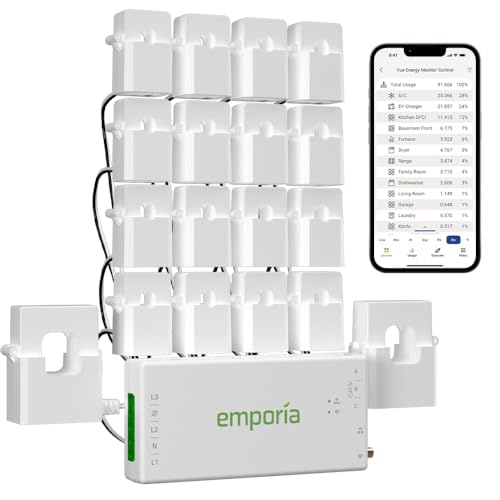
- UL Listed whole-home energy monitor
- Tracks solar, net metering, and appliance loads
- Works with the Emporia Energy app for automation
Best For: Homeowners wanting detailed circuit-level energy monitoring
Unified Smart Home Control
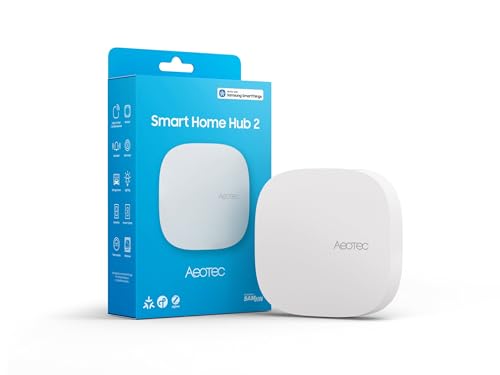
- SmartThings-powered hub for automation
- Supports Matter and Zigbee devices
- Local automations help during internet outages
Best For: SmartThings users needing broad device compatibility
Detailed Circuit Monitoring

- Panel-installed whole-home energy monitor
- Tracks real-time usage with app access
- Expandable to sixteen branch sensors
Best For: Homeowners wanting expandable circuit-level monitoring
Privacy-Focused Smart Plug

- Matter-enabled smart plug with Thread
- Local control with no cloud dependency
- UL-certified and quick to set up
Best For: Privacy-minded users needing simple appliance control
Solar-Ready Zigbee Monitor

- Needs a Tuya Zigbee hub for app integration
- Measures usage plus solar/battery export
- Includes 2 x 120A CTs for easier install
Best For: Zigbee-based energy tracking with solar and battery monitoring
Matter Smart Plug Pick

- Works with Matter platforms and AiDot app
- Useful for schedules, timers, and remote shutoff
- Needs a Matter hub for Apple Home and similar platforms
Best For: Simple device control and scheduling without a full monitoring system
Whole-Home Leviton Monitor
Leviton LWHEM-2R Energy Monitor

- Monitors whole-home energy use and production
- Wi-Fi app control with OTA updates
- Works with Leviton smart breakers and schedules
Best For: Leviton ecosystem users who want monitoring plus circuit control
Energy-Saving Single-Outlet Control
Govee 4-Pack Energy Monitoring Plugs

- Tracks real-time power, current, and voltage.
- Stores usage data daily, weekly, monthly, and up to 1 year.
- Supports scheduling, group control, Alexa, and Google Assistant.
Best For: budget-friendly monitoring of individual plug-in appliances
Smart Tracking and Bill Awareness
Tapo P115 Energy Monitoring Plugs

- Shows energy statistics, charts, and bill estimates.
- Supports scheduling, smart charging, and auto-shutoff.
- Works with Alexa, Google Assistant, and the Tapo app.
Best For: buyers who want clear usage data and cost-focused automation
Whole-Home Energy Tracking – Emporia Vue 3 with 16 Circuit Sensors
If you’re comparing smart home hubs for energy management, the Emporia Vue 3 is a practical choice for households that want detailed, real-time electricity visibility from the breaker panel. It monitors whole-home usage, solar and net metering, and lets you automate around time-of-use rates, peak demand, and excess solar through the Emporia Energy app.
Best For: Homeowners who want UL-listed whole-home monitoring with circuit-level detail and solar/net metering support.
Pros:
- UL Listed and CE Listed for added safety confidence
- Includes sixteen branch sensors for monitoring key appliances and circuits
- Supports solar and net metering, plus automation for cost-saving energy plans
- Real-time data available in the iPhone, Android, and web app
Cons:
- Requires installation in the circuit panel
- Needs 2.4 GHz Wi-Fi with an internet connection
- Best fit for homes that can handle clamp-on sensor installation
For buyers focused on energy management rather than general smart-home control, this is a strong monitoring-first option. It gives you actionable usage data and automation tools, but it is more specialized than a typical hub.
Unified Smart Home Control – Aeotec Smart Home Hub2 V4
The Aeotec Smart Home Hub2 is a solid pick if you want smart home hubs for energy management that can also unify lighting, sensors, thermostats, and more. Powered by SmartThings, it supports Matter and Zigbee, so you can build automations for comfort, security, and energy savings from one app.
Best For: Users who want a SmartThings-based hub with Matter and Zigbee support for broad device control.
Pros:
- Powered by SmartThings for monitoring and automation in one ecosystem
- Supports Matter and Zigbee for wide device compatibility
- Local automations can keep running during temporary internet outages
- Works with Alexa and Google Assistant for voice control
Cons:
- No Z-Wave support
- Some users will need to rely on the SmartThings ecosystem
- Energy management here is automation-focused rather than detailed utility monitoring
This hub makes sense if you want a flexible foundation for connected devices and energy-aware routines. It is less about measuring power consumption directly and more about coordinating smart devices efficiently.
Detailed Circuit Monitoring – Emporia Vue 3 Expansion Ready
For shoppers looking at smart home hubs for energy management, this Emporia Vue 3 model stands out as a monitoring-first solution with the same core features as a whole-home energy tracker. It installs in the circuit panel, reports real-time usage through the app, and supports automation for lower bills, solar/net metering, and time-of-use planning.
Best For: Buyers who want UL-listed panel monitoring with the option to add more circuit sensors later.
Pros:
- UL Listed and CE Listed for safer energy monitoring
- Real-time electricity usage data with app and web access
- Supports solar/net metering and energy-saving automations
- Can add up to sixteen branch sensors for appliance-level monitoring
Cons:
- Requires 2.4 GHz Wi-Fi and internet access
- Must be installed in the electrical panel
- Some advanced wiring setups need an additional sensor sold separately
If you want visibility into where power is going and prefer a system built around energy data, this is a compelling option. It is a better fit for homeowners who want actionable monitoring than for those seeking a general-purpose smart home hub.
Privacy-Focused Smart Plug – Eve Energy Matter Thread Plug
If you want a simple device in the smart home hubs for energy management category, the Eve Energy smart plug is a compact way to control appliances and lights while keeping data local. It works with major Matter platforms, uses Thread for a more robust network, and avoids cloud dependence with 100% privacy.
Best For: People who want a privacy-first smart plug for app, voice, and presence-based control.
Pros:
- Matter-enabled for cross-platform control across major ecosystems
- Thread support improves stability and reach on compatible networks
- No Eve cloud, no registration, and no tracking
- UL-certified with quick setup and voice/app control
Cons:
- Requires a compatible platform hub or controller
- Limited to plug-in devices and 120V use
- Not a whole-home energy monitor
This is a strong choice if you mainly want to switch appliances and lights efficiently without handing data to a cloud service. It is best viewed as a smart plug building block rather than a full energy-management hub.
Solar-Ready Zigbee Monitor – Zigbee Home Energy Monitor
If you’re comparing smart home hubs for energy management, this Zigbee energy monitor is built for homes that want detailed usage tracking without replacing the whole electrical panel. It measures voltage, current, power, and total energy consumption, and it also supports bi-directional monitoring for solar and battery systems.
Best For: Homeowners who already use a Tuya Zigbee hub, Home Assistant, or Zigbee2MQTT and want detailed whole-circuit energy visibility.
Pros:
- Requires a Tuya Zigbee hub and works with Tuya Smart / Smart Life app setups.
- Tracks voltage, current, power, and total energy with Class 1 precision.
- Supports bi-directional monitoring for solar export and battery systems.
- Includes 2 x 120A split-core CTs and simple pluggable terminals for easier installation.
Cons:
- Not a standalone device; a compatible Zigbee hub is required.
- Installation still involves CT placement in or near the load center.
For energy management setups that need more than basic plug-level data, this monitor is a strong fit. Its support for Zigbee2MQTT, Home Assistant, and dynamic load balancing makes it especially useful for structured home energy automation.
Matter Smart Plug Pick – Linkind Matter Smart Plug
For shoppers looking at smart home hubs for energy management, this Matter smart plug is a simple way to control and schedule everyday devices. It works with Matter-certified platforms like Apple Home, Alexa, Google Home, and SmartThings, and it can also be used through the AiDot app without a separate hub.
Best For: People who want an easy smart plug for scheduling, remote control, and basic energy-saving routines.
Pros:
- Supports Matter and works with Apple Home, Alexa, Siri, Google Home, and SmartThings.
- Can be used without a hub in the AiDot app.
- Offers remote control, voice control, scheduling, and timer functions.
- Compact design with 15A/1800W capacity and safety protections.
Cons:
- Apple Home, Alexa, Google Home, and SmartThings require a Matter-certified hub or controller.
- Only supports 2.4GHz Wi-Fi and IPv6 networks.
This is a practical pick if you want to automate power use for lamps, fans, and similar devices without adding complexity. It won’t provide whole-home monitoring, but it is useful for reducing wasted runtime through schedules and remote shutoff.
Whole-Home Leviton Monitor – Leviton LWHEM-2R Energy Monitor
If your goal is broader smart home hubs for energy management, this Leviton monitor turns a compatible load center into a more connected energy dashboard. It uses Wi-Fi for remote monitoring, shows whole-home energy use and production in real time, and integrates with the My Leviton app for a unified control experience.
Best For: Leviton load center owners who want whole-home energy monitoring and circuit-level smart control in one app.
Pros:
- Provides whole-home energy consumption and production monitoring in real time.
- Works over Wi-Fi with remote monitoring and OTA firmware updates.
- Can remotely control compatible 2nd Gen Smart Circuit Breakers.
- Supports scheduling and backup-power load shedding when paired with the right transfer switch and backup system.
Cons:
- Designed for Leviton load centers and compatible breaker ecosystems.
- Backup-power shedding features depend on additional compatible equipment.
This is the most integrated option in the group for homeowners already committed to Leviton’s ecosystem. It combines energy visibility with circuit control, so it suits buyers who want monitoring and automation in the same platform.
Energy-Saving Single-Outlet Control – Govee 4-Pack Energy Monitoring Plugs
If you want a simple way to add smart home hubs for energy management without replacing appliances, this Govee smart plug 4-pack is a practical starting point. It tracks real-time power, current, and voltage in the Govee Home app, so you can spot waste and manage plug-in devices more intentionally. The combination of remote control, scheduling, and voice support makes it useful for everyday energy-saving routines.
Best For: households that want affordable, app-based energy monitoring for individual plug-in devices
Pros:
- Real-time monitoring shows power, current, and voltage in the app.
- Daily, weekly, monthly, and up to 1 year of data review helps track usage over time.
- WiFi and Bluetooth connectivity support remote control through the Govee Home app.
- Scheduling, timer, and group control features help automate power use.
Cons:
- Does not support 5G Wi-Fi.
- Controls one outlet per plug, so larger setups may need multiple units.
For plug-in appliances like a coffee maker or lamp, this is a straightforward energy management tool with useful tracking and automation. It is also FCC and ETL certified, which adds confidence for everyday home use.
Multi-Device Desk Power Hub – GHome Smart 6-Outlet Power Strip
This GHome Smart power strip is a strong pick for smart home hubs for energy management when you need to control several devices from one place. It combines six individually controlled smart outlets with energy monitoring, so you can track usage and reduce waste across a desk, office, or entertainment setup. The added USB-C fast charging and flat plug design make it especially convenient for crowded spaces.
Best For: home offices and multi-device setups that need centralized outlet control plus charging
Pros:
- Six individually controlled WiFi outlets reduce the need for multiple smart plugs.
- Energy monitoring helps identify power-hungry devices and manage consumption.
- Includes 2 USB-A ports and 1 USB-C port with 30W fast charging.
- Schedules, countdowns, and cycle timers support automation through Alexa or Google Home.
Cons:
- Works on 2.4GHz WiFi only.
- Bulkier than a single smart plug, even with the flat plug design.
If you want one strip to handle multiple devices while still monitoring energy use, this model is more efficient than buying several separate plugs. It is a practical fit for keeping a workspace organized and easier to manage.
Smart Tracking and Bill Awareness – Tapo P115 Energy Monitoring Plugs
For shoppers comparing smart home hubs for energy management, the Tapo P115 focuses on clear tracking and cost awareness. Its app shows energy statistics and charts in a way that makes it easier to understand how much power connected devices are using. With scheduling, auto-shutoff, and smart charging features, it goes beyond basic remote switching and helps support more deliberate power use.
Best For: users who want straightforward energy tracking with bill estimation and safety-focused automation
Pros:
- Insightful energy tracking provides clear statistics and intuitive charts.
- Energy bill estimation helps visualize single and periodic readings.
- Programmable scheduling can shift high-use devices to off-peak hours.
- Smart charging and auto-shutoff add helpful power management safeguards.
Cons:
- Controls one outlet per plug, so larger setups need multiple units.
- Energy management features are centered on plug-in devices only.
This is a well-rounded choice if you want monitoring that feels practical instead of technical. It should appeal to buyers who care about both usage data and automation that helps reduce waste.
How We Picked the Best Smart Home Hubs for Energy Management
We focused on Smart Home Hubs for Energy Management that make usage data easy to access, support practical automations, and fit common ecosystems like Alexa, Google Home, Apple Home, SmartThings, Matter, Zigbee, Wi-Fi, and Thread. Priority also went to products with clear energy-monitoring features, reliable app control, and strong value for the use case.
Quick Comparison
Not every home needs the same setup. Whole-home monitors are best for visibility at the panel level, while smart plugs and power strips work well for controlling specific appliances, office gear, and entertainment setups. If you want to expand an existing smart home, choose a hub-friendly option that matches your current platform. If you only need simple savings, a Wi-Fi smart plug with energy monitoring may be enough.
Key Buying Factors for Smart Home Hubs for Energy Management
Monitoring Scope
Decide whether you want whole-home insight, circuit-level tracking, or per-device data. Whole-home monitors are better for identifying large loads, while plugs and strips help isolate individual energy hogs.
Ecosystem Compatibility
Make sure the device works with your preferred platform. Matter support can simplify cross-platform use, while Zigbee, Thread, and Wi-Fi matter if you already have compatible hardware or want fewer extra bridges.
Automation Features
The best Smart Home Hubs for Energy Management do more than measure power. Look for scheduling, app alerts, voice control, and routines that can shut off unused devices or adjust them based on time, occupancy, or power thresholds.
Installation and Ease of Use
Some energy monitors require panel installation or a more involved setup, while smart plugs are usually plug-and-play. Choose the least complex option that still gives you the level of insight you need.
App Quality and Reporting
Clear charts, historical trends, and easy-to-read dashboards matter as much as hardware. Good reporting makes it easier to spot waste, compare devices, and verify savings over time.
Who Should Buy Which Smart Home Hubs for Energy Management?
If you want the most complete homewide visibility, choose a whole-home energy monitor. If you want quick wins with individual appliances, smart plugs are the simplest path. If your priority is building a connected system, choose a Matter- or hub-compatible device that integrates smoothly with your existing smart home. For renters, apartments, and shared spaces, compact plug-in options are usually the most practical choice.
The right setup depends on how much detail you want, how much installation you’re comfortable with, and which smart home platform you already use. Start with the simplest monitoring method that solves your biggest energy question, then expand from there.
