The best digital pianos for live performance combine convincing piano tone, dependable weighted action, flexible connectivity, and enough output power for rehearsals, venues, and sessions.
This roundup compares 10 strong options across professional stage pianos, portable performance keyboards, and affordable weighted digital pianos, so you can match your instrument to your setup and budget.
Best 10 Digital Pianos for Live Performance Picks for 2026
Flagship Stage Control

- Dual V-Piano and SuperNATURAL sound engines
- Includes two V-Piano Expansion titles
- Nine sliders and eight encoder knobs
Best For: Advanced performers needing extensive stage control
Versatile Stage Workhorse

- RH3 weighted hammer action keyboard
- Seven engines with 700 total sounds
- Balanced XLR and TRS outputs
Best For: Live players needing broad sounds and quick splits
Compact Pro Value

- PHA-4 Standard 88-note keyboard
- 26-watt stereo speaker system
- Bluetooth audio and MIDI support
Best For: Players wanting capable performance features in a compact design
Expressive Touring Platform
Studiologic Numa X Piano GT SE

- Wooden hammer action with aftertouch
- Acoustic, electric piano, and synth engines
- Integrated USB audio interface
Best For: Professional performers needing expressive control and flexible workflows
Balanced Performer

- PHA-4 weighted 88-key action
- SuperNATURAL sound engine
- 22-watt stereo speakers
Best For: Portable practice, rehearsal, recording, and smaller performances
Streaming Specialist

- Built-in mixer and dynamic mic
- USB-C audio and MIDI
- 13.01-pound battery-powered design
Best For: Livestreaming, busking, and mobile performance
Compact Essentials

- Authentic-feel 88-note keyboard
- SuperNATURAL piano tones
- USB/MIDI for recording
Best For: Practice, lessons, home recording, and smaller setups
Versatile Performance Workstation
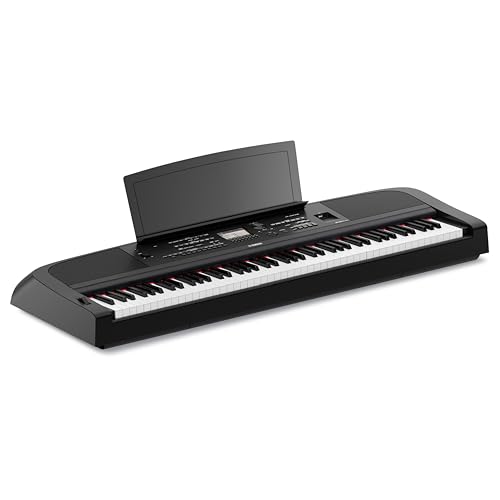
- 88-key weighted action with CFX concert grand sound
- 630 Voices and 263 accompaniment Styles
- Microphone input with digital vocal effects
Best For: Multifaceted performers needing accompaniment and vocal features
Simple Piano Foundation

- 88 touch-sensitive weighted keys
- 10 Voices with piano and Dual Mode layering
- Simple one-button operation and included sustain pedal
Best For: Piano-focused players wanting uncomplicated controls
Portable Grand Piano Choice

- Portable 25.4-pound design with 88 weighted keys
- CFX concert grand sound and 24 instrument Voices
- Smart Pianist and Rec’n’Share app compatibility
Best For: Mobile performers seeking a piano-focused portable instrument
Flagship Stage Control – Roland RD-2000 EX
For performers who need extensive control and detailed sounds, the Roland RD-2000 EX is a premium choice among digital pianos for live performance. Its dual sound engines, full-size keybed, and hands-on controls suit demanding stage setups.
Best For: Advanced players who need premium piano modeling, multiple sound engines, and deep real-time control on stage.
Pros:
- Combines V-Piano modeling with a 128-voice SuperNATURAL sound engine.
- Includes German Concert and Essential Upright V-Piano Expansion titles.
- Nine sliders and eight LED-equipped encoder knobs provide extensive live control.
- Supports Roland Cloud Manager, DAWs, MIDI, and USB MIDI.
Cons:
- Its 62-pound weight may be demanding for frequent transport.
- The advanced control layout may be more than beginners need.
The RD-2000 EX is built for players who want a broad, expandable sound palette and immediate parameter access. It is especially compelling when stage control and detailed piano tone take priority over portability.
Versatile Stage Workhorse – Korg Grandstage X
The Korg Grandstage X combines realistic weighted action with a wide sound library, making it a flexible option among digital pianos for live performance. Balanced outputs, quick splits and layers, and integrated effects support practical stage use.
Best For: Live players who want acoustic and electric piano variety, broad accompaniment sounds, and fast onstage setup changes.
Pros:
- RH3 weighted hammer action has heavier lower-register and lighter upper-register touch.
- Seven sound engines provide 700 sounds, including acoustic pianos, electric pianos, organs, and synths.
- XLR and 1/4-inch TRS balanced outputs are suited to stage connections.
- Quick layer and split functions simplify live sound combinations.
Cons:
- At 55.1 pounds, it is not the lightest stage instrument.
- Its extensive sound selection may require time to organize for a specific set.
With Japanese construction, practical connectivity, and a diverse sound profile, the Grandstage X is a strong all-around performance keyboard. Its rhythm and chord progression section also adds useful options for solo practice or performance.
Compact Pro Value – Roland FP-60X
The Roland FP-60X offers a practical balance of expressive action, onboard amplification, and connectivity for musicians seeking digital pianos for live performance without moving to a flagship stage model. Its compact design also works well in smaller spaces.
Best For: Experienced players who want a versatile 88-note piano for modest performance setups, home use, and mobile-device integration.
Pros:
- PHA-4 Standard keyboard provides an acoustic-style weighted playing feel.
- SuperNATURAL Piano sound engine supports expressive dynamics.
- 26-watt stereo speakers deliver built-in amplification for practice and smaller settings.
- Bluetooth audio and MIDI support mobile-device connections.
Cons:
- Bluetooth headphones are not supported.
- Its 42.6-pound weight is portable but still substantial for frequent carrying.
- It offers less dedicated live control than specialized stage pianos.
The FP-60X is a sensible choice when strong piano fundamentals, onboard sound, and a manageable footprint matter more than an extensive stage-controller layout. Piano Designer adds useful control over individual-note tone customization.
Expressive Touring Platform – Studiologic Numa X Piano GT SE
The Studiologic Numa X Piano GT SE is designed for demanding musicians who need expressive control and flexible sound shaping. Its wooden hammer action, aftertouch, multi-engine architecture, and USB audio interface make it a compelling option among digital pianos for live performance.
Best For: Professional touring and studio players who need premium key response, aftertouch, layered sounds, and direct computer or mobile connectivity.
Pros:
- Wooden hammer-action keys provide a realistic weighted feel.
- Aftertouch adds expressive control beyond standard key velocity.
- Acoustic piano, electric piano, and synth engines support varied stage setups.
- Integrated USB audio interface supports recording and live workflows.
Cons:
- At 63 pounds, it may be cumbersome for regular transport.
- Its professional feature set may have a steeper learning curve for casual players.
- The supplied notes do not specify onboard speakers, so external amplification may be needed.
The Numa X Piano GT SE stands out for its combination of acoustic-style key response and modern performance functionality. It is best suited to players prepared to use its deeper controls in touring, studio, or hybrid setups.
Balanced Performer – Roland FP-30X
The Roland FP-30X is a strong choice among digital pianos for live performance when you want authentic weighted-key feel, room-filling onboard sound, and useful outputs in a portable format. Its SuperNATURAL engine, PHA-4 Standard keyboard, and 22-watt stereo speakers make it suitable for practice, rehearsal, recording, and smaller performances.
Best For: Players who want a portable, expressive 88-key piano with enough sound variety and connectivity for rehearsals, performances, and home recording.
Pros:
- PHA-4 Standard 88-key keyboard provides an acoustic-style, ivory-feel playing experience.
- SuperNATURAL Piano sound engine delivers expressive tone from pianissimo to fortissimo.
- 22-watt stereo speakers offer room-filling sound without requiring external amplification for every setting.
- Includes piano, electric piano, organ, strings, and synthesizer sounds plus Bluetooth audio and MIDI.
Cons:
- At 32.7 pounds, it is less convenient to transport than ultra-light live-performance keyboards.
- Bluetooth headphones are not supported.
- The included pedal switch is functional but less substantial than a full three-pedal setup.
The FP-30X stands out as a versatile middle-ground option: more powerful and feature-rich than a basic practice piano, while still compact enough for portable setups. Its line outputs and weighted action make it especially practical for players moving between home practice and performance.
Streaming Specialist – Korg Liano LIVE
The Korg Liano LIVE is built for creators who need digital pianos for live performance, livestreaming, or mobile music-making without assembling a separate mixer and interface. It combines an 88-key velocity-sensitive keyboard with a dynamic microphone, built-in mixer, USB-C audio and MIDI, speakers, and battery operation.
Best For: Livestreamers, buskers, mobile performers, and creators who want an all-in-one piano and audio setup.
Pros:
- Built-in mixer, dynamic mic, and USB-C audio interface simplify livestreaming and recording.
- Lightweight 13.01-pound design and battery operation support mobile performance.
- Balanced mic input, line in/out, headphone output, USB-C, and damper pedal connectivity provide flexible routing.
- Full-size 88-key keyboard includes velocity sensitivity and eight onboard sounds.
Cons:
- Its eight onboard sounds offer less variety than the Roland models in this roundup.
- Battery life is listed at approximately six hours, so extended events may require planning.
- The velocity-sensitive LS keyboard is not described as weighted or acoustic-style.
For content creation and compact gigs, the Liano LIVE is unusually convenient because its core streaming tools are built in. Choose it over a traditional digital piano when portability, direct audio routing, and fast setup matter more than weighted piano action or a broad sound library.
Compact Essentials – Roland FP-10
The Roland FP-10 is a straightforward entry point for digital pianos for live performance, offering an 88-note authentic-feel keyboard, SuperNATURAL piano tones, onboard speakers, and USB/MIDI connectivity. It works well for players who prioritize realistic piano playing and a compact setup for lessons, practice, recording, or smaller performance environments.
Best For: Beginners and experienced players seeking an affordable, compact 88-key piano with realistic touch and essential recording connectivity.
Pros:
- 88-note keyboard has an authentic acoustic feel with expressive touch and ivory feel.
- SuperNATURAL Piano engine provides responsive acoustic-piano-style sound.
- Headphone output enables quiet practice, while onboard speakers provide clear, dynamic sound.
- USB/MIDI connectivity supports GarageBand, computers, and DAW-based recording.
Cons:
- It has fewer listed onboard sound and performance features than the FP-30X.
- The optional matching stand is sold separately.
- Its 27-pound weight is portable, but it is not as light as the battery-powered Korg.
The FP-10 is a sensible choice when realistic piano feel matters most and you do not need the FP-30X’s more powerful speakers or expanded connectivity. Its Twin Piano mode, app integration, and USB/MIDI support also make it particularly useful for lessons and home production.
Versatile Performance Workstation – Yamaha DGX-670B
The Yamaha DGX-670B is a strong choice for musicians seeking digital pianos for live performance with extensive accompaniment and sound options. Its weighted 88-key action, CFX concert grand sampling, microphone input, and built-in speakers support solo playing, rehearsals, and informal performances.
Best For: Performers who want one keyboard for piano playing, accompaniment, varied instrument sounds, and singing.
Pros:
- Weighted action is heavier in the low keys and lighter in the high keys for a more acoustic-style response.
- Offers 630 Voices and 263 Automatic Accompaniment Styles for broad performance flexibility.
- Includes a microphone input with Yamaha digital vocal effects, plus a sustain foot switch and music rest.
- Built-in learning tools include a Score Display and the You Are The Artist library.
Cons:
- At 67.7 pounds, it is substantially less portable than the other options here.
- The furniture stand and bench are sold separately.
- Its many features may be more than needed for players seeking a simple piano-only setup.
The DGX-670B stands out when live performance means more than reproducing piano: its styles, Voices, vocal input, and performance-assisting features make it a flexible centerpiece. Choose it if maximum versatility matters more than minimizing weight and setup complexity.
Simple Piano Foundation – Yamaha P71
The Yamaha P71 is a straightforward option for musicians comparing digital pianos for live performance on a budget-conscious, piano-focused setup. Its 88 weighted, touch-sensitive keys, 10 Voices, Dual Mode, built-in speakers, and included sustain pedal cover essential playing needs without a crowded control layout.
Best For: Players who prioritize expressive weighted piano action and uncomplicated operation for rehearsals, practice, or smaller performances.
Pros:
- Touch-sensitive weighted action supports dynamic, expressive playing.
- Includes a Yamaha grand piano Voice with full dynamic sound and deep bass.
- Dual Mode lets you layer two Voices, such as piano and strings.
- Simple one-button operation keeps controls focused and accessible.
Cons:
- With 10 Voices, it offers fewer sound choices than the DGX-670B and P225.
- Its feature set is relatively limited for performers needing accompaniment patterns or vocal input.
- The supplied notes identify USB and auxiliary connectivity but do not specify Bluetooth.
The P71 is best viewed as a no-frills weighted digital piano rather than an all-in-one performance workstation. It makes sense when realistic key response, a familiar Yamaha piano sound, and easy operation matter more than extensive production features.
Portable Grand Piano Choice – Yamaha P225
The Yamaha P225 combines a portable form with features useful in digital pianos for live performance, including 88 weighted keys, CFX concert grand sound, built-in speakers, and two headphone jacks. App compatibility with Smart Pianist and Rec’n’Share adds practical support for playing, practice, and sharing.
Best For: Performers who want a lightweight, piano-centered instrument that can move easily between rooms, rehearsals, and informal gigs.
Pros:
- Weighted action uses a heavier low register and lighter high register for an acoustic-style feel.
- Includes Yamaha CFX Full Concert Grand sound with natural resonance and rich tones.
- At 25.4 pounds, its portable design is easier to transport than the DGX-670B.
- Includes 24 Voices, built-in speakers, a music rest, sustain foot switch, and power adapter.
Cons:
- Its 24 Voices provide less variety than the DGX-670B’s 630 Voices.
- The supplied notes do not list accompaniment Styles or a microphone input.
- App connectivity may be most useful to players prepared to use iOS or Android devices.
The P225 offers a compelling balance for mobile piano players: it keeps the core weighted-key experience and concert grand sound while trimming weight and complexity. Select it when portability and piano quality are more important than extensive accompaniment or vocal functions.
How We Picked the Best Digital Pianos for Live Performance
We focused on the features that matter most onstage: realistic key action, reliable sound engines, fast controls, useful outputs, built-in amplification, portability, and performance-oriented connectivity. Professional stage models receive extra consideration for zone layering, controller functions, effects, and broad sound libraries. Portable home-style models are judged by how effectively they balance piano feel, speaker quality, weight, and price for rehearsals, small venues, worship spaces, and solo performances.
Because no single keyboard suits every player, the selection includes premium instruments such as the Roland RD-2000 EX, Korg Grandstage X, and Studiologic Numa X Piano GT SE, along with more affordable options from Roland, Korg, and Yamaha.
Quick Comparison
| Best For | What to Prioritize | Recommended Types |
|---|---|---|
| Professional touring | Flexible zones, deep control, robust outputs | Stage pianos |
| Solo gigs and small venues | Built-in speakers, manageable weight, simple setup | Portable digital pianos |
| Streaming and online performance | USB audio, mixer functions, convenient monitoring | Streaming-focused models |
| Budget-conscious players | Weighted action, dependable piano tone, low cost | Entry-level 88-key models |
Key Buying Factors for Digital Pianos for Live Performance
Action and Playability
Choose an 88-key weighted action if you need a piano-like response, dynamic control, and full range. Wooden hammer actions can feel more substantial, while lighter actions are easier to transport. Aftertouch is especially useful for expressive synth and layered sounds, but it is not essential for traditional piano playing.
Sounds, Layers, and Controls
Stage performers should look beyond the acoustic piano presets. Check whether the instrument supports splits, layers, quick registrations, effects, electric pianos, organs, strings, and synth sounds. Dedicated knobs, sliders, and zone controls can be much faster to use during a song than menu-based editing.
Outputs and Connectivity
For gigging, prioritize dependable line outputs and headphone connectivity. MIDI and USB can connect the piano to computers, tablets, or external sound modules. If you stream, a built-in mixer or USB audio interface can simplify routing vocals, backing tracks, and keyboard audio.
Amplification, Size, and Reliability
Built-in speakers are useful for practice and intimate performances, but larger venues generally require a PA or monitor system. Compare total weight, stand compatibility, pedal options, and case availability before buying. A model that sounds excellent but is difficult to transport may be a poor fit for frequent gigs.
Who Should Buy Which Digital Pianos for Live Performance?
Touring professionals: Choose a dedicated stage piano with advanced control, multiple zones, strong outputs, and a broad sound palette.
Versatile working musicians: Look for a model that combines convincing acoustic piano with electric piano, organ, synth, layering, and hands-on controls.
Solo performers and small-venue players: A portable 88-key digital piano with capable speakers and straightforward controls may offer the best balance.
Streamers and content creators: Prioritize USB audio, onboard mixing, easy monitoring, and simple computer integration.
Students and budget buyers: Start with a reliable weighted 88-key model, then add a stand, sustain pedal, case, and amplification as your performance needs grow.
