The best digital pianos for practice make it easier to build technique consistently, whether you are learning your first scales or preparing advanced repertoire. Weighted keys, dependable sound, useful connectivity, and a comfortable setup all matter more than a long list of extra features.
We’ve gathered 10 88-key options across several price and feature ranges, including compact instruments, beginner bundles, and furniture-style home pianos. Use the guide below to match the right keyboard to your playing goals, available space, and budget.
Best 10 Digital Pianos for Practice Picks for 2026
Reliable Foundation

- 88 weighted, touch-sensitive keys
- Includes sustain pedal and power supply
- Dual Mode layers piano and strings
Best For: Focused home practice and developing piano technique
Quiet Practice Pick

- 88-note acoustic-style keyboard
- Headphone output for silent practice
- Bluetooth and USB MIDI connectivity
Best For: Beginners and learners practicing at home
Flexible Starter Keyboard

- 88 semi-weighted keys with adjustable touch
- Lesson, split, layer, and standard modes
- Adapter or battery-powered operation
Best For: Beginners seeking portable, lesson-friendly practice
Best Compact Yamaha Practice Piano
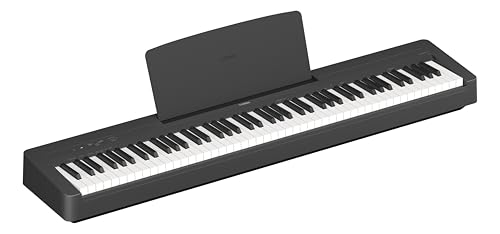
- 88 weighted, touch-sensitive keys
- Bluetooth audio and app connectivity
- Compact 24.5-pound portable design
Best For: Students and home players wanting realistic action in a portable Yamaha piano
Best Multifunction Desk Piano

- 88 weighted hammer-action keys
- 800 tones and 128-note polyphony
- Converts between piano and desk
Best For: Beginners needing a full-size practice piano for a dorm, apartment, or office
Best Triple-Pedal Practice Piano
UISCOM 1852 Weighted Digital Piano

- 88 progressive hammer-action keys
- Includes sustain, sostenuto, and soft pedals
- MIDI, recording, and USB MP3 playback
Best For: Home learners wanting expressive pedal control in a desk-style piano
Best Complete Bundle

- 88 touch-sensitive keys with 128-note polyphony
- 500 tones, 200 rhythms, and 150 demo songs
- Includes bag, X-stand, pedal, and music rest
Best For: Beginners wanting a portable all-in-one practice setup
Best Home-Style Setup
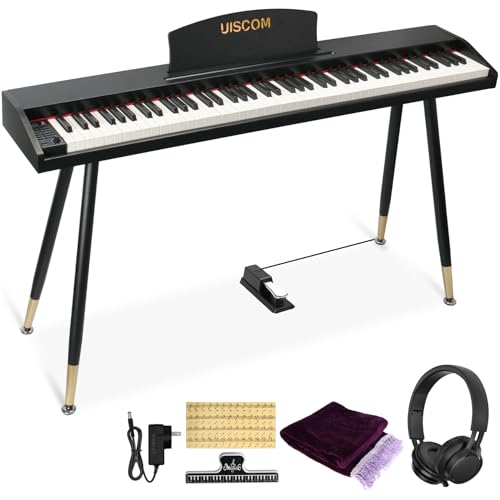
- Semi-weighted 88-key keyboard with matching wooden stand
- 600 tones, 800 rhythms, and 80 demo songs
- Includes triple pedal, headphones, and piano cover
Best For: Home learners seeking a complete, furniture-style piano
Best Connected Starter Kit

- 88 semi-weighted keys with built-in speakers
- Bluetooth, MIDI, USB, MP3, and headphone support
- Includes stand, pedal, headphones, bag, and stickers
Best For: Beginners wanting connectivity and quiet practice options
Reliable Foundation – Yamaha P71
The Yamaha P71 is a straightforward choice for digital pianos for practice, combining 88 weighted, touch-sensitive keys with a compact design and simple controls. Its acoustic-piano-style action and included sustain pedal support expressive practice for players at multiple skill levels.
Best For: Students and home players who want a focused, full-size weighted keyboard without complicated controls.
Pros:
- 88 weighted, touch-sensitive keys provide an acoustic piano feel.
- Includes a sustain pedal and power supply.
- Dual Mode blends voices such as piano and strings.
- Simple one-button operation helps keep attention on playing.
Cons:
- Offers 10 voices, so its sound selection is more limited than models with larger libraries.
- The streamlined feature set may be less appealing for users seeking extensive onboard functions.
With full-size weighted action, headphone connectivity, USB support, and an uncomplicated interface, the P71 is a practical practice instrument for building technique and dynamics.
Quiet Practice Pick – Roland FP-10
The Roland FP-10 is a compact option among digital pianos for practice, with 88-note keys, an acoustic-style feel, and headphone output for quieter sessions. Its SuperNATURAL piano sound engine and app integration add useful support for beginners and experienced players.
Best For: Beginners, apartment players, and learners who want realistic key response with silent practice and lesson-friendly features.
Pros:
- 88-note keyboard has expressive touch and an ivory feel.
- Headphone output enables practice without disturbing others.
- USB MIDI and Bluetooth connectivity support apps, computers, and DAW software.
- Twin Piano mode is useful for student-teacher lessons.
Cons:
- The matching stand is optional rather than included.
- Its listed skill level is beginner, which may not cover every advanced player’s feature needs.
The FP-10 balances authentic-feeling keys, clear onboard speakers, quiet practice, and modern connectivity, making it a versatile choice for a learning-focused setup.
Complete Home Setup – AODSK B-83 Weighted Digital Piano
The AODSK B-83 is an all-in-one option for digital pianos for practice, pairing 88 fully weighted keys with a furniture-style stand and triple pedals. Its teaching functions, demonstration songs, recording controls, and two-headphone support make it suited to structured home learning.
Best For: Families and students who want a full-size practice station with included furniture, pedals, and learning-oriented features.
Pros:
- Fully weighted 88-key keyboard is designed to feel like a real piano.
- Includes a stand and soft, sustain, and sostenuto pedals.
- Provides 128 timbres, 88 demonstration songs, teaching functions, and recording.
- Supports up to two headphones for quiet practice.
Cons:
- At 71.2 pounds, it is substantially less portable than a compact keyboard.
- Its furniture-style dimensions require more dedicated floor space.
For buyers prioritizing a traditional home setup, the B-83 offers substantial practice support and included hardware in one package, though its size makes it better suited to a permanent location.
Flexible Starter Keyboard – Alesis Recital 88-Key Piano
The white Alesis Recital is a flexible choice among digital pianos for practice, offering 88 semi-weighted keys with adjustable touch response and dedicated lesson features. Its portable design, built-in speakers, headphone output, and battery option support practice in different locations.
Best For: Beginners who want adjustable key response, lesson modes, and a portable keyboard for home practice or lessons.
Pros:
- 88 full-size semi-weighted keys offer adjustable touch response.
- Standard, split, layer, and lesson modes support varied practice routines.
- Built-in 20W speakers provide room-filling sound.
- Can run from the included adapter or six D-cell batteries.
Cons:
- The keys are semi-weighted rather than fully weighted.
- The sustain pedal is not included.
- It provides five voices, fewer than some feature-rich digital pianos.
The Recital is a practical beginner instrument when portability and educational tools matter more than fully weighted action, with useful connectivity and private-practice support included.
Best Compact Yamaha Practice Piano – Yamaha P145BT
The Yamaha P145BT is a practical choice for anyone comparing digital pianos for practice and wanting an authentic-feeling instrument without a bulky cabinet. Its 88 weighted, touch-sensitive keys, graded hammer action, built-in speakers, and Bluetooth audio support make it well suited to everyday home playing or portable practice.
Best For: Home players, students, and adults who want a compact, portable Yamaha with realistic piano action.
Pros:
- 88 weighted, touch-sensitive keys provide a natural acoustic-piano feel.
- Bluetooth audio supports playing along with favorite songs.
- Compact 24.5-pound design is easier to move or take when traveling.
- Includes a music rest, sustain foot switch, and AC adapter.
Cons:
- Offers a single built-in piano-focused sound profile rather than an extensive tone library.
- The sustain foot switch is more basic than a full triple-pedal setup.
- Requires corded electric power.
The P145BT stands out when realistic key response, straightforward controls, and easy placement matter more than a large collection of sounds. Bluetooth and compatibility with Yamaha apps add useful practice flexibility.
Best Multifunction Desk Piano – KU-1181 Digital Piano
The KU-1181 combines an 88-key weighted keyboard with a desk-style cabinet, making it an interesting option for shoppers seeking digital pianos for practice in a dorm, apartment, or home office. Its hammer-action keys, 800 tones, recording features, and USB-MIDI connectivity offer plenty of room for learning and experimentation.
Best For: Beginners and space-conscious players who want a full-size practice keyboard that can also function as a desk.
Pros:
- Full-size 88-key weighted hammer-action keyboard supports developing touch.
- Includes 800 tones and 128-note polyphony for varied playing styles.
- USB-MIDI connectivity and MP3 playback expand practice and creative options.
- Flip key cover, portable legs, stand, pedal, and headphones are included.
Cons:
- At about 24.49 kg, it is substantially heavier than a portable slab-style piano.
- Its desk configuration may require more dedicated floor space than a compact keyboard stand.
- Uses a 3.5mm headphone jack rather than the larger 6.35mm format.
This model is appealing if your practice area also needs a functional workspace. The extensive tone selection and beginner-friendly controls provide flexibility, while the weighted 88-key layout preserves a traditional playing format.
Best Triple-Pedal Practice Piano – UISCOM 1852 Weighted Digital Piano
The UISCOM 1852 is designed for players who want digital pianos for practice with a furniture-style wooden desk cabinet and more expressive pedal control. It pairs 88 weighted keys with a triple-pedal system, recording, dual-tone operation, demo songs, MIDI, and USB MP3 playback.
Best For: Home learners and developing players who want a desk-style piano with sustain, sostenuto, and soft pedals.
Pros:
- 88 weighted keys use progressive hammer action for a more traditional response.
- Custom triple pedals provide sustain, sostenuto, and soft-pedal functions.
- Includes recording, playback, dual-tone, reverb, chorus, and tempo controls.
- Dual headphone jacks, MIDI functionality, and USB MP3 playback support flexible practice.
Cons:
- Provides 8 tones, fewer than models with large sound libraries.
- Its wooden desk-style design is less portable than a compact keyboard.
- The supplied warranty is listed as one year.
The UISCOM 1852 makes the most sense for a stationary practice space where pedal technique and a built-in furniture-style setup are priorities. Its MIDI and playback features also give learners useful ways to review and support practice sessions.
Best Complete Bundle – Donner DEP-07
The Donner DEP-07 is a practical choice for shoppers seeking digital pianos for practice with a full-size, touch-sensitive keyboard and plenty of included accessories. Its 88 keys, 128-note polyphony, USB MIDI connectivity, and portable design support lessons, home playing, and creative work.
Best For: Beginners who want an all-in-one, portable setup for home practice or lessons.
Pros:
- 88 full-size touch-sensitive keys encourage dynamic playing and finger control.
- Includes 500 tones, 200 rhythms, and 150 demo songs for varied practice.
- Bundle includes a carry bag, X-style stand, pedal, music rest, and note stickers.
- Dual 10W stereo speakers and USB MIDI add useful practice and connectivity options.
Cons:
- Semi-weighted keys may feel lighter than a traditional acoustic piano.
- The X-style stand may be less furniture-like than a fixed piano stand.
With its large sound library and beginner-focused bundle, the DEP-07 offers flexibility without requiring many extra purchases. The slim, lightweight profile is particularly useful if you need to store or transport your instrument.
Best Home-Style Setup – UISCOM 88-Key Digital Piano
The UISCOM digital piano is designed for home learners who want digital pianos for practice with a furniture-style appearance. Its semi-weighted 88-key keyboard, wooden stand, headphones, Bluetooth audio, and MIDI-USB connectivity create a convenient setup for lessons and everyday playing.
Best For: Beginners, teens, and adults who want a complete home piano setup with built-in practice features.
Pros:
- Full-size semi-weighted keys provide touch response while remaining approachable for beginners.
- Includes a matching wooden stand, triple pedal, headphones, cover, and music accessories.
- Offers 600 tones, 800 rhythms, 80 demo songs, recording, playback, and metronome functions.
- Bluetooth audio and USB MIDI support play-along practice and compatible learning apps.
Cons:
- The furniture-style stand is less portable than a folding keyboard stand.
- Semi-weighted keys do not replicate the resistance of fully weighted piano keys.
The UISCOM stands out when appearance and convenience matter as much as features. Its large selection of sounds and rhythms supports varied practice, while the included headphones make quieter sessions easier at home.
Best Connected Starter Kit – Bfgxuoo 88-Key Piano
The Bfgxuoo 88-key set covers the essentials for digital pianos for practice, pairing semi-weighted keys with built-in speakers, Bluetooth, MIDI, USB, and MP3 support. Its included stand, headphones, bag, and key stickers make it ready for beginner lessons and home use.
Best For: Beginners who want flexible connections, quiet practice options, and a complete starter kit.
Pros:
- 88 semi-weighted keys offer a more piano-like touch than unweighted keys.
- Bluetooth, MIDI, USB, MP3, microphone, and headphone connections support varied uses.
- Includes a double-X stand, sustain pedal, headphones, keyboard bag, and key stickers.
- Recording, playback, 200 rhythms, 200 sounds, and 70 demo songs support practice.
Cons:
- The 200-tone and 200-rhythm libraries are smaller than those of some competing models.
- Semi-weighted action is not the same as fully weighted acoustic-piano action.
- The supplied warranty is listed as one year.
This set is appealing if connectivity and included accessories are priorities. Bluetooth can support lessons from a smart phone, while headphones and recording functions add useful flexibility for focused practice.
How We Picked the Best Digital Pianos for Practice
We focused on the features that have the greatest effect on regular practice: key feel, full-size 88-key layouts, sound quality, polyphony, speaker performance, pedal support, and connectivity. We also considered setup value, including included stands, benches, music rests, power supplies, and pedals. Since practice environments vary, the selection includes compact models for apartments, affordable beginner keyboards, and more complete home setups.
Key action is especially important. Fully weighted hammer-action keys generally provide a more piano-like response and better support finger-strength development, while semi-weighted models can be lighter, less expensive, and easier for beginners to play. Product specifications and bundle contents should be checked carefully because accessories can vary by seller or configuration.
Quick Comparison
| Best For | Look For | Why It Matters |
|---|---|---|
| Traditional piano practice | Weighted hammer action | More realistic resistance and control |
| Beginners on a budget | 88 keys, speakers, pedal | Covers core lessons without unnecessary cost |
| Small spaces | Compact cabinet and portable design | Easier storage and flexible placement |
| Technology-assisted learning | USB MIDI or Bluetooth | Works with apps, computers, and recording tools |
| Home presentation | Stand, music rest, and triple-pedal unit | Creates a more complete piano-style setup |
Key Buying Factors for Digital Pianos for Practice
Key Action and Playing Response
Choose weighted keys if your priority is classical technique, exam preparation, or transitioning between digital and acoustic pianos. Semi-weighted keys may be sufficient for casual playing, songwriting, and early lessons, but they typically provide less realistic resistance.
Sound, Polyphony, and Speakers
A convincing piano tone should remain clear across the keyboard and respond naturally to changes in playing force. Higher polyphony is useful when using the sustain pedal, layering sounds, or playing backing tracks. Built-in speakers should be loud and clear enough for your room without distortion.
Pedals, Connectivity, and Included Accessories
A sustain pedal is essential for most repertoire, while a triple-pedal system is helpful for advanced classical playing. USB MIDI and Bluetooth can connect the piano to lesson apps, digital audio workstations, and notation software. A bundled stand or furniture-style cabinet can add value, but verify stability and dimensions before buying.
Size, Noise, and Daily Comfort
Measure your available space and allow room for a bench and pedal position. Headphone output is valuable for quiet practice, especially in shared homes or apartments. Also consider whether the instrument is easy to move if you expect to relocate it.
Who Should Buy Which Digital Pianos for Practice?
Beginners should prioritize a full 88-key layout, dependable speakers, a sustain pedal, and an approachable price. Players focused on technique should favor the most realistic weighted action they can afford. Apartment musicians should look for compact construction and headphone support. Students using apps or recording software will benefit from USB MIDI or Bluetooth. Buyers creating a permanent home setup may prefer a model with a stable stand, music rest, and multiple pedals.
Before ordering, confirm the exact bundle, warranty, return policy, dimensions, and power requirements. The right choice is the instrument you will play comfortably and consistently—not necessarily the one with the most tones or accessories.
