The right digital piano can make songwriting feel more immediate, whether you are sketching chords late at night, building arrangements, or preparing parts for recording. The best models combine expressive keys with useful sounds, recording tools, portability, and a setup that fits your space.
We selected 10 digital pianos for songwriters across several budgets and use cases, from compact 61-key instruments to fully weighted 88-key models with Bluetooth, accompaniment features, and bundled accessories.
Best 10 Digital Pianos for Songwriters Picks for 2026
Feature-Rich Songwriting Hub
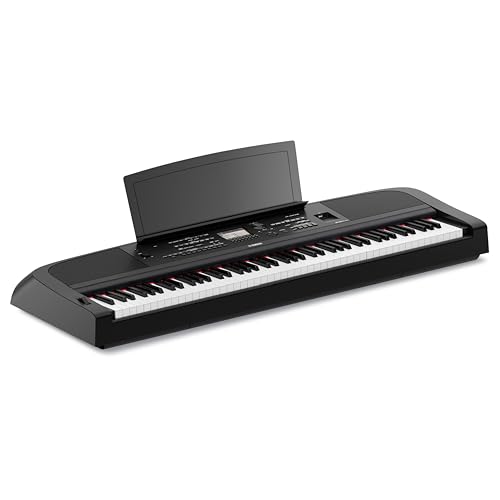
- Weighted 88-key action with Yamaha CFX piano sound
- 630 Voices and 263 accompaniment styles
- Microphone input, vocal effects, and learning features
Best For: Songwriters building arrangements with piano, backing styles, and vocals
Balanced Portable Performer

- PHA-4 weighted keys with SuperNATURAL piano sound
- 22-watt stereo speakers for room-filling playback
- Bluetooth audio and MIDI for mobile-device integration
Best For: Songwriters wanting expressive piano feel in a portable setup
Focused Entry-Level Foundation

- 88 weighted, touch-sensitive keys
- 10 Voices with piano and layered Dual Mode
- Includes sustain pedal and power supply
Best For: Beginners and songwriters who want simple piano-centered composing
Compact Creative Workstation

- 24-pound design with weighted 88-key action
- 700 Tones, 200 Rhythms, and 6-track recorder
- USB-MIDI, battery option, and optional Bluetooth adapter
Best For: Mobile and space-conscious songwriters needing broad creative tools
Best Full-Size Starter

- 88 velocity-sensitive keys with three pedals
- 128 tones, 83 rhythms, and recording
- USB-MIDI plus multiple headphone jacks
Best For: Beginner songwriters composing at home
Best Feature-Packed Value

- 88 semi-weighted keys with adjustable touch
- Split, layer, and lesson modes
- Battery operation and stereo RCA outputs
Best For: Beginners exploring arrangements and practice
Best Portable Songwriting Keyboard

- 61 touch-sensitive piano-style keys
- 11.5-pound design with battery power
- Recording, metronome, and Smart Pianist app
Best For: Mobile songwriters and collaborative composing
Best Creative Toolkit

- 88 weighted keys with textured ebony-and-ivory feel
- 700 tones, 200 rhythms, recording, and editable DSP effects
- Bluetooth audio/MIDI and slim, stage-ready design
Best For: Songwriters who want realistic piano feel and extensive sound-shaping options
Best Simple Practice Piano
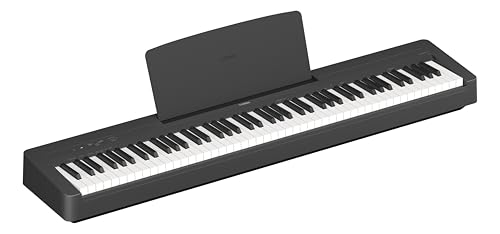
- 88 weighted keys with Graded Hammer Compact action
- Grand-piano sound with Bluetooth audio playback
- Compact, lightweight design with app support
Best For: Songwriters seeking a focused, portable piano for practice and idea development
Best Ready-to-Play Bundle

- Includes stand, bench, music rest, pedal, and AC adapter
- 88 weighted keys with grand-piano sound
- Built-in speakers, multiple voices, and split mode
Best For: Songwriters who want a complete piano setup ready for immediate home use
Feature-Rich Songwriting Hub – Yamaha DGX-670B
For songwriters seeking a full-size instrument that can support composing, arranging, and casual performance, the Yamaha DGX-670B combines weighted action with a broad selection of sounds and accompaniment features. Its built-in learning and vocal tools add flexibility beyond basic piano playing.
Best For: Songwriters who want piano realism plus automatic backing, varied instrument voices, and vocal performance capability.
Pros:
- Weighted action is heavier in the low keys and lighter in the high keys.
- Includes Yamaha CFX stereo sampling with natural resonance and rich tones.
- Offers 630 Voices and 263 Automatic Accompaniment Styles.
- Built-in microphone input, vocal effects, learning tools, and Score Display expand its creative uses.
Cons:
- The furniture stand and bench are sold separately.
- At 67.7 pounds, it is less convenient for frequent relocation.
The DGX-670B is a strong choice when songwriting involves more than piano sketches. Its accompaniment styles and extensive sound library can help develop arrangements, while the weighted keyboard keeps the playing experience rooted in traditional piano technique.
Balanced Portable Performer – Roland FP-30X
The Roland FP-30X is a practical option for digital pianos for songwriters who want authentic-feeling keys in a portable design. Its SuperNATURAL sound engine, useful onboard sounds, and Bluetooth audio and MIDI support make it suitable for composing, practicing, and connecting with mobile devices.
Best For: Songwriters who prioritize acoustic-style touch, room-filling speakers, and app or mobile-device connectivity.
Pros:
- PHA-4 Standard 88-note keyboard provides acoustic-style weighted touch.
- SuperNATURAL Piano sound engine supports expressive dynamics.
- Includes electric pianos, organs, strings, and synthesizer sounds.
- Bluetooth audio and MIDI work with mobile devices, while 22-watt speakers provide strong onboard sound.
Cons:
- Bluetooth headphones are not supported.
- It has fewer stated creative features than more accompaniment-focused models.
The FP-30X keeps the focus on playable piano performance while still offering enough sounds and connectivity for songwriting workflows. It is especially appealing when a slim cabinet and mobile integration matter as much as expressive keys.
Focused Entry-Level Foundation – Yamaha P71
The Yamaha P71 is a straightforward starting point for songwriters who want full-size weighted keys without a complicated control layout. Its touch-sensitive action, simple operation, and Dual Mode make it useful for building ideas and practicing piano parts.
Best For: Beginners and songwriters seeking an uncomplicated, affordable-feeling piano setup with essential expressive features.
Pros:
- 88 weighted, touch-sensitive keys recreate an acoustic piano feel.
- Includes 10 Voices, including a Yamaha grand piano sound.
- Dual Mode allows piano and strings or other Voices to be layered.
- Sustain pedal and power supply are included.
Cons:
- The sound selection is limited to 10 Voices.
- Its streamlined design provides fewer built-in songwriting and accompaniment tools.
The P71 is best viewed as a focused piano foundation rather than an all-in-one arranger. Its clean controls can help keep attention on melody, harmony, and performance while the layered sound option adds some tonal variety.
Compact Creative Workstation – Casio CDP-S360
For songwriters working in small rooms, dorms, or mobile setups, the Casio CDP-S360 combines weighted 88-key action with a lightweight design and a large sound library. Its recorder, rhythms, USB-MIDI, and optional battery operation make it flexible for capturing and developing ideas.
Best For: Space-conscious songwriters who want many tones, accompaniment rhythms, recording tools, and easy computer or smart-device connection.
Pros:
- Scaled hammer-action keys include simulated ivory and ebony textures.
- At 24 pounds, it is easy to move and suits compact spaces.
- Provides 700 Tones, 200 Rhythms, pitch bend, and 128-note polyphony.
- Includes a 6-track recorder, USB-MIDI, LCD display, and battery-power option.
Cons:
- Bluetooth MIDI and audio require the optional WU-BT10 adapter.
- The slim, portable design may offer less substantial physical presence than heavier home instruments.
The CDP-S360 stands out when flexibility and portability are central to a songwriting setup. It offers substantially more than a basic digital piano while remaining light enough for mobile use and compact enough for limited studio space.
Best Full-Size Starter – Donner OURA DDP-60
The Donner OURA DDP-60 is a practical choice for songwriters who want a full-size instrument with built-in sounds, rhythms, and recording features. Its 88 velocity-sensitive keys, USB-MIDI connectivity, and three-pedal setup support both composing and developing piano technique.
Best For: Beginner songwriters seeking a furniture-style digital piano with broad onboard accompaniment options.
Pros:
- 88 full-size keys with four velocity-sensitive curves.
- 128 tones, 83 rhythms, 128-note polyphony, and eight reverb effects.
- Built-in recording, USB-MIDI, dual mode, and three-pedal unit.
- Three headphone connections support private practice.
Cons:
- The cabinet-style design is less portable than a slim keyboard.
- It is positioned primarily for beginners.
For home-based songwriting, the DDP-60 offers a generous feature set and a complete playing setup. Its recording and USB-MIDI functions are especially useful for capturing ideas and connecting to compatible music equipment.
Best Feature-Packed Value – Alesis Recital 88-Key
The Alesis Recital is a flexible option among digital pianos for songwriters who want full-size keys, adjustable touch response, and straightforward sound-shaping modes. Its split, layer, and lesson functions make it useful for exploring arrangements while practicing.
Best For: Beginners who want an affordable, adaptable keyboard for songwriting, practice, and basic sound layering.
Pros:
- 88 full-sized semi-weighted keys with adjustable touch response.
- Five built-in voices, plus chorus and reverb effects.
- Standard, split, layer, and lesson modes with 128-note polyphony.
- Battery operation and stereo RCA outputs add setup flexibility.
Cons:
- The sustain pedal is not included.
- It has five built-in voices, fewer than some multifunction digital pianos.
The Recital balances essential songwriting tools with portability, weighing 15.7 pounds and supporting six D-cell batteries. It is a sensible pick for writers who value adjustable playing response and simple layering over a large preset library.
Best Portable Songwriting Keyboard – Yamaha Piaggero NP15B
The Yamaha Piaggero NP15B suits songwriters who need a lightweight instrument for quick ideas, travel, or collaboration. Its 61 touch-sensitive piano-style keys, recording function, metronome, and Smart Pianist app support spontaneous composing without the footprint of an 88-key piano.
Best For: Mobile songwriters who prioritize portability, battery operation, and a piano-focused playing experience.
Pros:
- 61 touch-sensitive piano-style keys for dynamic playing.
- Ultra-lightweight 11.5-pound design with battery operation.
- Recording function and metronome support idea capture and practice.
- Smart Pianist app adds control and additional features.
Cons:
- Its 61-key range is smaller than a full-size 88-key piano.
- The Smart Pianist app is listed for iOS.
- Only a 3.5mm jack is specified in the supplied details.
The NP15B is a strong fit when portability matters more than a full keyboard range. Six AA batteries provide up to five hours of continuous play, while the included power adapter keeps it practical for home use.
Best Creative Toolkit – Casio Privia PX-S3100
For songwriters who want one instrument to cover piano parts, arrangements, and experimentation, the Casio Privia PX-S3100 combines 88 weighted keys with 700 tones, rhythms, recording features, and editable DSP effects. Its slim design also makes it practical for a home studio or stage setup.
Best For: Songwriters who want realistic piano feel plus extensive sound-shaping and accompaniment options.
Pros:
- 88 weighted keys with textured ebony-and-ivory feel provide a realistic playing experience.
- Includes a German grand piano sound, 700 tones, and 200 rhythms for developing varied song ideas.
- Bluetooth audio/MIDI, USB connectivity, recording tools, and editable DSP effects support flexible music creation.
- Compact, lightweight design includes dual headphone jacks for quiet practice.
Cons:
- Its large library of tones and controls may feel more involved than a straightforward piano.
- Bluetooth functionality requires the included WU-BT10 adapter.
The PX-S3100 is the most feature-rich choice here for writers who regularly move beyond basic piano sounds. Choose it if creative flexibility matters as much as key feel.
Best Simple Practice Piano – Yamaha P145BT
The Yamaha P145BT is a focused option for songwriters who primarily need a dependable piano sound and natural key response. Its 88 weighted keys, compact body, Bluetooth audio, and app compatibility make it well suited to writing and practicing without unnecessary complexity.
Best For: Songwriters who want a portable, piano-centered instrument for home practice, travel, and playing along with tracks.
Pros:
- Graded Hammer Compact action and 88 touch-sensitive weighted keys provide an acoustic-style feel.
- Built-in speakers deliver a grand-piano sound with natural resonance and a rich tone.
- Bluetooth audio supports playing along with favorite songs.
- Smart Pianist and Rec’n’Share compatibility can assist with practice and sharing.
Cons:
- The supplied notes emphasize piano-focused operation rather than a broad collection of tones or rhythms.
- Only a sustain foot switch is included, so a full pedal setup may require additional equipment.
The P145BT keeps the songwriting setup straightforward: sit down, find a convincing piano sound, and work through ideas. It is a strong fit when portability and simplicity take priority over extensive arranging features.
Best Ready-to-Play Bundle – Yamaha P-143 Bundle
The Yamaha P-143 bundle gives songwriters a complete starting setup instead of just the keyboard. Along with 88 weighted keys and built-in speakers, it includes a stand, bench, music rest, sustain foot switch, and AC adapter, making it convenient for immediate home use.
Best For: Songwriters who want a complete, furniture-style setup for writing, practicing, and exploring piano ideas right away.
Pros:
- Includes the keyboard, stand, bench, music rest, sustain foot switch, and AC adapter.
- 88 weighted keys provide an acoustic-piano-style playing experience.
- Grand-piano sound includes the natural resonance and rich tone of internal piano mechanics.
- Built-in speakers, headphone jack, multiple voices, and split mode support practical home use.
Cons:
- The included stand and bench make this bundle less minimal than a keyboard-only setup.
- The supplied notes do not list Bluetooth connectivity for this P-143 bundle.
For writers starting from scratch, the P-143 bundle removes the hassle of choosing compatible furniture and accessories. It is particularly practical when you want a dedicated writing station rather than a bare portable keyboard.
How We Picked the Best Digital Pianos for Songwriters
We focused on features that directly support songwriting rather than treating every keyboard as a general-purpose piano. Our selection considers key feel, playable range, sound variety, recording and practice functions, connectivity, portability, speaker quality, and overall value. Weighted 88-key instruments are prioritized for realistic piano parts, while lighter and smaller options remain useful for mobile writing, secondary setups, and producers who work primarily with software instruments.
Because songwriting workflows vary, there is no single best choice for everyone. A pianist who records acoustic-style ballads may value action and dynamic response most, while a pop or electronic songwriter may benefit more from hundreds of tones, Bluetooth, layering, or a compact footprint.
Quick Comparison
- Best all-around workstation: Yamaha DGX-670B, with broad accompaniment and arrangement-focused features.
- Best expressive compact 88-key option: Roland FP-30X, a strong fit for piano-led writing and home recording.
- Best affordable weighted piano: Yamaha P71, for straightforward piano practice and songwriting.
- Best tone variety in a slim design: Casio CDP-S360 or Privia PX-S3100.
- Best portable writing keyboard: Yamaha Piaggero NP15B, especially when 61 keys are sufficient.
- Best bundle value: Yamaha P-143 bundle, which includes the main accessories needed for a home setup.
Key Buying Factors for Digital Pianos for Songwriters
Key Action and Range
Weighted 88-key actions provide the most natural response for piano-based composition and make it easier to play bass lines and wide chord voicings. Semi-weighted or touch-sensitive keys can be more affordable and portable, but they may feel less realistic. A 61-key instrument is practical when space matters or when most parts are created with MIDI and software instruments.
Sounds, Layering, and Accompaniment
Look beyond the piano preset. Electric pianos, organs, strings, pads, basses, and drum patterns can help turn a chord idea into a fuller arrangement. Layering and split functions are particularly useful for testing song sections without opening a computer.
Recording and Connectivity
Built-in recording is convenient for capturing ideas quickly, but check whether it records audio, MIDI, or only basic performances. USB or Bluetooth connectivity can simplify work with a phone, tablet, or DAW. Confirm compatibility and included cables before assuming a model will connect directly to your setup.
Size, Speakers, and Accessories
Measure your available space and consider whether you need onboard speakers, a stand, a bench, and a sustain pedal. Bundles can save money, while slim models are easier to store and transport. For frequent performances, also check weight, power options, and the availability of a suitable carrying case.
Who Should Buy Which Digital Pianos for Songwriters?
Choose a fully weighted 88-key model if piano feel, expressive dynamics, and complete range are central to your writing. Choose a feature-rich arranger-style instrument if you want accompaniment patterns and multiple sounds for developing complete demos. A slim weighted model suits apartment setups and writers who need versatility without a bulky cabinet.
For beginners, budget-conscious writers, or secondary workstations, an affordable 88-key model offers the most usable range for the money. Pick a 61-key portable piano when mobility and quick idea capture matter more than traditional piano layout. Finally, consider a bundle if you are starting from scratch and want the stand, bench, and pedal included in one purchase.
