The best professional keyboard workstations combine expressive keys, versatile sounds, hands-on controls, and efficient production features in one instrument. The right choice depends on whether you prioritize weighted piano feel, portable performance, sequencing, or deep sound design.
We compared 10 strong options across Roland, Yamaha, Korg, Akai, and Arturia to help you match your workflow, playing style, and budget with a capable keyboard workstation.
Best 10 Professional Keyboard Workstations Picks for 2026
Best Overall

- Extensive electronic and acoustic sound library
- Deep sampling and professional sequencing tools
- Strong DAW, USB audio, MIDI, and CV/gate connectivity
Best For: Producers and performers seeking an all-in-one 61-note workstation
Best Standalone Production

- Standalone MPC3 track-based production workflow
- 37 keys, 16 MPC pads, touchscreen, and sampling
- USB-C audio, MIDI, and device connectivity
Best For: Hands-on beatmakers and producers working without a computer
Best Weighted-Key Option

- 88-note weighted hammer-action keyboard
- Over 3,800 ZEN-Core sounds
- USB-C audio/MIDI and mobile power support
Best For: Pianists and performers who want workstation sounds with authentic piano action
Best Lightweight Studio Setup

- Portable 61-key production synthesizer
- Motif sound engine with 128-note polyphony
- Class-compliant USB audio and MIDI connectivity
Best For: Portable studio and live setups needing simple computer integration
Versatile Starter Workstation

- 790 instrument sounds and 59 drum kits
- 61 velocity-sensitive keys with three touch curves
- Portable 5.7 kg design with performance controls
Best For: All-skill-level players composing, arranging, and performing
Weighted Professional Workstation
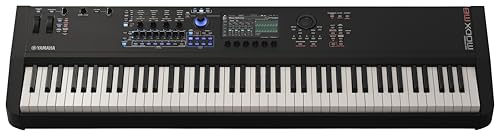
- 88-key graded-hammer action for pianists
- Three sound engines and advanced sequencing
- Hands-on controls plus DAW softsynth integration
Best For: Professional pianists and producers needing weighted action
Gig-Ready Sound Workstation

- Over 3,800 sounds from the ZEN-Core engine
- Lightweight 61-note design for transport
- Eight-track sequencing and WAV sample import
Best For: Gigging keyboardists needing portable sounds and sequencing
Weighted Workstation Choice

- 88 weighted hammer-action keys
- EDS-i sound engine and step MIDI sequencers
- Mic/line inputs plus audio recorder
Best For: Weighted-key workstation performance and composition
Modern Controller Workstation

- 88 fully weighted hammer-action keys
- Pads, faders, knobs, and color display
- Integration with major DAWs and Arturia software
Best For: Computer-based production with expressive weighted keys
Compact Production Synth

- 49-key synthesizer with Motif sound engine
- 128-note polyphony for live and sequenced work
- Class-compliant USB audio and MIDI
Best For: Portable production and USB-connected performance
Best Overall – Roland FANTOM-06
The Roland FANTOM-06 is a versatile choice for professional keyboard workstations, combining a 61-note synthesizer keybed with extensive sound generation, sampling, sequencing, and live-performance controls. Its broad connectivity and DAW integration make it suitable for both studio production and stage use.
Best For: Producers and performers who want a feature-rich 61-note workstation with deep sound design and sequencing tools.
Pros:
- Thousands of electronic and acoustic sounds using ZEN-Core, V-Piano, and SuperNATURAL technologies
- Deep onboard sampling, multisample support, and a large effects library
- Clip-based sequencing, TR-REC, piano-roll editing, and extensive performance controls
- Multi-channel USB audio, MIDI, CV/gate, and integration with Logic Pro, MainStage, and Ableton Live
Cons:
- 61-note range may be limiting for players who require a full piano span
- Its extensive feature set may require time to master
- Plastic construction may not feel as substantial as heavier stage instruments
The FANTOM-06 stands out when you need one keyboard to cover synthesis, acoustic sounds, sampling, sequencing, and live control. It is especially compelling for users who want workstation depth without moving to a larger 88-note model.
Best Standalone Production – Akai MPC Key 37 G2
The Akai Professional MPC Key 37 G2 brings a computer-free production workflow to professional keyboard workstations. Its 37-key synth-action keybed, MPC pads, touchscreen, sampling tools, and MPC3 operating system support complete track creation from a single instrument.
Best For: Beatmakers and producers who prioritize hands-on sampling, sequencing, clip launching, and standalone song production.
Pros:
- Standalone MPC3 workflow for creating, arranging, and finishing tracks without a computer
- Combines 37 full-size keys, 16 velocity-sensitive MPC pads, pitch and mod wheels, and a 7-inch touchscreen
- Eight-core processing supports up to 16 stereo audio tracks and 32 plugin instruments per project
- USB-C provides multichannel audio, expanded MIDI, device support, and direct sampling from compatible devices
Cons:
- 37-key range is less suited to extended piano-style playing
- Designed around production and beatmaking rather than a traditional weighted-keyboard experience
- Its many MPC features may be more than casual players need
Choose the MPC Key 37 G2 if your ideal workstation combines keys, pads, sampling, and DAW-style arrangement in one compact setup. Its standalone design is particularly useful for producers who want to reduce reliance on a computer.
Best Weighted-Key Option – Roland JUNO-D8
The Roland JUNO-D8 offers an 88-note weighted hammer-action keyboard in a format suited to live performance and production. Among professional keyboard workstations, it is a strong fit for players who want authentic piano response alongside acoustic pianos, electric pianos, organs, synths, and USB-C connectivity.
Best For: Pianists, stage performers, and keyboardists who need weighted action with a broad selection of ready-to-play sounds.
Pros:
- 88-note PHA-4 weighted keyboard with hammer action for a piano-style playing experience
- Over 3,800 sounds powered by Roland’s ZEN-Core engine
- Includes acoustic and electric pianos, organs, synths, and other live-performance sounds
- USB-C audio/MIDI interface and support for mobile battery power
Cons:
- At 32 pounds, it is less portable than lighter 61-note workstations
- The 88-note chassis requires more setup and transport space
- Its weighted action may be less suitable for players focused primarily on fast synth parts
The JUNO-D8 is the practical choice when key feel matters as much as sound selection. It provides a full piano range and weighted response while retaining the sound variety and connectivity expected from a modern workstation.
Best Lightweight Studio Setup – Yamaha MX61
The Yamaha MX61 is a lightweight 61-key music production synthesizer for musicians building a straightforward studio or live rig. Its Motif sound engine, 128-note polyphony, and class-compliant USB audio/MIDI make it a practical option among professional keyboard workstations.
Best For: Keyboardists who want a portable 61-key instrument with broad sounds and simple computer connectivity.
Pros:
- Motif sound engine supports layering, zoning, switching, cycling, and control of up to eight elements in one voice
- 128-note polyphony helps prevent dropouts during live playing or full 16-track sequences
- Class-compliant USB provides plug-and-play audio and MIDI without separate driver installation
- One USB connection can handle stereo audio recording/playback and 16 channels of MIDI
Cons:
- 61 keys do not provide a full piano range
- The supplied notes describe fewer onboard production features than the larger workstations in this roundup
- Remote-control functions depend on compatible software and platform
The MX61 makes sense for players who value portability and uncomplicated computer integration. Its strong polyphony and Motif-based sound engine provide a capable foundation for live parts, layering, and computer-based production.
Versatile Starter Workstation – Korg i3 Music Workstation
The Korg i3 is a practical choice for musicians who want professional keyboard workstations features in a portable, approachable 61-key instrument. Its broad sound library, onboard controls, and arrangement-focused design support composing, practice, and live performance.
Best For: All-skill-level players who want a versatile workstation for arranging, composing, and performing.
Pros:
- Includes 790 instrument sounds and 59 drum kits.
- Velocity-sensitive keys offer three touch curves for customized response.
- Backlit controls, a useful display, joystick control, and a dedicated Grand Piano button support live operation.
- At 5.7 kg, it is relatively portable for a workstation keyboard.
Cons:
- Its 61-key layout may not suit players who require a full 88-key range.
- The supplied notes list a 3.5mm headphone jack rather than a larger studio headphone connection.
The i3 emphasizes breadth and ease of use rather than piano-style weighted action. It is a strong fit when portability, accessible controls, and built-in sounds matter more than an advanced synthesizer engine.
Weighted Professional Workstation – Yamaha MODX M8 Synthesizer
The Yamaha MODX M8 is built for pianists and advanced users comparing professional keyboard workstations for stage and studio work. Its 88-key graded-hammer action combines piano-oriented playability with three sound engines, hands-on controls, and DAW integration.
Best For: Professional pianists, producers, and performers who need weighted action plus deep sound-design and sequencing capabilities.
Pros:
- 88-key graded-hammer action provides heavier low-key and lighter high-key response.
- Three engines cover analog-style synthesis, FM synthesis, and realistic instruments.
- Eight physical faders, a Super Knob, color touchscreen, and dedicated display knobs support expressive editing.
- The Expanded Softsynth Plugin replicates MODX M sounds in a DAW.
Cons:
- At 40.5 pounds and over 57 inches long, it is less convenient to transport than compact 61-key models.
- Its professional feature set may be more than beginners need.
The MODX M8 is the most piano-focused option in this group, while still offering substantial synthesis and workflow tools. Choose it when realistic 88-key action and studio-to-stage flexibility outweigh portability.
Gig-Ready Sound Workstation – Roland JUNO-D6 Synthesizer
The Roland JUNO-D6 is a compact option for musicians seeking professional keyboard workstations capabilities without a bulky setup. It combines more than 3,800 onboard sounds with an eight-track sequencer, sample importing, and USB-C support for live and mobile workflows.
Best For: Gigging keyboardists and creators who want a portable 61-note synthesizer with extensive sounds and sequencing tools.
Pros:
- ZEN-Core engine provides over 3,800 ready-to-play sounds.
- Compact 61-note design weighs 12.8 pounds for easier transport.
- Built-in eight-track sequencer supports song and arrangement creation.
- Supports USB-C mobile battery power, audio/MIDI connectivity, and user WAV sample import.
Cons:
- Synth-action keys do not provide the weighted feel of an 88-key piano action.
- The supplied notes identify the included component simply as the synthesizer, so additional accessories may be needed.
The JUNO-D6 prioritizes portability, immediate stage sounds, and flexible modern connectivity. It is especially appealing for performers who need a lightweight keyboard that can also handle sequencing and customized sample-based sounds.
Weighted Workstation Choice – Korg Kross 2-88-MB
The Korg Kross 2-88-MB is a strong option for shoppers comparing professional keyboard workstations with a full 88-key range. Its natural weighted hammer-action keybed, EDS-i sound engine, mic/line inputs, step MIDI sequencers, and audio recorder support hands-on composing and performance in one instrument.
Best For: Players who want weighted piano-style keys alongside workstation sequencing, recording, and sound-design features.
Pros:
- 88-key natural weighted hammer-action keybed.
- EDS-i sound engine for workstation-based sound creation.
- Includes mic/line inputs, step MIDI sequencers, and an audio recorder.
- USB and MIDI connectivity support computer and hardware setups.
Cons:
- Its 38.5-pound weight and 64-inch length may require a dedicated setup.
- The matte-black finish may not suit every studio aesthetic.
Choose the Kross 2-88-MB if a complete, weighted workstation is more important than a lightweight controller. It combines key feel, sequencing, inputs, and recording features in a single keyboard.
Modern Controller Workstation – Arturia KeyLab 88 mk3
Arturia KeyLab 88 mk3 88-key Weighted Hammer-action Keyboard Controller - White
Check Price On AmazonThe Arturia KeyLab 88 mk3 is designed for computer-based professional keyboard workstations, pairing fully weighted hammer-action keys with deep software control. Its pressure-sensitive pads, faders, contextual display, USB-C connection, and included stands make it a focused controller for studio production.
Best For: Producers who want an 88-key weighted controller with integrated DAW and Arturia software control.
Pros:
- 88 fully weighted hammer-action keys.
- 12 pressure-sensitive pads with four built-in banks.
- Nine onboard faders and potentiometers provide hands-on parameter control.
- Supports integration with Ableton Live, Logic Pro, Cubase, Bitwig Studio, and other listed software.
Cons:
- It is a MIDI controller rather than a standalone synthesizer workstation.
- USB-C is the listed connectivity interface, so hardware setups may need additional adapters or equipment.
- At 19.7 kg, it is substantial for a controller.
The KeyLab 88 mk3 is a practical choice when your sounds and production tools live on a computer. Its weighted keyboard and broad control surface make it especially useful for expressive software-instrument and DAW workflows.
Compact Production Synth – Yamaha MX49BK
The Yamaha MX49BK suits musicians seeking professional keyboard workstations in a compact, lightweight format. It combines a Motif sound engine with 128-note polyphony, Virtual Circuit Modeling effects, and class-compliant USB audio/MIDI for streamlined computer recording and production.
Best For: Mobile producers and performers who need a 49-key synthesizer with broad sounds and straightforward USB integration.
Pros:
- Motif sound engine supports layering, zoning, switching, cycling, randomizing, and controlling up to eight elements within a voice.
- 128-note polyphony helps support live playing and full 16-track sequences.
- Class-compliant USB audio/MIDI offers plug-and-play computer connectivity without drivers.
- Can record and play back stereo audio and 16 channels of MIDI through one USB cable.
Cons:
- Its 49-key format offers less range than an 88-key workstation.
- The supplied notes do not list weighted or hammer-action keys.
- At 12.5 pounds, its lighter construction may provide less of a full piano-key feel.
The MX49BK is a sensible fit when portability and computer connectivity take priority. Its polyphony, Motif-based sounds, effects modeling, and USB recording features give compact setups substantial production flexibility.
How We Picked the Best Professional Keyboard Workstations
We focused on instruments that can handle serious composing, arranging, sound selection, and live performance without requiring a large collection of separate hardware. Our comparison considered keyboard feel, sound libraries, sequencing and production tools, connectivity, portability, and the intended role of each model.
The lineup includes full workstations, production keyboards, synthesizers, and a controller designed for software-based studios. Because these categories overlap but are not identical, the most suitable option depends on how much onboard production capability you need.
Quick Comparison
- Best for broad workstation versatility: Roland FANTOM-06
- Best for standalone beat-making: Akai Professional MPC Key 37 G2
- Best for weighted 88-key performance: Roland JUNO-D8 or Korg Kross 2-88
- Best for compact production: Yamaha MX49BK or Yamaha MX61BK
- Best for software-based studios: Arturia KeyLab 88 mk3
- Best for affordable portable arranging: Korg i3
Key Buying Factors for Professional Keyboard Workstations
Keyboard Action and Playing Feel
Choose semi-weighted or synth-action keys for fast leads, pads, and electronic parts. Weighted or graded hammer-action keys are better for pianists and expressive acoustic-piano performances, but they add size and weight. Also check the key count: 49 or 61 keys suit portability, while 76 or 88 keys provide more room for two-handed parts and split arrangements.
Sounds, Synthesis, and Effects
Check whether the instrument emphasizes realistic acoustic sounds, modern synthesizer engines, or both. A large preset library is useful for immediate results, while deeper synthesis controls matter if you regularly create or modify patches. Multi-effects, layering, and splitting can be especially valuable onstage.
Sequencing and Standalone Production
If you want to write without a computer, look for onboard sequencing, sampling, pattern creation, automation, and comfortable navigation. Controller keyboards can offer excellent keybeds and software control but generally depend on a computer or tablet for sounds and production.
Connections and Stage Practicality
Review MIDI, USB, audio outputs, pedal inputs, storage options, and external-display or expansion support where applicable. Consider weight, chassis size, power requirements, and whether the controls are easy to reach during a performance.
Who Should Buy Which Professional Keyboard Workstations?
Choose a full workstation such as the FANTOM-06 if you need one centerpiece for composing, sound design, and live sets. Pick an MPC Key 37 if hands-on sequencing and beat production are central to your workflow.
Pianists should prioritize the JUNO-D8, Kross 2-88, or another 88-key weighted model. Players who need a lighter, more compact instrument may prefer the JUNO-D6, MX61BK, MX49BK, or Korg i3. For a computer-centered studio with virtual instruments, the KeyLab 88 mk3 is the most specialized choice because its weighted controller design puts expressive software control first.
