Choosing among digital pianos for stage use means balancing realistic key action, dependable live controls, flexible sounds, and manageable weight. The right model should feel natural under your fingers while fitting smoothly into your performance setup.
This roundup compares 10 stage-ready options, including workstation-style instruments, portable digital pianos, and performance keyboards built for demanding live players.
Best 10 Digital Pianos for Stage Use Picks for 2026
Professional Layering Power
Nord Stage 4 88-Key Digital Piano

- 88-key triple-sensor hammer action
- Up to seven sound layers
- 512 programs and four assignable outputs
Best For: Advanced stage performers needing expressive control and layered sounds
Portable All-Rounder

- 88-note PHA-4 hammer-action keyboard
- Over 3,000 ZEN-Core sounds
- Built-in stereo speakers and USB audio/MIDI
Best For: Gigging musicians who need versatility and easy setup
Classic Piano Color

- RH3 weighted hammer action
- Seven engines with 700 sounds
- Balanced XLR and 1/4-inch outputs
Best For: Live players prioritizing premium piano tones and quick layering
Deep Real-Time Control

- V-Piano modeling and two sound engines
- Nine sliders and eight encoder knobs
- German Concert and Essential Upright expansions
Best For: Advanced performers who shape sounds live
Best Performance Workstation
Nord Piano 6 88-Key Stage Piano
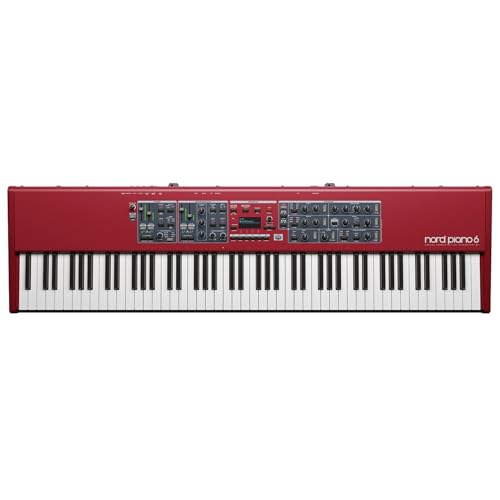
- 88-key Triple Sensor Keybed with Virtual Hammer Action
- Dual piano and synth layers with onboard effects
- 576 program locations for organized live setups
Best For: Advanced performers needing layered sounds and extensive program storage
Best Portable Piano Experience
Roland FP-90X 88-Note Digital Piano

- PHA-50 hybrid keyboard for an acoustic-style playing feel
- PureAcoustic Piano Modeling with Piano Designer customization
- Bluetooth audio and MIDI plus a four-speaker system
Best For: Professional players prioritizing expressive piano tone and connectivity
Best Multi-Engine Stage Keyboard

- Four independent piano, electric piano, organ, and synth engines
- 512 Scenes and 128 Scene Chains for setlist management
- Balanced outputs plus microphone and line inputs
Best For: Professional performers needing broad sounds and flexible live routing
Professional Expression

- Grand Feel wooden-key action
- SK-EX, SK-5, and EX grand sounds
- Kawai triple pedal included
Best For: Professional players seeking realistic action and deep piano customization
Portable Gigging Pick

- PHA-4 weighted 88-note action
- SuperNATURAL piano and electric pianos
- Portable body with built-in speakers
Best For: Gigging musicians who need weighted keys and easy transport
Versatile Performance Hub
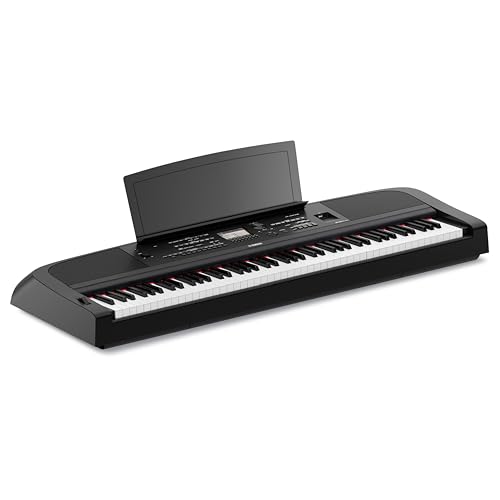
- Weighted action with Yamaha CFX sampling
- 630 Voices and 263 accompaniment Styles
- Microphone input with vocal effects
Best For: Players wanting piano, accompaniment, learning, and vocal features
Professional Layering Power – Nord Stage 4 88-Key Digital Piano
For players comparing digital pianos for stage use, the Nord Stage 4 combines a full 88-key triple-sensor hammer-action keybed with fast controls for piano, organ, and synth sounds. Its extensive program storage, multiple outputs, and included performance accessories make it a flexible advanced-player setup.
Best For: Advanced performers who need expressive weighted action, layered sounds, and broad stage connectivity.
Pros:
- 88-key triple-sensor weighted hammer action provides responsive dynamic control.
- Supports up to seven independent layers across piano, organ, and synth sections.
- 512 program locations, USB MIDI, and four assignable outputs support complex live rigs.
- Bundle includes a stand, bench, sustain pedal, headphones, cable, and polishing cloth.
Cons:
- Its advanced feature set is geared toward experienced players.
- The 43.2-pound keyboard may require help or a sturdy setup for transport.
The Nord Stage 4 is a strong choice when live control and sound layering matter as much as piano feel. The included stand and accessories also reduce the need to assemble a separate gigging package.
Portable All-Rounder – Roland RD-88 EX Stage Piano
Among digital pianos for stage use, the Roland RD-88 EX stands out for combining an 88-note hammer-action keyboard with extensive sounds and built-in stereo speakers. Its compact design, USB audio/MIDI interface, and included damper pedal suit musicians who need a versatile instrument for gigs, rehearsal, and travel.
Best For: Gigging musicians and players who want realistic piano action, broad sounds, and onboard amplification.
Pros:
- PHA-4 hammer-action keys with Ivory Feel offer responsive, expressive playability.
- SuperNATURAL piano sounds and the ZEN-Core engine provide a wide range of tones.
- Built-in stereo speakers allow performance or practice without external amplification.
- USB audio/MIDI, rhythms, and MP3/WAV playback add practical performance features.
Cons:
- The 41.5-pound weight still makes frequent transport a consideration.
- Its many sounds and functions may take time to organize for a streamlined live setup.
The RD-88 EX is particularly practical for performers who value portability and self-contained sound. It offers a broad sonic palette without giving up a full-size weighted keyboard.
Classic Piano Color – Korg Grandstage X 88-Key
The Korg Grandstage X is a compelling option for digital pianos for stage use when realistic weighted action and curated piano voices are priorities. Its RH3 keyboard, seven sound engines, balanced outputs, and quick split-and-layer functions are designed for expressive live playing.
Best For: Performers who want premium piano and electric-piano sounds with straightforward live layering.
Pros:
- RH3 weighted action uses a heavier lower-register touch and lighter upper-register touch.
- Seven sound engines provide 700 sounds, including acoustic pianos, electric pianos, organs, and synths.
- XLR and 1/4-inch TRS balanced outputs support professional audio connections.
- Quick layer and split functionality helps adjust sounds efficiently on stage.
Cons:
- At 55.1 pounds, it is heavier than several portable stage-piano alternatives.
- The automatic accompaniment and effects features may be unnecessary for players seeking a minimalist piano rig.
With its range of classic grand-piano voices, weighted RH3 action, and balanced outputs, the Grandstage X is built around polished live performance. Its weight is the main tradeoff for the substantial sound and construction.
Deep Real-Time Control – Roland RD-2000 EX
For advanced players evaluating digital pianos for stage use, the Roland RD-2000 EX offers two independent sound engines and an expansive hands-on control layout. V-Piano modeling, SuperNATURAL sounds, nine sliders, and eight encoder knobs make it suited to detailed live shaping.
Best For: Advanced performers who need deep real-time control and richly modeled piano sounds.
Pros:
- V-Piano modeling technology delivers detailed tone with full polyphony.
- Pre-installed German Concert and Essential Upright expansions broaden the piano options.
- Nine sliders and eight encoder knobs provide extensive hands-on control.
- USB MIDI and DAW compatibility support computer-based performance setups.
Cons:
- At 62 pounds, it is the heaviest instrument in this group.
- The extensive controller layout may be more than casual players need.
The RD-2000 EX is aimed at musicians who actively shape sounds during performance rather than simply select presets. Its premium engine and controller section make it powerful, though transport requires planning.
Best Performance Workstation – Nord Piano 6 88-Key Stage Piano
For players seeking digital pianos for stage use with broad sound-shaping options, the Nord Piano 6 combines an 88-key Triple Sensor Keybed with dual piano and dual synth layers. Its OLED display, onboard effects, split-point crossfades, and large program-storage capacity support demanding live setups.
Best For: Advanced performers who need flexible piano-and-synth layering and fast access to stored stage sounds.
Pros:
- 88-key Triple Sensor Keybed with Nord Virtual Hammer Action technology.
- Dual piano and dual synth layers support complex live arrangements.
- 16 banks with 36 programs provide 576 storage locations.
- Includes onboard effects, an OLED display, and split-point crossfades.
Cons:
- At 55.1 pounds, it is not the lightest stage instrument.
- Its advanced controls and layering features may be more than casual players need.
The Nord Piano 6 is a performance-focused choice for musicians who want a serious weighted keyboard with extensive sound organization and hands-on stage flexibility.
Best Portable Piano Experience – Roland FP-90X 88-Note Digital Piano
The Roland FP-90X brings a premium acoustic-piano-style experience to players comparing digital pianos for stage use. Its PHA-50 hybrid keyboard, PureAcoustic Piano Modeling, Piano Designer controls, Bluetooth audio and MIDI, and portable format make it suitable for performances, rehearsals, and connected practice.
Best For: Professional and advanced players who prioritize expressive piano performance, sound customization, and portable connectivity.
Pros:
- PHA-50 hybrid keyboard combines wood keys with durable molded materials.
- PureAcoustic Piano Modeling supports expressive dynamics from pianissimo to fortissimo.
- Four-speaker audio system includes 2×25-watt main speakers and 2×5-watt tweeters.
- Bluetooth audio and MIDI enable connections with compatible mobile devices and software.
Cons:
- At 69.2 pounds, it is relatively heavy for a portable digital piano.
- Bluetooth headphones are not supported.
- Its feature set is centered more on piano performance than broad stage-keyboard control.
The FP-90X is a strong fit when realistic piano feel and built-in sound are more important than a large collection of dedicated live-performance controls.
Best Multi-Engine Stage Keyboard – Roland V-STAGE 88
For performers who need more than a piano sound, the Roland V-STAGE 88 is one of the most versatile digital pianos for stage use in this lineup. It combines acoustic piano, electric piano, organ, and ZEN-Core synthesizer engines with dedicated controls, scene management, and balanced outputs for live routing.
Best For: Professional keyboardists covering piano, electric piano, organ, and synthesizer parts in live performances.
Pros:
- Four independent sound engines cover acoustic piano, electric piano, organ, and synth sounds.
- Dedicated panel sections provide hands-on access to sound and effect parameters.
- 512 Scenes and 128 Scene Chains help organize complex setlists.
- Balanced XLR and 1/4-inch outputs, sub outputs, microphone input, and stereo line inputs support flexible stage connections.
Cons:
- The extensive engine and scene features may require a learning period.
- Its 88-key weighted design may be less convenient for players seeking a compact gigging keyboard.
- Some expansion features depend on Roland Cloud and compatible sound packs or model expansions.
The V-STAGE 88 is the most stage-oriented option here for players who need a complete live keyboard rig in one instrument rather than a piano-only setup.
Professional Expression – MP11-SE Digital Stage Piano
For players seeking digital pianos for stage use, the Kawai MP11-SE emphasizes a highly detailed playing experience and acoustic-piano character. Its wooden-key Grand Feel action, premium grand piano sounds, and hands-on controls make it particularly suited to demanding performance settings.
Best For: Professional players who prioritize realistic action, rich acoustic-piano tones, and deep sound customization.
Pros:
- Class-leading Grand Feel wooden-key keyboard action.
- Includes SK-EX, SK-5, and EX acoustic grand piano sounds.
- Virtual Technician parameters support extensive sound editing.
- Includes the Kawai GFP-3 triple pedal unit.
Cons:
- Its professional-focused feature set may be more than casual players need.
- The 54.33-inch-wide body is less compact than lighter stage-oriented options.
The MP11-SE is a strong choice when touch and piano authenticity matter more than minimal weight or streamlined controls. Its intuitive panel and independent sound sections also help support practical live performance workflows.
Portable Gigging Pick – Roland RD-08 Stage Piano
The Roland RD-08 is a practical option among digital pianos for stage use, combining an 88-note weighted PHA-4 keyboard with a portable design and fast-access performance controls. It also adds onboard speakers and expandable sounds for rehearsals, gigs, and recording.
Best For: Gigging musicians who want weighted keys, strong piano and electric-piano sounds, and easy transport.
Pros:
- 88-note PHA-4 weighted-action keyboard with Ivory Feel.
- SuperNATURAL piano and electric-piano sounds derived from Roland instruments.
- Portable design with built-in stereo speakers.
- ZEN-Core supports more than 3,000 additional sounds through Roland Cloud.
Cons:
- Additional ZEN-Core sounds require the Roland Cloud upgrade.
- Its 3.5mm headphone jack may require an adapter for some stage headphones or cables.
With a listed weight of 39.5 pounds and a compact profile, the RD-08 is easier to move than many full-size digital pianos. It balances stage-ready playability with useful built-in amplification and expansion potential.
Versatile Performance Hub – Yamaha DGX-670B Digital Piano
The Yamaha DGX-670B suits players who want digital pianos for stage use with more than straightforward piano playback. Its weighted action and CFX grand sound are supported by hundreds of voices, accompaniment styles, Bluetooth connectivity, and a microphone input for broader performance setups.
Best For: Players who want a feature-rich keyboard for performances, practice, accompaniment, and vocal sessions.
Pros:
- Weighted action is heavier in the bass and lighter in the treble.
- CFX Stereo Sampling delivers a rich, resonant grand piano sound.
- Includes 630 instrument Voices and 263 Automatic Accompaniment Styles.
- Microphone input with digital vocal effects expands performance options.
Cons:
- Stand and bench are sold separately.
- Its broad accompaniment and learning features may be unnecessary for players seeking a dedicated stage piano.
- The listed 67.7-pound weight makes it less convenient to transport frequently.
The DGX-670B is best viewed as a versatile performance workstation rather than a minimalist stage board. Its built-in learning tools, automatic accompaniment, speakers, and vocal features make it especially flexible for home use and varied live applications.
How We Picked the Best Digital Pianos for Stage Use
We focused on instruments that support live performance rather than home practice alone. Our comparison considers key action, sound quality, control layout, connectivity, portability, reliability, and the ability to handle layered sounds, splits, pedals, and external equipment. We also included a range of price and feature levels so beginners, working musicians, and professional performers can find a suitable match.
Quick Comparison
For the broadest live-performance control, the Nord Stage 4 and Roland RD-2000 EX are strong choices. The Korg Grandstage X and Nord Piano 6 appeal to players who prioritize premium piano sounds and expressive stage operation. The Roland RD-88 EX, RD-08, and Yamaha DGX-670B offer more accessible routes into weighted 88-key performance, while the FP-90X emphasizes portability and home-to-stage versatility. The Roland V-STAGE 88 and MP11-SE are best suited to players seeking specialized performance features or a particularly substantial piano-playing experience.
Key Buying Factors for Digital Pianos for Stage Use
Key Action and Playing Feel
Weighted hammer action is important for pianists who need acoustic-piano response, but actions vary in resistance, speed, and escapement feel. Test the keyboard if possible, especially if you play repeated notes, fast passages, or dynamic classical-style parts.
Sounds and Live Control
Check whether the instrument provides the piano, electric piano, organ, synth, strings, and other sounds your set requires. Dedicated knobs, buttons, zones, and scene or registration memories can make a greater difference onstage than a large sound library that is difficult to access quickly.
Connectivity and Setup
Look for outputs that match your mixer or amplification system, along with MIDI, USB, pedal connections, and any audio inputs you need. Stereo outputs are useful for detailed piano and layered sounds, while robust preset management helps reduce setup time between songs.
Size, Weight, and Reliability
An 88-key instrument offers the most complete piano range but can be difficult to transport. Consider its case, stand, and pedal requirements as part of the total load. A well-built keyboard with clear controls and dependable power and output connections is usually worth prioritizing for frequent gigs.
Who Should Buy Which Digital Pianos for Stage Use?
Choose the Nord Stage 4 or Roland RD-2000 EX if you need a versatile centerpiece for professional bands and complex live rigs. The Nord Piano 6 or Korg Grandstage X is a better fit for players who want a focused, premium piano-led stage instrument. Consider the RD-88 EX, RD-08, or Yamaha DGX-670B for practical weighted keys and useful sounds at a more approachable level.
The Roland FP-90X suits musicians who split time between home playing and occasional performances. The Roland V-STAGE 88 is worth considering for players who want a modern, performance-oriented keyboard platform, while the MP11-SE is aimed at pianists who place maximum importance on detailed action and an authentic playing response. Before buying, confirm the instrument’s weight, output format, stand compatibility, and pedal setup against your real gigging needs.
