The best beginner-friendly guitar amplifiers make it easier to practice consistently, explore different tones, and learn the controls without overspending. This roundup includes compact practice amps, versatile modeling combos, rechargeable mini amps, and straightforward starter options.
Before choosing, consider where you will play, how much volume you need, whether built-in effects or Bluetooth matter, and how important headphone practice is. The guide below highlights the practical differences that matter most for new guitarists.
Best 10 Beginner-Friendly Guitar Amplifiers Picks for 2026
Best Budget Starter

- 10 watts with a 6-inch speaker
- Simple controls and built-in overdrive
- Headphone and auxiliary inputs
Best For: New guitarists practicing at home
Best Feature-Rich Practice Amp

- 40 watts with dual 4-inch speakers
- Built-in amp and effects modeling
- Desktop app and headphone output
Best For: Exploring many tones at home
Best Simple Marshall Option

- 10 watts with a 6.5-inch speaker
- Clean and overdrive channels
- Three-band EQ, contour, and headphone output
Best For: Beginners wanting direct Marshall-style controls
Best for Expanding Practice Setups

- 25 watts with an 8-inch speaker
- Built-in reverb, delay, chorus, and more
- USB, auxiliary, and headphone connectivity
Best For: Beginners progressing toward rehearsals
Simple Practice Pick
Leo Jaymz 20W Guitar Amplifier
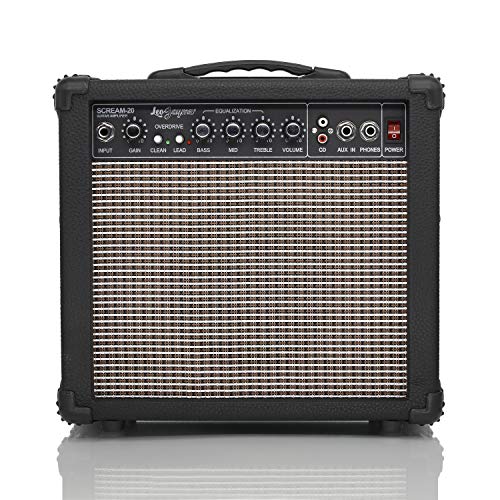
- 20W output with a 6.5-inch speaker
- Clean and crunch channels
- Three-band EQ plus AUX input
Best For: Basic home practice and small informal sessions
Feature-Rich Beginner Pick

- 25W combo with an 8-inch speaker
- 30 presets and color display
- USB and headphone output
Best For: Home practice and exploring varied guitar tones
Portable Practice Pick

- Rechargeable for up to six hours
- Clean and drive modes
- Headphone, AUX, and wireless audio
Best For: Travel, quiet practice, and mobile playing
Reliable Practice Power

- 20W output with a 6.5-inch speaker
- Simple tone and gain controls
- Headphone and AUX connections
Best For: Home practice, rehearsals, and casual playing
Retro Rechargeable Pick

- Clean and Overdrive sound modes
- Up to 6 hours of battery use
- Bluetooth and headphone output
Best For: Portable practice and private play-along sessions
Ultra-Compact Practice Choice

- Dual 5W speakers in a lightweight cabinet
- Clean and Overdrive channels
- Bluetooth, AUX, and headphone output
Best For: Bedroom, dorm, travel, and outdoor practice
Best Budget Starter – Fender Frontman 10G
The Fender Frontman 10G is a straightforward choice for shoppers seeking beginner-friendly guitar amplifiers for home practice. Its 10-watt output, 6-inch speaker, simple controls, and built-in overdrive cover essential clean, blues, and distorted sounds without an intimidating interface.
Best For: New guitarists who want an affordable, compact practice amp with basic tone shaping and headphone connectivity.
Pros:
- Simple gain, volume, treble, bass, and overdrive controls are approachable for beginners.
- Closed-back cabinet supports a heavier bass response.
- Includes a headphone jack and auxiliary input for practice flexibility.
- Backed by Fender’s two-year limited warranty.
Cons:
- The 10-watt design and 6-inch speaker are primarily suited to individual practice.
- It offers a more limited feature set than digital modeling amps.
Choose the Frontman 10G when ease of use and classic Fender branding matter more than extensive effects or high-volume performance. It is a sensible first amp for learning fundamentals at home.
Best Feature-Rich Practice Amp – Fender Mustang LT40S
The Fender Mustang LT40S is one of the more versatile beginner-friendly guitar amplifiers for home playing. With 40 watts, dual 4-inch speakers, onboard amp and effects models, and a color display, it gives new players room to explore different tones as they learn.
Best For: Beginners and developing players who want a wide range of tones, built-in effects, and silent practice features.
Pros:
- Preset collection and onboard modeling cover a broad range of electric guitar sounds.
- Dual 4-inch full-range speakers provide stereo output.
- Headphone output supports silent practice.
- Fender Tone LT Desktop App lets users edit, store, and manage presets on Mac or PC.
Cons:
- Its digital interface and many presets may take longer to learn than a basic analog practice amp.
- The 14.7-pound cabinet is less portable than smaller beginner models.
The Mustang LT40S makes sense if you want a beginner amp that can remain useful as your interests expand. Its modeling, app support, and stereo setup offer substantially more experimentation than a simple 10-watt combo.
Best Simple Marshall Option – Marshall MG10G
The Marshall MG10G keeps the learning curve manageable while offering the recognizable Marshall-style clean and overdrive setup. For shoppers comparing beginner-friendly guitar amplifiers, its 10-watt output, 6.5-inch speaker, three-band EQ, and dedicated contour control provide a practical set of essential controls.
Best For: Beginners who want a compact Marshall practice amp with separate clean and overdrive channels.
Pros:
- Clean and overdrive channels make it easy to switch between core sounds.
- Three-band EQ and contour control provide useful tone adjustment.
- Includes a 3.5mm headphone jack and auxiliary input.
- Compact 10-watt format is suited to individual practice.
Cons:
- It does not list built-in effects or digital modeling.
- The 10-watt output is aimed at practice rather than larger playing situations.
The MG10G is a good fit when you prefer direct controls over extensive presets. It delivers the key clean, overdrive, and EQ functions a new player needs in a compact practice-oriented package.
Best for Expanding Practice Setups – Fender Champion II 25
The Fender Champion II 25 is a strong middle-ground option among beginner-friendly guitar amplifiers. Its 25-watt output and 8-inch speaker provide more headroom than entry-level 10-watt models, while built-in reverb, delay, chorus, tremolo, and other effects make practice more engaging.
Best For: Beginners who want a flexible amp for bedroom practice, rehearsals, and continued development.
Pros:
- 25 watts and an 8-inch speaker offer a step up from smaller practice combos.
- Built-in multi-effects include reverb, delay/echo, chorus, tremolo, and Vibratone.
- Tap control helps set delay times and tremolo speeds to a song’s tempo.
- Includes auxiliary input, headphone output, USB port, and a two-year limited warranty.
Cons:
- Its 14.9-pound size is less convenient to move than compact 10-watt amps.
- The single-channel design may feel less flexible than an amp with separate channels.
The Champion II 25 is worth considering if you want beginner-friendly operation without quickly outgrowing the amp. Its extra power, larger speaker, effects suite, and connectivity suit players moving from basic practice toward rehearsals or small performance use.
Simple Practice Pick – Leo Jaymz 20W Guitar Amplifier
The Leo Jaymz DA-20 is a straightforward option for players seeking beginner-friendly guitar amplifiers with separate clean and crunch sounds. Its 20-watt output, 6.5-inch speaker, and three-band equalization suit home practice, recording spaces, and small courtyard sessions.
Best For: Beginners who want simple controls, basic tone shaping, and enough output for practice or small informal settings.
Pros:
- Offers both clean and crunch channels for exploring different tones.
- Three-band equalization provides practical bass, middle, and treble adjustment.
- Includes CD audio line and AUX 6.5mm input support.
- Comfortable handle and leather-surface construction make it easier to carry.
Cons:
- Its 6.5-inch speaker is smaller than the Fender model in this roundup.
- The supplied specifications list a 30-day warranty.
- It uses corded power rather than a rechargeable battery.
The DA-20 keeps the feature set focused, making it a sensible choice when clean and crunch channels matter more than extensive digital presets or portability.
Feature-Rich Beginner Pick – Fender Mustang LT25
The Fender Mustang LT25 is a strong choice for shoppers comparing beginner-friendly guitar amplifiers with guided tone options. Its 25 watts, 8-inch Fender speaker, color display, and 30 built-in presets give new players several sounds to try without requiring a large collection of separate gear.
Best For: Beginners who want preset variety, a clear interface, headphone output, and USB connectivity in a home-practice combo amp.
Pros:
- Provides 30 preloaded presets covering a broad range of music styles.
- Simple user interface includes a 1.8-inch color display.
- Uses an 8-inch Fender special-design speaker with 25 watts of output.
- Includes USB and headphone output connectivity.
Cons:
- At 15.2 pounds, it is less portable than the rechargeable mini amp.
- Its digital modeling setup may be more than needed for players wanting only basic controls.
- The supplied details list a one-year manufacturer warranty, while the product bullets mention two years.
For beginners likely to experiment with multiple tones, the Mustang LT25 offers the broadest feature set here, though its larger cabinet and mains-powered design favor stationary practice.
Portable Practice Pick – Flatsons 10W Mini Guitar Amp
The Flatsons FBA-10 stands out among beginner-friendly guitar amplifiers for its compact, rechargeable design. It combines clean and drive modes with a headphone jack, AUX input, wireless audio, and up to six hours of battery use, making it practical for travel and quiet practice.
Best For: Beginners who prioritize portability, battery operation, silent practice, and playing along with audio from a mobile device.
Pros:
- USB-C rechargeable battery provides up to six hours of playtime.
- Clean and drive modes are supplemented by gain and tone controls.
- Headphone and AUX jacks support quiet practice and external audio.
- Wireless connectivity and a 580-gram design make it easy to carry.
Cons:
- Its 1.7-inch speaker is substantially smaller than the speakers in the other listed amps.
- At 10 watts, it offers less output than both corded models.
- The two-band design provides less EQ adjustment than the Leo Jaymz.
The FBA-10 is the most flexible option for mobile practice and casual playing, especially if wireless playback and a rechargeable battery are more important than larger-speaker projection.
Reliable Practice Power – 20W Portable Guitar Amplifier
For players seeking beginner-friendly guitar amplifiers with enough output for home practice and casual performance, this 20-watt solid-state model offers straightforward controls and useful connectivity. Gain, bass, treble, and volume knobs make tone adjustments approachable, while the included noise-shielded cable is designed to reduce unwanted background noise.
Best For: Beginners who want a compact, corded amp for home practice, rehearsals, or small casual playing sessions.
Pros:
- 20-watt output with a 6.5-inch speaker
- Simple gain, bass, treble, and volume controls
- AUX input and headphone output support play-along and quiet practice
- 6.2-pound portable design with a carry handle and reinforced construction
Cons:
- Corded electric power is less convenient for outdoor use
- Larger and heavier than the mini rechargeable options in this roundup
This is a practical choice if you prefer a traditional practice amp with more output than a pocket-sized model. Its basic layout should be easy for a new guitarist to understand, while the headphone jack and AUX input add flexibility for everyday practice.
Retro Rechargeable Pick – LEKATO Mini Bluetooth Amp
This LEKATO is among the most beginner-friendly guitar amplifiers for players who value portability and simple sound options. Its Clean and Overdrive modes, three knobs, Bluetooth 5.0, and rechargeable battery provide an uncomplicated setup for practice at home or away from an outlet.
Best For: Beginners who want a small, battery-powered amp for travel, private practice, and casual play-along sessions.
Pros:
- Clean and Overdrive modes are easy to switch between
- Rechargeable 2,000mAh battery offers up to 6 hours of playing time
- Bluetooth 5.0 supports wireless play-along audio
- Headphone output enables private practice
Cons:
- 5-watt output and compact dual speakers are intended for practice rather than large venues
- Three controls provide less tone-shaping range than a larger amp
Its compact, retro-styled cabinet and cordless operation make this a convenient first amp for learning and experimenting. Choose it when portability and play-along features matter more than maximum volume or extensive controls.
Ultra-Compact Practice Choice – JOYO JA-02 II Mini Amp
The JOYO JA-02 II is a beginner-friendly guitar amplifier for players who want a very small setup with familiar practice features. Its Clean and Overdrive channels, Gain and Tone controls, Bluetooth 5.0, AUX input, and headphone output cover the essentials without requiring a large cabinet.
Best For: Beginners needing an especially lightweight amp for bedrooms, dorms, travel, or outdoor practice.
Pros:
- Dual 5-watt speakers in a 330-gram portable design
- Clean and Overdrive channels with Gain and Tone controls
- Bluetooth 5.0 and AUX input support backing tracks and lessons
- Rechargeable battery provides up to 6 hours of playtime
Cons:
- Designed for practice, not large stages
- Bluetooth and AUX cannot be used simultaneously
- Small speakers offer less room-filling output than the 20-watt option
This model is a strong fit for learners who want an amp that can travel almost anywhere. It keeps the controls approachable while adding modern wireless playback and silent-practice functionality, though its compact size limits its usefulness for larger performances.
How We Picked These Beginner-Friendly Guitar Amplifiers
We focused on features that help new players get useful sound quickly: simple controls, manageable output, reliable practice features, and flexible connectivity. The selection spans traditional clean-and-overdrive combos, modeling amplifiers with preset sounds, and compact battery-powered designs for portable practice.
We also considered speaker size, headphone support, auxiliary or Bluetooth playback, battery operation, and the learning value of effects or tone-shaping controls. Because beginners have different spaces and budgets, no single amplifier is best for everyone.
Quick Comparison
| Type | Best For | What to Look For |
|---|---|---|
| Basic practice combo | First-time players and simple home practice | Easy controls, clean and overdrive channels, headphone output |
| Modeling amplifier | Exploring multiple tones and effects | Presets, app or USB connectivity, tone customization |
| Portable rechargeable amp | Travel, casual practice, and small spaces | Battery life, Bluetooth, compact size, usable speaker volume |
| Higher-powered home combo | Practice with more headroom or small jams | Larger speaker, flexible inputs, controlled volume range |
Key Buying Factors for Beginner-Friendly Guitar Amplifiers
Power and Speaker Size
For bedroom practice, a 5- to 25-watt amplifier is usually sufficient. Higher wattage does not automatically mean better tone, but it can provide more volume and clean headroom. Smaller speakers are easier to place and carry, while larger speakers often sound fuller.
Controls and Available Tones
A simple amp with gain, volume, bass, middle, and treble controls is easy to learn. Modeling amps add presets, effects, and amp simulations, which are useful if you want to try several sounds without buying pedals. Beginners who prefer less setup may be happier with a basic clean/overdrive design.
Quiet Practice and Playback
A headphone output is valuable for late-night practice. Auxiliary input, USB, or Bluetooth lets you play along with lessons and backing tracks. Check whether the amplifier supports the connection method you actually use, and remember that Bluetooth is generally for playback rather than sending the guitar signal.
Portability and Power
Rechargeable mini amps are convenient for moving around the home or practicing away from an outlet. Compare stated battery life, charging requirements, weight, and speaker output. A compact amp is only useful on the go if it is simple to carry and quick to operate.
Who Should Buy Which Beginner-Friendly Guitar Amplifiers?
Choose a basic Fender Frontman or Marshall MG-style practice combo if you want an affordable, familiar setup with minimal distractions. Choose a Fender Mustang model if experimenting with presets, effects, recording features, or multiple amp sounds is part of your learning plan.
A higher-powered Fender Champion is a better fit for players who want more volume flexibility and room to grow. The Leo Jaymz and other straightforward 20-watt options suit buyers who want conventional controls and extra output without a complex modeling interface.
For travel, apartment use, or casual unplugged-style sessions, consider one of the rechargeable mini amplifiers from 5 to 10 watts. Look for Bluetooth and headphone support if you plan to practice with songs or lessons. Whichever model you choose, prioritize easy volume control, a clear clean tone, and features you will use regularly rather than paying for specifications that will sit unused.
