Choosing the right music synthesizer for recording depends on how you create: hands-on analog sound design, software-based production, portable sketching, or full-range keyboard performance.
These 10 options cover compact MIDI controllers, standalone synthesizers, and practical studio tools for beginners, beatmakers, composers, and experienced producers.
Best 10 Music Synthesizers for Recording Picks for 2026
Analog Powerhouse

- Dual wavefolding VCOs with sub-oscillator
- 32 expressive keys and 64-step sequencer
- CV, MIDI, USB-C, and versatile ladder filter
Best For: Analog basses, leads, sequences, and expressive monophonic recording
DAW Command Center

- 37-key controller with pads, knobs, and transport controls
- Built-in 64-step drums and melody/chord sequencer
- USB, MIDI, and CV/Gate connectivity
Best For: Computer production and controlling software or external synthesizers
Experimental Texture Maker
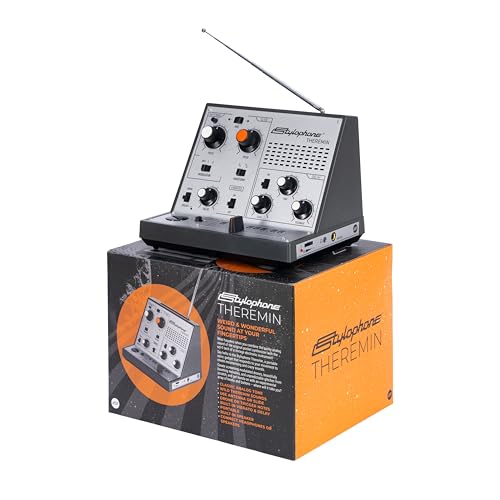
- Pitch antenna and precision touch slider
- Built-in delay and vibrato effects
- Battery-powered with speaker and audio output
Best For: Drones, cinematic textures, glides, and unusual recording layers
Compact Workflow Controller

- 37 slim keys for compact two-handed play
- Pads, faders, display, and DAW integration
- Arpeggiator, Chord mode, and USB-C connection
Best For: Space-conscious home studios, mobile rigs, and software-instrument control
Best Portable FM Pick

- Six-operator FM engine with 32 algorithms
- Battery powered with speaker and 27 keys
- Effects, sequencer, arpeggiator, and three MIDI options
Best For: Mobile recording and FM sound design
Best Standalone Controller

- 25 keys, eight MPC pads, four knobs, and OLED display
- Over 100 internal sounds and built-in speaker
- USB MIDI, battery operation, and production software included
Best For: Portable beat making and DAW control
Best Analog Sound Design Tool

- Analog-style LFO, filter, envelope, PWM, and delay
- Stylus keyboard with finger-sensitive expression strip
- CV/Gate outputs for modular and semi-modular equipment
Best For: Expressive analog sounds and hardware rigs
Best Full-Range Controller

- 88 velocity-sensitive semi-weighted keys
- USB-powered Mac, PC, and compatible iOS setup
- Includes DAW and production software
Best For: Home studios needing an expansive keyboard for virtual instruments
Best Pocket Sound
Stylophone Original Pocket Synthesizer

- Pocket-sized, battery-powered design
- Warm retro sound with three octaves
- 3.5mm connection for recording into software
Best For: Portable sound experiments and distinctive vintage-style recording textures
Best Compact Production Hub

- 25 velocity-sensitive keys with pads and controls
- DAW integration plus MIDI Out and USB-C
- Includes virtual instruments and recording software
Best For: Portable producers wanting hands-on control over synths, beats, and mixes
Analog Powerhouse – Moog Messenger
For producers seeking music synthesizers for recording with hands-on control, the Moog Messenger combines two wavefolding VCOs, a versatile ladder filter, full-size keys, and extensive sequencing in a portable analog instrument.
Best For: Recording basses, leads, evolving sequences, and expressive monophonic performances.
Pros:
- Two continuously variable-shape oscillators, sync, frequency modulation, and a sub-oscillator provide broad analog sound-shaping options.
- Its 32 velocity- and aftertouch-sensitive keys support expressive studio and performance use.
- The 64-step sequencer, arpeggiator, 256 presets, MIDI, USB-C, and CV connectivity suit varied setups.
- The filter includes multiple response types and resonance bass compensation for fuller low frequencies.
Cons:
- Its monophonic design is less suitable for playing conventional chords.
- At 5.14 kg and with a larger footprint, it may be more than compact desktop rigs need.
The Messenger is a strong choice when tactile analog sound design and recording flexibility matter more than polyphony or minimal size.
DAW Command Center – Akai MPK Mini Plus
The Akai MPK Mini Plus is a practical controller for music synthesizers for recording, offering 37 keys, pads, knobs, DAW controls, and connections for both computer-based instruments and external hardware.
Best For: Producers who want one compact controller for software instruments, beat making, and compatible MIDI or CV/Gate gear.
Pros:
- The 37-key layout provides three full octaves for melodic and harmonic playing.
- Eight RGB pads, eight assignable knobs, Chords and Scales modes, and transport controls support hands-on production.
- The built-in 64-step sequencer can handle separate drum and melody or chord tracks.
- CV/Gate and MIDI I/O expand control beyond a computer, while NKS integration supports compatible Native Instruments sounds.
Cons:
- It is a MIDI keyboard controller rather than a synthesizer with its own sound engine.
- Its USB connection and included software are most useful when integrated with a computer-based setup.
Choose the MPK Mini Plus if recording workflow, tactile DAW control, and flexible external connectivity are higher priorities than built-in synthesis.
Experimental Texture Maker – Stylophone Theremin
For distinctive music synthesizers for recording, the Stylophone Theremin offers a compact way to add drones, glides, and unusual melodic textures, with a pitch antenna, touch slider, delay, and vibrato.
Best For: Producers adding experimental effects, cinematic soundscapes, sustained drones, and retro-flavored theremin parts.
Pros:
- The antenna and precision touch slider provide contrasting pitch and glide control.
- Built-in delay and vibrato add movement and depth without requiring external effects.
- Battery power, a built-in speaker, and headphone output make it portable for practice and experimentation.
- The audio output can connect to amps, pedals, or recording equipment.
Cons:
- Its compact control format is more specialized than a conventional keyboard synthesizer.
- The 3.5 mm output may require an adapter or suitable input for some recording interfaces.
The Stylophone Theremin is best viewed as a character instrument: small, portable, and especially useful when a track needs unconventional pitch movement or atmospheric sound.
Compact Workflow Controller – Arturia MiniLab 37
The Arturia MiniLab 37 is a space-conscious controller for music synthesizers for recording, pairing a 37-key slim keyboard with pads, faders, a display, arpeggiator, and DAW-oriented controls.
Best For: Home studios, mobile rigs, and producers who need two-handed keyboard access without a large desktop footprint.
Pros:
- The expanded 37-key slim layout supports two-handed play while remaining compact.
- DAW-integrated pads and faders provide practical control for clips, finger drumming, and software workflows.
- A built-in arpeggiator, Chord mode, transposition, and custom mappings encourage quick idea generation.
- The real-time mini display and USB-C connection support a streamlined setup.
Cons:
- It is a controller and does not include a standalone synthesizer sound engine.
- The slim keys may feel less substantial than full-size keys for players who prefer a traditional keybed.
MiniLab 37 makes sense for producers who value portability and immediate DAW interaction, especially when software instruments provide the sounds.
Best Portable FM Pick – M-VAVE FM Synthesizer
For creators seeking music synthesizers for recording that can travel easily, the M-VAVE FM Synthesizer combines a six-operator FM engine with battery power, a built-in speaker, and several ways to connect to a recording setup. Its presets and onboard sequencing make it approachable, while its algorithm and operator controls allow deeper sound design.
Best For: Mobile recording, FM-synthesis exploration, and compact MIDI setups.
Pros:
- Portable battery-powered design with a built-in speaker and 27 silicone keys.
- Six operators, 32 algorithms, 128 presets, and support for FM SYSEX sound banks.
- Includes effects, arpeggiator, 16-step sequencer, and USB, Bluetooth, and 3.5mm MIDI connectivity.
Cons:
- Its compact 27-key layout may feel limiting for two-handed playing.
- The FM architecture can require more sound-design familiarity than simpler preset-based instruments.
The M-VAVE is a flexible sketchpad for recording ideas away from the studio, especially if you want classic FM tones and built-in sequencing in a very small instrument.
Best Standalone Controller – Akai MPK Mini Play MK3
The Akai MPK Mini Play MK3 is a practical choice among music synthesizers for recording when you want a compact keyboard controller that can also make sounds without a computer. It combines built-in instruments and drums with velocity-sensitive keys, MPC pads, an arpeggiator, and bundled production software.
Best For: Beat makers, songwriters, and portable computer-based recording.
Pros:
- Offers 25 dynamic keys, eight velocity-sensitive MPC pads, four knobs, and an OLED display.
- Includes over 100 internal drum and instrument sounds plus a built-in speaker.
- Supports battery operation or USB power and includes MPC Beats, AIR instruments, Melodics lessons, and a Splice offer.
Cons:
- Batteries are not included.
- The 25-key mini format is less suitable for broad keyboard parts.
Choose the MPK Mini Play MK3 if you want immediate standalone playback but expect to spend much of your recording time controlling software instruments and drum parts over USB.
Best Analog Sound Design Tool – Stylophone GENX-2
The Stylophone GENX-2 stands out among music synthesizers for recording with its hands-on analog design and unusual stylus keyboard. Battery operation, a speaker, dedicated audio connections, and CV/Gate outputs make it useful for quick ideas, expressive performance, and integration with hardware or a DAW.
Best For: Retro analog tones, expressive leads, bass sounds, and modular setups.
Pros:
- Provides an LFO, resonant low-pass filter, attack/decay envelope, PWM, and analog delay for sound shaping.
- Dual sub-octave switches add weight to bass sounds and leads.
- CV/Gate outputs support modular or semi-modular gear, while keyboard and expression strip offer hands-on control.
Cons:
- The stylus-based keyboard has a different playing feel from a conventional piano keyboard.
- Its two-octave format is compact but may not suit extended keyboard parts.
The GENX-2 is a characterful option for recording distinctive analog phrases and controlling external hardware, particularly when tactile expression matters more than a traditional keybed.
Best Full-Range Controller – M-Audio Keystation 88 MK3
For music synthesizers for recording, the M-Audio Keystation 88 MK3 is a practical choice when you want a full-size keyboard for controlling virtual instruments, software samplers, and plug-in synthesizers. Its 88 semi-weighted, velocity-sensitive keys provide a broad range for piano-style parts, while USB connectivity keeps setup straightforward.
Best For: Home studios and producers who need an 88-key controller for expressive virtual-instrument performances.
Pros:
- 88 full-size, velocity-sensitive semi-weighted keys suit piano-style playing.
- Pitch and modulation wheels, octave controls, transport buttons, and a volume fader support hands-on recording.
- USB-powered plug-and-play operation works with Mac and PC, with iOS compatibility through an adapter.
- Includes a selection of production software, including Ableton Live Lite and MPC Beats.
Cons:
- Its 88-key design is less portable than a compact controller.
- It controls software instruments rather than producing synthesizer sounds on its own.
The Keystation 88 MK3 makes the most sense when range and straightforward DAW control matter more than portability. It is a capable recording centerpiece for software-based synthesizer setups.
Best Pocket Sound – Stylophone Original Pocket Synthesizer
The Stylophone Original brings a compact, distinctive option to music synthesizers for recording. Its touch-sensitive metal surface and connected stylus produce a warm, retro sound, while the headphone output and 3.5mm connection make it easy to experiment with ideas and route sounds into recording software.
Best For: Beginners, traveling musicians, and producers seeking unusual vintage-style sounds in a highly portable instrument.
Pros:
- Compact, pocket-sized design is easy to carry.
- Iconic analog-style sound includes three octaves and an optional vibrato effect.
- Built-in speaker and headphone socket support convenient practice and sound exploration.
- Can connect to a computer or other gear with a 3.5mm stereo cable for recording and sound manipulation.
Cons:
- Its stylus-based playing surface is less versatile than a conventional keyboard.
- Requires three AA batteries.
- It offers a focused, retro sound rather than broad synthesizer control.
The Stylophone is best viewed as a characterful sound source and idea generator rather than a complete studio keyboard. Its portability and unusual interface make it useful for adding memorable textures to recordings.
Best Compact Production Hub – Arturia MiniLab 3 Mint Green
For music synthesizers for recording in a compact setup, the Arturia MiniLab 3 combines a 25-key velocity-sensitive keyboard with pads, knobs, sliders, and direct DAW integration. USB-C connectivity, MIDI Out, an arpeggiator, and included software make it suited to composing, controlling virtual synthesizers, and shaping mixes without relying entirely on a mouse.
Best For: Producers who want a portable controller with pads, hands-on controls, and bundled software for modern music production.
Pros:
- Compact 25-key design is portable while retaining velocity-sensitive performance.
- Eight RGB pads, eight encoders, four sliders, and a display provide broad hands-on control.
- Built-in arpeggiator, Hold, and Chord modes support fast idea development.
- Works with major DAWs and includes Analog Lab V, Ableton Live Lite, UVI Model D, and NI The Gentleman.
Cons:
- 25 keys provide less playing range than a full-size controller.
- USB power means it depends on a connected host for operation.
- The large feature set may take time to learn for beginners.
The MiniLab 3 is a strong fit for producers who prioritize portability and tactile control. It offers a well-rounded command surface for recording, beat programming, and virtual-synth workflows in a small footprint.
How We Picked the Best Music Synthesizers for Recording
We evaluated these instruments by looking at their recording role, sound-generation approach, keyboard or control layout, connectivity, portability, and ease of integration with a computer or other studio hardware. Because a MIDI controller does not generate sound on its own, we considered it separately from standalone analog and digital synthesizers while focusing on how effectively each option supports a recording workflow.
We also prioritized useful features such as velocity-sensitive keys, pads, knobs, onboard speakers, battery operation, CV/Gate connections, preset access, and compatibility with common music-production software.
Quick Comparison
| Best For | Recommended Type | What to Look For |
|---|---|---|
| Hands-on analog recording | Monophonic analog synthesizer | Oscillator control, filter, sequencer, and audio output |
| DAW-based production | USB MIDI keyboard controller | Key feel, knobs, pads, mapping, and software support |
| Portable music making | Battery-powered standalone synth | Built-in speaker, compact design, and internal sounds |
| Full-range playing | 88-key MIDI controller | Weighted or piano-style action and sustain-pedal support |
| Experimental sound design | Compact analog or touch-sensitive synth | Filter, delay, vibrato, LFO, and expressive controls |
Key Buying Factors for Music Synthesizers for Recording
Sound Source and Recording Setup
Standalone synthesizers create their own audio and can connect directly to an interface, mixer, or recorder. MIDI controllers send performance data to virtual instruments but require a computer, tablet, or external sound module. Confirm which workflow you want before buying.
Keyboard Size and Playability
Compact 25- or 37-key designs save space and work well for bass lines, leads, chords, and mobile production. An 88-key controller is better for piano-style parts and wide arrangements, though it needs considerably more room. For expressive playing, check whether keys are velocity sensitive and whether the unit supports sustain pedals.
Control and Connectivity
Knobs, pads, pitch controls, modulation, and transport buttons can make software recording faster. USB is standard for computer setups, while CV/Gate and dedicated audio outputs matter when connecting hardware synthesizers or modular equipment. Wireless operation and battery power are useful for portability but should not replace a dependable wired setup for serious sessions.
Presets, Effects, and Monitoring
Built-in presets help you start quickly, while filters, LFOs, delay, and vibrato provide more room for sound shaping. A built-in speaker is convenient for practice and songwriting, but studio monitoring through headphones or speakers remains important for accurate recording decisions.
Who Should Buy Which Music Synthesizers for Recording?
Choose a hands-on analog synthesizer if you want a distinctive hardware signal and direct control over basses, leads, and drones. A compact MIDI controller is the better choice for producers who already use software instruments and want more tactile control than a computer keyboard provides.
Portable standalone models suit beginners, traveling musicians, and creators who want to develop ideas without setting up a full studio. A larger controller is ideal for pianists, composers, and anyone recording two-handed parts. If you are experimenting with unusual performance techniques or vintage-inspired sounds, a touch-sensitive or effects-equipped compact synth can add character without taking over your workspace.
