The best music synthesizers can be expressive instruments, practical production tools, or compact ways to experiment with sound anywhere. This roundup covers ten options across analog, digital, MIDI-controller, portable, and performance-focused designs.
Use the comparison and buying advice below to match your experience level, workflow, preferred key feel, sound engine, and available space with the right synthesizer.
Best 10 Music Synthesizers Picks for 2026
Analog Powerhouse

- Two wavefolding VCOs plus sub-oscillator
- 32 full-size keys with velocity and aftertouch
- Sequencer, arpeggiator, CV, MIDI, and USB-C
Best For: Analog-focused performers and producers
Studio Control Hub

- 37-key velocity-sensitive controller
- Pads, knobs, chord and scale modes
- Sequencer, CV/Gate, MIDI, and NKS support
Best For: DAW producers and hybrid hardware setups
Playful Sound Maker

- Touch-sensitive stem controls pitch
- Wah and vibrato effects add expression
- Headphone, amp, and speaker compatibility
Best For: Beginners, gifts, and quirky performances
Portable Production Tool

- Bluetooth and rechargeable battery for mobile use
- 25 keys, eight pads, eight knobs, and touch strips
- Works with major desktop and mobile platforms
Best For: Traveling producers and mobile beat makers
Best for Bowie Fans
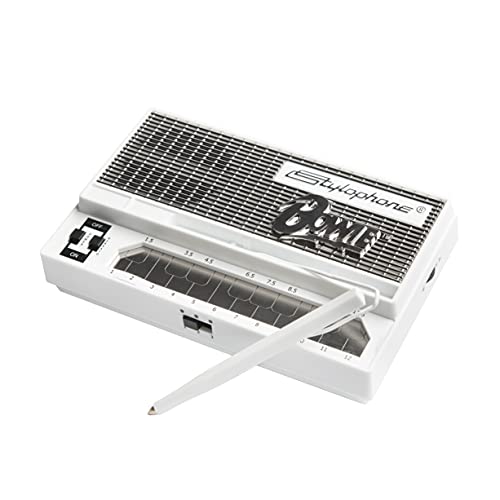
- Limited-edition Bowie-inspired white design
- Compact, battery-powered stylus instrument
- Three classic analog-style synth and bass modes
Best For: Fans, collectors, and casual portable play
Best for Pianists
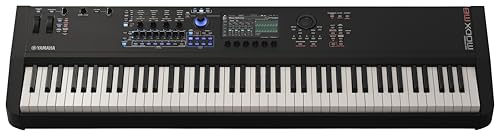
- 88-key graded-hammer weighted action
- Three engines for synth and instrument sounds
- Hands-on controls and DAW-focused ESP plugin
Best For: Professional stage and studio players
Best for Beat Making

- Four drum kits and four bass sounds
- Records patterns and multiple layered parts
- Battery-powered with speaker and headphone support
Best For: Portable rhythm practice and beat sketches
Best for Guitarists

- Six-operator FM engine with 32 algorithms
- 128 presets, sequencer, arpeggiator, and six effects
- USB-C, Bluetooth MIDI, and rechargeable battery
Best For: Guitarists and producers needing portable FM synthesis
Best Pocket Pick

- Iconic analog-style retro sound
- Stylus interface with three octaves and vibrato
- Pocket-sized, battery-powered, and headphone-ready
Best For: Beginners and retro-sound enthusiasts
Best All-in-One FM
M-VAVE Wireless FM Synthesizer

- Six operators, 32 algorithms, and 128 presets
- Built-in speaker, battery, effects, and sequencer
- USB, Bluetooth, and 3.5mm MIDI connectivity
Best For: Portable FM sound design and MIDI control
Analog Powerhouse – MOOG Messenger
The MOOG Messenger is a strong choice for musicians seeking music synthesizers with classic analog character, hands-on controls, and performance-ready features. Its two wavefolding oscillators, sub-oscillator, expressive keyboard, and extensive modulation tools support both studio sound design and live playing.
Best For: Producers and performers who want a portable, full-size monophonic analog synthesizer with deep sound-shaping capabilities.
Pros:
- Two variable-shape VCOs, sync, frequency modulation, and a sub-oscillator provide flexible bass and lead sounds.
- Full-size 32-key semi-weighted keyboard includes velocity and aftertouch.
- Built-in 64-step sequencer, arpeggiator, 256 presets, CV connections, MIDI, and USB-C expand workflow options.
Cons:
- Monophonic design limits simultaneous note playing.
- Its larger, heavier format is less portable than compact MIDI controllers.
With a knob-per-function layout and a feature set that bridges traditional analog synthesis and modern sequencing, the Messenger is a versatile centerpiece for a hardware-focused setup.
Studio Control Hub – Akai MPK Mini Plus
The Akai MPK Mini Plus is a practical option for music synthesizers and software-based production, combining a 37-key controller with pads, knobs, sequencing, and hardware connectivity. It can control a DAW, external synthesizers, modular equipment, and sound modules from one compact workstation.
Best For: Producers who need a versatile MIDI controller for composing, beat making, and controlling both software and hardware instruments.
Pros:
- 37 velocity-sensitive keys provide three octaves for melodic and harmonic parts.
- Includes eight RGB MPC pads, eight assignable knobs, chord and scale modes, and DAW transport controls.
- Built-in 64-step sequencer, CV/Gate, MIDI I/O, NKS support, and included MPC Beats software add flexibility.
Cons:
- It is a MIDI controller rather than a standalone synthesizer with its own sound engine.
- USB connectivity is required for computer-based operation.
The MPK Mini Plus is well suited to producers who want tactile control without committing to a full-size keyboard, while its CV/Gate and MIDI connections make it useful beyond purely in-the-box setups.
Playful Sound Maker – Otamatone Deluxe
The Otamatone Deluxe brings a highly unusual approach to music synthesizers and electronic instruments. Its touch-sensitive stem controls pitch, while squeezing the face adds a wah effect and shaking the stem creates vibrato, making it accessible for casual playing while offering expressive possibilities for experienced musicians.
Best For: Beginners, gift buyers, and musicians looking for a distinctive, portable instrument with a playful performance style.
Pros:
- Touch-sensitive stem offers roughly four octaves at each of three pitch settings.
- Face squeeze and stem movement provide wah and vibrato effects.
- 3.5mm stereo output supports headphones, amplifiers, and speakers; batteries, cable, and strap are included.
Cons:
- Its unconventional controls and sound may not suit traditional synthesizer workflows.
- Operation relies on three AA batteries when used away from other power options.
The Deluxe version is a fun alternative to conventional keys and knobs, especially when the goal is expressive novelty, approachable experimentation, or an entertaining musical gift.
Portable Production Tool – M-VAVE K5 MIDI Controller
The M-VAVE K5 is a compact controller for music synthesizers, virtual instruments, and mobile production. Its 25 velocity-sensitive keys, pads, knobs, touch strips, Bluetooth, and rechargeable battery make it convenient for composing and adjusting sounds away from a traditional studio desk.
Best For: Mobile producers, beat makers, and songwriters who want wireless control for compatible computers and mobile devices.
Pros:
- Bluetooth operation and a built-in 2,000 mAh battery provide up to about 16 hours of portable use.
- Combines 25 velocity-sensitive keys, eight RGB pads, eight assignable knobs, and two touch strips.
- Supports Windows, Mac OS, Android, and iOS with common DAWs including Ableton Live, FL Studio, Cubase, Logic Pro X, and GarageBand.
Cons:
- Its 25-key layout offers less range than larger controllers.
- It controls external software or hardware rather than providing a built-in synthesizer sound engine.
The K5 emphasizes portability and flexible control, making it a useful secondary keyboard for travel or a compact starting point for software-based music production.
Best for Bowie Fans – Bowie Stylophone
The Bowie Stylophone is a compact, battery-powered choice for shoppers who want a distinctive entry point into music synthesizers. Its stylus interface, white Bowie-inspired design, and three sound modes make it straightforward to experiment with classic analog-style synth and bass sounds.
Best For: Bowie fans, collectors, and casual players seeking a portable novelty synthesizer.
Pros:
- Limited-edition David Bowie-inspired design with an embossed logo
- Compact and battery-powered for portable use
- Simple stylus control with three synth and bass sound modes
Cons:
- More limited in sound variety and controls than full-size synthesizers
- Requires batteries for portable operation
This Stylophone prioritizes character, portability, and simplicity over deep programming. It is a fun, accessible pick for quick musical experimentation rather than a comprehensive studio instrument.
Best for Pianists – Yamaha MODX M8
The Yamaha MODX M8 is a professional 88-key music synthesizer designed for players who want piano-like response alongside broad sound-design options. Its graded-hammer action, three sound engines, hands-on controls, color touchscreen, and DAW-oriented ESP plugin support it for performance and studio workflows.
Best For: Pianists, professional performers, and studio musicians who need realistic weighted keys with extensive sound options.
Pros:
- 88-key graded-hammer action with heavier low keys and lighter high keys
- Three engines cover classic analog, FM, and realistic instrument sounds
- Eight physical faders, Super Knob, touchscreen, and dedicated display controls support hands-on editing
- ESP plugin helps replicate MODX M sounds in a DAW
Cons:
- At 40.5 pounds, it is less portable than compact synthesizers
- Its professional feature set may be more than casual players need
- Requires corded power
The MODX M8 is the most complete option here for a pianist who wants expressive keyboard feel without giving up synthesizer depth. Its size and complexity make it better suited to a dedicated stage or studio setup.
Best for Beat Making – Stylophone Beat
The Stylophone Beat is a compact rhythm-focused alternative for shoppers exploring music synthesizers and beat-making tools. It combines four drum kits, four bass sounds, pattern recording, layered parts, a click track, tempo lock, and a built-in speaker in a small battery-powered format.
Best For: Beginners, mobile beat makers, and musicians who want a portable rhythm and bass sketchpad.
Pros:
- Includes four drum kits and four bass sounds
- Records multiple layers and patterns with mute controls
- Click track and tempo lock help keep performances in time
- Built-in speaker and wired headphone support suit portable practice
Cons:
- Three AA batteries are required and not included
- Sound selection is limited compared with larger synthesizers and drum machines
- USB is listed as the connector type, while headphone use requires wired headphones
This is a focused beat-making device rather than a full melodic synthesizer. Choose it when quick rhythm creation, portability, and simple pattern layering matter more than extensive sound design.
Best for Guitarists – M-VAVE FM-1
The M-VAVE FM-1 is a highly portable option for shoppers comparing music synthesizers for guitar rigs, DAW production, or mobile practice. Its six-operator FM engine, 128 presets, sequencing tools, and flexible MIDI connections provide substantial sound-shaping capability in a compact format.
Best For: Guitarists, producers, and mobile musicians who want FM synthesis with broad MIDI connectivity.
Pros:
- Six-operator FM synthesis with 32 algorithms and 128 factory presets.
- Includes an arpeggiator, 16-step sequencer, and six built-in effects.
- Supports USB-C, Bluetooth BLE MIDI, and 3.5mm MIDI IN connections.
- Rechargeable battery provides up to 12 hours of play, according to the supplied specifications.
Cons:
- The 27-key silicone keyboard may feel less traditional than full-size keys.
- Its extensive FM controls may take time for beginners to learn.
Choose the FM-1 if portability and integration matter as much as synthesis depth. It is particularly compelling for musicians who want to add programmable FM textures to an existing guitar or computer-based setup.
Best Pocket Pick – Stylophone Original
The original Stylophone is a simple, distinctive choice among music synthesizers, especially for beginners, casual players, and retro-sound fans. Rather than using conventional keys, it produces notes when you tap and slide its stylus across a touch-sensitive metal surface.
Best For: Beginners, collectors, and musicians seeking a compact vintage-style instrument.
Pros:
- Produces an iconic analog-style sound with a warm, vintage character.
- Stylus-based interface is easy to experiment with and includes three octaves.
- Small, battery-powered design includes a built-in speaker and headphone socket.
- Can connect to a computer or other gear through a 3.5mm stereo cable.
Cons:
- The touch-surface layout is less conventional than a piano keyboard.
- It has fewer sound-design and performance features than larger synthesizers.
- Operation requires three AA batteries.
The Stylophone is best viewed as a fun, focused instrument rather than a full production workstation. Its pocketable size, unusual playing method, and recognizable retro voice make it a strong entry point or creative add-on.
Best All-in-One FM – M-VAVE Wireless FM Synthesizer
This wireless M-VAVE model is a practical pick for music synthesizers shoppers who want a compact, self-contained FM instrument. It combines 128 presets, six operators, built-in effects, sequencing, a speaker, and multiple MIDI options for playing at home, on the move, or with external equipment.
Best For: Portable creators who want a ready-to-play FM sound module and MIDI controller.
Pros:
- Six-operator FM engine offers 32 algorithms and supports FM SYSEX sound-bank imports.
- Includes 128 factory presets covering pianos, strings, brass, basses, and synth sounds.
- Built-in speaker, battery operation, and 27 silicone keys support mobile playing.
- Provides USB MIDI, Bluetooth MIDI, and 3.5mm MIDI IN for simultaneous use.
Cons:
- The compact silicone-key design may not suit players seeking weighted or full-size keys.
- Advanced FM programming and SYSEX importing may require extra learning.
With its speaker, battery, presets, and three-channel MIDI connectivity, this M-VAVE is designed for immediate experimentation and flexible setups. It stands out when portability and built-in functionality are higher priorities than traditional keyboard feel.
How We Picked the Best Music Synthesizers
We selected these instruments to represent the main ways musicians use synthesizers in 2026: hands-on analog sound design, computer-based production, portable experimentation, rhythm creation, and full-keyboard performance. We considered keyboard size, sound generation, portability, controls, connectivity, preset variety, learning curve, and likely use case.
The list includes true standalone synthesizers, compact electronic instruments, drum-focused devices, and MIDI keyboard controllers. Because a controller does not generate sound independently, check the included software and your computer, tablet, or hardware setup before buying.
Quick Comparison
| Best For | Look For | Recommended Type |
|---|---|---|
| Analog bass and leads | Hands-on controls and monophonic architecture | Moog Messenger |
| Computer music production | USB MIDI, pads, knobs, and DAW compatibility | Akai MPK Mini Plus or M-VAVE controller |
| Beginners and casual play | Simple controls, built-in sound, and portability | Stylophone or Otamatone Deluxe |
| Rhythm and beat making | Drum kits, bass sounds, and loop controls | Stylophone Beat |
| Traditional keyboard performance | Full range and weighted key action | Yamaha 88-key model |
| Portable digital synthesis | Presets, battery power, speakers, and a display | M-VAVE FM synthesizers |
Key Buying Factors for Music Synthesizers
Sound Engine
Analog synthesizers are valued for immediate, tactile control and rich subtractive tones. Digital and FM instruments can offer more voices, algorithms, presets, and unusual timbres in a smaller package. Decide whether you want to shape a few sounds deeply or access a broad library quickly.
Keyboard and Playing Feel
Key count affects range and portability. Compact 25- or 37-key models suit desks and mobile setups, while 61- or 88-key instruments are better for two-handed parts and piano-style playing. If realistic response matters, prioritize graded hammer action or another quality velocity-sensitive keybed.
Connectivity and Workflow
USB MIDI controllers generally require external software or hardware, while standalone synthesizers may include speakers, headphones output, batteries, or onboard presets. Confirm MIDI, USB, audio, Bluetooth, and power requirements before purchasing, especially for live use.
Controls and Expandability
Knobs, pads, sequencers, and dedicated modulation controls make sound design and beat programming faster. Also check polyphony, preset storage, effects, audio outputs, and whether the instrument supports your preferred DAW.
Who Should Buy Which Music Synthesizers?
Choose the Moog if expressive monophonic analog tones and hands-on synthesis are the priority. Pick a full-size Yamaha when realistic keyboard performance matters more than portability. For laptop production, the Akai or M-VAVE MIDI controllers offer useful physical controls without duplicating software sounds.
Beginners, families, and curious players may prefer a Stylophone or Otamatone because both make experimentation approachable and portable. The Stylophone Beat is the better fit for rhythm-focused creativity. Choose an M-VAVE FM model if you want many digital presets, built-in portability, and a more self-contained instrument.
