Adding telephone audio to a professional studio requires more than a standard microphone interface. You need dependable routing, clean level control, low-latency monitoring, and a practical way to connect phone lines or mobile devices to the rest of your setup.
This roundup compares 10 options for different workflows, including dedicated telephone hybrids, multichannel rack interfaces, compact desktop units, and mobile-friendly solutions. The right choice depends on whether your priority is broadcast call handling, music production, podcasting, or flexible studio expansion.
Best 10 Telephone Audio Interfaces for Professional Studios Picks for 2026
Dedicated Telephone Bridge
Passive Telephone Audio Interface

- Full-duplex telephone audio
- RCA connectivity
- Two-year warranty
Best For: Broadcast and telephone-interview workflows
Studio Hub Pick
Focusrite Scarlett 4i4 4th Gen

- Four-in/four-out USB I/O
- Two mic and two Hi-Z inputs
- MIDI plus 192kHz support
Best For: Hybrid music and production studios
Expansion Specialist

- Eight microphone preamps
- ADAT optical output
- 44.1/48kHz, 24-bit conversion
Best For: Adding channels to an ADAT-equipped studio
Compact Producer Choice
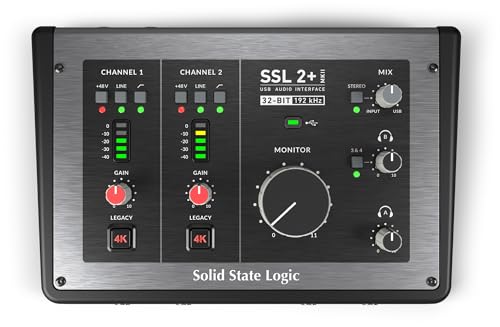
- Two mic and line/Hi-Z inputs
- Stereo loopback and dual headphones
- 32-bit/192kHz converters
Best For: Compact podcast and production studios
Large-Format Recording Hub

- 18 inputs and 20 outputs over USB
- Eight MIDAS mic preamps with phantom power
- ADAT I/O and 24-bit/96 kHz support
Best For: Multi-microphone studio recording and expanded routing
Precision Monitoring Interface

- 192 kHz/32-bit converters
- Four independent foldback mixes
- Built-in talkback and ADAT input
Best For: Professional tracking, mixing, and multi-headphone monitoring
Compact Four-Input Workhorse

- Four inputs and four outputs over USB
- Four MIDAS mic preamps with phantom power
- 24-bit/192 kHz and MIDI I/O
Best For: Small studios and four-source recording sessions
Best Expansion-Ready Studio Pick

- 16-in/8-out USB-C design for hybrid studio systems
- Eight mic preamps and 14 line inputs for broad expansion
- Standalone modes, MIDI I/O, loopback, and low-latency drivers
Best For: Hybrid studios, bands, producers, and engineers
Best Stereo Streaming Pick

- Stereo RCA inputs for mixers and studio gear
- Works with phones, tablets, Mac, and PC
- Direct monitoring and loopback for streaming
Best For: Stereo streaming, podcasting, and mobile recording
Dedicated Telephone Bridge – Passive Telephone Audio Interface
For studios specifically seeking telephone audio interfaces for professional studios, the Autohybrid provides a straightforward way to bring audio over a phone line. Its full-duplex design and RCA connectivity make it suited to telephone-focused broadcast or recording workflows.
Best For: Broadcast setups, telephone interviews, and studios needing two-way phone-line audio.
Pros:
- Designed specifically for full-duplex telephone audio.
- Supports microphone, computer, headphones, and speaker connections.
- Uses familiar RCA connectivity.
- Includes a two-year warranty.
Cons:
- Its telephone-line focus makes it less versatile than a general USB recording interface.
- Windows is the only supported operating system listed.
The Autohybrid is the most purpose-built option here for phone integration. Choose it when telephone transmission is central to your workflow rather than when you need broad multitrack studio I/O.
Studio Hub Pick – Focusrite Scarlett 4i4 4th Gen
The Scarlett 4i4 is a flexible choice for studios that need more than a phone connection from their telephone audio interfaces for professional studios. It combines two mic preamps, Hi-Z inputs, line I/O, MIDI, and USB connectivity with up to 24-bit/192kHz operation.
Best For: Music production, podcasting, and hybrid studio setups requiring microphones, instruments, line-level gear, and MIDI.
Pros:
- Offers two mic preamps, two Hi-Z inputs, four line inputs, and four line outputs.
- Provides MIDI input and output for compatible hardware.
- Supports up to 24-bit/192kHz recording and includes Air modes.
- Includes Auto Gain, Clip Safe, and a substantial software bundle.
Cons:
- It is a general USB audio interface, not a dedicated telephone-line interface.
- Its broad feature set may be more than needed for simple phone routing.
For a professional studio that may handle phone-related production alongside music and instruments, the 4i4 offers the broadest everyday connectivity in this group. Its telephone integration would require compatible external routing equipment.
Expansion Specialist – Behringer ADA8200 8-In/8-Out
Behringer ADA8200 Audiophile 8 In/8 Out ADAT Audio Interface with Midas Mic Preamplifiers
Check Price On AmazonThe Behringer ADA8200 is an ADAT expansion unit for studios that need eight additional microphone inputs and outputs. While it is not a telephone-specific device, it can support larger professional-studio routing systems built around telephone audio interfaces for professional studios.
Best For: Expanding an existing ADAT-equipped interface with eight XLR inputs and corresponding outputs.
Pros:
- Provides eight microphone preamplifier channels.
- Includes Midas microphone preamps.
- Offers ADAT optical output for compatible digital systems.
- Supports 24-bit conversion at 44.1/48kHz.
Cons:
- Requires an existing compatible ADAT setup for its intended expansion role.
- Its maximum listed sample rate is 48kHz.
- It is not a standalone telephone audio interface.
The ADA8200 makes sense when channel count matters more than standalone connectivity. It is a useful infrastructure component for a larger studio, but not the direct choice for connecting a telephone line.
Compact Producer Choice – SSL 2 MKII Plus USB-C
The SSL 2 MKII Plus is a compact USB-C interface for producers, podcasters, and live-studio musicians. It brings two mic preamps, line/Hi-Z inputs, dual headphone outputs, loopback, MIDI, and 32-bit/192kHz converters to smaller setups considering telephone audio interfaces for professional studios.
Best For: Compact Mac or Windows studios, podcast production, and live-studio workflows needing loopback and multiple monitoring options.
Pros:
- Includes two XLR mic preamps and two line/Hi-Z inputs.
- Provides two discrete headphone outputs and four line outputs.
- Offers stereo loopback and zero-latency monitoring.
- Supports 32-bit/192kHz conversion, MIDI I/O, and a 4K analog enhancement.
Cons:
- It is not a dedicated telephone-line interface.
- Its two-input format is less suitable for larger multichannel sessions.
The SSL 2 MKII Plus is a strong small-studio option when monitoring and loopback are priorities. For telephone work, plan on adding suitable external phone-routing hardware rather than connecting a phone line directly.
Large-Format Recording Hub – Behringer UMC1820
For telephone audio interfaces for professional studios that need substantial I/O, the Behringer UMC1820 provides 18 inputs and 20 outputs over USB 2.0. Its eight MIDAS-designed mic preamps, ADAT I/O, and 24-bit/96 kHz support make it suited to larger recording setups.
Best For: Studios recording multiple microphones and instruments while routing numerous channels to and from a computer.
Pros:
- 18×20 USB audio/MIDI connectivity with ADAT I/O
- Eight MIDAS-designed mic preamps with +48 V phantom power
- 24-bit/96 kHz resolution and compatibility with popular DAWs
Cons:
- Larger footprint than a compact desktop interface
- 96 kHz maximum sample rate is lower than some newer high-resolution interfaces
The UMC1820 is a practical choice when channel count and expansion matter more than portability. Its broad I/O makes it especially useful for tracking several sources at once.
Precision Monitoring Interface – SSL 12
For telephone audio interfaces for professional studios where conversion and monitoring control are priorities, the SSL 12 combines 192 kHz/32-bit converters with more than 120 dB of dynamic range. It also offers ADAT expansion, software-controlled foldback mixes, and built-in talkback functionality.
Best For: Professional recording and mixing workflows that need detailed conversion, flexible headphone mixes, and a comprehensive monitoring system.
Pros:
- 192 kHz/32-bit converters with over 120 dB dynamic range
- Up to four independent near-zero-latency foldback mixes
- Built-in talkback microphone and ADAT optical input
Cons:
- Requires SSL 360 software for its software mixer workflow
- Its feature set may be more than a basic recording setup needs
The SSL 12 stands out for studios that need refined monitoring and routing options in addition to high-resolution capture. Its foldback mixes are particularly useful for sessions involving multiple performers.
Compact Four-Input Workhorse – Behringer UMC404HD
For telephone audio interfaces for professional studios in a compact format, the Behringer UMC404HD offers four inputs, four outputs, and MIDI I/O over USB. Its 24-bit/192 kHz support, four MIDAS-designed mic preamps, and impact-resistant metal chassis suit small recording rigs.
Best For: Home and project studios recording up to four microphone or instrument sources at a time.
Pros:
- Four-in/four-out USB audio and MIDI interface
- Four MIDAS-designed mic preamps with +48 V phantom power
- 24-bit/192 kHz support and durable metal chassis
Cons:
- Four inputs provide less simultaneous recording capacity than larger interfaces
- USB connectivity limits expansion compared with systems featuring ADAT I/O
The UMC404HD is a straightforward option when four recording inputs are sufficient. It delivers high-resolution specifications and essential MIDI connectivity without the larger footprint of a high-channel-count interface.
Best Mobile Creator Pick – Hybrid USB Audio Interface
For creators comparing telephone audio interfaces for professional studios, the MAONO P2 stands out when mobile connectivity matters. Its dual USB ports can connect a computer and phone or iPad simultaneously, while dual XLR inputs, 24-bit/192kHz recording, ASIO support, and direct monitoring support recording, streaming, and home-studio work.
Best For: Mobile musicians, podcasters, streamers, and solo creators who need computer-and-phone workflows.
Pros:
- Dual USB connectivity supports simultaneous computer and mobile-device use.
- Dual XLR inputs offer up to 56dB of gain and support condenser and dynamic microphones.
- Loopback, Stream Mode, mute controls, and ProStudio 2 software simplify streaming and routing.
- Compact aluminum housing, tilted controls, and direct monitoring suit desk or mobile setups.
Cons:
- Its two-input design is less suitable for larger multi-microphone or outboard-gear setups.
- The feature set may be more extensive than needed for simple stereo recording.
The P2 is a flexible choice when a professional-style studio workflow must also travel to a phone or tablet. It offers strong creator-focused routing and monitoring without requiring a larger rack-style interface.
Best Expansion-Ready Studio Pick – Fender Quantum LT 16
For professional studios that need substantial routing and hardware integration, the Fender Quantum LT 16 is the most expansive option among these telephone audio interfaces for professional studios. It provides 16 inputs, eight outputs, eight MAX-HD mic preamps, 14 line inputs, MIDI I/O, DC-coupled outputs, balanced monitoring, and USB-C connectivity.
Best For: Hybrid studios, bands, producers, and engineers connecting multiple microphones, synthesizers, mixers, and outboard gear.
Pros:
- Eight mic preamps with up to +75dB of gain support demanding microphones and multi-mic recording.
- Six front combo inputs and eight rear TRS inputs provide broad studio expansion.
- Standalone Mixer Mode and Mic Pre Mode add flexibility beyond computer recording.
- Low-latency drivers, loopback, balanced outputs, MIDI I/O, and DC-coupled outputs support advanced workflows.
Cons:
- Its larger 19-inch form factor and broad feature set may be excessive for basic mobile recording.
- It is designed for Windows and macOS rather than direct phone-focused operation.
The Quantum LT 16 is the strongest fit when a studio is growing beyond a simple interface and needs substantial I/O. Its standalone modes and extensive connectivity also make it useful for hybrid production and live or classroom mixing.
Best Stereo Streaming Pick – IK Multimedia iRig Stream
The IK Multimedia iRig Stream is a compact stereo solution for buyers seeking telephone audio interfaces for professional studios, especially when the source is a mixer, keyboard, or other line-level device. Stereo RCA inputs, 24-bit recording, device compatibility across iPhone, iPad, Mac, and PC, loopback, and direct headphone monitoring make it practical for streaming and simple capture.
Best For: Stereo streaming, podcasting, mobile recording, and sending mixer or studio-gear audio to phones and computers.
Pros:
- Stereo RCA inputs connect mixers, keyboards, audio players, and other studio gear.
- Works with iPhone, iPad, Mac, PC, and apps such as Instagram, Zoom, and Clubhouse.
- Direct headphone monitoring helps avoid latency and echo during streaming.
- Loopback supports jamming or combining device audio with incoming sound.
Cons:
- Two-channel stereo operation is not intended for multi-microphone recording.
- RCA connectivity is better suited to line-level sources than direct XLR microphone use.
- Its 24-bit/96kHz capability is focused on compact streaming rather than extensive studio expansion.
The iRig Stream makes the most sense when portability and straightforward stereo routing matter more than preamp count. It is a lightweight bridge between studio playback gear and mobile or desktop streaming apps.
How We Picked These Telephone Audio Interfaces for Professional Studios
We selected products across the main studio use cases rather than treating every interface as interchangeable. The lineup includes a dedicated passive telephone audio interface, USB-C desktop interfaces, expandable units with ADAT, multichannel rack systems, and compact phone-oriented devices. We considered I/O count, microphone preamp quality, analog connectivity, digital expansion, monitoring, computer compatibility, and suitability for integrating caller audio into a professional recording or broadcast chain.
A key distinction is whether an interface directly handles a telephone line. Most conventional audio interfaces do not connect safely or conveniently to an analog phone line without suitable telephone hardware. They can still be excellent choices when paired with a hybrid, mobile device, VoIP workflow, or external routing system.
Quick Comparison
| Best For | Look For | Most Suitable Type |
|---|---|---|
| Analog call integration | Telephone-line connectivity and send/return control | Dedicated telephone hybrid |
| Small studio production | Two to four mic inputs, direct monitoring, USB-C | Compact desktop interface |
| Band or panel recording | Eight or more preamps and multiple outputs | Multichannel rack interface |
| Expandable studio systems | ADAT input/output and stable clocking | Interface with digital expansion |
| Mobile calls and streaming | Phone compatibility, stereo I/O, simple level control | Mobile or hybrid USB interface |
Key Buying Factors for Telephone Audio Interfaces for Professional Studios
Telephone Connection and Signal Routing
First identify your source: an analog landline, VoIP software, smartphone, or tablet. A dedicated telephone interface is the most direct option for a physical phone line. For app-based calls, a USB or mobile interface may be more practical, but verify how the device handles simultaneous input, output, and monitoring.
Inputs, Outputs, and Expansion
Count more than microphone inputs. You may need a mix-minus output for callers, separate monitor feeds, headphone outputs, line-level returns, and spare channels for playback. ADAT support is valuable if your studio may add an external preamp or converter later.
Latency, Drivers, and Monitoring
Low-latency direct monitoring matters when a host and caller must communicate naturally. Check the operating-system support, driver reputation, USB connection, and whether the interface provides independent headphone and monitor control. A high channel count is less useful if routing software is difficult to configure.
Audio Quality and Gain Structure
Look for clean preamps, adequate headroom, balanced line connections, and reliable meters. Telephone audio is bandwidth-limited, so transparent conversion will not make a call hi-fi, but it can prevent added noise, clipping, and hum in the studio chain.
Who Should Buy Which Telephone Audio Interfaces for Professional Studios?
Choose the Autohybrid Passive Telephone Audio Interface when direct analog telephone integration is the central requirement. Choose a compact interface such as the Scarlett 4i4, SSL 2 MKII Plus, or UMC404HD for a small production desk that also needs microphones and line equipment. Larger projects, panels, and multi-microphone sessions are better served by the UMC1820, ADA8200, SSL 12, or Fender Quantum LT, especially when expansion or numerous outputs matters. For smartphone, tablet, and lightweight streaming workflows, the MAONO P2 or IK Multimedia iRig Stream is the more convenient fit.
