Choosing the right audio interface can make a bigger difference to your stream than upgrading almost any other gear. Cleaner voice, better gain control, and lower noise all help you sound more professional fast.
This roundup focuses on the best options for streaming setups of all kinds, from simple solo rigs to more flexible creator and podcast workflows.
Best 10 Audio Interface for Streaming Picks for 2026
Best for Solo Creators
Focusrite Scarlett 2i2 4th Gen USB Interface

- Clean, high-fidelity preamps
- Easy two-input setup
- Includes helpful software bundle
Best For: Streamers and podcasters who want simple, studio-quality audio from a compact interface.
Best for Co-Hosts
MAONO MaonoCaster E2 Gen2 Podcast Bundle

- Dual XLR inputs with 60dB gain for two mics
- 8 sound effects, voice changes, and reverb controls
- Loopback, monitoring, mute, and battery-powered portability
Best For: Streamers and podcasters who need an easy dual-mic setup with live effects.
Best for Sound Effects

- Voice changer and 4 sound pads for live showmanship
- Noise cancellation helps reduce room and fan noise
- Bluetooth input adds music or clips to the mix
Best For: Streamers and gamers who want playful effects and quick live audio control.
Best for Streaming Flexibility
MAONO PS22 Lite USB Audio Interface

- 24-bit/192kHz audio with 106dB dynamic range
- Loopback routing software and ASIO support for streams
- XLR mic input with 48V phantom power and 56dB gain
Best For: Streamers and creators who want a compact interface with routing flexibility.
Best for XLR Streaming
MAONO G1 NEO Gaming Audio Mixer

- Pro preamp and 48V phantom power for XLR mics
- Voice effects, sound pads, and noise reduction
- Compact mixer with RGB lighting and easy live controls
Best For: XLR mic users who want a feature-rich mixer for gaming streams and live content.
Best Portable Pick
M-AUDIO M-Track Duo USB Audio Interface
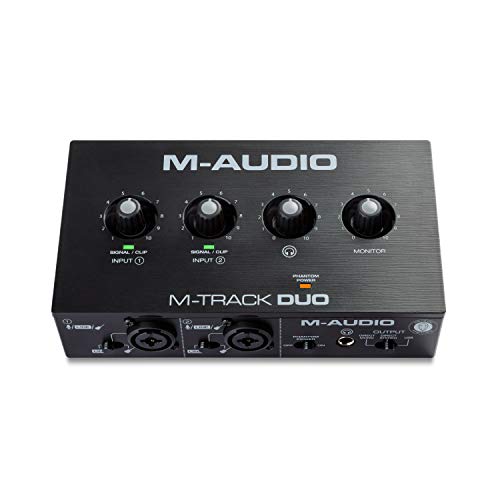
- USB-powered and easy to carry for simple setups
- Two combo inputs handle microphones, guitars, and line sources
- Direct monitoring reduces latency for streaming and recording
Best For: Streamers and podcasters who want a compact, budget-friendly interface with two inputs.
Best for Streamers Who Need Sound Pads
MAONO MaonoCaster AME2 10-Channel Mixer

- 11 customizable sound pads for live shows and content cues
- 48V phantom power and up to 60dB gain for XLR mics
- Includes guitar/bass input plus Bluetooth and loopback tools
Best For: Streamers and podcasters who want an effects-heavy mixer with strong mic support.
Best for Mobile Streaming
MAONO P1 Hybrid USB Audio Interface
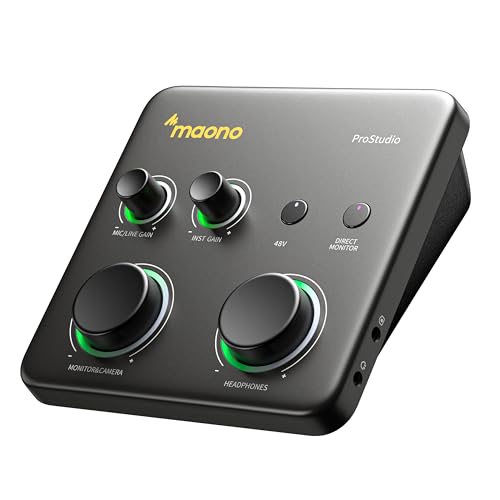
- Dual USB/MFi connectivity for PC, phone, and iPad
- 70dB gain with low-noise performance for dynamic mics
- Auto-Gain, loopback, mute, and routing software features
Best For: Streamers and creators who want one interface for desktop and mobile workflows.
Best for Dual Inputs
Synido USB C Audio Interface for Streaming

- 2-channel design for mic plus second source
- 48V phantom power for condenser mics
- USB-C connection with 24-bit/48kHz audio
Best For: Streamers and podcasters who need a simple dual-input interface with phantom power.
Best for Solo Creators – Focusrite Scarlett 2i2 4th Gen USB Interface
The Focusrite Scarlett 2i2 4th Gen is a strong audio interface for streaming if you want clean sound, simple controls, and a proven setup that works well for voice, music, and podcasting. It gives you a straightforward way to improve mic quality without a steep learning curve.
Best For: Streamers, podcasters, and solo creators who want dependable studio-quality recording with an easy two-input layout.
Pros:
- Clean, high-fidelity preamps for clearer voice capture
- Simple two-input design that’s easy to set up and use
- Includes software bundle to help you start recording faster
- Well-suited for streaming, podcasting, and songwriting
Cons:
- Only two inputs, so it’s not ideal for larger setups
- Better suited to solo use than multi-person streaming
Overall, the Scarlett 2i2 4th Gen is a reliable audio interface for streaming when you want better sound quality and a compact, no-fuss workflow. It’s especially appealing for creators who value clarity and consistency over extra channels or advanced routing.
Best for Co-Hosts – MAONO MaonoCaster E2 Gen2 Podcast Bundle
If you need an audio interface for streaming that makes multi-person shows easier, the MAONO MaonoCaster E2 Gen2 is a practical all-in-one pick. It combines dual XLR inputs, USB-C and 3.5mm connectivity, and onboard effects so you can start streaming or podcasting with less extra gear.
Best For: Streamers, podcasters, and small creator teams that want dual mic inputs, simple controls, and built-in effects in one portable unit.
Pros:
- Dual XLR combo inputs with up to 60dB gain for two microphones
- 8 sound effect pads plus voice effects and reverb for live personality
- Loopback, mute, monitoring, and battery power make streaming more flexible
Cons:
- Feature-rich layout may feel busy for absolute beginners
- Included bundle is useful, but serious studios may still want higher-end accessories
For creators who want an audio interface for streaming with dual-mic support and easy live controls, this MAONO bundle hits a strong balance of convenience and versatility. It is especially appealing if you want to handle co-hosted shows, gaming chats, or simple mobile setups without adding separate preamps and processors.
Best for Sound Effects – PUPGSIS Gaming Audio Mixer
If you want an audio interface for streaming that adds effects, voice changes, and live control without a lot of software juggling, the PUPGSIS Gaming Audio Mixer is built for that style of setup. It combines mic input, noise cancellation, reverb, Bluetooth audio, and programmable pads into one compact console for streamers, podcasters, and gamers.
Best For: Streamers and gamers who want built-in voice effects, sound pads, and simple live controls for entertaining broadcasts.
Pros:
- Built-in voice changer, reverb, and 4 programmable sound-effect pads
- Noise cancellation helps cut fan noise and background hum
- Bluetooth input can add music or backing tracks directly to the mix
Cons:
- Not compatible with USB microphones
- Does not support 48V dynamic microphones
- Bluetooth is input-only, so it won’t handle wireless headphone monitoring
Overall, this is a feature-heavy audio interface for streaming if you care more about live entertainment tools than studio purism. Just make sure your mic setup matches its input requirements, because the compatibility limits matter as much as the effects features.
Best for Streaming Flexibility – MAONO PS22 Lite USB Audio Interface
If you want an audio interface for streaming that can also handle recording, guitar, and podcast work, the MAONO PS22 Lite is a versatile pick. It offers 24-bit/192kHz audio, 106dB dynamic range, XLR mic support, and loopback routing software, so you can manage clean input and flexible broadcast mixes without a complicated setup.
Best For: Streamers, podcasters, and beginners who want a compact USB interface with loopback routing and mic/guitar support.
Pros:
- 24-bit/192kHz recording with 106dB dynamic range for detailed sound
- Built-in loopback and ProStudio routing software for streaming workflows
- XLR input with up to 56dB gain and 48V phantom power for condenser mics
- Compact, plug-and-play design with direct monitoring and side headphone output
Cons:
- More feature-rich than a basic starter interface, so it may feel like overkill for simple voice chat
- Software-based routing may take a little setup time for first-time users
Overall, the PS22 Lite stands out as an audio interface for streaming when you want one device that covers live broadcast, voice recording, and instrument input. Its loopback tools and low-latency ASIO support make it especially appealing for creators who need flexibility more than a stripped-down interface.
Best for XLR Streaming – MAONO G1 NEO Gaming Audio Mixer
If you need an audio interface for streaming that adds XLR mic support, voice effects, and easy controls without a complicated setup, the MAONO MaonoCaster G1 NEO is a strong pick. It’s built for gamers and creators who want clearer voice capture, quick sound shaping, and a compact mixer that fits neatly into a streaming desk.
Best For: Streamers and podcasters using an XLR microphone who want simple live controls, RGB flair, and voice effects.
Pros:
- Built-in pro preamp and 48V phantom power for XLR condenser mics
- Voice changer, sound pads, reverb, and sidechain for more engaging streams
- One-click noise reduction, mute, loopback, and direct monitoring for easier control
- RGB lighting and compact layout suit gaming and streaming setups
Cons:
- Not compatible with USB microphones
- Best suited to XLR users, so it’s not the most universal option
- Some features may take a little setup to dial in correctly
Overall, this is a feature-packed audio interface for streaming if you want live voice processing, XLR support, and a more interactive presentation. It’s especially appealing for creators who value easy controls and extra entertainment features over a bare-bones mixer.
Best Portable Pick – M-AUDIO M-Track Duo USB Audio Interface
If you want an affordable audio interface for streaming that’s easy to travel with, the M-AUDIO M-Track Duo keeps the setup simple while still covering the essentials. It offers two combo inputs, zero-latency monitoring, and USB bus power, making it a practical choice for creators who stream, podcast, or record on a laptop.
Best For: Streamers, podcasters, and solo creators who need a compact, plug-and-play interface with two mic/instrument inputs.
Pros:
- Compact, USB-powered design is easy to move between rooms or take on the go
- Two combo XLR/line/instrument inputs support mics, guitars, and other sources
- Direct monitoring with a USB/Direct switch helps avoid distracting latency
- Includes software to help new users start recording right away
Cons:
- Only offers 48kHz resolution, so it’s more basic than higher-end interfaces
- Feature set is simple compared with models that add more routing or inputs
For shoppers prioritizing portability and straightforward operation, this is a dependable audio interface for streaming and entry-level recording. It won’t overwhelm you with extras, but it covers the core needs well for solo creators and small setups.
Best for Streamers Who Need Sound Pads – MAONO MaonoCaster AME2 10-Channel Mixer
If you want an audio interface for streaming that adds more than basic mic control, the MAONO MaonoCaster AME2 is built for creator-style setups. It combines a pro preamp, 48V phantom power, Bluetooth, and a large set of sound pads, making it a flexible pick for live shows, podcasts, and social content.
Best For: Streamers, podcasters, and creators who want an all-in-one mixer with voice effects, sound pads, and instrument input.
Pros:
- Built-in preamp with up to 60dB gain and 48V phantom power for XLR mics
- 11 customizable sound pads plus loopback, sidechain, and music-only controls
- Supports guitar and bass through the 6.35mm instrument input
- Works with PC, smartphones, tablets, cameras, and Mac/Windows setups
Cons:
- Not compatible with USB microphones
- Feature-rich layout may feel busy if you only need a simple interface
- Best suited to content creation, not clean studio recording alone
The AME2 stands out if your audio interface for streaming needs include live effects, sound triggers, and flexible input options in one box. It is especially appealing for creators who want a more broadcast-style setup without building a full mixer chain.
Best for Mobile Streaming – MAONO P1 Hybrid USB Audio Interface
The MAONO P1 is a flexible audio interface for streaming if you switch between PC, phone, iPad, and guitar recording. Its dual USB connectivity, strong 70dB mic gain, and routing tools make it a practical pick for creators who want a single box for live streams, podcasts, and mobile content capture.
Best For: Streamers, podcasters, and musician creators who need one interface that can handle desktop and mobile workflows without extra gear.
Pros:
- Dual USB/MFi connectivity for computer and mobile recording
- Up to 70dB gain with -130dB EIN for dynamic mics
- Auto-Gain, loopback, mute controls, and direct monitoring
- ProStudio2 routing software helps manage desktop and app audio
Cons:
- Feature set may be more than casual users need
- Routing software can take time to learn
Overall, this MAONO model stands out as a creator-focused audio interface for streaming when you want mobile flexibility and strong gain in a compact desk-friendly design. It is especially appealing for solo creators who value convenience, loopback, and real-time monitoring over a stripped-down interface.
Best for Dual Inputs – Synido USB C Audio Interface for Streaming
If you want a straightforward audio interface for streaming that can handle a mic and another source at the same time, the Synido USB C model is built for that kind of setup. It offers XLR and line input support, 24-bit/48kHz recording, and 48V phantom power, making it a practical fit for beginner to intermediate creators.
Best For: Streamers, podcasters, and solo creators who need a simple 2-channel interface with mic support.
Pros:
- 2-channel layout works well for voice plus an instrument or second source
- 48V phantom power supports condenser microphones
- USB-C connection keeps the setup modern and convenient
- 24-bit/48kHz resolution is solid for everyday recording and streaming
Cons:
- Not ideal if you need more than two inputs
- Best suited to basic to mid-level workflows, not advanced studio routing
For creators who want a simple, no-fuss audio interface for streaming, this Synido unit covers the essentials without overcomplicating the desk setup. Its dual-input design and phantom power make it a flexible pick for live voice work, podcasts, and small recording sessions.
Best for Hybrid Streaming – MAONO P2 Hybrid USB Audio Interface
The MAONO P2 is a practical audio interface for streaming if you need a compact unit that can handle a mic, phone, iPad, or guitar without making setup complicated. With 56dB gain, loopback, mute controls, and routing software support, it’s geared toward creators who want flexibility for live content, podcasts, and mobile recording.
Best For: Streamers and content creators who need one interface for USB and mobile devices, plus simple live routing features.
Pros:
- Dual XLR support with 56dB gain for mics and other sources
- Loopback and mute functions are useful for live streaming control
- Works with PC, phone, iPad, and guitar for multi-device workflows
- ASIO and routing software add flexibility for recording and monitoring
Cons:
- Not as feature-rich as higher-end interfaces for advanced studio use
- Hybrid device support can take a little setup time
Overall, the P2 is a strong pick if you want an audio interface for streaming that bridges desktop and mobile use without a lot of clutter. It’s especially appealing for creators who value live control, versatile inputs, and a straightforward path into podcasting or music recording.
How We Picked the Best Audio Interface for Streaming
We looked for interfaces that are easy to set up, reliable in daily use, and well suited to live voice work. Priority went to models with stable USB connectivity, solid preamps, loopback or routing tools, and enough input flexibility for common creator setups.
We also favored devices that make sense for real streaming needs: fast mute controls, monitoring options, phantom power for condensers, and software that does not get in the way. The goal is to help you find an Audio Interface for Streaming that fits your workflow, not just your spec sheet.
Quick Comparison
For simple one-mic setups, compact 1- or 2-channel interfaces are usually the best value. If you stream with a co-host, guest mic, or instrument, dual-input models offer more flexibility. Creator-focused mixers add loopback, sound pads, voice effects, and Bluetooth, which can be useful for live shows but are not always necessary for basic streaming.
Key Buying Factors for Audio Interface for Streaming
Inputs and Channel Count
Match the interface to your current setup, then leave a little room to grow. A single XLR input works for solo streaming, while dual XLR or XLR plus line inputs are better for interviews, gaming duo streams, and hybrid music-content workflows.
Gain and Microphone Compatibility
Dynamic microphones often need more clean gain than condenser mics. If you use a gain-hungry mic, look for higher gain output, low noise performance, or built-in preamp support so you do not have to push the input too hard.
Loopback and Routing
Loopback is one of the most useful features for streaming because it lets you mix system audio with your microphone feed. Routing software can also simplify game audio, music playback, alerts, and call management.
Monitoring, Phantom Power, and Controls
Direct monitoring helps you hear yourself without distracting delay. Phantom power matters if you plan to use a condenser microphone. Handy front-panel controls such as mute buttons, gain knobs, and quick volume adjustment can improve live usability.
Who Should Buy Which Audio Interface for Streaming?
If you want the simplest path to clear voice and dependable performance, choose a straightforward two-channel interface. If you need built-in streaming tools, effects, or dual-mic support, a mixer-style unit may be a better fit. Mobile creators or multi-device users should pay close attention to hybrid connectivity and routing features.
For most people, the best Audio Interface for Streaming is the one that balances clean sound, easy controls, and the features you will actually use every day. Start with your microphone, your streaming software, and whether you need loopback or extra inputs, then buy accordingly.
