Last updated on October 29th, 2026
A home studio can put monitors, interfaces, computers, and outboard gear on the same circuit. A well-chosen power strip gives that setup enough outlets while helping protect equipment from surges and, on some models, problematic voltage.
These 10 selections span compact surge protectors and more elaborate power conditioners. The right choice depends less on audiophile labels than on your outlet count, equipment needs, and the power issues you actually face.
Best 10 Audiophile Power Strip for Home Studio Picks for 2026
Best for Mixed Studio Gear

- 8 outlets in two isolated banks
- Linear AC-noise filtering
- SMP+ and extreme-voltage shutdown
Best For: Studios combining digital and analog gear
Best Portable Option

- 6 filtered outlets
- 9-foot power cable
- 540-joule surge rating
Best For: Movable, smaller studio setups
Best for Studio and AV Crossover
- 6 AC outlets plus 2 USB-A ports
- Video-filtered and high-current connections
- Level 2 noise dissipation
Best For: Audio workspaces shared with AV equipment
Best for Isolated Outlets
- 8 individually isolated outlets
- Active noise cancellation
- Polarity and ground diagnostics
Best For: Multi-component systems needing isolated outlets
Voltage Protection Pick
- EVS over- and under-voltage shutdown
- Six outlets with EMI/RFI filtration
- Steel enclosure and 15-foot cord
Best For: Studios prioritizing voltage protection and cord reach
Filtered Outlet Pick

- Eight outlets in three outlet groups
- Four USB-A charging ports
- Non-sacrificial surge protection
Best For: Mixed audio/video setups needing dedicated outlet types
Flexible Placement Pick
- Eight outlets, including one wide-spaced
- 15-foot cord and wall-mount slots
- Two USB-A ports and metal enclosure
Best For: Studios needing flexible placement and eight outlets
Rack-Ready Studio Pick

- 12 outlets: four high-current, eight filtered
- Non-sacrificial surge protection
- Includes 2RU rack ears and 2-meter cable
Best For: Rack-mounted amplifier and source-gear setups
Compact Gear Pick

- Seven grounded outlets with adapter spacing
- ETL-listed metal enclosure
- Right-angle plug and keyhole mounting
Best For: Compact 125V studio gear setups
Enhanced Filtering Pick

- Four high-current and eight ultra-linear-filtered outlets
- Non-sacrificial surge protection
- Includes 2RU rack ears and PQ-715 cable
Best For: Rack-based studios with amplifiers and source gear
Best for Mixed Studio Gear – Furman PST-8D
The Furman PST-8D is a strong audiophile power strip for home studio setups that mix digital equipment with analog audio gear. Its eight outlets are arranged in two isolated banks, while its filtering and surge protection address common power concerns.
Best For: Home recording setups with both digital and analog equipment.
Pros:
- Eight outlets across separate digital and linear banks.
- Linear filtering targets AC line noise.
- SMP+ surge protection and automatic extreme-voltage shutdown.
- Cable, satellite, and telephone-line protection connections.
Cons:
- Its 23.75-inch listed length needs room in a studio layout.
- Designed for 120V, 15A power.
Choose the PST-8D when isolated outlet banks and protection for connected signal lines matter more than a compact footprint.
Best Portable Option – Black Lion Audio PG-P
If you need an audiophile power strip for home studio use that can also move between setups, the Black Lion Audio PG-P offers six outlets, audio filtration, and a nine-foot power cable in a portable design.
Best For: Small recording setups that need a movable power conditioner with a longer cord.
Pros:
- Six outlets for a modest equipment setup.
- Audio filtration and 540-joule surge protection.
- Nine-foot cable offers flexible placement.
Cons:
- Fewer outlets than the eight-outlet options here.
- Specified for 120V indoor use.
The PG-P makes sense when portability and cord reach are priorities; check that six outlets cover your equipment before buying.
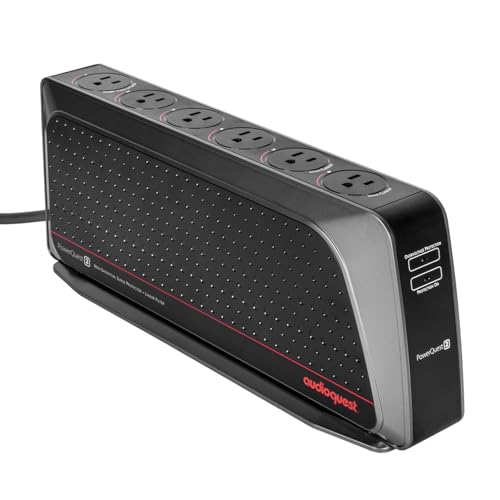
Best for Studio and AV Crossover – AudioQuest PowerQuest 2
The AudioQuest PowerQuest 2 is an audiophile power strip for home studio buyers whose setup also includes a screen, receiver, or speakers. It provides six outlets, including connections intended for video equipment and high-current audio components.
Best For: Workspaces that combine audio equipment with a TV, projector, or AV system.
Pros:
- Six outlets with video-optimized filtering and high-current connections.
- Level 2 noise-dissipation design.
- Two high-speed USB-A charging ports.
- Catastrophic surge protection.
Cons:
- Its stated device focus is AV equipment rather than studio-specific gear.
- Six AC outlets may be limiting for larger setups.
The PowerQuest 2 is most compelling when your audio workspace doubles as an entertainment setup; its outlet types are the key reason to choose it.
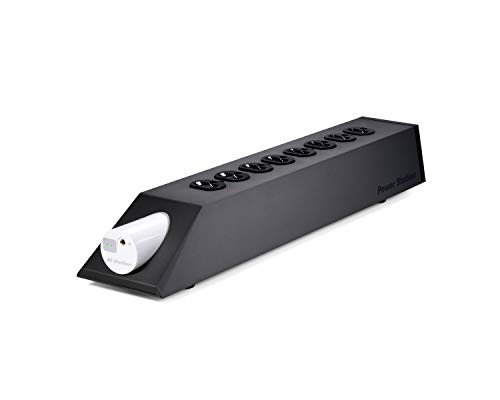
Best for Isolated Outlets – iFi Power Station
The iFi Power Station is an audiophile power strip for home studio setups that need eight outlets with individual isolation. Its active noise cancellation, aluminum enclosure, and built-in diagnostics distinguish it from a basic surge strip.
Best For: Multi-component setups where outlet isolation and power diagnostics are priorities.
Pros:
- Eight outlets, each isolated in its own chamber.
- Active noise cancellation for power-line noise.
- Diagnostics detect polarity and missing-ground issues.
- Surge protection rated at 900 joules.
Cons:
- At 6.6 pounds, it is the heaviest option listed here.
- Supplied specifications list 240V alongside a North American Type B plug; verify compatibility before purchase.
The Power Station offers a feature-rich approach to distributing power, but confirming the voltage and plug configuration for your location is essential.
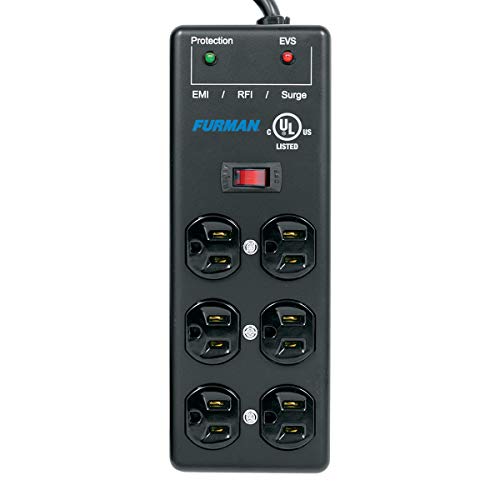
Voltage Protection Pick – Furman SS-6B-PRO
If you’re choosing an audiophile power strip for home studio gear, the Furman SS-6B-PRO stands out for its Extreme Voltage Shutdown (EVS): it cuts power during dangerous over- or under-voltage conditions and restores it when voltage stabilizes. It pairs six protected outlets with EMI/RFI filtration.
Best For: Studio setups that need voltage protection and a long reach to the wall outlet.
Pros:
- EVS responds to both over- and under-voltage conditions.
- Six outlets offer surge suppression and EMI/RFI filtration.
- Steel enclosure and 15-foot cord suit flexible studio placement.
Cons:
- Only six outlets, fewer than the other two picks.
- No USB charging is described in the product bullets.
Choose this one when voltage shutdown matters more than outlet count. Its 15A rating is worth checking against the combined load of your connected equipment.
Filtered Outlet Pick – AudioQuest PowerQuest 3
The AudioQuest PowerQuest 3 is an audiophile power strip for home studio buyers who want different outlet types for different gear. Its eight outlets include four Ultra-Linear filtered outlets, two video-optimized filtered outlets, and two high-current outlets, alongside four USB-A charging ports.
Best For: A mixed audio/video setup that can use dedicated filtered and high-current outlets.
Pros:
- Eight outlets provide separate options for filtered, video, and high-current connections.
- Non-sacrificial surge protection is a stated feature.
- Four USB-A ports can charge accessories.
Cons:
- Two outlets are specifically video-optimized, which may be less useful in an audio-only studio.
- No cord length is provided in the supplied details.
The outlet layout is the main reason to pick the PQ3: map your gear to its outlet groups before buying to make sure that layout fits your studio.
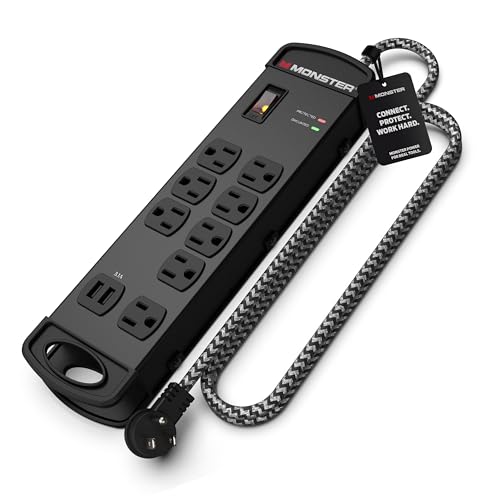
Flexible Placement Pick – Monster Pro MI
For an audiophile power strip for home studio use where placement is a challenge, the Monster Pro MI combines eight grounded outlets with a 15-foot cord, right-angle plug, and wall-mount slots. Its metal enclosure and two USB-A ports add practical flexibility around a desk or gear area.
Best For: Studio gear layouts that need eight outlets and flexible mounting or cord placement.
Pros:
- Eight grounded outlets include one wide-spaced position for a larger plug.
- 15-foot cord, right-angle plug, and wall-mount slots offer placement options.
- Fire-resistant MOV design provides surge protection; two USB-A ports charge accessories.
Cons:
- Only one outlet is identified as wide-spaced.
- Voltage and maximum-current figures in the supplied details warrant checking against your equipment before purchase.
This is the practical pick for spreading connections across a studio workspace. Confirm the electrical ratings for your specific setup, especially before connecting amplifiers or other higher-draw gear.
Rack-Ready Studio Pick – AudioQuest PowerQuest 303
If you need an audiophile power strip for home studio equipment that can live in a rack, the PowerQuest 303 offers 12 outlets with separate provisions for amplifiers and source components. Its 2RU rack ears and included 2-meter detachable power cable make it practical for a fixed setup.
Best For: Studios needing rack-mounted power distribution for amplifiers and source gear.
Pros:
- Four high-current outlets for amplifiers and eight linear-filtered outlets for source components.
- Non-sacrificial surge protection and automatic shutdown at 140VAC.
- Includes rack ears, a detachable power cable, and a flat-to-wall plug.
Cons:
- At 10.2 pounds, it is less convenient to move between workspaces.
- Its rack-oriented format may be more than a simple desktop setup needs.
The 303 is a strong fit when outlet layout and installation matter as much as protection. Its linear noise-dissipation is a stated feature, but any audible benefit will depend on your system and power conditions.
For a smaller audiophile power strip for home studio gear, the Monster Pro MI provides seven grounded outlets in a metal enclosure. One widely spaced outlet accommodates a bulky adapter, while the four-foot cord and right-angle plug help with placement behind furniture or a desk.
Best For: Compact studio setups connecting computers, amplifiers, or pedal boards.
Pros:
- Seven grounded outlets, including one spaced for an adapter.
- ETL-listed metal enclosure with surge protection.
- Keyhole mounting slots, LED indicators, and a right-angle plug.
Cons:
- The four-foot cord may limit placement.
- Designed for 125V systems; the supplied notes say not to use it with high-voltage systems.
This is the straightforward choice for mounting or tucking a protected strip near a modest collection of gear. The supplied notes do not specify dedicated filtered outlets, so do not choose it on that basis.
The PowerQuest 505 suits buyers seeking an audiophile power strip for home studio racks with dedicated outlets for different types of gear. It pairs four high-current amplifier outlets with eight ultra-linear-filtered source-component outlets and includes 2RU rack ears.
Best For: Rack-based studios with amplifiers and multiple source components.
Pros:
- Twelve outlets divided between high-current amplifier and ultra-linear-filtered source connections.
- Non-sacrificial surge protection and shutdown when presented with 140VAC.
- Includes a detachable 2-meter PQ-715 cable and flat-to-wall plug.
Cons:
- Its 10.8-pound, 2RU format is not ideal for portable setups.
- A 12-outlet conditioner may exceed the needs of a small desktop rig.
Compared with a basic multi-outlet strip, the 505 is built around differentiated outlet groups, power protection, and rack installation. Consider it if those features match your equipment layout rather than assuming filtration will produce the same audible result in every studio.
How We Picked the Best Audiophile Power Strip for Home Studio
We focused on practical studio needs: surge protection, available outlets, space for bulky adapters, and features that may help with power-related noise or abnormal voltage. The selections range from portable six-outlet blocks to 12-outlet conditioners. We also distinguished basic surge protection from features such as voltage monitoring, since they address different risks.
The supplied list includes the Monster Pro MI twice, so its two entries should not be mistaken for distinct models. Check the exact listing and specifications before buying any product, especially where configurations or regional versions may differ.
Quick Comparison
For a small setup, the six-outlet AudioQuest PowerQuest 2 and Furman SS-6B-PRO offer simpler layouts. The eight-outlet Furman PST-8D and AudioQuest PowerQuest 3 suit studios with more devices; the PowerQuest 3 also lists USB charging ports. The AudioQuest PowerQuest 303 and 505 provide 12 outlets for larger systems. Consider the Black Lion Audio PG-P when portability matters, and the iFi Power Station when active power-conditioning features are a priority. Compare the Monster Pro MI on its actual outlet layout and surge specifications rather than its name alone.
Key Buying Factors for an Audiophile Power Strip for Home Studio Use
Protection Before Promises
Look for clearly stated surge-protection features and an indication of what happens when protection is no longer available. Voltage monitoring or shutdown can be useful where overvoltage or undervoltage is a concern, but a power strip is not a substitute for a UPS if your computer needs time to shut down during an outage.
Outlets, Spacing, and Load
Count every plug, including monitors, interface, computer, display, and external drives. Check whether large wall adapters block neighboring sockets and whether the cord reaches your intended location. Confirm the strip’s current rating and the combined load of connected equipment; never use extra outlets as a reason to overload a circuit.
Noise and Connections
Conditioning may help in some environments, but it cannot fix every hum or hiss. Ground loops, unbalanced cables, gain staging, and wiring faults often need separate attention. Keep computers and other potential noise sources on suitable outlets if the manufacturer specifies different outlet groups, and follow its guidance for amplifiers or powered monitors.
Who Should Buy Which Audiophile Power Strip for Home Studio?
Choose a straightforward six-outlet option if your rig is modest and you mainly need organized, protected connections. Step up to an eight-outlet model when your desk is filling up or you want features such as USB charging. Pick a 12-outlet PowerQuest model for a larger fixed setup after checking its dimensions and outlet arrangement. For a mobile rig, prioritize portability and a durable, practical form factor. If you suspect a genuine power-quality problem, identify the source before paying more for conditioning; safety issues belong with a qualified electrician.
