Last updated on November 3rd, 2026
A Class A amplifier can be an appealing choice if you value a straightforward signal path and are willing to make room for the heat, weight, and power use that often come with it. But the label alone cannot tell you whether an amp will suit your speakers.
These 10 picks span solid-state power amplifiers, integrated models, and single-ended tube designs. The best choice depends on your speaker sensitivity, listening volume, available space, and whether you need volume control or source inputs.
Best 10 Class a Power Amplifier Picks for 2026
Solid-State Power Amp
A1S Pure Class A Stereo Amplifier

- 20W/channel into 8Ω
- Toroidal transformer and large filter array
- 110V AC specification
Best For: Desktop or bookshelf stereo systems
Hand-Wired Tube Pick

- 10W per channel
- Point-to-point tube circuitry
- 4Ω and 8Ω speaker connections
Best For: Tube systems with speakers rated 88dB or higher
Integrated Hi-Fi Choice

- 25W Class A output into 8Ω
- Built-in MM/MC phono stage
- Independent channel power supplies
Best For: Turntable-based systems in small to mid-sized rooms
KT88 Tube Option
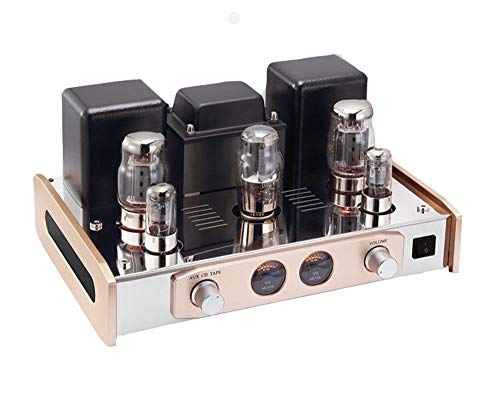
- Single-ended KT88 tube design
- Up to 8W per channel
- Listed weight of 18kg
Best For: Low-power two-channel tube setups
Best for Straightforward Stereo

- 20W per channel, pure Class A
- 300W toroidal transformer
- Speaker protection circuit
Best For: Two-channel systems needing 20W-per-channel Class A output
Best for Two RCA Sources

- Two switchable RCA inputs
- 30W x 2 at 8Ω; 42W x 2 at 4Ω
- 100–120V AC supply range
Best For: Stereo systems with two RCA sources
Best for Tube-System Flexibility

- Integrated or power-amplifier mode
- Single-ended Class A 300B design
- Listed 8.5W output; 230V AC
Best For: Tube systems needing integrated and power-stage modes
High-Current Stereo Pick
A9.4 Dual-Mono Class-A Power Amplifier

- 100W/channel at 8 ohms; 200W at 4 ohms
- Dual-mono transformers and circuitry
- XLR, RCA, and bi-wiring terminals
Best For: Demanding speakers in a dedicated stereo setup
Connected Tube Pick
CR888 KT88 Integrated Amplifier
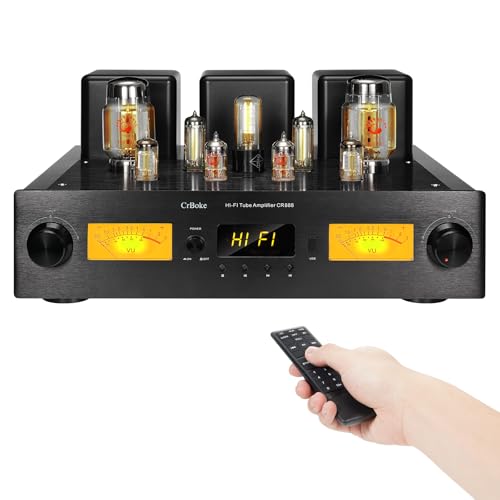
- aptX HD Bluetooth and multiple wired inputs
- Active subwoofer output
- Remote included; AAA batteries not included
Best For: Tube listeners with wireless and digital sources
300B Tube Pick
Willsenton R300 Plus Integrated Amplifier

- Single-ended Class-A 300B output
- Integrated, power-amp, and headphone use
- 5W listed output; check speaker match
Best For: 300B tube setups with suitable speakers
Solid-State Power Amp – A1S Pure Class A Stereo Amplifier
The A1S is a class a power amplifier for listeners who already have a source and want a two-channel, solid-state amp. It is rated at 20W per channel into 8Ω or 25W per channel into 4Ω, making speaker matching more important than chasing a high wattage figure.
Best For: Desktop or bookshelf speaker systems where a dedicated stereo power amp fits the setup.
Pros:
- Specified output ratings for both 8Ω and 4Ω speakers.
- Large toroidal transformer and 144,000µF total filter capacity.
- Omron relay provides switch-on/off shock and DC output protection.
Cons:
- Modest 20W-per-channel rating into 8Ω.
- Specified for 110V AC supply.
Choose the A1S if you want a compact, dedicated Class A power stage; check your speakers’ power needs and your local mains voltage before buying.
Hand-Wired Tube Pick – Oldchen EL34 Single-Ended Amp
If you want a class a power amplifier with tube circuitry and built-in volume control, the Oldchen EL34 is an integrated option rated at 10W per channel. Its point-to-point wiring and EL34C output tubes distinguish it from the solid-state models here.
Best For: Listeners pairing 4Ω or 8Ω speakers rated at 88dB sensitivity or higher with a single-ended tube amp.
Pros:
- Hand-wired, point-to-point circuitry.
- Separate 4Ω and 8Ω speaker connections accept banana plugs, spades, or bare wire.
- Includes an ALPS volume potentiometer and custom-wound output transformers.
Cons:
- 10W-per-channel output makes speaker sensitivity an important consideration.
- Tube complement adds components to handle and maintain.
This is the more hands-on choice for a compatible speaker setup, rather than an amp to buy on wattage alone.
Integrated Hi-Fi Choice – Musical Fidelity A1
The Musical Fidelity A1 is a class a power amplifier and preamplifier in one chassis, rated at 25W of Class A output into 8Ω. Unlike a basic power amp, it also includes a phono stage for moving-magnet and moving-coil cartridges.
Best For: Small- to mid-sized listening rooms with carefully matched speakers, especially systems that include a turntable.
Pros:
- Discrete, symmetrical Class A design with independent left and right power supplies.
- Built-in MM/MC phono stage.
- Direct switch bypasses the preamp gain block before the volume control.
Cons:
- 25W into 8Ω is not aimed at buyers seeking high rated output.
- Oversized heatsinks are essential to its operation and affect placement.
The A1 makes sense when its integrated features and phono connectivity matter as much as its output stage. Its dynamic Class A design can move into Class B-style operation when the Class A standing current is exceeded.
KT88 Tube Option – BOYUURANGE A20 with VU Meter
Reisong - BOYUURANGE A20 Hi-Fi Intergrated Amplifier KT88 Tube Single-end Class A 4ND VU Meter
Check Price On AmazonThe BOYUURANGE A20 is a single-ended tube class a power amplifier with KT88-98 output tubes and a VU meter. Its stated maximum output is 8W per channel, so it is worth checking speaker compatibility before choosing it for a room.
Best For: Buyers who want a low-power, two-channel KT88 tube amplifier with a VU meter.
Pros:
- Single-ended Class A tube design.
- Two-channel output rated at up to 8W per channel.
- VU meter is part of the listed model configuration.
Cons:
- Limited 8W-per-channel maximum output.
- Listed weight is 18kg, so it needs a sturdy location.
The A20 is a specific choice for its tube layout and presentation; prioritize speakers that suit its limited output rather than assuming it will fit every setup.
Best for Straightforward Stereo – B6-72 20W Class A Amplifier
The B6-72 is a class a power amplifier option for listeners building a two-channel system around a stated 20W per channel. Its 300W toroidal transformer, four 10,000μF filter capacitors, and speaker protection circuit make the design worth a look if you prioritize its specified power-supply and protection features.
Best For: Stereo listeners seeking a 20W-per-channel Class A design with RCA connectivity and speaker protection.
Pros:
- Specified pure Class A operation at 20W per channel.
- 300W toroidal transformer and four 10,000μF Vishay filter capacitors.
- Speaker protection circuit and copper RCA inputs and output terminals.
Cons:
- 20W per channel may not suit setups that require higher stated output.
- Only RCA input connectivity is specified in the supplied details.
The component list is a draw, but check your speakers’ power needs and the available connections before choosing it. The supplied details also describe the included component as a “tube preamplifier unit,” so confirm what ships with the seller.
Best for Two RCA Sources – Nobsound NS-02G PRO
The Nobsound NS-02G PRO is a class a power amplifier option that also works as an integrated speaker amp. Its two switchable RCA inputs are useful if you want to keep, for example, a streamer and CD player connected, while its stated output is 30W per channel at 8Ω or 42W per channel at 4Ω.
Best For: Home stereo setups with two RCA sources and speakers suited to its stated power ratings.
Pros:
- Dual RCA inputs let you switch sources without swapping cables.
- Specified 30W x 2 at 8Ω and 42W x 2 at 4Ω.
- Symmetrical circuit design, ALPS potentiometer, and toroidal transformer.
Cons:
- Specified supply range is 100–120V AC; verify compatibility with your mains power.
- Only two RCA inputs are described, with no other input types specified.
This is the practical pick here when source switching matters alongside Class A operation. Check your local voltage and speaker requirements before ordering.
Best for Tube-System Flexibility – MS-500B 300B Tube Amplifier
The MS-500B takes a tube-based approach to the class a power amplifier category. This single-ended 300B design can run as an integrated amplifier through its Aux1–3 inputs or in a power-amplifier mode using Aux4 as a preamp input.
Best For: Listeners seeking a 300B tube amplifier that can serve as either an integrated amp or a power stage.
Pros:
- Switches between integrated and power-amplifier use.
- Single-ended Class A triode design with hand-built output transformers.
- Remote control for volume and input selection, plus an earphone output.
Cons:
- Listed output power is 8.5W; confirm it meets your speakers’ needs.
- Listed for 230V AC and weighs 29 kg, so check power compatibility and placement.
Its operating modes offer useful flexibility if your system may gain a separate preamp later. Verify the 230V requirement and speaker match rather than relying on the separately listed 150W maximum-output figure.
High-Current Stereo Pick – A9.4 Dual-Mono Class-A Power Amplifier
If you need a class a power amplifier for demanding speakers, the A9.4 pairs a dual-mono design with a stated 100W per channel into 8 ohms and 200W per channel into 4 ohms. It is a dedicated stereo power amp, so plan on a separate source and volume-control component.
Best For: Stereo systems with demanding speakers and room for a large, heavy amplifier.
Pros:
- Separate transformers and amplification circuitry for each channel.
- Balanced XLR and RCA inputs, plus binding posts for bi-wiring.
- Large side heatsinks and soft-start and speaker-protection circuitry.
Cons:
- Its 70.5-pound, 16.9-by-16.9-inch chassis needs substantial support and clearance.
- No integrated volume control or source switching is listed.
The A9.4 is the most straightforward choice here if your priority is a dedicated, high-current stereo power stage rather than an all-in-one amplifier.
Connected Tube Pick – CR888 KT88 Integrated Amplifier
For buyers searching for a class a power amplifier with modern source options, the CR888 combines a KT88-based tube design with built-in Bluetooth, digital inputs, and integrated volume control. It is an integrated amplifier rather than a bare power amp.
Best For: Listeners who want tube amplification with wireless, computer, and digital-source connectivity.
Pros:
- Bluetooth with aptX HD support, plus USB, optical, coaxial, and RCA inputs.
- Active subwoofer output and included remote control.
- Hand-wired construction with nine tubes and three toroidal transformers.
Cons:
- Specified for 110V power.
- Remote requires two AAA batteries, which are not included.
- Tube changes require attention to the selection switch and must be made with the unit off.
Choose the CR888 for its broad connectivity and tube-based setup; the supplied notes do not establish a comparable per-channel speaker-output rating, so check speaker matching before buying.
300B Tube Pick – Willsenton R300 Plus Integrated Amplifier
If your class a power amplifier search is focused on single-ended tubes, the Willsenton R300 Plus uses two 300B output tubes in a Class-A design. It can serve as an integrated amplifier, a power amplifier through its dedicated input, or a headphone amp.
Best For: Listeners seeking a hand-wired 300B amplifier with integrated, power-amp, and headphone use.
Pros:
- Single-ended Class-A output stage with two 300B tubes.
- Dedicated power-amp input and headphone-amp capability.
- Point-to-point wiring and included remote control.
Cons:
- The supplied output specification is 5W; check compatibility with your speakers and listening needs.
- No Bluetooth or digital inputs are listed.
The R300 Plus is a flexible way to build around 300B tubes, but its modest listed wattage makes speaker selection more important than with the higher-output stereo option above.
How We Picked the Best Class a Power Amplifier
We focused on the differences that matter when building a system: amplifier type, stated output, tube versus solid-state design, connection options, and everyday usability. The selected products include both standalone power amplifiers and integrated amplifiers; they are not interchangeable. Because specifications and Class A operating claims can vary by listing and operating level, confirm the manufacturer’s current documentation before buying.
Quick Comparison: Which Type Fits Your Setup?
Solid-state models such as the A1S, B6-72, A9.4, and Musical Fidelity A1 are a logical starting point if you prefer to avoid tube replacement. Check each model’s inputs and controls: a power amplifier generally needs a separate preamp or a source with suitable volume control, while an integrated amplifier includes that function.
Single-ended tube models such as the Oldchen EL34, BOYUURANGE A20, MS 500B, CR888, and R300 Plus may appeal to listeners building around efficient speakers. Their tube types, stated wattage, and features differ, so compare the complete system rather than choosing by tube name alone. The Nobsound offers another integrated option for shoppers prioritizing a compact home-audio setup.
Key Buying Factors for a Class a Power Amplifier
Speaker Match and Real Listening Levels
Start with your speakers’ sensitivity, impedance requirements, room size, and preferred volume. A low-wattage amp may be entirely practical with efficient speakers at moderate levels but run out of headroom with demanding speakers or in a large room. Compare output ratings at the same impedance where possible, and leave margin for musical peaks.
Power Amp or Integrated Amp?
Check the signal chain before ordering. A dedicated Class a Power Amplifier typically expects a preamp; an integrated model usually accepts sources directly and provides volume control. Verify the actual input types, number of sources supported, and whether features such as a headphone output, Bluetooth, remote, or subwoofer connection are included on the specific version sold.
Heat, Placement, and Ownership Costs
Class A operation can draw substantial power and produce heat even at modest listening levels. Allow the clearance specified by the maker, avoid enclosed shelves, and account for electricity use. Tube amplifiers also bring tube replacement costs and, depending on the design, possible bias adjustments. Follow the manufacturer’s instructions rather than assuming every tube amp is plug-and-play.
Who Should Buy Which Class a Power Amplifier?
Choose a standalone solid-state power amp if you already own a compatible preamp and want to keep those components separate. Choose a solid-state integrated amp for a simpler system without routine tube maintenance. Consider a single-ended tube integrated amp if you have suitably efficient speakers and accept lower output and tube upkeep. If you need modern conveniences, shortlist models with the exact inputs and controls you will use—then confirm speaker compatibility and ventilation before deciding.
