Choosing the right preamp can make a bigger difference than many people expect. A good dual channel microphone preamp can add clean gain, reduce noise, and give you more control over two mics at once.
Whether you’re recording vocals, interviews, instruments, or a podcast setup, the best choice depends on your mic type, noise tolerance, and workflow.
Best 10 Dual Channel Microphone Preamp Picks for 2026
Ultra-Clean Dual Channel
MIC-1 2-Input Microphone Preamp

- Up to +75 dB clean gain
- 2 inputs with 48V phantom power
- Balanced XLR and 6.35mm outputs
Best For: Home studios, podcasting, and streaming with mixed mic types
EQ Shaping Dual Channel
Behringer 1273 2-Channel Preamp

- 2-channel mic/line/instrument preamp
- 3-band EQ, tone switch, and highpass filter
- Custom Midas transformers and XLR/1⁄4 inch connectivity
Best For: Recording setups that need built-in EQ and analog tone shaping
Tube Color Dual Channel

- Dual-path tube and solid-state gain
- Combo mic/instrument inputs with 48V phantom power
- Tube drive plus VU meter and onboard filters
Best For: Tracking vocals or instruments with optional tube saturation
Inline Phantom Pair

- 2-channel in-line preamplifier
- +20 dB boost with variable impedance
- Dual phantom powered compact design
Best For: Compact recording chains that need a simple inline boost
Clean Gain Booster
StudioMan CL-200 Dual-Channel XLR Preamp

- +25dB clean gain boost for passive mics
- Dual-channel operation for 2 inputs
- 48V phantom-powered, balanced XLR design
Best For: Dynamic and passive ribbon mic users who want a compact gain booster
Vintage Tube Color
Warm Audio WA-2MPX Dual-Channel Tube Mic Preamp

- 351-style tape-era tube preamp design
- Up to 90dB of tube gain with saturation
- Dual-channel analog shaping with filters
Best For: Engineers and musicians seeking vintage tube tone and analog coloration
High-Gain Versatility
XTUGA XIC1 Dual-Input Mic Preamp

- Up to +75dB clean gain
- Works with dynamic and condenser mics
- XLR plus 3.5mm outputs with phantom power
Best For: Mixed mic setups that need high gain and flexible connectivity
Balanced Dual-Channel Amp
Independent Gain Stereo Preamp
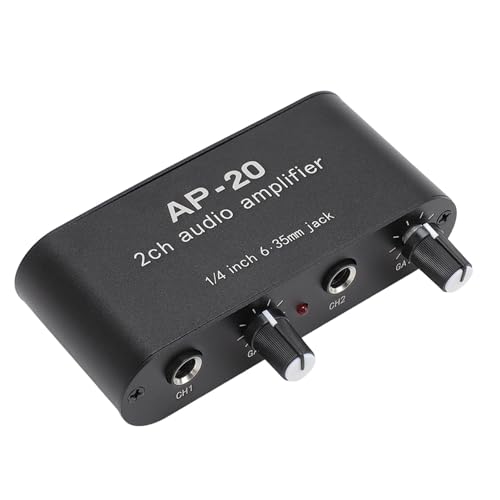
- Independent 0-20 dB gain per channel
- Balanced circuit with single-ended or balanced input
- 6.35mm I/O and aluminum chassis
Best For: people who want simple dual-channel gain control and flexible 6.35mm connections
Budget Mic Booster
Two-Channel Dynamic Mic Preamp

- 25 dB gain for low-output dynamic mics
- Powered by 48V phantom power
- Low-noise two-channel design
Best For: podcasters and home-studio users boosting dynamic microphones on a budget
Compact Metal Preamp
Dual Channel 6.35mm Gain Control

- Independent 0 to 20 dB dual-channel gain
- Balanced input with 6.35mm ports
- DC 5V to 12V power range and metal build
Best For: small audio setups that need simple dual-channel gain control
Ultra-Clean Dual Channel – MIC-1 2-Input Microphone Preamp
If you want a dual channel microphone preamp that keeps the signal clean while adding plenty of level, the MIC-1 is built for straightforward studio and streaming use. With up to +75 dB of gain, 48V phantom power, and 2-channel inputs, it can handle a condenser mic and a dynamic mic at the same time without adding obvious coloration.
Best For: Home studios, podcast setups, and live streamers who need clean gain for both condenser and dynamic microphones.
Pros:
- Up to +75 dB of clean, transparent gain
- 2-channel inputs with 48V phantom power for running condenser and dynamic mics together
- XLR balanced output plus 6.35mm stereo mic and line output for flexible hookup
- Metal shell helps reduce EMC interference and keep noise low
Cons:
- Designed as a clean preamp rather than a tone-shaping unit
- Feature set is focused on gain and connectivity, not advanced processing
For buyers who mainly need clean amplification and flexible output options, the MIC-1 covers the essentials well. Its simple layout and balanced circuit design make it a practical choice when clarity matters more than extra coloration.
EQ Shaping Dual Channel – Behringer 1273 2-Channel Preamp
The Behringer 1273 is a dual channel microphone preamp for users who want both recording gain and simple tone shaping in one rack unit. It combines 2-channel mic, line, and instrument preamp functionality with a 3-band EQ, custom Midas transformers, a highpass filter, and a tone switch for more control at the source.
Best For: Recordists who want a 2-channel preamp with built-in EQ and analog tone tools.
Pros:
- 2-channel mic/line/instrument preamp design
- 3-band EQ plus tone switch for shaping sound before recording
- Custom Midas transformers and highpass filter for added control
- XLR connectivity with 1/4 inch interface support
Cons:
- Large, heavy unit at 14.3 pounds
- Rack-style format is less portable than compact desktop preamps
If you want a preamp that does more than boost signals, the 1273 offers useful analog processing in a straightforward dual-channel format. It suits users who prefer hardware tone control over relying only on DAW plugins.
Tube Color Dual Channel – PreSonus BlueTube DP v2
The PreSonus BlueTube DP v2 is a dual channel microphone preamp for users who want the option of clean gain or tube-driven character. Its dual-path design combines a 12AX7 vacuum tube stage with solid-state gain, plus combo mic/instrument inputs, XMAX mic preamps, and 48V phantom power.
Best For: Musicians and home recordists who want two channels with both clean and tube-saturated sounds available.
Pros:
- Dual-path design with 12AX7 tube and solid-state gain stages
- Combo mic/instrument inputs with 48V phantom power
- Tube drive control for adding saturation when needed
- Useful front-panel tools like VU metering, high-pass filter, pad, and polarity reverse
Cons:
- 1/2U rack format may still be less convenient than a tiny desktop unit
- Tube coloration may not be ideal if you only want the cleanest possible path
This model is a strong pick if you want one preamp that can stay subtle or lean into a warmer sound. The meter and onboard switches make it a practical channel strip style tool for everyday tracking.
Inline Phantom Pair – ART Dual RP Dual Mic Preamp
The ART Dual RP is a compact dual channel microphone preamp for adding level right in the signal path without taking up much space. It is a 2-channel, +20 dB in-line mic preamplifier with variable impedance and dual phantom power, so it fits neatly into setups that need a simple boost rather than a full-featured front end.
Best For: Small rigs that need a compact inline preamp with dual-channel phantom power.
Pros:
- Compact 2-channel in-line design
- +20 dB gain boost for both channels
- Variable impedance for added setup flexibility
- Dual phantom powered operation
Cons:
- Limited gain compared with higher-output preamps
- Minimal feature set beyond basic boosting and impedance control
If your priority is a simple, low-profile gain stage, the Dual RP keeps things focused. It is best viewed as a practical utility preamp for modest boosting in compact recording chains.
Clean Gain Booster – StudioMan CL-200 Dual-Channel XLR Preamp
If you need a dual channel microphone preamp for weak dynamic or passive ribbon mics, the StudioMan CL-200 is built to add a clean +25dB boost without forcing your interface gain to the limit. Its phantom-power operation keeps the setup simple, while the balanced XLR design makes it a practical fit for recording, podcasting, streaming, and live sound.
Best For: Users with dynamic or passive ribbon microphones who want a compact, low-noise gain booster.
Pros:
- Dual-channel design can process 2 microphone signals at once.
- Delivers up to +25dB clean gain with very low noise and distortion.
- Runs on 48V phantom power from compatible mixers or interfaces.
- Balanced XLR I/O supports studio and live setups.
Cons:
- Not compatible with condenser microphones.
- Requires phantom-power support from the connected gear.
- Short mic-to-booster cable runs are recommended.
The CL-200 is a straightforward choice if your main goal is stronger mic output with minimal added noise. It is especially appealing when you want a simple, compact dual channel microphone preamp that solves gain issues without adding much complexity.
Vintage Tube Color – Warm Audio WA-2MPX Dual-Channel Tube Mic Preamp
The Warm Audio WA-2MPX is a dual channel microphone preamp for buyers who want authentic tube color instead of a transparent boost. Based on a 351-style tape-era design, it combines high-voltage tube gain, selectable saturation, and analog filtering to shape vocals and instruments with a classic warm character.
Best For: Recordists who want vintage tube tone, saturation, and hands-on analog shaping.
Pros:
- Dual-channel tube preamp with up to 90dB of tube gain.
- Uses premium tubes and custom-wound CineMag transformers.
- Selectable tape saturation adds compression and non-linear color.
- Hi-pass and low-pass filters help refine low end and midrange.
Cons:
- Large and heavy compared with compact gain boosters.
- Designed for analog tone rather than transparent sound.
- Higher-end feature set may be more than basic setups need.
If you want a preamp that contributes character as much as gain, the WA-2MPX stands out. Its value is in the vintage-style tube behavior, so it makes the most sense for users building a color-rich recording chain.
High-Gain Versatility – XTUGA XIC1 Dual-Input Mic Preamp
The XTUGA XIC1 is a dual channel microphone preamp aimed at users who need strong, clean gain across dynamic and condenser microphones. With up to +75dB of gain, 48V phantom power, and multiple output options, it is a flexible option for home studio, podcasting, and live streaming setups.
Best For: Users who need a versatile preamp that can handle both dynamic and condenser mics.
Pros:
- Up to +75dB clean gain for low-output microphones.
- Dual-input design can handle one dynamic and one condenser mic at the same time.
- Includes 48V phantom power plus XLR and 3.5mm outputs.
- Full balanced circuit design is intended to keep noise low.
Cons:
- Multiple output options may be unnecessary for simple setups.
- Best suited to users who need more than basic gain boosting.
- As with any preamp, compatibility depends on the rest of the recording chain.
For buyers who want one unit that can cover different mic types and recording situations, the XIC1 is a strong all-rounder. It trades specialization for flexibility, which makes it a practical dual channel microphone preamp for mixed-use audio workflows.
Balanced Dual-Channel Amp – Independent Gain Stereo Preamp
This dual channel microphone preamp is built for simple setups that need quick level control and flexible wiring. It uses 6.35mm connections, supports single-ended or balanced input, and gives you independent gain adjustment for each channel, making it practical for instruments, microphones, amplifiers, and other stereo sources.
Best For: Users who want an easy-to-connect dual channel preamp with separate gain control and balanced input support.
Pros:
- Independent 0-20 dB gain adjustment on both channels
- Balanced circuit design supports single-ended or balanced input
- 6.35mm input and output make setup straightforward
- Sturdy aluminum chassis with independent power
Cons:
- Uses 6.35mm connections rather than XLR
- Unbalanced output may not suit every long-run setup
- Best suited to amplification use rather than advanced studio routing
Overall, this is a practical pick if you want a compact dual channel microphone preamp with simple connectivity and separate level adjustment. The aluminum build and wide voltage support add convenience, while the balanced design gives it more flexibility for everyday audio setups.
Budget Mic Booster – Two-Channel Dynamic Mic Preamp
If you need a dual channel microphone preamp for podcasting or home studio work, this model is aimed at boosting low-output dynamic and ribbon mics cleanly. It offers 25 dB of gain, works from phantom power provided by your interface or mixer, and is designed to help keep built-in preamps from having to run at maximum.
Best For: Budget-conscious creators who want a clean two-channel mic booster for dynamic and ribbon microphones.
Pros:
- 25 dB of gain for dynamic microphones like the SM58 and SM7B
- Runs from 48V phantom power with no extra power supply
- Low-noise design aimed at clean, color-free boost
- Available in single-channel, dual-channel, and four-channel versions
Cons:
- Requires phantom power from an interface or mixer
- XLR-only connector type may limit compatibility
- Designed as a booster, not a full-featured preamp channel strip
This is a straightforward solution if your interface struggles with quiet microphones and you want to raise level without introducing extra noise. The two-channel format makes it a sensible fit for small studios, streaming setups, and beginner recording rigs.
Compact Metal Preamp – Dual Channel 6.35mm Gain Control
This dual channel microphone preamp is a compact option for setups that want balanced input support and separate level control in a simple metal enclosure. It uses 6.35mm ports for both input and output, offers independent 0 to 20 dB gain adjustment, and is built for microphones, instruments, amps, and DJ-style audio use.
Best For: Users who want a compact dual-channel preamp with straightforward 6.35mm connections and adjustable gain.
Pros:
- Independent dual-channel gain control from 0 to 20 dB
- Balanced input design supports single-ended or balanced sources
- Wide DC 5V to 12V power input range with power switch and LED
- Compact aluminum alloy build for portable audio setups
Cons:
- Output is unbalanced single-ended
- 6.35mm-only connection style may not fit XLR-based rigs
- Better matched to practical audio control than high-end studio use
For buyers who want a compact dual channel microphone preamp with easy wiring and basic level shaping, this WALFRONT unit keeps the feature set focused. Its metal build, balanced input support, and independent controls make it a useful utility piece for small audio systems.
How We Picked the Best Dual Channel Microphone Preamp
We focused on models that offer practical two-channel operation, stable gain performance, and useful connectivity for real-world recording. Priority went to units with low-noise amplification, phantom power where applicable, and enough headroom for dynamic or condenser microphones. We also considered build quality, rack or desktop suitability, and whether the preamp adds flexibility such as tube coloration, EQ, or independent channel control.
Quick Comparison
For clean, transparent gain, simple dual mic setups tend to be the easiest fit. If you want more character, tube designs and tone-shaping models can add color. Budget-friendly units often emphasize basic amplification and phantom power, while more advanced options may include EQ or instrument input support. The best choice depends on whether you want clarity, warmth, or maximum versatility from your Dual Channel Microphone Preamp.
Key Buying Factors for a Dual Channel Microphone Preamplifier
Gain Range and Noise Floor
Check how much clean gain the unit provides, especially if you use low-output dynamic microphones. A higher gain number is not enough on its own; low self-noise matters just as much for podcasts, voice work, and quiet sources.
Phantom Power and Mic Compatibility
If you use condenser microphones, make sure the preamp supplies 48V phantom power. Some models are designed mainly for dynamics, while others support both dynamic and condenser mics.
Channel Control
Independent channel gain can be helpful when recording two different voices or instruments at once. Balanced inputs and outputs also help reduce interference in longer cable runs.
Character Vs. Transparency
Some users want a neutral sound, while others want tube warmth or EQ shaping. A Dual Channel Microphone Preamp can be either a clean utility tool or a tone device, so choose based on your recording style.
Form Factor and Build
Compact metal housings suit portable setups, while larger units may be better for permanent studios. Consider power needs, front-panel access, and how easily the preamp fits into your rack or desktop workflow.
Who Should Buy Which Dual Channel Microphone Preamp?
Podcasters and streamers usually benefit most from clean gain, phantom power, and simple operation. Home studio users may want a more flexible unit with better headroom or tube character. If you record two sources at once, prioritize independent control and quiet performance. If your goal is basic signal boosting for dynamic mics, a straightforward budget model may be enough.
For the best long-term value, choose the preamp that matches your microphones, recording environment, and desired sound rather than just the highest specs on paper.
