Choosing a tube microphone preamp can be the difference between a flat, noisy recording and a track that feels fuller, smoother, and more polished. The best models add usable gain, subtle harmonic color, and practical control without getting in the way of your sound.
Below, we focus on options that make sense for home studios, project rooms, and budget-conscious pro setups, so you can quickly find the right balance of warmth, noise performance, and features.
Best 10 Tube Microphone Preamp Picks for 2026
Budget Tube Mic Preamp
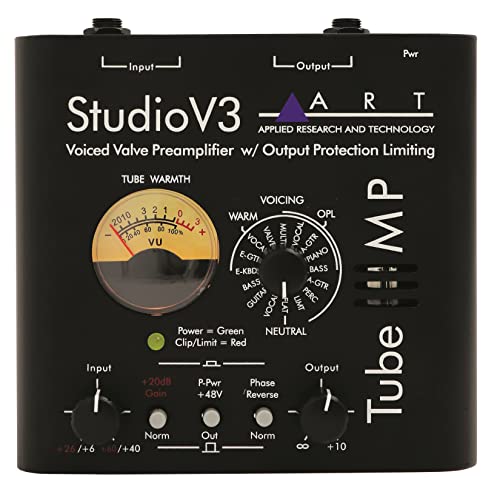
- Single-channel tube mic/instrument preamp
- Variable valve voicing for tone shaping
- Works with vocals, guitars, bass, and keys
Best For: Affordable home recording and simple analog warmth
Hybrid Tube Preamp
Universal Audio 710 Twin-Finity

- Blends tube and solid-state preamp sounds
- Dual gain stages for clean to crunchy tones
- Includes a high-impedance instrument DI
Best For: Tone shaping with flexible tube/solid-state blending
Tube Preamp DI Box

- 12AX7 tube-based preamp with XMAX input stage
- Separate mic and instrument inputs
- Includes phantom power, HP filter, and pad
Best For: Compact recording and DI duties with tube drive
Clean Gain Booster
Xvive P2 Tube Microphone Preamp

- Up to +40 dB of low-noise inline gain
- Nutube adds tube warmth and character
- USB-C rechargeable with balanced XLR I/O
Best For: Dynamic and ribbon mics needing inline gain
Single-Channel Tube Preamplifier
Behringer MIC300 Audiophile Vacuum Tube Preamplifier

- Single-channel mic/instrument preamp
- Built-in limiter helps prevent clipping
- Works with mic, instrument, and line sources
Best For: Solo recording and compact studio or live setups
Hybrid Dual-Channel Preamp
PreSonus BlueTube DP v2 Tube Mic/Instrument Preamp

- Two-channel mic/instrument preamp
- 12AX7 tube and solid-state dual-path design
- Includes phantom power, meter, pad, and filter
Best For: Dual-channel recording and flexible tone control
Tube Mic and Line Preamp
Behringer MIC2200 Audiophile Vacuum Tube Preamp
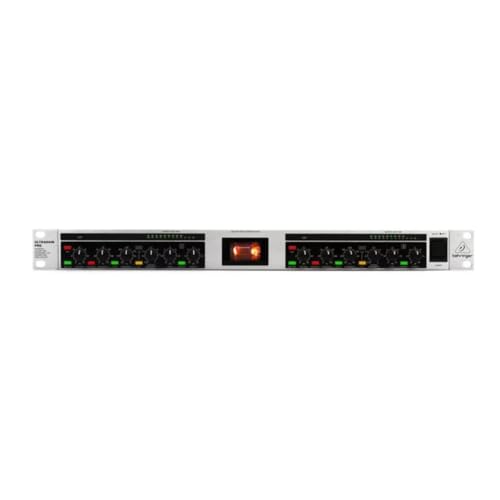
- Single-channel mic/line preamp with 12AX7 tube
- Integrated fully parametric EQs
- Line driver converts -10 dBV to +4 dBu
Best For: Flexible mic and line-level processing with EQ control
Warm Tape-Style Tone
Warm Audio WA-MPX Single-Channel Tube Mic Preamp

- 351-style tube preamp inspired by American tape machines
- 90dB of tube gain with 300v power
- Selectable tape saturation plus hi-pass/low-pass filters
Best For: Warm, tape-era tube color with hands-on tone shaping
Versatile Valve Channel
ART TPS II Tube Preamplifier System

- Variable input impedance and Variable Valve Voicing
- Automatically switches between mic and instrument preamp modes
- Wide 5Hz-50kHz response with output protection limiter
Best For: Flexible mic and instrument recording in one tube unit
USB Tube Recording Hub
Behringer TUBE ULTRAGAIN MIC500USB

- Supports mic, instrument, and line-level sources
- 16 preamp voicings plus built-in USB/audio interface
- Includes recording software and 150 plug-ins
Best For: Direct-to-computer recording with flexible voicing options
Budget Tube Mic Preamp – ART Tube MP Studio V3
The ART Tube MP Studio V3 is a compact tube microphone preamp for users who want simple, single-channel analog warmth for vocals, instruments, and recording basics. Its variable valve voicing and tube design make it a practical pick when you want to shape tone without adding a large rack unit.
Best For: Home studios, singers, and players who want an affordable tube preamp for mic or instrument tracking.
Pros:
- Single-channel tube mic and instrument preamp with variable valve voicing
- Works with vocals, electric/acoustic guitars, bass, keyboards, and drums
- Compact metal enclosure and XLR connectivity
- Light 2-pound design for easy desktop placement
Cons:
- Only one output channel
- Not aimed at multi-mic or dual-channel workflows
- Basic feature set compared with higher-end tube preamps
For straightforward tube coloration in a small setup, the Tube MP Studio V3 covers the essentials well. It is best viewed as a versatile entry-level tube microphone preamp rather than a full-featured studio centerpiece.
Hybrid Tube Preamp – Universal Audio 710 Twin-Finity
The Universal Audio 710 Twin-Finity is a tube microphone preamp built for users who want to blend tube and solid-state character in one channel. Its phase-aligned tone-blending design, dual gain stages, and hi-Z DI make it a flexible front end for mic and instrument sources.
Best For: Engineers and musicians who want a single-channel preamp with adjustable tube-to-solid-state tone blending.
Pros:
- Twin-Finity design blends 310-volt Class-A tube and solid-state preamp sounds
- Dual gain stages let you move from clean to creamy to crunchy tones
- Discrete JFET DI supports high-impedance instrument inputs
- Single-channel mic/line preamp with XLR connectivity
Cons:
- Single-channel unit only
- Larger and heavier than compact desktop preamps
- More of a premium tone-shaping tool than a simple utility preamp
If your goal is to dial in everything from transparent to aggressive character, the 710 Twin-Finity offers a lot of control in one box. It stands out as a tube microphone preamp for users who want flexibility, not just warmth.
Tube Preamp DI Box – Presonus TubePre v2
The Presonus TubePre v2 is a tube microphone preamp and DI box aimed at practical tracking jobs where you need mic and instrument inputs in one compact unit. Its 12AX7 tube-based design, XMAX solid-state input stage, and tube drive control give you a simple way to add saturation and gain.
Best For: Small studios and players who want a compact preamp/DI with tube drive, basic controls, and mic/instrument flexibility.
Pros:
- 12AX7 tube-based preamp with XMAX solid-state input stage
- Separate instrument and mic inputs
- Tube drive saturation control plus gain control
- Includes phantom power, HP filter, -20 dB pad, and polarity reverse
Cons:
- Single-channel design
- Limited to one year warranty
- More of a utility preamp/DI than a deep tone-shaping unit
For recording tasks that need a straightforward tube microphone preamp with useful front-end tools, the TubePre v2 is easy to place in a signal chain. It is a solid choice when you want practical controls rather than a complicated setup.
Clean Gain Booster – Xvive P2 Tube Microphone Preamp
The Xvive P2 is a tube microphone preamp designed as an inline gain booster for low-output dynamic and ribbon mics. With up to +40 dB of clean gain, a Nutube circuit, and USB-C rechargeable battery power, it is built for setups where the mic needs extra level right at the source.
Best For: Podcasters, streamers, vocalists, and live users who need clean inline gain for dynamic or ribbon microphones.
Pros:
- Delivers up to +40 dB of low-noise gain for weak microphones
- Uses a genuine Nutube 6P1 vacuum tube for added warmth
- USB-C rechargeable battery lasts up to 10 hours per charge
- Balanced XLR in and XLR out for easy integration
Cons:
- Battery powered, so it is another device to charge
- Designed as an inline booster rather than a full studio preamp
- Single-channel use only
If you need a tube microphone preamp that sits directly in line with a mic and adds gain without extra software or phantom power, the P2 is purpose-built for that job. Its compact, rechargeable design makes it especially convenient for mobile and creator-focused setups.
Single-Channel Tube Preamplifier – Behringer MIC300 Audiophile Vacuum Tube Preamplifier
Behringer Tube ULTRAGAIN MIC300 Audiophile Vacuum Tube Preamplifier with Limiter
Check Price On AmazonIf you want a tube microphone preamp for one mic or instrument source, the Behringer MIC300 is built for straightforward studio or live use. It offers high-end preamplification for microphone, instrument, and line-level signals, plus a limiter that helps keep the output from clipping.
Best For: Solo vocal recording, one-channel tracking, and compact studio or live setups that need tube color with basic protection from clipping.
Pros:
- Single-channel tube mic/instrument preamp fits simple recording chains.
- Limiter helps prevent output clipping.
- Handles microphone, instrument, and line-level sources.
- Designed for studio-grade condenser mics.
Cons:
- Only one channel, so it is not ideal for dual-mic workflows.
- Feature set is focused on core preamp and limiter duties.
For buyers who need a compact tube microphone preamp with no extra complexity, the MIC300 keeps the workflow simple and adds a practical safety net at the output. It is a strong match when you need one source processed cleanly and want tube-based preamplification in the chain.
Hybrid Dual-Channel Preamp – PreSonus BlueTube DP v2 Tube Mic/Instrument Preamp
The PreSonus BlueTube DP v2 is a tube microphone preamp aimed at users who want two channels and flexible tone shaping. Its dual-path design combines a 12AX7 vacuum tube stage with solid-state gain, while the tube drive control lets you push saturation from cleaner to more textured.
Best For: Dual-mic recording, instrument tracking, and small racks that need flexible tone control and useful front-panel tools.
Pros:
- Two channels support multi-source recording.
- Dual-path design blends 12AX7 tube and solid-state gain stages.
- Tube drive control adds adjustable saturation.
- Includes phantom power, VU metering, pad, polarity reverse, and high-pass filter.
Cons:
- Half-rack format may not suit every rack layout.
- Its tone-shaping options add more controls than a basic preamp.
As a tube microphone preamp, the BlueTube DP v2 stands out for giving you two channels plus practical studio controls in a compact chassis. It makes sense when you want the option to keep things clean or lean into tube saturation without sacrificing utility.
Tube Mic and Line Preamp – Behringer MIC2200 Audiophile Vacuum Tube Preamp
Behringer ULTRAGAIN PRO MIC2200 Audiophile Vacuum Tube Microphone/Line Preamplifier
Check Price On AmazonIf you need a tube microphone preamp that also works as a line preamp, the Behringer MIC2200 is built for flexible front-end use. It features an ultra-low-noise discrete mic/line design, a hand-selected 12AX7 tube, and integrated fully parametric EQs for more detailed shaping.
Best For: Users who want tube coloration, parametric EQ control, and line-level conversion in a single rack-friendly unit.
Pros:
- Discrete mic/line preamp with a hand-selected 12AX7 tube.
- Fully parametric EQs add detailed tone control.
- Independent line driver converts -10 dBV to +4 dBu pro level.
- Wide bandwidth and low-noise design support clean signal handling.
Cons:
- No extra onboard workflow tools like a limiter or VU meter are listed.
- Single-channel design is less suitable for multi-mic setups.
The MIC2200 is a practical choice when your tube microphone preamp needs go beyond basic gain and into EQ and line-level duties. It is especially appealing for setups that benefit from open bandwidth, flexible shaping, and a dedicated line driver.
Warm Tape-Style Tone – Warm Audio WA-MPX Single-Channel Tube Mic Preamp
If you’re shopping for a tube microphone preamp with a distinctly vintage character, the Warm Audio WA-MPX is built around a 351-style circuit inspired by American tape machines. It combines 90dB of tube gain, selectable tape saturation, and onboard hi-pass and low-pass filters, making it a practical choice for shaping warm, finished tones at the source.
Best For: Engineers and musicians who want authentic tape-era tube color with flexible tone shaping.
Pros:
- Based on a 351-style tape-era tube preamp for vintage-inspired tone
- Offers 300v power and up to 90dB of tube gain
- Selectable all-analog tape saturation adds compression and non-linear response
- Hi-pass and low-pass filters help refine muddy or overly bright sources
Cons:
- Single-channel design limits you to one source at a time
- Geared toward warm, colored sound rather than transparent preamping
The WA-MPX is a strong pick if your priority is character and control in a tube microphone preamp. Its handwired construction, CineMag transformers, and filter section make it feel purpose-built for tone shaping rather than utility alone.
Versatile Valve Channel – ART TPS II Tube Preamplifier System
The ART TPS II is a tube microphone preamp built for users who want flexibility as much as warmth. It adds variable input impedance, Variable Valve Voicing, and automatic switching between instrument and mic preamp modes, so it can cover a wide range of recording tasks with one unit.
Best For: Home and project studio users who want a flexible tube preamp for microphones and instruments.
Pros:
- Variable input impedance for broader tonal control
- Variable Valve Voicing helps tailor the tube character
- Automatically switches between instrument and mic preamp use
- Wide 5Hz-50kHz frequency response and output protection limiter
Cons:
- Single-channel design may not suit multi-mic setups
- Physical size is relatively large for a desktop unit
Overall, the TPS II stands out for giving you more ways to adapt the sound to the source. If you want a tube microphone preamp that can handle mic and instrument duties while still offering practical metering and protection, this is a very capable option.
USB Tube Recording Hub – Behringer TUBE ULTRAGAIN MIC500USB
The Behringer TUBE ULTRAGAIN MIC500USB is a tube microphone preamp aimed at straightforward studio, live, and computer recording. It supports microphone, instrument, and line-level sources, includes 16 preamp voicings, and adds a built-in USB/audio interface for direct connection to a computer.
Best For: Budget-minded users who want a tube preamp with USB recording and built-in voicing options.
Pros:
- Works with microphone, instrument, and line-level sources
- Includes 16 preamp voicings for different instruments and vocals
- Built-in USB/audio interface for direct computer recording
- Comes with software plus 150 instrument and effect plug-ins
Cons:
- More feature-focused than purist analog tube designs
- Only two channels, which may still be limiting for some setups
If you want a tube microphone preamp that also acts as a simple USB interface, the MIC500USB is the most convenience-oriented option here. Its modeling presets and bundled software make it especially appealing for basic recording, podcasting, and flexible home setups.
How We Picked These Tube Microphone Preamps
We focused on preamps that offer a meaningful tube stage, solid gain for common mics, and features that matter in real sessions. That includes noise control, DI or instrument input options, balanced outputs, channel count, and how well each unit fits vocals, guitars, bass, podcasts, and mobile recording.
We also favored models that cover different use cases, from simple single-channel boxes to dual-channel and higher-feature designs, so buyers can match the preamp to their workflow instead of overpaying for extras they will not use.
Quick Comparison
If you want the simplest path, choose a single-channel unit for one vocal or instrument chain. If you track multiple sources or stereo instruments, a dual-channel design is the better value. If you want more tone shaping or interface-friendly connectivity, look for added controls, output options, or USB features.
Among Tube Microphone Preamp choices, the main tradeoff is usually color versus cleanliness. Some models are built to add obvious warmth and saturation, while others aim for cleaner gain with just a touch of tube character.
Key Buying Factors for a Tube Microphone Preamp
Gain and Noise Floor
Check whether the preamp can supply enough clean gain for low-output dynamic and ribbon microphones. A good unit should stay quiet at higher gain settings and avoid adding hiss that becomes obvious during compression.
Tube Color and Tone Control
Some preamps give you mild warmth, while others offer more aggressive saturation or variable blending. Decide whether you want subtle enhancement for vocals or a more audible tube effect for instruments and creative tracking.
Input and Output Flexibility
Look for XLR, instrument, and balanced output options that match your interface or recorder. A DI input can be especially useful if you plan to track bass, synths, or electric guitar directly.
Channel Count and Workflow
Single-channel models suit solo vocal recording and overdubs. Two-channel units are better for stereo miking, duo vocal sessions, or any setup where you need more routing flexibility.
Extra Features
Features such as limiting, phase controls, impedance options, and USB connectivity can be helpful, but only if they support your actual recording habits. Prioritize sound quality and gain structure first.
Who Should Buy Which Tube Microphone Preamp?
If you want an affordable entry point into tube warmth, start with a compact single-channel model. If you record vocals and instruments regularly, a unit with DI capability and stronger gain staging is usually the smartest all-around choice. For higher-end tracking, look for a more robust Tube Microphone Preamp with better headroom, lower noise, and more refined tone control.
Producers who want flexibility across sessions should lean toward dual-channel or feature-rich designs, while streamers and mobile users may prefer smaller, USB-powered, or easy-to-integrate options. The right pick depends less on the tube label and more on how much clean gain, color, and routing flexibility your setup actually needs.
