Choosing the right headphone amp for IEMs can make a big difference in clarity, comfort, and control—whether you are mixing on stage, rehearsing at home, or monitoring in the studio.
This roundup focuses on compact, practical options with the features buyers actually need: low-noise performance, flexible inputs, and easy portability.
Best 10 Headphone Amp for Iems Picks for 2026
Best for Wired IEM Monitoring
Behringer P2 In-Ear Monitor Amp

- 3.5 mm output works with headphones, earbuds, and IEMs
- Mono/stereo switching fits different monitor feeds
- Locking input and belt clip make stage use easier
Best For: Wired personal monitoring for musicians who need simple on-body control.
Best for IEM Tuning

- Dual CS43198 DACs with low-distortion output
- App-based PEQ makes IEM tuning easy
- Portable USB DAC/amp with 3.5mm and 4.4mm outputs
Best For: IEM listeners who want precise tuning control and a clean portable DAC/amp.
Best for Live Monitoring
Personal Monitoring IEM Headphone Amp

- Mic input and mic thru for direct vocal monitoring
- Separate mix and mic level controls
- Works with IEMs and standard headphones
Best For: Singers and musicians who want clear real-time monitoring on stage or in the studio.
Best for Multi-Listener Setups
LZSIG 4-Channel Headphone Amplifier
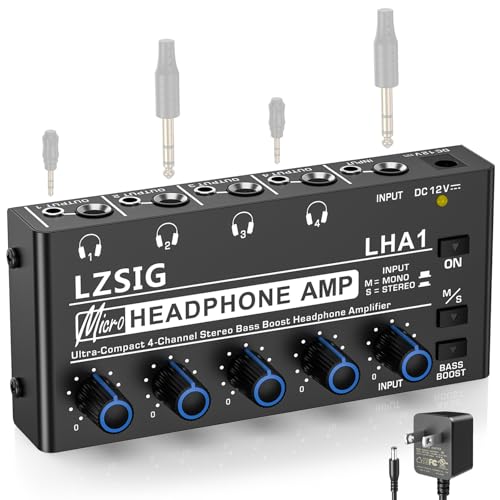
- Four outputs with independent volume control
- 3.5mm and 6.35mm compatibility without adapters
- Low-noise design with bass boost and stereo/mono switching
Best For: Small studios or shared listening setups that need multiple clean headphone outputs.
Best for Loud Stage Monitoring
ANLEON S1 Personal In-Ear Monitor Amp
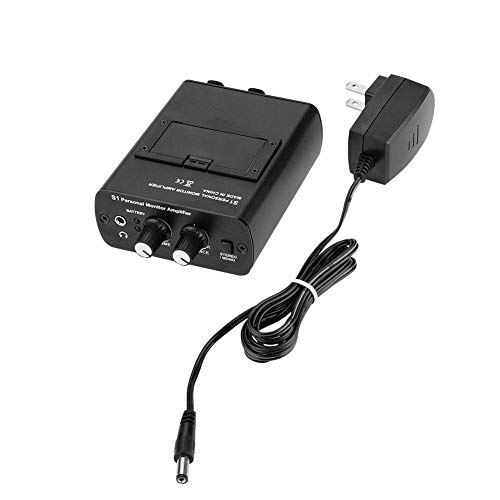
- Dual XLR inputs for mono or stereo feeds
- High-output design helps cut through loud stage volume
- Simple Level and Balance controls for fast adjustment
Best For: Drummers and stage musicians who need a straightforward wired in-ear monitor amp.
Best Portable Upgrade
Kiwi Ears Allegro Mini Portable IEM DAC

- 3.5mm and 4.4mm outputs for flexible listening
- USB-C DAC/amp with plug-and-play convenience
- Compact aluminum build for easy portability
Best For: Portable IEM users who want a small DAC/amp with balanced output support.
Best for Live IEM Monitoring
Bolanle P2 Portable In-Ear Monitor Amp

- XLR/TRS input support for easy pro-audio hookup
- Stereo/mono switch for flexible monitoring setups
- Battery-powered metal body built for gigging
Best For: Live musicians who need a rugged, no-fuss in-ear monitor amp with flexible inputs.
Best for Stage Monitoring
Phenyx Pro Dual-Channel IEM Amp
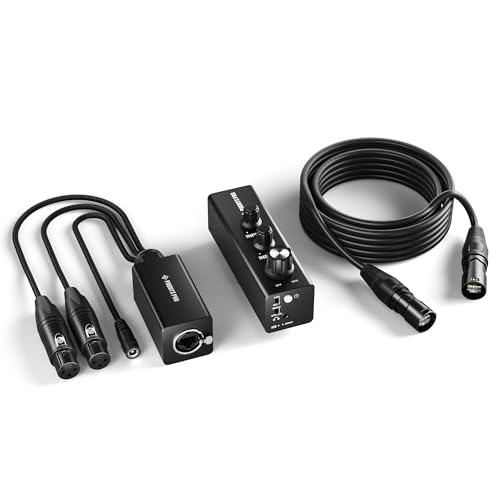
- Dual XLR wired monitoring for stable signal delivery
- Mono/stereo modes with separate L/R level controls
- DC or AAA battery power for flexible stage use
Best For: Musicians and live performers who need a portable wired IEM amp with simple, precise mix control.
Best Heavy-Duty Pick

- Secure locking XLR/TRS input for stage use
- Stereo/mono switching for flexible monitoring
- 10-hour AAA battery runtime with metal clip
Best For: Players who need a simple wired IEM monitor amp for rehearsals, live shows, or studio use.
Best for Stage Control
Coda Ultra-Compact Personal IEM Amplifier

- Mono, dual mono, and stereo mix control
- XLR and TRS inputs for flexible routing
- Limiter and belt clip suit live use
Best For: Performers and rehearsal users who need a compact, flexible IEM monitor amp.
Best for Wired IEM Monitoring – Behringer P2 In-Ear Monitor Amp
If you need a practical headphone amp for iems in a live or rehearsal setup, the Behringer P2 is built for exactly that job. It clips to your belt, takes a balanced line or stereo feed, and gives you simple on-body volume control for quick monitor adjustments.
Best For: Musicians who want a compact, wired personal monitor amp for keyboards, drums, or stage use.
Pros:
- Works with standard headphones, earbuds, and custom IEMs via 3.5 mm output
- Mono/stereo switching makes it flexible with different mixer and source setups
- Locking input connection helps prevent accidental disconnects during a gig
- Lightweight belt-pack design keeps monitor control close at hand
Cons:
- Designed for wired use, so it is not a wireless monitoring solution
- Best suited to stationary performers rather than players who move around a lot
For players who want a straightforward headphone amp for iems without extra features or a complicated setup, the P2 is a reliable stage tool. It focuses on the essentials: clean personal monitoring, easy level control, and a secure connection.
Best for IEM Tuning – MOONDROP Dawn PRO 2 DAC/AMP
If you want a headphone amp for iems that does more than just add volume, the MOONDROP Dawn PRO 2 is built for careful tuning, low-noise playback, and portable daily use. Its dual CS43198 DACs, 4Vrms output, and app-based PEQ make it a strong fit for listeners who want to fine-tune sensitive IEMs without losing control or clarity.
Best For: IEM listeners who want onboard DSP/PEQ control, low-distortion output, and a compact USB DAC/amp for phones or laptops.
Pros:
- Dual CS43198 DACs with smooth, low-distortion sound
- App-based PEQ tuning is useful for dialing in IEMs
- 4Vrms output and 4.4mm support add flexibility
- Portable aluminum build with good heat management
Cons:
- PEQ and tuning features may be more than casual users need
- Power is solid for IEMs, but not aimed at demanding full-size headphones
For buyers shopping specifically for a headphone amp for iems, the Dawn PRO 2 stands out because it combines clean amplification with detailed software control. That makes it especially appealing if you care about tailoring the sound of sensitive earphones rather than simply plugging in and playing.
Best for Live Monitoring – Personal Monitoring IEM Headphone Amp
If you need a practical headphone amp for iems that lets you hear your voice and mix clearly on stage or in the studio, this personal monitoring unit is built for that job. It combines mic input, mic thru, and separate level controls so you can fine-tune your monitor sound without complicating your setup.
Best For: Singers, musicians, podcasters, and home-studio users who want real-time vocal monitoring with flexible control.
Pros:
- Built-in mic input and mic thru for direct monitoring setups
- Separate mic level and monitor mix controls for better balance
- Works with both IEMs and standard headphones
- Metal housing adds durability for gigs and travel
Cons:
- More specialized than a basic headphone amp
- Designed for monitoring, not for powering high-end audiophile cans
For performers who want a straightforward headphone amp for iems with stage-ready flexibility, this is a smart pick. It focuses on live vocal monitoring and hands-on control rather than extra features, which makes it easy to fit into rehearsals, gigs, and recording sessions.
Best for Multi-Listener Setups – LZSIG 4-Channel Headphone Amplifier
If you need a practical headphone amp for iems and other sensitive headphones in a shared setup, the LZSIG 4-channel amplifier is built around separate volume control, low-noise operation, and simple stereo/mono switching. It’s more of a utility amp than a desktop audiophile statement piece, but it gives you four outputs, 1/8″ and 1/4″ compatibility, and a bass boost option for added flexibility.
Best For: Small studios, podcast rooms, or home users who need to feed multiple listeners from one source with independent volume control.
Pros:
- Four headphone outputs with independent level control
- Works with both 3.5mm and 6.35mm headphones without adapters
- Low-noise design helps keep monitoring clean and usable
- Bass boost and stereo/mono switching add setup flexibility
Cons:
- Not a mixer, so it won’t replace a full monitoring controller
- Bass boost may be unnecessary for neutral IEM listening
- Best suited to practical monitoring, not high-end desktop refinement
As a headphone amp for iems, this model makes the most sense when you need multiple clean outputs and easy level matching more than luxury features. If your priority is sharing one source across a few listeners, it’s a straightforward, capable option.
Best for Loud Stage Monitoring – ANLEON S1 Personal In-Ear Monitor Amp
If you need a simple headphone amp for iems that can keep up with a louder band mix, the ANLEON S1 is built for stage and studio monitoring. Its dual XLR inputs, Level control, and Balance/Mix function make it easy to blend two sources and dial in a personal monitor feed without a complicated setup.
Best For: Drummers, vocalists, keyboard players, and other musicians who want a straightforward wired in-ear monitor amp for stage use.
Pros:
- Dual XLR inputs support mono or stereo monitoring
- High-power headphone output is designed to stay audible as the band gets louder
- Simple Level and Balance controls make quick mix adjustments easy
- Includes a limiter for extra ear protection
Cons:
- Not a wireless system, so it is best for stationary players
- More of a practical monitor amp than a feature-heavy studio device
Overall, the ANLEON S1 is a solid choice if you want a no-fuss headphone amp for iems with enough output for live monitoring and basic mix control. It focuses on reliability and volume rather than advanced extras, which makes it a sensible pick for performers who just want to hear themselves clearly.
Best Portable Upgrade – Kiwi Ears Allegro Mini Portable IEM DAC
If you want a compact headphone amp for iems that also works as a USB DAC, the Kiwi Ears Allegro Mini is an easy travel-friendly pick. It adds 3.5mm and 4.4mm output options, supports high-resolution playback up to 32-bit/384kHz, and keeps the design simple with plug-and-play USB-C compatibility for phones and PCs.
Best For: IEM listeners who want a small, durable DAC/amp with both balanced and single-ended outputs for everyday portable use.
Pros:
- Compact all-aluminum body feels sturdy and easy to carry
- Includes both 3.5mm and 4.4mm outputs for flexible setups
- Supports up to 32-bit/384kHz PCM for hi-res playback
- USB-C plug-and-play design works well with modern devices
Cons:
- Best suited to IEMs and efficient headphones, not demanding full-size cans
- No onboard controls or advanced features beyond basic DAC/amp duties
For listeners building a simple portable stack, this headphone amp for iems stands out for portability, clean output, and balanced connection support. It is a sensible upgrade if you want better drive and clarity without carrying a larger desktop unit.
Best for Live IEM Monitoring – Bolanle P2 Portable In-Ear Monitor Amp
If you need a practical headphone amp for iems on stage, the Bolanle P2 is built for clear, low-noise personal monitoring with simple XLR/TRS connectivity. It’s aimed at musicians who want a dependable beltpack solution for rehearsals, gigs, and loud live rooms.
Best For: Keyboardists, drummers, guitarists, and bass players who want a rugged wired monitor amp with flexible input options.
Pros:
- XLR and 1/4" TRS inputs make it easy to connect to pro audio gear
- Stereo/mono switch adds flexibility for different monitoring setups
- Battery-powered design keeps it fully cordless on stage
- Metal chassis and belt clip suit touring and regular gig use
Cons:
- Requires 2 AAA batteries, so you’ll need spares on hand
- Designed for stage monitoring rather than desktop listening
- No built-in charging or USB power option
As a headphone amp for iems, the P2 makes the most sense if you want a straightforward live-monitoring tool instead of a feature-heavy studio unit. It’s a solid pick when reliability, simple routing, and stage-ready durability matter more than extras.
Best for Stage Monitoring – Phenyx Pro Dual-Channel IEM Amp
If you need a practical headphone amp for iems that works in live and rehearsal settings, the Phenyx Pro PWM-10 is built around flexible wired monitoring. Its dual XLR inputs, mono/stereo switching, and independent left/right level control make it easy to dial in a personal mix without adding extra coloration.
Best For: Musicians, bands, and recording setups that want a portable wired monitor amp with simple controls and dependable signal routing.
Pros:
- Dual XLR inputs support stable wired monitoring over longer cable runs.
- Mono and stereo modes give you more control over how you hear the mix.
- Independent left/right volume adjustment helps tailor the sound to your ears.
- DC or AAA battery power adds flexibility for stage or mobile use.
Cons:
- Wired-only design is less convenient than wireless monitoring solutions.
- More geared toward live monitoring than casual everyday listening.
For performers who want a straightforward headphone amp for iems, this model focuses on utility rather than extras. The included CAT-5 cable and adapter help keep setup compact, which makes it a solid fit when you want reliable monitoring without a lot of fuss.
Best Heavy-Duty Pick – P2 Portable IEM Headphone Amp
If you need a practical headphone amp for iems on stage or in the studio, the P2 is built for straightforward wired monitoring. It uses a locking XLR/TRS input, a 3.5mm output for your earbuds or headphones, and an analog signal path aimed at clear, low-latency monitoring.
Best For: Drummers, keyboardists, guitarists, and other performers who want a simple bodypack monitor amp for wired IEM setups.
Pros:
- Clear analog monitoring with low distortion and low latency
- Stereo/mono switch makes it easier to follow backing tracks or vocals
- Locking XLR/TRS input helps keep the connection secure during gigs
- Runs on two AAA batteries for about 10 hours of use
Cons:
- Does not connect to USB, phones, or PCs
- AAA batteries are not included
- 3.5mm output means it is best suited to wired IEMs and headphones
For players who want a no-frills headphone amp for iems, this P2 focuses on reliability, easy level control, and secure connectivity rather than extra streaming features. It is a solid pick if your priority is dependable wired monitoring during rehearsals and live sets.
Best for Stage Control – Coda Ultra-Compact Personal IEM Amplifier
If you want a practical headphone amp for iems that gives you more control on stage or in rehearsal, the Coda Ultra-Compact Personal In Ear Monitor Amplifier is built around flexible monitoring and simple mix shaping. It supports mono, dual mono, and stereo setups, and the XLR/TRS inputs make it easy to drop into different signal chains without extra fuss.
Best For: Musicians, singers, and rehearsal setups that need a compact belt-pack monitor amp with mix control and solid input flexibility.
Pros:
- Mono, dual mono, and stereo panning help tailor your monitor mix.
- XLR and TRS inputs add flexibility for different stage or studio rigs.
- Built-in limiter helps protect hearing from sudden peaks and clips.
- Compact, durable housing with belt clip is easy to wear and carry.
Cons:
- More suited to live monitoring than casual desktop listening.
- No advanced DSP or detailed EQ controls.
- Works best when paired with noise-isolating IEMs.
This is a straightforward headphone amp for iems if your priority is reliable monitoring, mix flexibility, and a portable form factor rather than extra features. It stands out most for performers who need quick, practical control over what they hear.
How We Picked These Headphone Amp for Iems Options
We prioritized models that suit in-ear monitoring use rather than general desktop listening. That means looking for clean gain, low hiss, reliable connectivity, and designs that are easy to carry or mount on a belt, pedalboard, or mic stand setup. We also weighed power options, input compatibility, and whether a unit makes sense for solo practice, band rehearsal, or live performance.
Quick Comparison
Some picks are USB DAC/amps built for phones, laptops, and portable listening, while others are stage-focused personal monitor amps that accept XLR or TRS feeds. If you need a simple listening upgrade, a USB model is usually the better fit. If you need to hear a monitor mix on stage, choose a wired personal monitor amp with stereo/mono switching and the right input type for your rig.
Key Buying Factors for Headphone Amp for Iems
Noise Floor and Gain Structure
IEMs are sensitive, so a good amp should stay quiet at low volumes and not introduce hiss. Adjustable gain is helpful if you use very efficient in-ears or need extra headroom for live use.
Inputs, Outputs, and Compatibility
Check whether you need 3.5mm, 1/4-inch, 4.4mm balanced, XLR, or TRS connections. For studio and stage monitoring, input flexibility matters more than extra features you may never use.
Portability and Power
USB-powered devices are convenient for travel and desktop use. Battery-powered and belt-pack styles are better for rehearsals and live sets where mobility matters. If you perform often, prioritize simple power options and sturdy construction.
Stereo, Mono, and Control Features
Musicians should look for stereo/mono switching, channel balance, and easy volume control. These features help you adapt to different monitor mixes quickly without changing your main audio source.
Who Should Buy Which Headphone Amp for Iems?
Buy a stage-style personal monitor amp if you are a drummer, vocalist, keyboardist, guitarist, or bassist who needs a dependable live monitoring solution. Choose a compact USB DAC/amp if you want a cleaner everyday audio upgrade for phones, tablets, or computers. If you need multiple outputs or shared listening, a multi-channel desktop unit may be the better match.
In short, the best Headphone Amp for Iems is the one that fits your source gear, your monitoring environment, and how much control you want over your in-ear mix.
