Choosing the right in-ear monitor system can make home recording, rehearsal, and streaming feel cleaner, quieter, and more controlled. The best options keep latency low, preserve detail, and give you a stable signal without cluttering your workspace.
In this roundup, we focus on practical picks for different studio setups, from simple plug-and-play systems to more advanced wireless models with stronger routing and monitoring flexibility.
Best 10 In-Ear Monitor Systems for Home Studios Picks for 2026
Reliable 5.8GHz Performer

- 5.8 GHz true diversity wireless helps reduce interference.
- Channel Scan Mode simplifies finding a stable channel.
- 20Hz–20kHz audio with 24-bit/48kHz support.
Best For: Home studio users who want dependable wireless monitoring and easy setup.
Flexible Clip-On Monitor
Wireless IEM for Singers and Drummers

- 2.4GHz low-latency wireless monitoring with stereo/mono modes.
- Compact clip-on design suits portable home studio setups.
- Compatible with mixers, audio interfaces, speakers, and computers.
Best For: Portable home studio monitoring for singers, drummers, and small recording setups.
Budget Practice Choice
JOYO JW-07 Wireless IEM System

- 2.4GHz system with under-5 ms latency for real-time monitoring.
- Frequency hopping helps improve signal stability.
- Up to 8 hours of battery life for long practice sessions.
Best For: Guitar practice and simple home studio monitoring on a budget.
Feature-Rich UHF Option
Phenyx Pro PTM-10 Stereo Wireless IEM

- 900MHz UHF wireless with up to 160 ft / 50 m range.
- Stereo/mono modes plus EQ, balance, limiter, and lock controls.
- 89 tunable frequencies support multiset operation.
Best For: Home studios that want advanced control and stronger wireless performance.
Rack-Mounted Mono Pick
SGPRO SG-40NA Wireless Monitor System

- UHF band with antenna diversity for steadier reception
- Three audio inputs, including XLR and 1/4-inch
- One transmitter can feed multiple receivers
Best For: home studio setups that need a rack-friendly mono IEM system
Easy-Pairing Studio Option
LEKATO MS-02 2.4G Stereo IEM System

- Under 4.5 ms latency in mono mode
- One transmitter supports up to 4 receivers
- Mono/stereo switching with auto-pairing
Best For: home studio users who want a simple low-latency wireless monitor system
Portable All-Day Pick
MELONARE PM-2 Wireless IEM System

- Charging case extends total runtime to 30 hours
- OTG input supports phones, tablets, and laptops
- Up to 10 sets can operate simultaneously
Best For: portable home studio workflows that need long battery life and easy device hookups
Quiet, Reliable Home Monitoring
Xvive U45 Wireless in Ear Monitor System

- 5.8 GHz true diversity wireless connection
- 20Hz–20kHz audio with 24-bit/48kHz detail
- USB-C charging and up to 5 hours battery
Best For: Home studio musicians who want clean wireless monitoring
Pro Metal Rack-Ready Option
Pyle Wireless in-Ear Monitor System
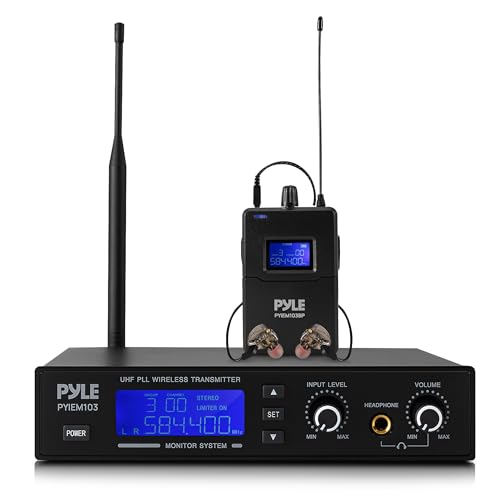
- 220 UHF frequencies across 10 groups
- 164 ft range with passive noise cancellation
- Includes rack bracket, antenna, and batteries
Best For: Studio users who want a rack-friendly monitoring package
Low-Latency Studio Performer Pick
POGOLAB Wireless in-Ear Monitor System

- 1ms ultra-low transmission delay
- 48kHz/24-bit audio with 7 UHF channels
- XLR input with AUX/LINE switching
Best For: Performers who need fast, responsive monitoring
Reliable 5.8GHz Performer – Xvive U45 Wireless IEM System
If you want in-ear monitor systems for home studios that stay dependable and stay out of the way, the Xvive U45 is built around stable 5.8 GHz wireless monitoring, low latency, and clear full-range audio. It’s a practical choice when you need a simple setup for tracking, rehearsing, or monitoring at home without crowding your workspace with cables.
Best For: Home studio players and performers who want a reliable wireless monitor link with straightforward channel scanning and clear audio.
Pros:
- 5.8 GHz true diversity wireless design helps avoid interference from other wireless devices.
- Channel Scan Mode makes it easier to find a steady wireless channel.
- 20Hz–20kHz frequency response with 24-bit/48kHz audio and a 110 dB signal-to-noise ratio.
- Up to 5 hours of battery life with USB-C charging and dual charging cables included.
Cons:
- Battery life is moderate compared with some longer-running alternatives.
- Best range is rated at 100 ft / 30.5 m, which may limit larger spaces.
The U45 is a focused, studio-friendly wireless IEM option if you value clean monitoring and reliable connection over extra features. Its channel scan and fast charging support make it especially convenient for regular home use.
Flexible Clip-On Monitor – Wireless IEM for Singers and Drummers
For home studios that need flexible in-ear monitor systems, this 2.4GHz clip-on setup is aimed at singers, drummers, guitarists, and creators who want wireless monitoring without a bulky rack unit. It supports stereo and mono modes, offers low-latency playback, and is designed for practice rooms, livestreaming, recording sessions, and small studio environments.
Best For: Musicians and home studio users who want a lightweight, portable wireless monitor solution for practice and recording.
Pros:
- 2.4GHz wireless transmission with low latency for synchronized monitoring.
- Supports both stereo and mono monitoring modes.
- Up to 30 m range in open environments for typical studio or rehearsal use.
- Compact clip-on design with up to 5 hours of battery life and dual USB-C charging cable.
Cons:
- Best performance depends on direct line-of-sight positioning.
- Battery life may require recharging during longer sessions.
This is a sensible pick if your priority is portability and easy wireless monitoring rather than advanced rack-style controls. Its compatibility with mixers, audio interfaces, and computers makes it a versatile fit for home studio workflows.
Budget Practice Choice – JOYO JW-07 Wireless IEM System
The JOYO JW-07 is a straightforward option among in-ear monitor systems for home studios, especially if you want something geared toward practice, basic monitoring, and guitar use. It uses 2.4GHz wireless transmission, offers low latency under 5 ms, and includes automatic pairing plus channel banks for flexible setup.
Best For: Guitarists and home practice users who need an affordable wireless monitoring system with simple operation.
Pros:
- Low latency under 5 ms for real-time monitoring.
- Frequency hopping helps reduce interference from other wireless devices.
- Up to 8 hours of battery life once fully charged.
- 12 channel banks across 4 groups for more flexible practice setups.
Cons:
- One transmitter does not support multiple receivers.
- Range is listed at 40–60 ft in open space, so it suits smaller rooms best.
JW-07 focuses on practical monitoring features rather than premium studio extras, which makes it a good fit for solo practice and simple home recording. If you need a compact, low-latency monitor system without much setup complexity, it covers the basics well.
Feature-Rich UHF Option – Phenyx Pro PTM-10 Stereo Wireless IEM
If you’re comparing in-ear monitor systems for home studios and want more control over your monitoring mix, the Phenyx Pro PTM-10 stands out with UHF wireless operation, stereo/mono switching, and several adjustment tools. Its 900MHz band, selectable frequencies, and up to 160 ft / 50 m range make it a strong fit for studio work, rehearsal spaces, and other demanding setups.
Best For: Home studio users who want a more advanced wireless IEM system with detailed monitoring controls and stronger range.
Pros:
- 900MHz UHF design helps reduce congestion and avoids the latency issues often seen in 2.4GHz systems.
- True stereo and mono modes provide flexible monitoring options.
- EQ, balance, limiter, and lock functions offer useful control over the monitor mix.
- Up to 160 ft / 50 m range and support for multiple systems with 89 tunable frequencies.
Cons:
- More feature-rich than basic home users may need.
- Rack-style hardware and multiple inputs may be more than necessary for very simple setups.
The PTM-10 is the most control-oriented pick in this group, especially if you want monitor tailoring and stable wireless performance. For home studios that need a serious monitoring tool rather than a casual practice device, it offers a lot to work with.
Rack-Mounted Mono Pick – SGPRO SG-40NA Wireless Monitor System
If you need in-ear monitor systems for home studios that can also handle rehearsals and small live setups, the SGPRO SG-40NA is built around stable UHF transmission and flexible input options. Its antenna diversity and selectable frequencies are aimed at reducing dropouts in crowded RF spaces, while the compact half-rack transmitter makes it easier to fit into a busy studio desk or portable rig.
Best For: Home studio users who want a rack-friendly mono IEM system with flexible input routing.
Pros:
- UHF wireless design with antenna diversity for more stable reception.
- Three audio inputs, including XLR and 1/4" jacks, for flexible integration.
- One transmitter can connect to multiple receivers for scaling up monitoring.
- Compact half-19-inch rack transmitter with up to 100 meters of coverage.
Cons:
- Mono-focused system, so it is not the most immersive option for stereo monitoring.
- Receiver battery life is listed at about 6 hours, which may require planning for longer sessions.
For studios that want a straightforward wireless monitoring path with solid connectivity options, the SGPRO SG-40NA offers a practical balance of flexibility and range. It looks especially useful if you need one transmitter feeding more than one performer without adding clutter.
Easy-Pairing Studio Option – LEKATO MS-02 2.4G Stereo IEM System
For in-ear monitor systems for home studios, the LEKATO MS-02 focuses on quick setup, low latency, and portable use. Its 2.4GHz design, auto-pairing, and compact beltpack-style receiver make it a convenient option for recording sessions, practice, and monitoring without running extra cables around the room.
Best For: Singers, small studio teams, and home recording users who want an easy wireless monitoring setup.
Pros:
- Upgraded low-latency transmission rated at under 4.5 ms in mono mode.
- One transmitter can send audio to up to 4 receivers.
- 6-8 hours of battery life with LED indicators for battery and volume status.
- Mono/stereo switching plus a compact, lightweight clip-on receiver.
Cons:
- Earbuds are not included, so you will need to buy your own.
- Open-area range is listed at 100 feet, which may be less ideal in more obstructed spaces.
The MS-02 is a strong fit if you want a simple wireless monitor path for a home studio and do not need a complex rack system. It is especially appealing when low latency and fast pairing matter more than extra hardware.
Portable All-Day Pick – MELONARE PM-2 Wireless IEM System
If portability is a priority for your in-ear monitor systems for home studios, the MELONARE PM-2 stands out with its charging case, OTG input support, and quick auto-pairing. It is designed for flexible monitoring from laptops, tablets, phones, and other gear, making it useful for modern studios that move between recording, playback, and mobile sessions.
Best For: Creators who want a portable wireless IEM setup with long battery life and easy device connection.
Pros:
- Up to 30 hours of total runtime with the included charging case.
- OTG cable support lets you connect phones, tablets, and laptops without a headphone jack.
- 2.4GHz wireless audio with 24bit/48kHz HD support for clear monitoring.
- One transmitter can connect to multiple receivers, with up to 10 sets operating simultaneously.
Cons:
- Battery life per charge is about 10 hours, so the charging case is part of the value proposition.
- Independent receiver volume control is useful, but the system is still aimed at portable, not rack-based, use.
The PM-2 is a smart pick if you want a travel-friendly IEM system that still feels capable in a studio environment. Its charging case and OTG support make it especially practical for users who rely on multiple devices and want fewer setup headaches.
Quiet, Reliable Home Monitoring – Xvive U45 Wireless in Ear Monitor System
If you want an in-ear monitor system for home studios that stays simple and dependable, the Xvive U45 is built around stable 5.8 GHz wireless performance and a straightforward setup. It offers true diversity reception, a 100 ft / 30.5 m working range, and a channel scan mode that helps you find a clean path before you start tracking or rehearsing.
Best For: Home studio musicians who want a compact wireless IEM for clean monitoring and quick setup.
Pros:
- 5.8 GHz true diversity wireless design for solid RF connection
- 20Hz–20kHz response with 24-bit/48kHz audio and 110 dB SNR
- Channel Scan mode helps identify a better wireless channel quickly
- USB-C charging with up to 5 hours of battery life
Cons:
- Battery life is limited compared with some larger systems
- Requires matching transmitter channel manually after scanning
The U45 is a practical pick if you value clear monitoring, low-latency wireless audio, and a compact setup for studio use. Its range and sound quality make it well suited to home rehearsal spaces, though its battery life means longer sessions may need charging breaks.
Pro Metal Rack-Ready Option – Pyle Wireless in-Ear Monitor System
For in-ear monitor systems for home studios that need a more traditional rack-style setup, the Pyle wireless IEM brings UHF PLL operation, 220 selectable frequencies, and a 164 ft range. It’s designed for accurate monitoring with passive noise cancellation and a wide 20Hz–20kHz response, making it a flexible option for studio rehearsal, recording, or spoken-word work.
Best For: Users who want a feature-rich, rack-friendly wireless IEM for studio and live monitoring.
Pros:
- 220 selectable UHF frequencies across 10 groups for interference control
- Metal base station transmitter for a more durable setup
- 20Hz–20kHz frequency response with passive noise cancellation
- Includes transmitter, bodypack, earphones, antenna, rack bracket, and batteries
Cons:
- Larger, more traditional system than compact portable options
- Uses AA batteries for the bodypack receiver
This Pyle system stands out if you want a broad frequency selection and a complete hardware package for a home studio rack. It’s less minimalist than some wireless IEMs, but the added connectivity and included accessories make it easier to build into a more permanent monitoring rig.
Low-Latency Studio Performer Pick – POGOLAB Wireless in-Ear Monitor System
If low delay matters most in your in-ear monitor systems for home studios, the POGOLAB model focuses on speed and clarity with a 1ms ultra-low transmission delay. It also supports 48kHz/24-bit audio, 7 selectable UHF channels, and a balanced XLR input with an AUX/LINE switch, which makes it easy to connect to mixers, interfaces, or playback sources.
Best For: Performers and home studio users who prioritize ultra-low latency and flexible input options.
Pros:
- 1ms ultra-low latency for real-time monitoring
- 48kHz/24-bit audio with over 106 dB dynamic range
- 7 selectable UHF channels to help reduce interference
- XLR input plus AUX/LINE switch for flexible source matching
Cons:
- Frequency response tops out at 16.5kHz rather than the full 20kHz range
- Battery life is listed at up to 5 hours per charge
The POGOLAB system is a strong fit if you want a monitoring setup that feels fast and responsive in a studio workflow. Its channel options, input flexibility, and rechargeable design make it a practical choice for rehearsals and recording sessions where latency is the top concern.
How We Picked These In-Ear Monitor Systems for Home Studios
We focused on features that matter most in real studio use: low latency, dependable wireless range, clear stereo or mono monitoring options, easy setup, and receiver comfort for long sessions. We also considered whether the system is practical for solo creators, small bands, and worship or rehearsal environments that double as home studios.
Quick Comparison: What Matters Most
If you want the simplest setup, look for automatic pairing and beltpack-style receivers. If you need the most stable monitoring for a busy room, prioritize stronger frequency management and solid interference resistance. For vocal tracking and instrumental practice, cleaner detail and low delay usually matter more than extra channels you may never use.
Key Buying Factors for In-Ear Monitor Systems for Home Studios
Latency
For recording and live cue monitoring, lower latency helps prevent distracting timing issues. Ultra-low-delay systems are especially useful for singers and drummers who need instant feedback.
Signal Type and Flexibility
Stereo monitoring can be helpful when you want a more natural mix, while mono is often simpler and more reliable. Check whether the transmitter accepts XLR, AUX, or line-level input so it matches your interface, mixer, or audio source.
Wireless Band and Interference
Different bands can perform differently depending on your room and nearby devices. A good system for home studios should stay stable in typical household wireless environments and avoid dropouts from Wi-Fi congestion or nearby electronics.
Range and Build Quality
Even in a home studio, range matters if you move between a control area and live room. Durable receivers, secure belt clips, and compact transmitters make everyday use easier and more reliable.
Battery and Charging
Rechargeable systems can reduce operating costs and simplify routine use. If you rehearse often or record long sessions, battery life and charging convenience should be part of your decision.
Who Should Buy Which In-Ear Monitor Systems for Home Studios?
Solo singers, producers, and podcasters usually benefit from a simple, low-latency system with straightforward setup. Drummers and players who move around more should prioritize stability, range, and secure wearability. If you need to support multiple performers or expect occasional room-to-room use, choose a more robust wireless design with better frequency handling and stronger monitoring controls.
For most home-studio buyers, the best choice is the system that gives you the cleanest monitoring with the least setup friction. Balance sound quality, latency, and compatibility first, then choose the feature set that matches how you actually record and rehearse.
