Choosing the right monitoring rig can make every performance cleaner, tighter, and easier to trust. The best professional in-ear monitor systems deliver stable wireless performance, clear sound, and a setup that fits your workflow.
Whether you need a simple single-user pack or a multi-channel solution for a full band, this roundup focuses on practical choices that balance audio quality, range, and value.
Best 10 Professional In-Ear Monitor Systems Picks for 2026
Stage-Ready Stereo Choice
Shure PSM300 P3TRA215CL Pro System

- Stereo personal monitoring with Mix Mode
- One-touch scan and sync for setup
- Includes SE215 earphones and accessories
Best For: Performers who want a dependable wireless IEM system with easy setup and stereo monitoring.
Compact Low-Latency Pick
Professional U4 Wireless Monitor System

- 2.4GHz wireless with under 5ms latency
- Rechargeable battery with about 5 hours of use
- Built-in limiter helps reduce distortion
Best For: Players and singers who want a simple low-latency wireless IEM for smaller setups.
Multi-Performer Monitor System

- Four-channel station supports four mixes
- Includes four bodypack receivers and earphones
- Rackmount-ready design for stage workflows
Best For: Four-person bands, church teams, and events that need multiple wireless monitor mixes.
Portable Multi-Receiver Option
Wireless In-Ear Monitor System MS-02

- Under 4.5ms latency in mono mode
- One transmitter can feed up to four receivers
- 6-8 hour battery life with LED indicators
Best For: Small bands, singers, and trainees who want a portable multi-receiver IEM setup.
Mono Clarity Pick
Phenyx Pro PTM-11 UHF Mono IEM

- Mono monitoring reduces phase issues and keeps the mix focused.
- UHF 900MHz system offers 50 selectable frequencies.
- Separate outputs and metal housing suit stage or studio use.
Best For: People who want a straightforward mono IEM system for dependable live monitoring.
Wireless Range Pick

- 5.8 GHz true diversity link with Channel Scan mode.
- 24-bit/48kHz audio and 20Hz–20kHz response.
- USB-C charging and up to 5 hours of battery life.
Best For: Players and studio users who want a compact IEM system with quick setup and clear audio.
Stereo Control Pick
Phenyx Pro PTM-10 UHF Stereo IEM

- True stereo monitoring with stereo/mono mode selection.
- 89 tunable frequencies in the 900MHz band.
- EQ, balance, limiter, and lock functions add control.
Best For: Users who want stereo IEM monitoring with flexible controls for stage, studio, or speaking events.
Compact Stereo Monitor
Phenyx Pro Compact UHF Stereo Wireless IEM
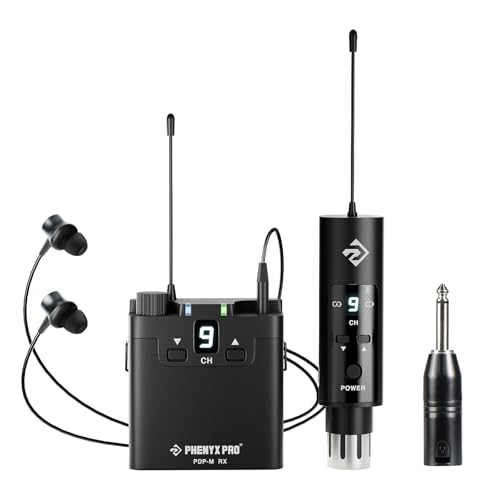
- Mono or stereo monitoring support
- 24-bit/48kHz digital audio path
- 160-200 ft UHF range with 16 channels
Best For: Portable monitoring for singers, musicians, and small stages
Four-Pack Stage Monitor

- Includes 4 bodypack receivers
- UHF with up to 300 ft range
- 2x40 adjustable frequencies for multi-set use
Best For: Bands and studios needing multiple wireless receivers
Dual-Channel Metal Monitor
Phenyx Pro PTM-22 Wireless IEM

- Dual-channel UHF with 100 frequencies
- Rugged metal transmitter and LCD
- Includes 2 bodypacks plus rackmount kit
Best For: Rugged mono monitoring for singers, worship teams, and bands
Stage-Ready Stereo Choice – Shure PSM300 P3TRA215CL Pro System
Shure PSM300 P3TRA215CL Pro Wireless in-Ear Personal Monitoring System with SE215-CL Earphones
Check Price On AmazonFor buyers comparing professional in-ear monitor systems, the Shure PSM300 P3TRA215CL is a polished option built for reliable stage use. It combines stereo personal monitoring, a one-touch frequency scan and sync workflow, and SE215 sound-isolating earphones for a setup that feels straightforward without sacrificing control.
Best For: Performers who want a dependable wireless IEM system with easy setup and stereo monitoring.
Pros:
- Patented Audio Reference Commanding is designed for clear sound with ultra-low noise and no artifacts.
- One-touch frequency scan and sync helps quickly find a clean wireless channel.
- Mix Mode or stereo mode lets you build a personal mix from two channels of audio.
- Includes SE215 sound-isolating earphones and a full mounting/accessory kit.
Cons:
- Uses a more involved rack-and-accessory setup than compact beltpack-only systems.
- Frequency response is listed at 38 Hz–15 kHz, which may matter to users wanting broader specs.
The Shure PSM300 is a strong fit if you want a stage-ready monitor system with proven wireless convenience and better mix control than basic entry-level models. Its included earphones and receiver controls make it especially practical for performers who need a complete package.
Compact Low-Latency Pick – Professional U4 Wireless Monitor System
The Xvive U4 is a practical pick in professional in-ear monitor systems when you want a compact wireless setup without a complicated rack. It uses 2.4GHz transmission, keeps latency under 5ms, and offers simple transmitter-and-beltpack operation for studio sessions, rehearsals, and live performance.
Best For: Players and singers who want a simple low-latency wireless IEM for smaller setups.
Pros:
- Less than 5ms latency helps keep monitoring responsive.
- 2.4GHz uncompressed wireless signal is designed for low noise and clear audio.
- Rechargeable battery provides about 5 hours of use.
- Built-in limiter circuitry helps reduce distortion under excessive input levels.
Cons:
- Listed battery life is modest compared with longer-running systems.
- Uses mono input/output structure rather than a full-featured stereo stage monitor setup.
The U4 is best viewed as a streamlined monitor solution for users who value portability and fast setup. If your priority is getting a clean, low-latency feed into headphones without extra complexity, it is a very workable choice.
Multi-Performer Monitor System – PTM-33-4B Mono Monitor System
Among professional in-ear monitor systems for bands and worship teams, the Phenyx Pro PTM-33-4B stands out for supporting multiple performers from one transmitter. It offers four groups of left/right inputs and loop outputs, four included bodypack receivers, and UHF mono monitoring built for clear stage communication.
Best For: Four-person bands, church teams, and events that need multiple wireless monitor mixes.
Pros:
- Four-channel monitor station supports up to four standalone mixes.
- UHF mono operation with 4×25 frequencies helps reduce interference.
- IR sync makes it easier to link additional receivers quickly.
- Rackmount kit and compact 16.5-inch transmitter support touring and stage setup.
Cons:
- Mono-only monitoring will not suit users specifically looking for stereo IEM playback.
- Best wireless range depends on line of sight, with obstacles reducing performance.
If you need a single system that can feed several performers at once, the PTM-33-4B is built for that workflow. Its multi-receiver design and flexible inputs make it a practical option for organized live monitoring on busy stages.
Portable Multi-Receiver Option – Wireless In-Ear Monitor System MS-02
The LEKATO MS-02 is a compact choice in professional in-ear monitor systems for smaller stage and rehearsal setups. It uses 2.4G wireless transmission, supports one transmitter to multiple receivers, and adds a simple mono/stereo switch so you can adapt the monitor feed to different use cases.
Best For: Small bands, singers, and trainees who want a portable multi-receiver IEM setup.
Pros:
- Upgraded latency is listed at under 4.5ms in mono mode.
- Supports one transmitter to up to four receivers.
- Offers 6-8 hours of battery life with LED battery and volume indicators.
- Mono/stereo switching and one-key mute add setup convenience.
Cons:
- Earbuds are not included and must be purchased separately.
- Open-area range is listed at 100 feet, so real-world performance may vary with obstacles.
The MS-02 is a sensible option if you want a lightweight wireless monitor system that is easy to share across a few performers. Its long battery life and simple controls make it especially appealing for practice spaces, rehearsals, and smaller live gigs.
Mono Clarity Pick – Phenyx Pro PTM-11 UHF Mono IEM
If you want professional in-ear monitor systems that keep the mix focused and easy to follow, the Phenyx Pro PTM-11 is built around mono monitoring for clear, stable audio. Its UHF design, separate outputs, and straightforward setup make it a practical fit for live performers, pastors, broadcasters, and studio users who need dependable monitoring without unnecessary complexity.
Best For: Users who want a simple mono IEM setup with stable wireless performance and pass-through outputs for stage or speaking work.
Pros:
- Mono monitoring helps avoid phase issues and keeps the sound clear and focused.
- Separate left/right inputs and line out let the original signal pass through unchanged.
- UHF 900MHz operation offers 50 selectable frequencies and support for up to 5 systems.
- Metal transmitter, half-rack design, and carry case add durability and portability.
Cons:
- Mono-only monitoring is less flexible than stereo systems for imaging and spatial detail.
- 164 ft range may be reduced by thick walls, glass, or metal obstacles.
This is a solid choice if your priority is reliable, no-fuss monitoring with clean mono sound and practical stage features. It is especially appealing when you want a professional in-ear monitor system that favors consistency and ease of use over advanced extras.
Wireless Range Pick – Xvive U45 5.8GHz IEM System
The Xvive U45 is a practical option in professional in-ear monitor systems if you want compact wireless monitoring with quick channel setup and high-resolution audio. Its 5.8 GHz true diversity connection, channel scan mode, and USB-C charging make it a good fit for studio work, band rehearsal, and live performance where reliability and convenience matter.
Best For: Performers and home or studio users who want a compact wireless IEM system with easy channel selection and clear audio.
Pros:
- 5.8 GHz true diversity wireless connection is designed for stable RF performance.
- Channel Scan mode helps you quickly find a usable channel.
- 24-bit/48kHz audio with a 20Hz–20kHz response supports detailed monitoring.
- USB-C charging and up to 5 hours of battery life add convenience.
Cons:
- About 100 ft range is shorter than some stage-focused IEM systems.
- Battery life may require planning for longer sessions.
If you value simple operation and clear sound over maximum range, this system makes sense. It is a compact professional in-ear monitor system for users who want dependable monitoring with modern charging and setup features.
Stereo Control Pick – Phenyx Pro PTM-10 UHF Stereo IEM
For buyers comparing professional in-ear monitor systems, the Phenyx Pro PTM-10 stands out with true stereo monitoring and a useful set of controls. It supports stereo or mono mode, offers 89 tunable frequencies in the 900MHz band, and includes EQ, balance, limiter, and lock functions for users who want more control over their monitor mix on stage or in the studio.
Best For: Performers, speakers, and bands who want stereo monitoring with more mix control and multi-system flexibility.
Pros:
- True stereo mode provides spatial clarity, with mono mode available when needed.
- 900MHz operation with 89 frequencies supports up to 5 systems together.
- EQ, balance, limiter, PAD, and lock functions add practical control and protection.
- Metal transmitter, rackmount kit, and carrying case suit professional setups.
Cons:
- More features can mean a slightly more involved setup than simpler mono systems.
- Best performance still depends on maintaining a clear wireless path within the rated range.
This model is a strong pick when you want the added clarity of stereo plus tools to fine-tune the mix. It is a well-rounded professional in-ear monitor system for users who need flexible monitoring across live, rehearsal, lecture, and studio applications.
Compact Stereo Monitor – Phenyx Pro Compact UHF Stereo Wireless IEM
This professional in-ear monitor systems pick is built for performers who want a compact, easy-to-carry setup with flexible mono or stereo monitoring. It uses a 24-bit/48kHz digital signal path, UHF 900MHz frequency-hopping, and up to 16 selectable frequencies to help deliver a stable stage feed for rehearsals, worship, and small live shows.
Best For: Singers, musicians, and small bands that need a portable IEM system with both mono and stereo support.
Pros:
- Supports mono or stereo monitoring depending on your source and adapter setup.
- 24-bit/48kHz digital audio aims for a cleaner, more consistent monitor feed.
- 30mW UHF transmission and 160-200 ft range help reduce dropouts on typical stages.
- Can send one monitor mix to multiple receivers for expandable use.
Cons:
- Listed battery life is up to 4 hours, which may be short for long sessions.
- Best suited to small-stage and rehearsal use rather than larger multi-channel rigs.
Overall, this is a practical entry point if you want a compact wireless monitor that balances portability, stereo flexibility, and straightforward setup. The included adapters, earphones, and storage pouch make it easier to get started quickly and stay organized between gigs.
Four-Pack Stage Monitor – XTUGA RW2080 UHF IEM System
If you need professional in-ear monitor systems for a band, stage, or studio setup, the XTUGA RW2080 is designed around multi-user monitoring. It uses UHF circuitry for delay-free operation, offers up to 300 feet of range, and includes four bodypack receivers so several performers can monitor from the same transmitter.
Best For: Bands, stage crews, and studios that need four wireless bodypacks from one system.
Pros:
- Includes 4 bodypack receivers, making it useful for small group monitoring.
- UHF design is built for steady signal and delay-free operation.
- Up to 300 ft range gives performers room to move.
- Preset 2×40 adjustable frequencies help support interference-free multiset operation.
Cons:
- Heavier package at 4.9 pounds, so it is less minimal than compact two-user systems.
- More features and outputs may be more than a solo performer needs.
For groups that want a more traditional multi-receiver monitor package, this system stands out for its four-pack layout and rackmount-friendly design. The metal transmitter and included accessories make it a practical choice for more professional stage use.
Dual-Channel Metal Monitor – Phenyx Pro PTM-22 Wireless IEM
This professional in-ear monitor systems option is aimed at performers who want dependable mono monitoring in live, worship, rehearsal, or studio settings. The dual-channel UHF design offers 2×50 selectable frequencies, while the metal transmitter and clear LCD make setup and channel management more straightforward on stage.
Best For: Singers, worship teams, and bands that want a rugged dual-channel mono IEM setup.
Pros:
- Dual-channel UHF operation with 100 selectable frequencies helps reduce interference.
- Rugged metal transmitter adds durability for stage and travel use.
- Works with mixers and audio systems for stage or worship monitoring.
- Includes 2 bodypack receivers, rackmount kit, carry case, and earphones.
Cons:
- Designed for mono monitoring, so it is not the best fit if you need stereo IEM mixes.
- The package uses AA batteries, which means ongoing battery management for the receivers.
In practical terms, the PTM-22 is a strong fit when you want stable wireless monitoring and a hardware package that feels ready for live use. It is less flexible than stereo systems, but it compensates with rugged construction and a useful accessory bundle.
How We Picked These Professional In-Ear Monitor Systems
We looked for systems that offer dependable wireless operation, usable range, straightforward setup, and features that matter in real-world rehearsals and live shows. Priority went to models with stable frequency options, low-latency performance where applicable, and enough flexibility for solo performers, bands, and venues.
Quick Comparison: What Matters Most
Before comparing models, focus on three basics: mono versus stereo monitoring, the wireless band and interference risk, and how many performers the system can support. Some Professional In-Ear Monitor Systems are ideal for a single vocalist or instrumentalist, while others are built for multi-user stage monitoring and rack-based rigs.
Key Buying Factors for Professional In-Ear Monitor Systems
Mono Vs. Stereo
Mono systems are usually simpler, more affordable, and easier to manage in busy RF environments. Stereo systems provide better spatial detail, which can help performers place instruments and vocals more naturally in the mix.
Wireless Band and Frequency Control
Check whether the system uses UHF, 2.4GHz, 5.8GHz, or another band. UHF often offers stronger range and flexibility for live stages, while 2.4GHz and 5.8GHz models can be convenient for smaller setups but may be more sensitive to congestion in crowded environments.
Latency, Range, and Stability
Low latency is essential for accurate performance timing, especially for drummers, vocalists, and musicians who rely on tight rhythm. Range matters too, but stability is usually more important than raw distance. A shorter, cleaner connection is better than a longer one that drops out.
Receiver Design and Build Quality
Bodypack comfort, display clarity, battery life, and overall ruggedness all affect day-to-day use. Metal housings, secure belt clips, and easy-to-read controls are valuable for touring and frequent rehearsals.
Who Should Buy Which Professional In-Ear Monitor Systems?
Solo performers and small bands often do best with a simple single-channel wireless setup that is easy to deploy and monitor. Groups with multiple players should look at multi-channel or multi-bodypack options that reduce crossover and simplify shared stage monitoring. If you play live often, prioritize reliable UHF performance and sturdy hardware; if you mainly rehearse or record in controlled spaces, convenience and stereo detail may matter more.
In short, the best choice depends on your stage size, number of users, and how much control you want over your monitoring mix.
