Choosing the right in-ear monitor system can make every show feel tighter, cleaner, and easier to control. For touring musicians, the best setups balance sound quality, wireless reliability, and fast stage-ready operation.
This roundup focuses on practical options for live use, from compact budget-friendly systems to more flexible rigs built for demanding performance schedules.
Best 10 In-Ear Monitor Systems for Touring Musicians Picks for 2026
Portable 5.8GHz Pick
Xvive U45 Wireless in Ear Monitor System

- 5.8 GHz true diversity wireless link
- Channel scan mode helps find a clean channel
- 24-bit/48kHz audio with USB-C charging
Best For: Touring musicians who want a compact, interference-resistant IEM system
Simple 2.4GHz Starter
Xvive U4 Wireless in-Ear Monitor System Set
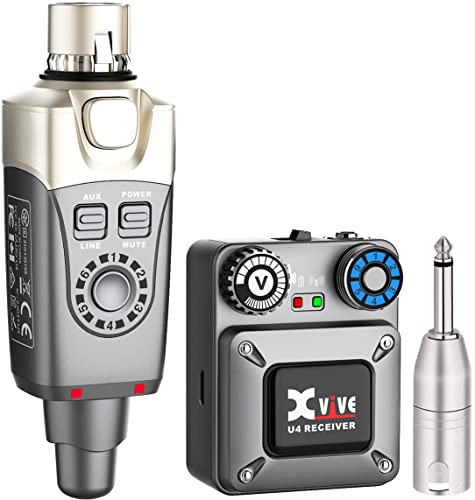
- 2.4GHz wireless design for global use
- Less than 5ms latency for monitoring
- Over 90 feet of range and 5-hour battery life
Best For: Small venues and touring players who want a simple wireless IEM starter
Rack-Friendly Mono Choice
Phenyx Pro PTM-11 Wireless IEM System

- Mono UHF monitoring with 50 selectable frequencies
- 164 ft range and separate input/output routing
- Metal half-rack transmitter with carry case
Best For: Users who want a durable mono IEM system for stage, studio, or speech
Long-Run Charging Case Pick
MELONARE PM-2 Wireless In Ear Monitor System

- Up to 30 hours total runtime with charging case
- OTG input works with phones, tablets, and laptops
- Mono/stereo switching with multi-receiver support
Best For: Mobile performers who want long battery life and flexible device connectivity
Stage-Ready Stereo Monitoring
Phenyx Pro PTM-10 UHF Stereo Wireless IEM

- True stereo/mono monitoring options
- 900MHz band with 89 tunable frequencies
- Up to 160 ft. range with rack-mountable transmitter
Best For: Touring bands and performers who want flexible stereo monitoring
Low-Interference Touring Pick
Coda AirSync UHF Stage Monitor System

- Dedicated UHF band avoids WiFi and Bluetooth interference
- Factory-paired plug-and-play setup
- Supports up to 13 simultaneous systems
Best For: Bands and touring acts that want simple, reliable stage monitoring
Dual-Channel Performance Monitor
Phenyx Pro PTM-22 Mono Dual Wireless IEM

- Mono dual wireless design with separate outputs
- Metal bodypack receiver with sturdy build
- 2x50 frequencies and 164 ft. range
Best For: Bands and studio users who want a durable mono dual system
Compact Stereo Pick
LEKATO MS-02 2.4G Low-Latency IEM

- Under 4.5ms latency in mono mode
- Supports one transmitter to multiple receivers
- 6-8 hour battery life with LED status
Best For: singers, bands, and church rehearsal setups
Long-Range Mono Pick
4-Pack UHF Wireless IEM System

- UHF PLL system with 520-580 MHz frequency range
- Up to 330 ft open-space coverage
- Includes 4 bodypack receivers and 4 earphones
Best For: live performers needing a bundled long-range mono system
Talkback Ready Pick

- Cue talkback via external dynamic mic
- 5.8GHz platform with 4 selectable channels
- Charging case extends total working time
Best For: bands and live teams needing cue communication
Portable 5.8GHz Pick – Xvive U45 Wireless in Ear Monitor System
If you want in-ear monitor systems for touring musicians that are simple to deploy and less likely to clash with crowded wireless setups, the Xvive U45 is built around 5.8 GHz operation and a solid 100 ft / 30.5 m connection. It also adds a channel scan mode to help you find a clean channel quickly before a show.
Best For: Players and bands that want a compact 5.8 GHz IEM setup for rehearsals, small stages, and live performance.
Pros:
- 5.8 GHz true diversity design helps avoid interference with other wireless devices.
- Channel scan mode simplifies finding a usable channel before you perform.
- 24-bit/48kHz audio with 20Hz-20kHz response and 110 dB SNR for detailed monitoring.
- USB-C charging with up to 5 hours of battery life and fast top-up capability.
Cons:
- Battery life is shorter than some larger charging-case systems.
- You must set the transmitter channel manually after scanning.
Overall, the U45 is a practical wireless monitor system for musicians who want clean audio, straightforward channel finding, and a travel-friendly setup. Its 5.8 GHz design makes it especially appealing where 2.4 GHz congestion is a concern.
Simple 2.4GHz Starter – Xvive U4 Wireless in-Ear Monitor System Set
The Xvive U4 is a straightforward option if you need in-ear monitor systems for touring musicians and want something easy to bring to small venues or rehearsal spaces. Its 2.4GHz wireless design, short setup, and low-latency performance make it a practical grab-and-go monitor system.
Best For: Small clubs, rehearsal use, and performers who want an easy portable wireless IEM setup.
Pros:
- 2.4GHz wireless operation works anywhere in the world.
- Less than 5ms latency supports distraction-free monitoring.
- Over 90 feet of working range suits small stages and clubs.
- Up to 5 hours of battery life for typical show use.
Cons:
- Range is shorter than some larger-stage systems.
- Only 6 channels are available for simultaneous broadcasts.
The U4 keeps the formula simple: portable wireless monitoring, low latency, and enough range for many gigging situations. It is a solid choice when ease of use matters more than advanced routing or extended range.
Rack-Friendly Mono Choice – Phenyx Pro PTM-11 Wireless IEM System
For in-ear monitor systems for touring musicians who prefer a focused mono feed and a more traditional UHF setup, the Phenyx Pro PTM-11 is built for reliable monitoring with minimal stage clutter. It offers 50 selectable frequencies, a 164 ft operating range, and a metal transmitter base that feels ready for regular use.
Best For: Bands, studios, churches, and presenters who want a mono wireless IEM system with separate outputs and rack-friendly hardware.
Pros:
- Mono monitoring helps avoid phase issues and keeps the mix clear and focused.
- UHF 900MHz operation with 50 selectable frequencies supports flexible setup.
- Separate left/right inputs and pass-through outputs add routing convenience.
- Metal transmitter base, half-rack design, and carry case improve portability.
Cons:
- Mono-only monitoring will not suit users who want stereo IEM mixes.
- Range notes warn that thick walls, glass, and metal can reduce performance.
The PTM-11 is a sensible option when reliability and simple mono monitoring matter more than stereo imaging. Its separate outputs and sturdy hardware make it especially useful for structured live or installed setups.
Long-Run Charging Case Pick – MELONARE PM-2 Wireless In Ear Monitor System
The MELONARE PM-2 is aimed at musicians who need in-ear monitor systems for touring musicians with long runtime and quick setup. It combines a 2.4GHz wireless link, OTG audio input support, and a charging case that extends the system far beyond a single battery cycle.
Best For: Mobile performers, crews, and rehearsing musicians who want long battery life and easy phone, tablet, or laptop connectivity.
Pros:
- Charging case extends total runtime up to 30 hours.
- OTG input supports smartphones, tablets, and laptops without a headphone jack.
- One transmitter can connect to multiple receivers with independent volume control.
- Mono/stereo switching adds flexibility for different monitoring needs.
Cons:
- The transmitter itself is rated for up to 10 hours per charge, so full runtime depends on the charging case.
- 2.4GHz wireless systems can be more crowded than less common bands in busy RF environments.
PM-2 stands out for portability and stamina, especially if you want a system that can keep up with long rehearsal days or repeated gigs. The charging case and OTG support make it feel well suited to modern, mobile workflows.
Stage-Ready Stereo Monitoring – Phenyx Pro PTM-10 UHF Stereo Wireless IEM
For in-ear monitor systems for touring musicians, the Phenyx Pro PTM-10 is built around true stereo monitoring, 900MHz wireless performance, and a rack-mountable transmitter. Its selectable stereo/mono modes, tunable frequencies, and practical control features make it a solid fit when you need dependable monitoring across rehearsals, gigs, and stage work.
Best For: Touring musicians, bands, and performers who want stereo monitoring with flexible frequency options.
Pros:
- True stereo/mono mode selection for different monitoring needs
- 900MHz band with 89 tunable frequencies and support for up to 5 simultaneous systems
- Up to 160 ft. operating range for stage and venue use
- EQ, balance, limiter, lock, and PAD functions for more control
Cons:
- Operation range is listed at 160 ft., which may be limiting on larger stages
- Uses a bodypack receiver and wired earbuds rather than premium custom monitors
The PTM-10 focuses on flexibility and control, which is useful when you need a wireless IEM setup that can adapt to different rooms and performance styles. If stereo imaging and rack-friendly hardware matter more than ultra-simple operation, it is a practical stage monitor option.
Low-Interference Touring Pick – Coda AirSync UHF Stage Monitor System
Among in-ear monitor systems for touring musicians, the Coda AirSync is aimed at players who want a straightforward UHF setup with minimal wireless congestion. It uses a dedicated 657-663 MHz band, comes factory-paired, and adds battery and channel features that make it easier to deploy on stage without a complicated setup.
Best For: Touring acts and small-to-mid-size bands that want plug-and-play UHF monitoring with simple setup.
Pros:
- Dedicated UHF band that avoids WiFi and Bluetooth congestion
- Factory-paired plug-and-play setup for fast deployment
- Up to 150-foot range with low-battery warnings
- Supports up to 13 simultaneous systems on different channels
Cons:
- Battery life is listed at 6 hours, so longer shows may require charging planning
- Designed around 3.5mm earphones, so compatibility depends on your earbuds
The AirSync is a strong choice if you value ease of use and channel scalability over extra onboard processing. Its dedicated UHF design and quick setup make it well suited to mobile musicians who want dependable monitoring without spending time on configuration.
Dual-Channel Performance Monitor – Phenyx Pro PTM-22 Mono Dual Wireless IEM
The Phenyx Pro PTM-22 is a mono dual wireless in-ear monitor system designed for users who want separate outputs and sturdy stage hardware. For touring musicians comparing in-ear monitor systems for touring musicians, this model stands out for its dual-channel design, metal build, and 164-foot operation range, making it a practical option for band and studio monitoring.
Best For: Bands and studio users who need a mono dual wireless IEM with separate outputs.
Pros:
- Mono dual wireless design with separate outputs
- Metal wireless IEM system and sturdy bodypack receiver
- 2×50 frequencies for added channel flexibility
- Up to 164 ft. operation range for stage use
Cons:
- Monophonic design may not suit users who specifically want stereo monitoring
- No additional feature details were provided in the supplied notes
The PTM-22 is positioned for users who prioritize a durable build and dual-channel flexibility over stereo imaging. If your monitoring workflow is centered on mono feeds and you want a metal receiver system with separate outputs, it is an efficient stage-ready choice.
Compact Stereo Pick – LEKATO MS-02 2.4G Low-Latency IEM
If you need in-ear monitor systems for touring musicians that are simple to deploy and easy to move around with, the LEKATO MS-02 is built for small to medium stage use, rehearsals, and daily practice. It uses 2.4GHz wireless transmission with mono/stereo switching, low noise, and a compact clip-on receiver design.
Best For: singers, bands, church teams, and rehearsal setups that want a lightweight wireless IEM option with quick pairing.
Pros:
- Ultra-low latency in mono mode, listed at under 4.5ms
- One transmitter can send to multiple receivers, up to 4 pairs
- 6-8 hours of battery life with LED battery and volume indicators
- 100 ft open-area wireless range for flexible stage movement
Cons:
- Earbuds are not included and must be purchased separately
- Best suited to small/medium stage use rather than larger touring rigs
Overall, the MS-02 focuses on straightforward monitoring, easy setup, and portable performance for players who want a practical wireless IEM system without extra complexity.
Long-Range Mono Pick – 4-Pack UHF Wireless IEM System
This wireless in-ear monitor system is aimed at touring musicians and live crews who need a stable mono monitoring setup with strong range. It uses UHF PLL technology, offers preset frequency options in the 520 MHz-580 MHz range, and is designed to reduce interference while keeping the signal clear.
Best For: stage musicians, sound engineers, church bands, and MCs who need a long-range mono IEM package with multiple receivers included.
Pros:
- UHF PLL design helps prevent frequency drops and interference
- Up to 330 ft open-space coverage for freer stage movement
- Includes 1 transmitter, 4 receivers, and 4 in-ear earphones
- Receiver indicators show low battery and RF signal status
Cons:
- Mono-only monitoring may not suit users who want stereo mixes
- Open-space range is reduced by thick walls, glass, and metal blocks
For buyers prioritizing reliable coverage and a bundled multi-user setup, this system offers a practical mono solution with the essentials already in the box.
Talkback Ready Pick – SWIFF WX520 5.8GHz IEM System
For touring musicians who want more communication built into their in-ear monitor systems, the SWIFF AUDIO WX520 adds a cue talkback function alongside stereo/mono switching. Its 5.8GHz wireless platform, four selectable channels, and one-to-more setup make it a flexible option for bands, studios, and live stages.
Best For: bands, studio sessions, and live performers who want cue talkback plus wireless monitoring in a rechargeable system.
Pros:
- Built-in cue talkback works with an external dynamic microphone
- 5.8GHz transmission with 4 channels for anti-interference performance
- Latency is listed at under 9.2ms for real-time monitoring
- Transmitter charging case extends total working time to about 10 hours
Cons:
- Receiver battery life is listed at up to 5 hours
- Latency is higher than the fastest low-latency IEM options
The WX520 stands out when communication matters as much as monitoring, especially for players and crews who want a compact digital system with useful workflow features.
How We Picked the Best In-Ear Monitor Systems for Touring Musicians
We focused on In-Ear Monitor Systems for Touring Musicians that prioritize dependable wireless performance, usable range, low-latency monitoring, and straightforward setup. We also considered mono versus stereo operation, transmitter and receiver durability, battery convenience, and whether the system is practical for rehearsals, clubs, and regular travel.
Quick Comparison
Think of these systems in three broad buckets: compact 2.4GHz or 5.8GHz setups for portability, UHF systems for more traditional stage monitoring, and multi-user or feature-rich kits for bands that need more flexibility. If you want the simplest grab-and-go solution, look at portable systems with charging cases. If you need stronger stage utility, UHF models with better channel control are often the safer bet.
Key Buying Factors for In-Ear Monitor Systems for Touring Musicians
Wireless Band and Stability
Choose a band that fits your environment. UHF systems are common for stage use and can offer more robust channel management, while 2.4GHz and 5.8GHz options may be easier to deploy but can be more sensitive to crowded wireless spaces.
Mono Vs. Stereo
Mono is usually simpler and more dependable for quick mixes, while stereo gives you more space and separation. Touring musicians who rely on precise panning or click tracks often prefer stereo, but mono remains a strong choice for vocalists and players who mainly need a solid monitor feed.
Latency and Range
Low latency matters because even a small delay can feel distracting on stage. Also check real-world operating range, not just the headline spec. Larger stages, outdoor gigs, and crowded venues can reduce effective performance.
Battery Life and Charging
Long battery life and a practical charging solution are essential when you are moving between rehearsals, soundcheck, and back-to-back shows. Systems with charging cases or rechargeable bodypacks can save time on the road.
Build Quality and Controls
Metal receivers, secure belt clips, clear displays, and simple channel switching are especially useful for touring. When gear is being packed, unpacked, and used nightly, durability matters as much as specs.
Who Should Buy Which In-Ear Monitor Systems for Touring Musicians?
If you want a lightweight, easy-to-live-with setup, a portable stereo system is a smart starting point. If you need more reliable stage coordination, a UHF rack-friendly option may be the better fit. Players who tour often but keep the rig compact should look for systems that combine stable wireless operation with rechargeable convenience. For bands building a shared monitor workflow, multi-pack or dual-transmitter-style options can be the most efficient choice.
Ultimately, the best choice depends on how you perform. For some musicians, simplicity wins. For others, the right monitor system is the one that delivers the cleanest mix, the least hassle, and the most confidence under live conditions.
