Choosing the right monitoring setup can make or break a live mix. For bigger stages, you need dependable signal, enough headroom, and systems that stay clear when the venue gets crowded with wireless gear.
This guide covers the best in-ear monitor systems for large venues, with a focus on real-world usability, coverage, and the features that matter most for bands, worship teams, and touring acts.
Best 10 In-Ear Monitor Systems for Large Venues Picks for 2026
Stage-Ready Wireless IEM
Audio-Technica ATW-3255 Wireless IEM System

- Wireless bodypack receiver and transmitter
- Monitor headphones included
- Simple stage-monitoring setup
Best For: Buyers who want a basic wireless IEM system with included headphones
Pro Personal Monitoring
Shure PSM300 P3TRA215CL Wireless IEM

- SE215 sound isolating earphones included
- One-touch scan and sync for clean channels
- Mix Mode and stereo monitoring support
Best For: Performers who want a dependable, feature-rich wireless personal monitor
Crowded-RF Venue Monitor
UHF 902-927MHz Wireless IEM System
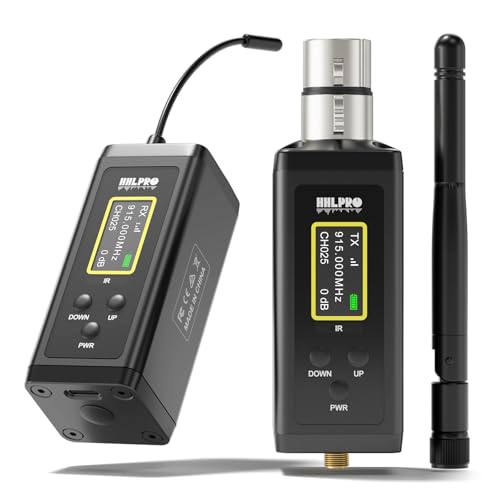
- Dedicated UHF band for crowded RF spaces
- Less than 5ms latency and 300-foot range
- 50 channels with auto-scan and sync
Best For: Bands and venues that need stable wireless monitoring in busy RF areas
True Stereo Tour Monitor
Xvive U45D True Stereo Wireless IEM

- Four modes: Stereo, L, R, and Mix
- Dual XLR inputs for true stereo monitoring
- Less than 5ms latency and six channels
Best For: Musicians and worship teams that want flexible stereo wireless monitoring
Reliable mono stage monitoring
Phenyx Pro PTM-11 Mono Wireless IEM System

- UHF 900MHz mono monitoring
- 50 selectable frequencies
- 164 ft operating range
Best For: Band, church, broadcast, and studio users needing stable mono monitoring
Compact low-latency monitoring
LEKATO MS-02 Wireless IEM System

- Under 4.5 ms mono latency
- One transmitter to up to 4 receivers
- 6 to 8 hours battery life
Best For: Church, rehearsal, and singer monitoring with easy setup
Multi-user rack-ready monitoring
Phenyx Pro PTM-33-4B 4-Channel UHF IEM System

- Four independent mono mixes
- 4x25 UHF selectable frequencies
- Includes 4 receivers and rack kit
Best For: Four-performer bands and worship teams needing multiple mixes
UHF Stereo Rack-Ready Pick

- True stereo with mono/stereo mode selection.
- 900MHz UHF with 89 tunable frequencies.
- 160 ft. range and rackmount-friendly design.
Best For: Performers and speech setups needing stereo monitoring
Long-Range 4-Bodypack Option

- Includes 4 bodypacks and 4 earphones.
- Claims up to 300 ft. wireless coverage.
- 2*40 frequencies with multiset support.
Best For: Teams that need four receivers and longer range
Mono High-Coverage Value Pick

- Mono UHF PLL system with zero latency.
- Includes 4 receivers and 4 earphones.
- Claims up to 330 ft. open-space coverage.
Best For: Mono monitoring for bands, churches, and events
Stage-Ready Wireless IEM – Audio-Technica ATW-3255 Wireless IEM System
If you’re comparing in-ear monitor systems for large venues, the Audio-Technica ATW-3255 is a straightforward wireless option built around a bodypack receiver, monitor headphones, and a transmitter. It fits buyers who want a practical stage-monitoring setup without a lot of extra complexity.
Best For: Performers who want a simple wireless in-ear monitoring setup with the core components included.
Pros:
- Wireless in-ear monitor system with transmitter and bodypack receiver included
- Comes with monitor headphones for an all-in-one monitoring setup
- Designed for wireless stage monitoring use
Cons:
- Supplied notes provide limited detail on range, latency, and channel features
- Less feature-specific information than some competing systems
Overall, the ATW-3255 is best viewed as a clean, no-frills wireless IEM option when you want the basics covered. If you value included hardware over advanced specs, it is easy to place on a shortlist.
Pro Personal Monitoring – Shure PSM300 P3TRA215CL Wireless IEM
Shure PSM300 P3TRA215CL Pro Wireless in-Ear Personal Monitoring System with SE215-CL Earphones
Check Price On AmazonFor in-ear monitor systems for large venues, the Shure PSM300 P3TRA215CL is a strong choice when you want dependable wireless monitoring and more control over your mix. The system is built around the P3RA receiver, P3T transmitter, and SE215 sound isolating earphones, with stereo personal monitoring features for stage use.
Best For: Musicians and performers who want a reliable wireless personal monitoring system with more advanced receiver controls.
Pros:
- Includes SE215 sound isolating earphones and all-metal components
- One-touch frequency scan and sync help find a clean wireless channel
- Mix Mode and stereo mode support flexible personal monitoring
- Includes rack mount and hardware kits for setup convenience
Cons:
- Uses RF wireless hardware, so setup is more involved than ultra-simple systems
- Included battery life is rated at 10 hours, which may require planning for longer events
As a stage-monitoring package, the PSM300 stands out for its practical tools and reliable feature set. If you need a proven wireless IEM system for live performance environments, this is one of the most complete options in the group.
Crowded-RF Venue Monitor – UHF 902-927MHz Wireless IEM System
If you need in-ear monitor systems for large venues with busy wireless traffic, this UHF wireless IEM system is designed to stay stable in crowded RF environments. The notes emphasize dedicated 902-927MHz operation, low latency, and a 300-foot range for live music, worship, and event use.
Best For: Bands, churches, and live-event users who need a rugged UHF monitor system with long range and simple channel handling.
Pros:
- Dedicated 902-927MHz UHF design aimed at fewer dropouts in crowded RF spaces
- <5ms latency helps keep performers tight with the mix
- 50 channels and auto-scan/one-touch sync simplify setup
- 300-foot range and dual volume control add flexibility on stage
Cons:
- Mono design only, so it is not the best fit if you need stereo monitoring
- Battery life is listed at 5-8 hours, which may be limiting for longer runs
This system is built around practicality: stable signal, easy setup, and a rugged metal construction. For larger venues where interference and distance matter, those priorities can be more valuable than extra monitoring features.
True Stereo Tour Monitor – Xvive U45D True Stereo Wireless IEM
Among in-ear monitor systems for large venues, the Xvive U45D is a good fit when you want true stereo monitoring without rack-heavy setup. It offers four monitoring modes, dual XLR inputs, and less than 5ms latency, making it useful for musicians, worship teams, and other live performers.
Best For: Performers who want true stereo wireless monitoring with fast setup and shared mix capability.
Pros:
- Four modes: Stereo, L, R, and Mix for different monitoring workflows
- Dual XLR inputs support true stereo monitoring
- Less than 5ms latency keeps monitoring responsive
- Six channels and channel scan simplify setup
Cons:
- Wireless range is listed at up to 100 ft, shorter than some venue-focused systems
- Battery life is up to 5 hours, which may be tight for longer events
The U45D is especially appealing if you want a flexible monitor that can switch between stereo and mono-style workflows. It is a compact way to get low-latency wireless IEM performance without complicated rack gear.
Reliable mono stage monitoring – Phenyx Pro PTM-11 Mono Wireless IEM System
If you’re comparing in-ear monitor systems for large venues, this Phenyx Pro PTM-11 is built around simple, reliable mono monitoring. Its UHF 900MHz design, separate left/right outputs, and 164 ft operating range make it a practical fit for band stages, churches, conferences, and studio monitoring where clarity and consistency matter more than complex features.
Best For: Performers, pastors, broadcasters, and stage users who want a straightforward mono IEM setup with stable UHF wireless performance.
Pros:
- Mono monitoring helps avoid phase issues and keeps audio focused and clear.
- Separate left/right inputs and line out make setup flexible for a mixer or speaker pass-through.
- UHF 900MHz operation offers 50 selectable frequencies and support for up to 5 systems together.
- Metal transmitter base and half-rack design add durability and easier transport.
Cons:
- Mono-only monitoring may not suit users who specifically want stereo IEM playback.
- 164 ft range is solid, but the notes warn that thick walls, glass, and metal can reduce performance.
- Only one bodypack receiver and one earphone are included in the box.
Overall, the PTM-11 is a dependable choice when you need a no-fuss wireless monitor with clean mono sound and a stage-friendly hardware layout. It is especially appealing if you value reliability and easy routing over advanced stereo features.
Compact low-latency monitoring – LEKATO MS-02 Wireless IEM System
For buyers shopping in-ear monitor systems for large venues, the LEKATO MS-02 focuses on fast setup and low-latency monitoring rather than heavy-duty stage infrastructure. Its upgraded 2.4G wireless design, sub-4.5 ms mono latency, and one-to-many pairing make it a smart pick for singers, church teams, and rehearsal setups that need quick, clean monitoring.
Best For: Small to medium performance teams, practice rooms, and church users who want compact wireless monitoring with easy pairing.
Pros:
- Upgraded mono latency is rated under 4.5 ms for responsive monitoring.
- One transmitter can send to multiple receivers, up to 4 paired devices.
- 6 to 8 hours of battery life supports longer practice or service sessions.
- Compact beltpack receiver includes 5-level volume control and LED status indicators.
Cons:
- Wireless range is listed at 100 ft in open areas, which is less than many stage-focused UHF systems.
- The package does not include earbuds, so you’ll need to buy those separately.
- The notes emphasize small and medium setups more than large multi-zone venue deployment.
The MS-02 is best viewed as a lightweight, easy-to-run IEM system that prioritizes convenience and low-latency performance. If your workflow values fast pairing and simple personal monitoring, it offers a practical balance of portability and sound quality.
Multi-user rack-ready monitoring – Phenyx Pro PTM-33-4B 4-Channel UHF IEM System
If you need in-ear monitor systems for large venues, the Phenyx Pro PTM-33-4B is the most venue-ready option in this group. Its 4-channel UHF mono design, four independent mixes, and rackmount-friendly layout are aimed at bands, worship teams, and live production environments where multiple performers need dependable monitoring at once.
Best For: Four-person bands, church worship teams, and live event crews that need multiple mono mixes from a single transmitter.
Pros:
- Four-channel design supports up to four standalone mixes for different performers.
- UHF mono operation offers 4×25 selectable frequencies and interference-resistant monitoring.
- 140 to 164 ft line-of-sight range suits stage and venue use.
- Rackmount kit, antennas, and four bodypack receivers are included for a more complete setup.
Cons:
- Mono-only monitoring may not fit users looking for stereo in-ear playback.
- The notes recommend avoiding thick walls, glass, and metal blocks for best range.
- At 16.5 inches wide, it is designed for rack use rather than ultra-compact portability.
Among the three, this PTM-33-4B is the strongest match for larger stages because it combines multi-user monitoring with a more professional rack-ready format. It is a sensible choice when you want separate mixes and easier stage coordination without adding extra wireless clutter.
UHF Stereo Rack-Ready Pick – Phenyx Pro PTM-10
If you need one of the more versatile in-ear monitor systems for large venues, the Phenyx Pro PTM-10 is built around true stereo monitoring, UHF wireless operation, and practical controls for live use. Its 900MHz band is designed to stay less congested than 2.4GHz setups, while the 160 ft. range and tunable frequencies make it a solid fit for stages, lectures, worship, and studio work.
Best For: Performers, speakers, and worship teams that want stereo monitoring with rack-friendly hardware and flexible channel control.
Pros:
- True stereo monitoring with stereo/mono mode selection.
- 900MHz UHF design with 89 tunable frequencies and up to 5 systems in use.
- 160 ft. operating range for stage, studio, speech, and exhibit settings.
- EQ, balance, limiter, lock, and PAD functions for more control.
Cons:
- Range is shorter than some larger-venue alternatives.
- Best suited to users who want the added complexity of stereo control.
Overall, the PTM-10 stands out for buyers who want a feature-rich monitor with rack mounting, durable metal components, and enough flexibility to adapt to different performance scenarios. It is a practical choice when you need clean monitoring without overcomplicating the setup.
Long-Range 4-Bodypack Option – XTUGA RW2080
For large venues that need multiple performers monitored at once, this XTUGA wireless in-ear monitor system offers a 2-channel UHF design with four bodypacks included. It uses the 902-928 MHz band, claims up to 300 ft. of coverage, and adds a limiter plus adjustable frequencies to help keep monitoring stable in stage, studio, and lecture environments.
Best For: Bands, stage crews, and event setups that need four bodypacks and wider wireless coverage.
Pros:
- Includes 4 bodypacks and 4 earphones for multi-user monitoring.
- Up to 300 ft. range for tabletop stage monitoring.
- 2*40 adjustable frequencies and multiset support for larger setups.
- Metal transmitter, LCD display, and rackmount kit for professional use.
Cons:
- Designed around mono monitoring rather than stereo.
- Large-venue performance can still depend on frequency coordination and placement.
This model is a strong fit when your priority is covering more people rather than adding extra monitoring features. The four-pack layout, long range, and rugged build make it a straightforward choice for teams that need practical wireless monitoring across a bigger stage.
Mono High-Coverage Value Pick – 4-Pack UHF IEM System
This wireless in-ear monitor system is aimed at large-venue users who want a simple mono monitoring setup with room for multiple performers. It uses UHF PLL technology, a 32 MHz band with 2×40 preset frequencies, and claims up to 330 ft. coverage in open spaces, making it useful for live performances, church bands, sound engineers, and MCs.
Best For: Buyers who want a mono IEM setup with four receivers, quick IR syncing, and strong open-space range.
Pros:
- UHF PLL design with zero latency and built-in limiter circuitry.
- 4 bodypack receivers and 4 earphones included.
- Up to 330 ft. coverage in open spaces.
- IR sync and 2×40 preset frequencies for flexible setup.
Cons:
- Mono monitoring only, so it is not the choice for stereo users.
- Long-distance use may be affected by thick walls, glass, and metal blocks.
For buyers focused on dependable wireless monitoring rather than advanced stereo control, this system delivers a clear feature set and strong coverage claims. The combination of four receivers, quick setup, and stable mono monitoring makes it especially appealing for practical stage and event use.
How We Picked the Best In-Ear Monitor Systems for Large Venues
We focused on systems that fit the demands of In-Ear Monitor Systems for Large Venues: stable wireless operation, practical channel selection, low-latency performance, and enough output flexibility for multiple performers. We also looked for rack-friendly designs, durable build quality, and receiver options that make sense for live production.
Quick Comparison
For smaller budgets, mono systems and fixed-band units can work well if the RF environment is controlled. For larger rooms, hybrid and UHF solutions usually offer better range, more reliable coordination, and fewer dropouts. Stereo-capable systems are a strong choice when performers need more personal mix detail, while multi-channel setups are better when several musicians need independent monitoring.
Key Buying Factors for In-Ear Monitor Systems for Large Venues
Frequency Band and RF Stability
Large venues often have more wireless traffic, so frequency flexibility matters. UHF systems are typically the safer bet for crowded stages because they offer better coordination options and stronger penetration than lower-cost 2.4GHz alternatives in many live environments.
Range and Coverage
Check the stated operating range, but also consider real-world obstructions, antenna placement, and stage depth. A system that works well at moderate distance can still struggle if the transmitter is poorly positioned or the venue has heavy RF interference.
Mono Vs. Stereo
Mono is usually simpler and more dependable for basic vocal and rhythm monitoring. Stereo becomes valuable when musicians want panning detail, better separation, or a more immersive mix. For larger productions, stereo can improve performance confidence if the mix engineer is ready to support it.
Channel Count and Scalability
If you need several performers on separate mixes, look for systems or packages with multiple bodypacks or multi-channel transmitters. Scalability is especially important for churches, theaters, and bands that may expand the monitor rig later.
Who Should Buy Which In-Ear Monitor Systems for Large Venues?
Choose a basic mono system if you want a straightforward, cost-conscious monitor setup for a small-to-mid-size band. Step up to a stereo or rack-mountable UHF system if you need stronger venue coverage and more refined mixes. For larger teams and fixed installations, multi-bodypack or multi-channel options are the best fit because they support more users and offer easier stage management.
If your priority is dependable performance in busy RF environments, focus on frequency control, build quality, and receiver ergonomics before extras. That approach usually leads to the best long-term choice for live sound.
