When it comes to achieving the best sound quality in your space, the choice of microphone can make all the difference. You’ll want a device that not only captures accurate acoustic measurements but also fits your specific needs. With options ranging from calibrated measurement microphones to versatile USB/XLR models, you have plenty to contemplate. Let’s explore the top contenders and what makes each one a valuable addition to your audio setup.
Dayton Audio EMM-6 Precision Omnidirectional Microphone

The Dayton Audio EMM-6 Precision Omnidirectional Microphone is an outstanding choice for audiophiles and sound engineers who need accurate room acoustic analysis. With its flat frequency response and true omnidirectional pattern, you’ll capture precise audio measurements effortlessly. Its 40 dB sensitivity and 70 dB signal-to-noise ratio guarantee clarity, even in challenging environments. Weighing just 16 ounces and measuring 0.88 x 0.88 x 7.5 inches, it’s portable and easy to handle. Included accessories like a stand mount, foam windscreen, and transport case enhance usability. Plus, with a solid customer rating of 4.6 stars, it’s clear this mic delivers exceptional performance.
Best For: Audiophiles and sound engineers seeking precise audio measurements and room acoustic analysis.
Pros:
- Flat frequency response ensures accurate recordings and measurements.
- Lightweight and portable design makes it easy to handle and transport.
- High customer satisfaction with a rating of 4.6 out of 5 stars.
Cons:
- Corded power source limits mobility during use.
- Single-channel microphone may not be suitable for multi-track recordings.
- Only suitable for specific applications like acoustic analysis, not ideal for general recording tasks.
miniDSP UMIK-1 USB Measurement Calibrated Microphone

For those seeking precise acoustic measurement, the miniDSP UMIK-1 USB Measurement Calibrated Microphone stands out as an ideal choice. Its unique calibration file guarantees accurate sensitivity for SPL monitoring and frequency response. Plus, you’ll appreciate its plug-and-play driverless installation, compatible with Windows, Mac, Linux, and iDevices, making it incredibly user-friendly. Whether you’re using Dirac Live, REW, or Smaart, this microphone fits seamlessly into your setup. The included mini tripod, USB cable, windscreen, and sturdy padded case enhance portability and convenience, making it suitable for various applications in acoustic measurement and analysis. Perfect sound quality is just a measurement away!
Best For: Acoustic professionals and enthusiasts looking for a reliable and accurate measurement microphone for various analysis applications.
Pros:
- Unique calibration file for precise sensitivity and frequency response monitoring.
- Plug-and-play installation compatible with major operating systems, enhancing user convenience.
- Includes essential accessories like a mini tripod and padded case for portability and ease of use.
Cons:
- Limited to USB connectivity, which may restrict some users who prefer traditional audio interfaces.
- Higher price point compared to basic measurement microphones, which may deter budget-conscious buyers.
- Calibration files may be specific to each unit, requiring careful handling to maintain accuracy.
Shure SM7dB Dynamic Vocal Microphone for Streaming and Podcasting

Looking for a microphone that delivers studio-quality sound while streaming or podcasting? The Shure SM7dB Dynamic Vocal Microphone is your go-to option. With its dynamic cartridge and wide frequency response, it captures smooth, natural audio for both music and speech. The built-in preamp provides +18 or +28 dB of clean gain, eliminating bulky accessories. Its cardioid polar pattern guarantees excellent noise isolation, blocking unwanted background sounds. Plus, the rugged design, detachable windscreen, and versatility make it perfect for any setup. Get ready to elevate your audio experience with the Shure SM7dB!
Best For: Content creators, streamers, and podcasters looking for high-quality, reliable audio capture.
Pros:
- Studio-quality sound with smooth and natural audio reproduction for various applications.
- Built-in preamp provides clean gain, simplifying the audio setup by eliminating the need for external equipment.
- Rugged construction and versatile features, including a detachable windscreen, ensure durability and adaptability for different environments.
Cons:
- Dynamic microphone may require higher gain settings, which can be challenging for some audio interfaces.
- Cardioid polar pattern limits pickup to front-facing sounds, potentially missing audio from other angles.
- Weight of the microphone might necessitate a sturdy stand or mount to prevent tipping.
Audio-Technica AT2020 Cardioid Condenser XLR Microphone
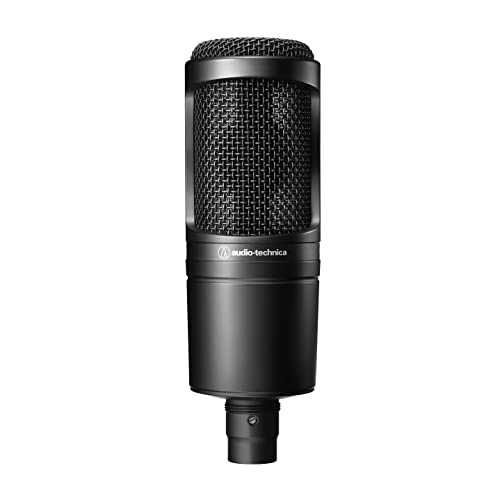
Ideal for project and home studio enthusiasts, the Audio-Technica AT2020 Cardioid Condenser XLR Microphone sets the standard in studio condenser technology. With its high SPL handling and wide dynamic range, you’ll achieve versatile audio performance for various applications. The custom-engineered low mass diaphragm guarantees extended frequency response and superior transient response, making your recordings sound crisp and clear. Thanks to its cardioid polar pattern, it effectively reduces pickup from the sides and rear, improving isolation of your desired sound source. If you’re seeking high-quality audio without breaking the bank, the AT2020 is a fantastic choice for your setup.
Best For: The Audio-Technica AT2020 is best for project and home studio enthusiasts seeking high-quality audio performance at an affordable price.
Pros:
- Excellent sound quality with extended frequency response and superior transient response.
- Cardioid polar pattern enhances isolation of the desired sound source by reducing background noise.
- Versatile performance with high SPL handling, suitable for various recording applications.
Cons:
- Requires an XLR connection, which may necessitate additional equipment (like an audio interface or mixer).
- Lacks built-in features such as a pop filter or shock mount, which may require extra purchases for optimal use.
- Not ideal for capturing sound from multiple sources simultaneously due to its directional nature.
Logitech Blue Yeti USB Microphone for Gaming and Streaming

The Logitech Blue Yeti USB Microphone stands out as an exceptional choice for gamers and streamers who demand high-quality audio without the hassle of complex setups. With its custom three-capsule array, you’ll experience clear, broadcast-quality sound. The four pickup patterns—cardioid, omni, bidirectional, and stereo—make it versatile for any recording situation. Onboard audio controls let you manage headphone volume, pattern selection, and mic gain effortlessly. Plus, the Blue VOICE software enhances your streams with professional vocal clarity and effects. Its adjustable stand and real-time monitoring guarantee you get the best sound quality every time, whether you’re gaming, podcasting, or recording music.
Best For: Gamers, streamers, podcasters, and content creators seeking high-quality audio and versatile recording options.
Pros:
- Custom three-capsule array delivers clear, broadcast-quality sound.
- Multiple pickup patterns offer versatility for different recording needs.
- Onboard audio controls and Blue VOICE software enhance user experience and audio quality.
Cons:
- USB connection may limit mobility for some users.
- Larger size may require more desk space compared to other microphones.
- Requires external software for full feature utilization, which may be a learning curve for some.
Audyssey ACM1-X Individually Calibrated Microphone for AV Receivers

For audiophiles seeking precise room acoustics measurement, the Audyssey ACM1-X Individually Calibrated Microphone is an essential tool. This omnidirectional microphone pairs perfectly with MultEQ-X supported AV receivers, delivering accurate sound measurements. Each ACM1-X is individually calibrated, ensuring you receive a unique calibration file that aligns with Type 1 reference standards. By capturing sound from all directions, it provides thorough data for effective room correction. Seamlessly integrate it with the Audyssey MultEQ-X app for enhanced control over your audio settings and detailed acoustic insights. Trust Audyssey’s expertise in audio technology to elevate your home theater experience.
Best For: Audiophiles and home theater enthusiasts seeking precise room acoustics measurement and calibration for an enhanced audio experience.
Pros:
- Individually calibrated to ensure precision measurements that align with Type 1 reference standards.
- Omnidirectional capabilities capture sound from all directions, providing comprehensive data for effective room correction.
- Seamless integration with the Audyssey MultEQ-X app, offering enhanced control over audio settings and detailed acoustic insights.
Cons:
- Compatibility limited to MultEQ-X supported AV receivers, which may restrict use with other systems.
- Price point may be higher than standard microphones, making it less accessible for casual users.
- Requires calibration expertise to fully utilize the features and make the most of the data gathered.
Superlux ECM999 Measurement Microphone

Engineers and sound technicians will find the Superlux ECM999 Measurement Microphone a formidable tool for room calibration and sound analysis. Its omnidirectional design captures sound accurately across a frequency range of 20 Hz to 20 kHz, making it essential for both home theaters and professional studios. With a sensitivity of 37 dB and a signal-to-noise ratio of 77 dB, you’ll achieve clear recordings. The microphone is compatible with various interfaces and requires phantom power, allowing for versatile applications. Plus, it comes with a carrying case, mic clip, and windscreen, ensuring you can transport it easily wherever you go.
Best For: The Superlux ECM999 Measurement Microphone is best for engineers, sound technicians, and home audio enthusiasts seeking accurate sound analysis and room calibration.
Pros:
- Excellent frequency response from 20 Hz to 20 kHz, ideal for various audio applications.
- High signal-to-noise ratio of 77 dB ensures clear recordings with minimal background noise.
- Portable design with included carrying case, mic clip, and windscreen for easy transport.
Cons:
- Requires phantom power, which may not be available on all devices.
- XLR cable is not included, potentially increasing initial setup costs.
- Some users may find the large diaphragm size less convenient for certain applications.
Dayton Audio iMM-6 Calibrated Measurement Microphone for iPhone and Android
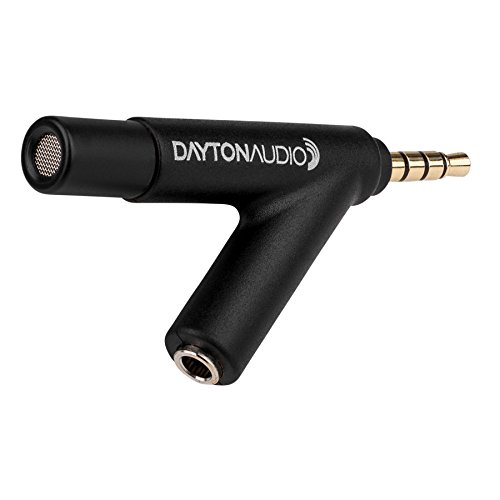
Designed for audiophiles and casual users alike, the Dayton Audio iMM-6 Calibrated Measurement Microphone excels in providing accurate sound measurements on both iOS and Android devices. Weighing just 3.53 ounces, its compact design makes it easy to carry. You’ll appreciate the 3.5mm TRRS jack compatibility, which allows seamless connection to your smartphone or tablet. Plus, the headphone/line-out pass-through lets you listen while testing. With a frequency response up to 18 kHz and a solid 70 dB signal-to-noise ratio, it delivers high-quality results. Customer ratings average 4.5 out of 5 stars, reinforcing its reliability for room tuning.
Best For: Audiophiles and casual users seeking accurate sound measurements on their iOS and Android devices.
Pros:
- Compact and lightweight design makes it easy to transport and use on-the-go.
- Compatible with a wide range of devices including Apple and Android smartphones and tablets via a 3.5mm TRRS jack.
- High-quality audio performance with a frequency response of up to 18 kHz and a signal-to-noise ratio of 70 dB.
Cons:
- Limited to devices with a 3.5mm TRRS jack, which may exclude some newer smartphones.
- Corded electric power source may limit mobility during use compared to wireless options.
- Single channel may not be suitable for more complex audio recording setups requiring multiple channels.
RØDE NT1 5th Generation Studio Condenser Microphone

The RØDE NT1 5th Generation Studio Condenser Microphone stands out as an exceptional choice for musicians and content creators seeking high-quality audio in their recordings. This large-diaphragm mic combines the iconic NT1 sound signature with next-gen technology. You can connect it via XLR to an audio interface or directly through USB, making it versatile for home or studio use. Enjoy its warm, silky character with extremely low self-noise and impressive SPL handling. Plus, with RØDE’s Revolution Preamp and high-resolution conversion, you’ll capture crystal-clear audio every time. Its durable design guarantees it’ll withstand daily recording challenges.
Best For: Musicians, podcasters, and content creators looking for high-quality audio recording solutions.
Pros:
- Versatile connectivity options with XLR and USB for easy integration into various setups.
- Exceptional sound quality with warm character and low self-noise, ideal for a variety of applications.
- Durable construction designed to endure the demands of daily use in different recording environments.
Cons:
- Price point may be higher than entry-level options, which could be a barrier for beginners.
- Large-diaphragm design might not suit all recording preferences, especially for those seeking a more focused sound.
- Power requirements may necessitate a compatible audio interface or mixer for optimal performance.
FIFINE USB/XLR Dynamic Microphone for Podcast and Gaming

For gamers and podcasters seeking a reliable microphone that delivers clear audio, the FIFINE USB/XLR Dynamic Microphone stands out with its cardioid pattern, effectively rejecting off-axis noise. With a frequency response of 50Hz-16KHz, it guarantees balanced audio for your streams. You can easily connect it via USB for plug-and-play convenience or use the XLR option for enhanced flexibility. The tap-to-mute feature and LED reminder keep your streams seamless, while the headphone jack allows for real-time monitoring. Plus, the customizable RGB lighting adds a personal touch to your setup. It’s versatile, portable, and perfect for both gaming and professional use.
Best For: Gamers and podcasters seeking a high-quality microphone that ensures clear audio and versatility in connectivity options.
Pros:
- Directional cardioid pattern effectively reduces background noise, enhancing vocal clarity.
- Dual connectivity options (USB and XLR) provide flexibility for different recording needs.
- Customizable RGB lighting adds aesthetic appeal and can match various gaming setups.
Cons:
- RGB features are only available when using the USB connection, limiting customization with XLR.
- XLR cable not included, requiring an additional purchase for XLR connectivity.
- Optimal recording distance of 2 to 6 inches may require proximity adjustments during use.
Factors to Consider When Choosing a Microphone for Room Tuning
When choosing a microphone for room tuning, you need to take into account several key factors. The type of microphone, frequency response range, and polar pattern all play vital roles in capturing accurate sound. Additionally, sensitivity, noise ratio, and available calibration features can make a significant difference in your results.
Microphone Type Selection
Choosing the right microphone for room tuning involves several key factors that can greatly impact your results. First, decide between an omnidirectional and a directional microphone. Omnidirectional mics capture sound from all directions, while directional mics focus on a specific area, affecting measurement accuracy. Look for microphones with a flat frequency response to guarantee all frequencies are captured equally without coloration. A high signal-to-noise ratio (SNR) is vital, minimizing background noise for clear recordings. If your tuning involves loud sound sources, make sure the microphone can handle high sound pressure levels to prevent distortion. Finally, check compatibility with calibration software, as this is fundamental for analyzing measurements and optimizing your audio experience.
Frequency Response Range
A microphone’s frequency response range plays an essential role in the accuracy of your room tuning efforts. This range indicates the spectrum of sound frequencies the microphone can capture, typically from 20 Hz to 20 kHz. For effective room tuning, you’ll want a mic that covers at least this audible range. A wider frequency response allows for better representation of both low and high frequencies, which is vital for precise acoustic measurements. Look for microphones designed with a flat frequency response, ensuring they capture all frequencies equally without coloration. Additionally, consider sensitivity, expressed in dB; higher sensitivity often translates to better performance across the frequency range, making your room tuning process even more effective.
Polar Pattern Importance
Understanding the polar pattern of a microphone is vital for capturing the nuances of your room’s acoustics effectively. The polar pattern dictates how sensitive a microphone is to sound from various directions, which is critical when tuning your space. Omnidirectional microphones are ideal for room measurement, as they capture sound equally from all directions, providing a complete picture of your acoustic environment. On the other hand, cardioid microphones can isolate specific sound sources, but they may overlook important reflections and ambient noise. Your choice of polar pattern greatly impacts the microphone’s ability to pick up these elements, so knowing which one suits your acoustic scenario will guarantee peak performance and accurate room tuning results.
Sensitivity and Noise Ratio
When selecting a microphone for room tuning, two key factors stand out: sensitivity and signal-to-noise ratio (SNR). Sensitivity measures how effectively a microphone converts sound into an electrical signal, so a higher sensitivity means it can capture quieter sounds better. This is vital in a tuning scenario where subtle audio details matter. The SNR indicates the clarity of recordings by measuring the desired signal against background noise; aim for a microphone with an SNR above 70 dB for peak performance. Additionally, a microphone with a flat frequency response will guarantee it captures all frequencies equally, enhancing your acoustic analysis. Understanding how sensitivity and SNR interplay will help you choose a microphone that delivers precise and interference-free measurements.
Calibration Features Availability
Calibration features in microphones play an essential role in achieving accurate room tuning. When you choose a microphone with unique calibration files tailored to it, you guarantee precise measurements that greatly enhance the accuracy of your setup. Look for individually calibrated microphones that align with Type 1 reference standards; this improves reliability in various acoustic environments. Additionally, having access to calibration graphs or files can help you optimize performance for specific applications, like room acoustics correction. Some models even integrate software compatibility, allowing for detailed insights and fine-tuning of settings. By utilizing microphones with built-in calibration capabilities, you can streamline the setup process and achieve consistent results across different measurement scenarios, making your audio experience much better.
Compatibility With Software
Choosing the right microphone for room tuning hinges on its compatibility with the acoustic measurement software you plan to use. Make sure it works seamlessly with popular options like Dirac Live or REW for the best results. Many measurement microphones come with unique calibration files tailored for specific software, enhancing accuracy in sound measurements. Look for models that offer plug-and-play driverless installation across operating systems such as Windows, Mac, and Linux to simplify setup. Additionally, check if the microphone supports various audio interfaces and calibration tools, as this can expand its versatility in room tuning applications. Some microphones are even designed to integrate flawlessly with AV receivers and related calibration apps, ensuring precise adjustments to your room’s acoustics.
