Outdoor thermal imaging monoculars make it easier to spot heat signatures in darkness, light brush, and challenging weather. For hunters, property owners, and search-and-observation users, the right model can turn near-zero visibility into actionable detail.
In this roundup, we focus on practical performance: image clarity, refresh rate, detection range, battery life, and portability. The goal is to help you choose a thermal monocular that fits how you actually plan to use it.
Best 10 Outdoor Thermal Imaging Monoculars Picks for 2026
Trail-Ready Thermal Scanner
TOPDON TS004 Thermal Imaging Monocular

- 256x192 resolution with 50Hz refresh
- Up to 11 hours from a 5000mAh battery
- IP67 waterproof with app-based live viewing
Best For: Hikers and campers needing a rugged thermal monocular with long battery life
Comfort-View Birdwatcher
Thermal Master DV2 Thermal Monocular

- Rotatable HD display reduces eye strain
- <15mK sensor with Super Resolution enhancement
- SuperBird Mode helps isolate wildlife heat signatures
Best For: Birdwatchers and wildlife viewers who prefer a screen-based thermal design
Versatile Hunting Viewer
GOYOJO G215 Thermal Imaging Monocular
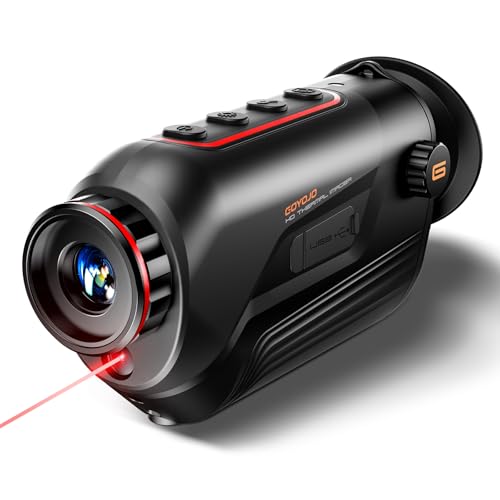
- 256x192 sensor with 50Hz refresh
- Six color palettes and 4X zoom
- IP65 waterproof with WiFi and 16GB storage
Best For: Hunters and outdoor users wanting a versatile thermal monocular with app sharing
Premium Pocket Scout
Pulsar Axion Compact Thermal Monocular

- Pocket-sized magnesium alloy housing
- Sensitive thermal sensor with 8 color palettes
- IPX7 waterproof with USB-C fast charging
Best For: Users wanting a compact premium thermal monocular for outdoor scouting
Budget-Friendly Tactical Thermal
GOYOJO G210 256x192 Thermal Monocular

- 256x192 sensor with 12μm detector
- Six palettes, 4X zoom, and 16GB storage
- IP65 rating with replaceable batteries
Best For: Hunters and campers wanting an affordable, weather-resistant thermal monocular
High-Sensitivity Field Viewer

- 384x288 sensor with 50Hz refresh
- <25 NETD for higher thermal sensitivity
- Wi-Fi app control plus photo/video recording
Best For: Users prioritizing smooth thermal viewing and smartphone connectivity
Compact Premium Pocket Pick
RIX Pocket K3 384x288 Thermal Monocular

- 384x288 sensor with 50Hz frame rate
- EIS and 800x600 OLED display
- Pocket-size build with Wi-Fi and recording
Best For: Hunters and observers who want a compact, stabilized thermal monocular
Compact Premium Bundle
Pulsar Axion XQ19 Thermal Monocular

- 384×288 sensor with up to 750 m detection
- Under 300 g and easy to operate one-handed
- Includes spare battery and hand warmers
Best For: Hunters and hikers who want a compact premium bundle
Touchscreen Pocket Pick

- 256×192 detector with 50Hz imaging
- 1.43" AMOLED touchscreen and app control
- 205 g body with IP67 weather protection
Best For: Buyers who want touchscreen convenience in a lightweight unit
Feature-Rich Tracking Pick
AGM Taipan V2 Thermal Monocular

- Sub-35mK detector with 1.5x–12x zoom
- Built-in recording with 16GB storage
- Up to 7 hours runtime and IP67 housing
Best For: Users who want versatile thermal viewing with recording and app support
Trail-Ready Thermal Scanner – TOPDON TS004 Thermal Imaging Monocular
If you’re shopping for outdoor thermal imaging monoculars, the TOPDON TS004 is a practical pick for users who want clear imaging, long battery life, and an easy way to monitor from a phone. Its 256×192 resolution, 50Hz refresh rate, and 13mm lens make it suitable for spotting wildlife, people, and objects in low-visibility conditions.
Best For: Hikers, campers, and outdoor users who want a rugged thermal monocular with app connectivity and long runtime.
Pros:
- 256×192 thermal resolution with a smooth 50Hz refresh rate
- 5000mAh battery rated for up to 11 hours of use
- WiFi app support for live monitoring, photos, and audio video recording
- IP67 waterproof design with silicone protection and 2-meter drop resistance
Cons:
- Clear detail is specified within 100 YD, so it is not built as a long-distance precision tool
- Larger battery and rugged build may be less compact than minimalist pocket options
The TS004 balances field durability and useful imaging features well for general outdoor use. It is a solid fit if you value dependable runtime and app-based viewing more than advanced specialty modes.
Comfort-View Birdwatcher – Thermal Master DV2 Thermal Monocular
The Thermal Master DV2 stands out among outdoor thermal imaging monoculars if you want a more comfortable viewing setup than a traditional tube-style design. Its camcorder-style body, rotatable HD display, and ultra-sensitive thermal sensor are aimed at users who spend long sessions watching wildlife or scanning outdoor scenes.
Best For: Birdwatchers and wildlife observers who want a screen-based thermal monocular with reduced eye strain.
Pros:
- Camcorder-style design with a rotatable HD display for easier viewing
- <15mK sensitivity, 256×192 infrared resolution, and 512×384 Super Resolution enhancement
- SuperBird Mode helps highlight animal heat signatures and reduce background clutter
- Records photos and videos, with a tripod mount and carrying pouch included
Cons:
- 5-hour battery life is shorter than some competing outdoor options
- IP54 protection is solid, but not as weather-sealed as higher-rated models
The DV2 is a strong choice if comfort and wildlife spotting matter more than the smallest possible body size. It is especially appealing for birding, where the display layout and SuperBird Mode can simplify target finding.
Versatile Hunting Viewer – GOYOJO G215 Thermal Imaging Monocular
The GOYOJO G215 is a flexible option in outdoor thermal imaging monoculars for users who want multiple color palettes, WiFi sharing, and dependable weather resistance. With a 256×192 sensor, 50Hz refresh rate, and 15mm focal lens, it is built for practical nighttime viewing in hunting and general outdoor situations.
Best For: Hunters and outdoor users who want a feature-rich thermal monocular with app connectivity and image storage.
Pros:
- 256×192 thermal sensor with 50Hz refresh for smooth viewing
- Six display palettes, including White-Hot, Black-Hot, and Rainbow
- 4X zoom plus 16GB of image storage for saving visuals
- IP65 waterproof rating and over 6 hours of runtime with replaceable batteries
Cons:
- Battery life is solid but shorter than the longest-running models here
- Detection and image quality may be less refined than higher-end premium units
The G215 offers a useful mix of visibility modes and field durability for users who want more control over how they scan. It is a sensible pick when WiFi, storage, and weather resistance are all part of the buying checklist.
Premium Pocket Scout – Pulsar Axion Compact Thermal Monocular
If you want a compact choice in outdoor thermal imaging monoculars, the Pulsar Axion Compact focuses on portability without dropping core thermal features. Its sensitive sensor, wide field of view, photo and video recording, and rugged magnesium alloy housing make it a polished option for scanning outdoors.
Best For: Users who want a small, durable thermal monocular with premium portability and reliable waterproofing.
Pros:
- Compact, pocket-sized build with rugged magnesium alloy housing
- Highly sensitive thermal sensor with multiple amplification levels
- Photo and video recording plus 8 color palettes for flexible viewing
- Removable battery with USB-C fast charging and IPX7 waterproofing
Cons:
- Fixed focus design may be less flexible than manual-focus options
- Premium feature set may be more than casual users need
The Axion Compact is a strong fit when portability and durability are top priorities. It is best for users who want a refined, easy-to-carry thermal monocular for hunting, scouting, or other outdoor scanning tasks.
Budget-Friendly Tactical Thermal – GOYOJO G210 256×192 Thermal Monocular
If you want outdoor thermal imaging monoculars that balance affordability and practical features, the GOYOJO G210 is built around a 256×192 sensor with a 12μm detector, 4X zoom, and six color palettes. It’s aimed at hunters, campers, and other outdoor users who need reliable thermal detection in changing light and weather.
Best For: Hunters, campers, and outdoor users who want a feature-rich, weather-resistant thermal monocular with app connectivity.
Pros:
- 256×192 thermal sensor with 12μm infrared detector for thermal detection
- Six color palettes, 4X zoom, and 16GB image storage
- Dedicated app for real-time thermal image sharing
- IP65 waterproof rating and over 6 hours of use with replaceable batteries
Cons:
- Lower-resolution sensor than 384×288 models
- 25Hz performance is less smooth than 50Hz options
- Focuses on practical field use rather than premium image detail
The G210 is a solid pick if you value versatility, portability, and weather resistance more than top-tier thermal resolution. It covers the essentials well for group outings, hunting, and basic search or safety use.
High-Sensitivity Field Viewer – ATN BlazeTrek-319 384×288
ATN BlazeTrek-319 Thermal Imaging Monocular 12 Micron, 384x288 <25 NETD, 50 Hz
Check Price On AmazonFor buyers comparing outdoor thermal imaging monoculars, the ATN BlazeTrek-319 stands out with a 384×288 sensor, 12μm pixel size, and 50Hz refresh rate. Its <25 NETD rating, 19mm lens, and built-in Wi-Fi make it a practical option for clearer thermal viewing and easy smartphone control.
Best For: Users who want a high-sensitivity thermal monocular with smooth 50Hz performance and smartphone connectivity.
Pros:
- 384×288 sensor with 12μm pixel size and 50Hz refresh rate
- <25 NETD rating for high sensitivity to temperature differences
- Built-in Wi-Fi and app connectivity for phone control
- Photo and video recording with microSD support up to 256GB
Cons:
- No weight or size details provided in the supplied notes
- Fewer product details are listed than some competitors
- Not described with waterproof or impact ratings in the notes
The BlazeTrek-319 is a strong choice if image sensitivity and smooth viewing matter most. It combines a sharper thermal sensor with fast refresh and convenient wireless features for field use.
Compact Premium Pocket Pick – RIX Pocket K3 384×288 Thermal Monocular
The RIX Pocket K3 is one of the more portable outdoor thermal imaging monoculars here, pairing a 384×288 sensor with a 15mm lens, 50Hz frame rate, and 800×600 OLED display. It is designed for handheld field observation where size, image steadiness, and recording features matter.
Best For: Hunters and field observers who want a compact, lightweight thermal monocular with smoother handheld viewing.
Pros:
- 384×288 thermal sensor with 15mm lens and 2x base magnification
- 50Hz frame rate and electronic image stabilization for smoother viewing
- Very compact 4.9 x 1.8 x 2.9-inch housing and 7.52-ounce weight
- Wi-Fi connectivity plus photo, audio, and video recording with 8GB memory
Cons:
- 15mm lens is smaller than some longer-range thermal monoculars
- 8GB storage is modest compared with larger-capacity rivals
- Detection range is listed under controlled testing conditions, so real-world results may vary
The Pocket K3 is a good fit if you want a small thermal monocular that is easy to carry and steady to use by hand. Its combination of portability, EIS, and Wi-Fi makes it especially convenient for mobile outdoor observation.
Compact Premium Bundle – Pulsar Axion XQ19 Thermal Monocular
If you want outdoor thermal imaging monoculars that are easy to carry yet still offer strong detection, the Pulsar Axion XQ19 is built for fast field scanning, hunting, and general outdoor use. Its 384×288 sensor, 1.5–6x magnification, and compact magnesium-alloy body make it a practical choice when you need a pocket-sized thermal device that works in poor light and harsh weather.
Best For: Hunters and outdoor users who want a lightweight, compact thermal monocular with a premium bundle.
Pros:
- 384×288 / 17 µm thermal sensor with up to 750-meter detection.
- Pocket-sized, lightweight design under 300 g for one-handed use.
- Magnesium alloy build for reliable performance in rain, fog, and extreme temperatures.
- Includes APS-3 battery, spare battery, carrying case, and hand warmers.
Cons:
- Lower magnification range may be less flexible than some larger hunting units.
- Bundle extras are useful, but the core device is still the main value driver.
Overall, this Axion XQ19 bundle makes sense if portability and dependable thermal detection matter more than a larger feature set. It is a straightforward option for users who want a compact outdoor thermal imaging monocular that is ready to take into the field.
Touchscreen Pocket Pick – EM10-256 Thermal Monocular
The EM10-256 stands out among outdoor thermal imaging monoculars for buyers who want a lightweight, modern handheld with a touchscreen interface. With a 256×192 VOx detector, 10 mm F1.0 lens, and 50Hz frame rate, it is designed for real-time viewing during hunting, nighttime navigation, or outdoor security work.
Best For: Users who want a pocket-sized thermal monocular with touchscreen convenience and solid battery life.
Pros:
- 256×192 VOx detector with up to 500 m detection range.
- 1.43″ AMOLED touchscreen helps reduce eye fatigue during extended use.
- Only 205 g and IP67-rated for portable all-weather use.
- Up to 6 hours of battery life with 20W quick charging support.
Cons:
- Smaller sensor than higher-resolution premium thermal monoculars.
- Built-in battery means you cannot swap power packs in the field.
This model is a smart fit if you want a compact thermal monocular that emphasizes comfort, convenience, and quick charging. The touchscreen and app connectivity make it especially appealing for users who value a more modern field experience.
Feature-Rich Tracking Pick – AGM Taipan V2 Thermal Monocular
For shoppers comparing outdoor thermal imaging monoculars, the AGM Global Vision Taipan V2 is a feature-heavy option built around high-sensitivity detection and practical field tools. Its sub-35mK thermal detector, 1.5–12x zoom range, built-in recording, and Wi-Fi/app support make it well suited to hunting, surveillance, and rescue-style use where versatility matters.
Best For: Users who want a versatile thermal monocular with strong software features and long runtime.
Pros:
- Sub-35mK 12µm detector for sharp imaging in darkness.
- 1.5x–12x digital zoom plus multiple color palettes for flexible viewing.
- Up to 7 hours of operation with a replaceable rechargeable battery.
- Built-in recording, 16GB storage, Wi-Fi, app control, and advanced tools like PIP and hot tracking.
Cons:
- Feature-rich design may be more than casual users need.
- Larger feature set can add complexity compared with simpler handheld monoculars.
The Taipan V2 is a strong pick if you want a thermal monocular that does more than basic spotting. Between the recording functions, connectivity, and tracking tools, it offers a practical balance of detection and field-friendly features.
How We Picked the Best Outdoor Thermal Imaging Monoculars
We prioritized models that balance real-world detection capability with usability. That means favoring strong thermal sensitivity, useful resolution, stable refresh rates, and designs that are easy to carry and operate in the field. We also considered battery performance, mounting or recording features, and whether the unit makes sense for close- to mid-range outdoor use.
Quick Comparison: What Matters Most
If you want a simple way to compare Outdoor Thermal Imaging Monoculars, start with these tradeoffs: higher resolution usually means clearer targets; lower NETD or higher sensitivity can improve contrast; wider fields of view help with scanning; and magnification can improve aiming detail but may narrow what you see. Compact models are easier to carry, while more advanced units tend to deliver stronger image quality and longer-range performance.
Key Buying Factors for Outdoor Thermal Imaging Monoculars
Sensor Resolution and Sensitivity
A 256×192 sensor is a practical entry point for general scanning, while 384×288 units often provide better definition at longer distances. Sensitivity matters too: lower NETD or a more sensitive detector usually helps reveal heat differences more clearly.
Refresh Rate and Motion Smoothness
For tracking moving animals or scanning open terrain, a 50Hz refresh rate helps produce smoother motion and a more natural viewing experience.
Lens Size and Field of View
Shorter focal lengths tend to offer a wider field of view for searching, while longer focal lengths can help identify targets at distance. Choose based on whether your priority is broad scanning or tighter detail.
Portability and Battery Life
Outdoor Thermal Imaging Monoculars should be comfortable to carry for long periods. Compact dimensions, simple controls, and dependable battery life matter as much as raw specs when you are in the field for hours.
Intended Use
Hunters may value detection range and aiming precision, while landowners and general outdoor users may care more about portability, fast startup, and easy target acquisition. Match the device to your use case rather than chasing the highest specs alone.
Who Should Buy Which Outdoor Thermal Imaging Monoculars?
Choose a compact, lower-cost monocular if you want a lightweight scanning tool for occasional use or short outings. Step up to a higher-resolution model if you need better identification at distance, especially for hunting or larger properties. If you want the most balanced option, look for a model that combines strong sensitivity, a practical lens, and a comfortable size for all-night use.
In short, the best Outdoor Thermal Imaging Monoculars are the ones that fit your viewing distance, environment, and comfort level. A smart match will outperform a spec-heavy model that is awkward to carry or difficult to use in real conditions.
