Thermal imaging monoculars make it easier to spot heat signatures in darkness, brush, fog, and other low-visibility conditions. Whether you are hunting, checking property, or scanning outdoors at night, the right unit can make a major difference.
In this roundup, we focus on practical performance, image quality, range-friendly features, and value so you can choose the best option with confidence.
Best 10 Thermal Imaging Monoculars Picks for 2026
Field-Ready 50Hz Explorer
TOPDON TS004 Thermal Imaging Monocular

- 256x192 sensor with 50Hz refresh
- Up to 11 hours from 5000mAh battery
- IP67 build with app-based live monitoring
Best For: Hikers and campers who want a rugged, long-runtime thermal monocular
Sensitive Mid-Range Scanner
ATN BlazeSeeker-210 Thermal Monocular

- <35 NETD for strong heat sensitivity
- Multiple palettes and app connectivity
- Records photos and video to MicroSD
Best For: Field users who want a sensitive, app-connected thermal monocular
High-Resolution Pocket Scout
RIX Pocket K3 Thermal Monocular

- 384x288 sensor with 50Hz frame rate
- Compact body with EIS and tripod mount
- Records photo, audio, and video with Wi-Fi
Best For: Hunters who want a pocketable, higher-resolution thermal monocular
Ultrasensitive Open-Field Viewer
ATN BlazeSeeker 6 Thermal Monocular

- ≤20 mK NETD for faint heat signatures
- 10 mm lens reaches up to 460 m
- IP67 body with SharpIR AI and hot point tracking
Best For: Open-terrain users who want a sensitive thermal monocular with tracking tools
Field-Ready Thermal Pick
GOYOJO G215 256x192 Hunting Monocular
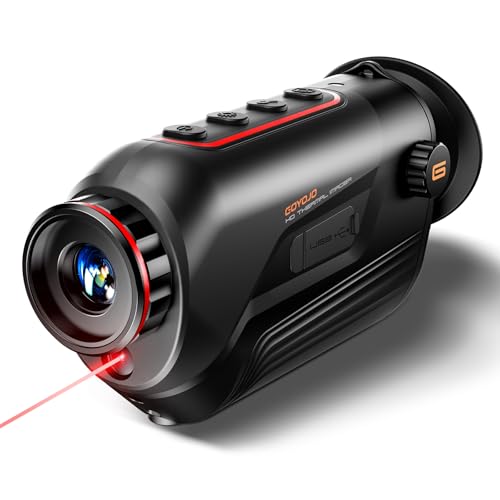
- 256x192 sensor with 50Hz refresh rate
- Six color palettes and 4x zoom
- IP65 waterproof with 6+ hour runtime
Best For: Hunters and outdoor users needing a durable, easy-to-share thermal monocular
Feature-Rich Hunting Option
AGM Taipan V2 High-Sensitivity Monocular

- Sub-35mK 12μm detector with 1.5x-12x zoom
- Recording, 16GB storage, and Wi-Fi app support
- IP67 housing with 5-year transferable warranty
Best For: Buyers wanting advanced thermal tools and rugged all-weather use
Long-Viewing Thermal Value
Teslong TTS260 Super Resolution Monocular

- Super Resolution upscales 256x192 to 512x384
- Up to 8 hours of battery life
- 32GB storage with USB-C and Mini HDMI output
Best For: Outdoor observers wanting clearer detail and dependable battery life
Pocketable Field Pick
RIX Pocket K2 Portable Thermal Monocular
- 256x192 thermal sensor with 50Hz refresh
- Pocketable, lightweight design for easy carry
- IP67 waterproof with EIS stabilization
Best For: Users who want a compact thermal monocular for hunting and hiking
Long-Run App Pairing
TOPDON TS004 Pro Thermal Monocular

- 384x288 resolution with smooth 50Hz viewing
- Up to 11 hours of battery life
- App support for live monitoring and recording
Best For: Users who want higher-resolution thermal viewing with phone connectivity
Detail-First Tracking Choice
MiLESEEY TNV10PRO Thermal Monocular

- True 320x240 sensor with 50Hz refresh
- Hotspot Tracking plus 4× digital zoom
- Up to 12 hours runtime with 32GB storage
Best For: Users who want clearer thermal detail and tracking tools for field use
Field-Ready 50Hz Explorer – TOPDON TS004 Thermal Imaging Monocular
If you want a thermal imaging monocular that balances image smoothness, battery life, and rugged handling, the TOPDON TS004 is a practical all-around pick. Its 256×192 sensor, 50Hz refresh rate, and 13mm lens are aimed at giving you clear thermal detail for wildlife viewing and general outdoor scanning.
Best For: Hikers, campers, and wildlife observers who want a durable thermal monocular with long runtime and app connectivity.
Pros:
- 256×192 thermal resolution with a smooth 50Hz refresh rate
- Up to 11 hours of battery life from the 5000mAh battery
- Wi-wireless app support for live monitoring, photos, and video with audio
- IP67 waterproof build with silicone protection and drop resistance up to 2 meters
Cons:
- Detection is listed up to 410 meters, which is more modest than some higher-end options
- Detail visibility is specified within 100 YD, so close-range use appears to be the strength
The TS004 stands out as a rugged, long-lasting choice for users who value dependable field use over maximum sensor resolution. It covers the essentials well and should fit buyers looking for a straightforward thermal imaging monocular for outdoor adventures.
Sensitive Mid-Range Scanner – ATN BlazeSeeker-210 Thermal Monocular
ATN BlazeSeeker-210 Thermal Imaging Monocular 256x192; 1.5-12x 12 Micron <35 NETD 50 Hz
Check Price On AmazonThe ATN BlazeSeeker-210 is built for buyers who want a compact thermal imaging monocular with strong sensitivity and flexible viewing options. Its 256×192 sensor, low <35 NETD rating, and multiple color palettes make it useful for spotting heat signatures and adapting the image to changing conditions.
Best For: Users who want a sensitive, app-connected monocular for general field observation and recording.
Pros:
- <35 NETD rating for better temperature sensitivity
- Multiple color palettes, including White Hot, Black Hot, Iron Red, Alarm, Sepia, and Green Hot
- Built-in photo and video recording with MicroSD support up to 256GB
- Wi-Fi and app connectivity for remote control and capture
Cons:
- The 256×192 sensor is solid, but not the highest resolution in this roundup
- Detection range is listed up to 460m, which may limit long-distance users
Overall, the BlazeSeeker-210 is a balanced option if sensitivity and customization matter more than raw resolution. It offers a practical feature set for recording, sharing, and adjusting thermal views in the field.
High-Resolution Pocket Scout – RIX Pocket K3 Thermal Monocular
The RIX Pocket K3 is a compact thermal imaging monocular that leans toward higher-resolution detail and easy carry. With a 384×288 sensor, 15mm objective lens, and 50Hz frame rate, it is designed to give smoother views and more detail for handheld observation in the field.
Best For: Hunters and observers who want a pocketable monocular with stronger resolution and stabilization.
Pros:
- 384×288 thermal sensor for higher image detail
- 50Hz frame rate plus EIS for smoother handheld viewing
- Compact size with a 1/4″-20 tripod interface
- Built-in photo, audio, and video recording with 8GB memory and Wi-Fi
Cons:
- Battery system is replaceable, but runtime is not stated as a fixed hour rating
- Detection range is given under controlled conditions, so real-world results may vary
The Pocket K3 is a strong fit for users who want a portable thermal monocular without giving up resolution or recording features. Its stabilization and compact form make it especially appealing for extended handheld use.
Ultrasensitive Open-Field Viewer – ATN BlazeSeeker 6 Thermal Monocular
ATN BlazeSeeker 6, 10 mm Thermal Monocular, 1.7–13.6X, 256×192 Sensor, 12μm, ≤20 mK NETD
Check Price On AmazonThe ATN BlazeSeeker 6 is aimed at buyers who want a compact thermal imaging monocular with very strong heat sensitivity and a wider field for longer sight lines. Its 256×192 sensor, 12 µm pixel pitch, and ≤20 mK NETD are positioned to help reveal faint heat signatures in challenging outdoor conditions.
Best For: Users who want a rugged, sensitive monocular for open terrain, tracking, and quick heat detection.
Pros:
- ≤20 mK NETD for highly sensitive thermal detection
- 10 mm lens with extended detection up to 460 m
- SharpIR AI, hot point tracking, and multiple color palettes
- IP67 waterproof body with up to 8 hours of runtime and Wi-Fi
Cons:
- 256×192 resolution is practical, but not as detailed as higher-resolution units
- 10 mm lens provides a narrower view, so it is better suited to longer sight lines than close scanning
For buyers focused on sensitivity and easy target pickup, the BlazeSeeker 6 offers a compelling feature set. It combines rugged construction with heat-tracking tools that make it a strong fit for open-field use.
Field-Ready Thermal Pick – GOYOJO G215 256×192 Hunting Monocular
If you want a practical thermal imaging monocular for hunting and general night use, the GOYOJO G215 focuses on the essentials: a 256×192 sensor, 50Hz refresh rate, and a 15mm lens for observing heat signatures in low light. It also adds multiple color palettes, 4x zoom, and WiFi connectivity, making it a flexible option for field scanning and quick image review.
Best For: Hunters, outdoor users, and safety-minded buyers who want a durable monocular with app connectivity and simple thermal capture.
Pros:
- 256×192 thermal sensor with 12μm detector for clear low-light imaging
- Six display modes, including White-Hot, Black-Hot, Red-Hot, Rainbow, Iron-Red, and Glimmer
- 4x zoom plus 16GB image storage for saving important snapshots
- IP65 waterproof rating and over 6 hours of operation with replaceable batteries
Cons:
- Lower-resolution class than some higher-end thermal imaging monoculars
- Only 4x zoom, which may be limiting for very distant observation
- Best suited to practical field use rather than advanced feature-heavy workflows
Overall, the G215 is a straightforward thermal monocular built for real-world outdoor use. Its mix of weather resistance, storage, and WiFi sharing makes it a sensible pick if you value utility over complexity.
Feature-Rich Hunting Option – AGM Taipan V2 High-Sensitivity Monocular
The AGM Global Vision Taipan V2 stands out among thermal imaging monoculars for buyers who want more advanced field tools in one device. It uses a sub-35mK 12μm detector, offers 1.5x to 12x digital zoom, and adds helpful functions like hot tracking, picture-in-picture, distance measurement, and automatic flat field correction.
Best For: Users who want a rugged thermal monocular with advanced imaging tools, app support, and strong all-around field performance.
Pros:
- High-sensitivity sub-35mK 12μm thermal detector for detailed imaging
- Wide field of view with 1.5x to 12x digital zoom
- Built-in recording, 16GB memory, and Wi-Fi app compatibility
- Rugged IP67 waterproof housing plus 5-year transferable warranty
Cons:
- More advanced feature set may be more than casual users need
- Single replaceable rechargeable battery may still require planning for long outings
- Premium capabilities typically come with a more specialized learning curve
For hunters, surveillance users, or rescue-minded buyers, the Taipan V2 offers a well-rounded package with strong software support and durable construction. It is a good fit if you want a monocular that goes beyond basic thermal viewing.
Long-Viewing Thermal Value – Teslong TTS260 Super Resolution Monocular
The Teslong TTS260 is aimed at users who want a compact thermal imaging monocular with extra clarity features built in. Its 256×192 sensor uses super resolution to upscale images to 512×384, while the 12mm lens, 4x digital zoom, and hotspot tracking make it useful for wildlife observation and property checking at a practical distance.
Best For: Outdoor observers who want a portable monocular with stronger image detail, long battery life, and easy recording.
Pros:
- Super Resolution boosts 256×192 images up to 512×384 detail
- 12mm lens and 4x digital zoom for viewing thermal signatures at distance
- Up to 8 hours of battery life with weather-resistant construction
- 32GB storage plus USB-C and Mini HDMI output for reviewing footage
Cons:
- 25Hz refresh rate is lower than some competing models
- Fixed-focus design may be less flexible for certain users
- Only one year of warranty coverage is listed
In practice, the TTS260 is a strong value choice if image refinement and portability matter most. It combines useful viewing comfort features with solid battery life and recording options for field use.
Pocketable Field Pick – RIX Pocket K2 Portable Thermal Monocular
If you want thermal imaging monoculars that are easy to carry without giving up core image quality, the RIX Pocket K2 is built for exactly that kind of use. Its 256×192 sensor, 50Hz refresh rate, and 800×600 OLED display make it a practical option for hunting, hiking, and general outdoor scanning where portability matters.
Best For: Hunters and hikers who want a lightweight thermal monocular with stable, portable everyday use.
Pros:
- 256×192 resolution with 12μm sensor and NETD <25mK for picking up subtle temperature differences
- 50Hz refresh rate and EIS help keep the image smoother and more stable
- Very lightweight, pocketable design is easy to carry in the field
- IP67 waterproofing adds protection in foggy, rainy, or humid conditions
Cons:
- Lower resolution than the higher-end 384×288 class options in this roundup
- Best suited to portability-first users rather than those prioritizing maximum detail
The Pocket K2 stands out if you value convenience, weather resistance, and a compact form factor. It looks like a strong choice for users who want a thermal imaging monocular they can keep on hand all day without much bulk.
Long-Run App Pairing – TOPDON TS004 Pro Thermal Monocular
The TOPDON TS004 Pro is a strong pick if you want thermal imaging monoculars with higher image detail and practical wireless sharing. Its 384×288 resolution, 50Hz refresh rate, and app-based live monitoring make it useful for users who want to inspect wildlife, people, or objects while staying connected to a phone.
Best For: Outdoor users who want higher-resolution thermal viewing with app connectivity and long battery life.
Pros:
- 384×288 IR resolution with 50Hz refresh for vivid thermal images
- Up to 11 hours of battery life from the 5000mAh battery
- TopInfrared App support for live monitoring, photos, and video with audio
- IP67 build and 2-meter drop resistance improve field durability
Cons:
- Heavier-duty feature set may be more than casual users need
- Detection detail is strongest within the stated 146 YD clear-detail range
For buyers who want a balanced mix of detail, endurance, and smartphone integration, the TS004 Pro is well positioned. It feels especially suited to long sessions in the field where battery life and easy recording matter.
Detail-First Tracking Choice – MiLESEEY TNV10PRO Thermal Monocular
The MiLESEEY TNV10PRO is aimed at buyers who want sharper thermal interpretation and useful target-tracking tools in a handheld unit. It combines a true 320×240 IR sensor, 50Hz refresh rate, 800×600 OLED display, and hotspot tracking, making it a capable choice for nighttime observation and fast field scanning.
Best For: Users who want clearer thermal detail, hotspot tracking, and longer runtime in rugged outdoor conditions.
Pros:
- True 320×240 IR sensor and 12μm detector for stronger image clarity
- Hotspot Tracking and 4× digital zoom help speed up target detection
- Up to 12 hours of battery life with a 4500mAh battery
- 32GB built-in memory supports MP4 recording without needing an extra card
Cons:
- IP65 protection is solid, but not as sealed as IP67 units here
- More feature-rich controls may be more than basic users need
This model makes sense if you care about image refinement and tracking aids more than ultra-compact portability. For thermal imaging monoculars focused on field efficiency, the TNV10PRO offers a strong mix of detail, runtime, and recording support.
How We Picked These Thermal Imaging Monoculars
We prioritized real-world usability over spec-sheet hype. That means looking at sensor resolution, refresh rate, thermal sensitivity, lens size, field of view, display clarity, battery life, and build quality. We also considered how each model fits common buyer needs, from hunting and wildlife observation to security checks and general nighttime scanning.
Since Thermal Imaging Monoculars vary widely in price and capability, we favored models that offer a sensible balance of image detail, detection range, portability, and ease of use.
Quick Comparison
Higher-resolution sensors generally give you a clearer image and better target identification, while larger lenses can help with longer-range detection. Compact, pocketable units are easier to carry all day, but may trade off some reach or screen size. Models with Wi-Fi, super-resolution, or improved sensitivity can add convenience and detail, though they are not always necessary for every buyer.
Key Buying Factors for Thermal Imaging Monoculars
Resolution and Image Detail
Sensor resolution is one of the biggest factors in how usable the image looks. A 256×192 unit can work well for general scanning, while 384×288 or enhanced-resolution models usually provide better target definition.
Thermal Sensitivity and Refresh Rate
Lower NETD values usually mean better sensitivity to subtle temperature differences. A 50Hz refresh rate is helpful for smoother motion tracking, especially when scanning moving subjects or panning quickly.
Lens Size and Detection Distance
Longer focal-length lenses often improve detection at distance, while shorter lenses can provide a wider view for closer-area scanning. Choose based on whether you need broader situational awareness or more reach.
Portability and Controls
For field use, weight, grip comfort, menu simplicity, and one-handed operation matter a lot. Thermal Imaging Monoculars that are easy to carry and fast to operate tend to be more practical than heavier models with complicated controls.
Extra Features
Wi-Fi, onboard recording, multiple color palettes, and image enhancement tools can be useful, but they should complement the core thermal performance rather than replace it.
Who Should Buy Which Thermal Imaging Monoculars?
If you want a compact all-purpose option, choose a smaller handheld model that balances portability and image quality. If your priority is hunting or longer-distance spotting, look for stronger resolution and a more capable lens setup. For budget-conscious buyers, a basic 256×192 monocular may be enough for general nighttime use. If you want the clearest image possible, consider higher-resolution or super-resolution Thermal Imaging Monoculars with stronger sensitivity and smoother refresh.
In short, the best choice depends on how far you need to see, how much detail you need to identify a target, and how often you plan to carry the device in the field.
