The best portable power stations for camping keep phones, lights, cameras, coolers, and small appliances running without relying on a campsite outlet. The right model depends on more than battery capacity: inverter output, recharge speed, portability, and battery chemistry all affect real-world usefulness.
We’ve selected 10 options across several sizes and price points, including compact stations for short outings and larger units for family camping or extended off-grid stays. Use the guide below to narrow your choice by power needs, trip length, and charging setup.
Best 10 Portable Power Stations for Camping Picks for 2026
Best Compact High-Capacity Pick

- 1,070Wh capacity and 1,500W AC output
- 23.8-pound design with foldable handle
- App control and 4,000-cycle LiFePO4 battery
Best For: Campers wanting substantial power in a relatively light package
Best Fast-Charging Camping Pick

- 1,024Wh capacity with 1,800W output
- 80% charge in about 45 minutes
- Quiet 30dB mode and 10ms UPS backup
Best For: Campers needing fast recharging and strong appliance support
Best Solar-Ready Versatility Pick

- 1,056Wh capacity and 1,800W output
- 80% charge in 43 minutes
- Up to 600W solar input and 11 ports
Best For: RV campers wanting flexible charging and connectivity
Best Lightweight Camping Pick

- 292Wh capacity in a roughly 7.5-pound body
- 300W output with 600W peak capability
- Charges up to six devices through multiple ports
Best For: Hikers and campers powering small personal electronics
Best Lightweight Camp Companion

- 300W output in a 7.4-pound body
- 100W PD fast recharge input
- Built-in LED with three lighting modes
Best For: Short camping trips and lightweight gear setups
Best High-Capacity Value Option

- 519Wh capacity and 500W rated output
- Pure sine wave AC inverter
- 10 outputs for simultaneous charging
Best For: Extended camps and powering multiple moderate loads
Best Compact Value
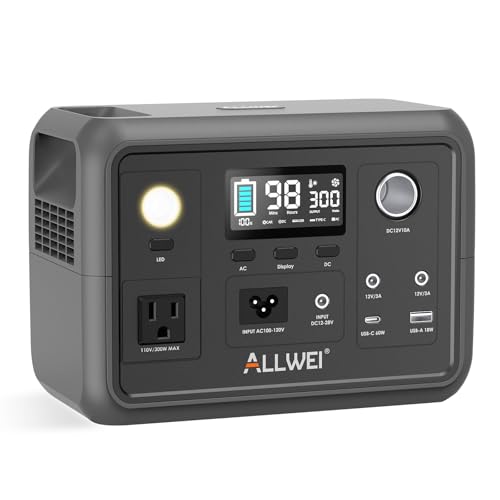
- 6.4-pound design with 256Wh capacity
- 300W output and 600W pure sine wave surge
- AC, car, solar, and dual-charging options
Best For: Lightweight camping and everyday device charging
Best Ultra-Light Emergency Backup

- 5.73-pound design with 300W output
- LiFePO4 battery rated for 3,500+ cycles
- Two AC outlets and 60W USB-C charging
Best For: Minimalist camping and small-device backup power
Best Compact High-Capacity Pick – Jackery Explorer 1000 v2
The Jackery Explorer 1000 v2 is a strong choice among portable power stations for camping when you want substantial capacity without a bulky setup. Its 1,070Wh battery, 1,500W output, and 23.8-pound build can handle a range of campsite and emergency essentials.
Best For: Campers who need to run multiple appliances while keeping weight and size manageable.
Pros:
- 1,500W output with a 3,000W surge peak for compatible appliances.
- Lightweight 23.8-pound design with a foldable handle.
- Fast one-hour charging mode, app control, and quiet 30dB overnight mode.
- LiFePO4 battery rated for over 4,000 cycles and a lifespan exceeding 10 years.
Cons:
- One-hour charging requires enabling emergency charging in the Jackery app.
- Solar charging is compatible only with Jackery solar panels.
With multiple AC, USB, and DC outputs plus 100W USB-C charging, this model balances campsite versatility and portability well. It is especially appealing if you value app-based controls and long-term battery durability.
Best Fast-Charging Camping Pick – BLUETTI Elite 100 V2
The BLUETTI Elite 100 V2 stands out among portable power stations for camping with its 1,024Wh capacity, 1,800W output, and rapid charging performance. Its compact 25-pound body is suited to campers who want strong output and quiet overnight operation.
Best For: Campers and road trippers who prioritize fast recharging, high output, and quiet operation.
Pros:
- 1,800W rated output with 2,700W Power Lifting capability.
- Reaches 80% charge in approximately 45 minutes with TurboBoost AC charging.
- 30dB silent mode is suitable for overnight camping.
- LiFePO4 battery offers over 4,000 cycles to 80% and a stated 10-year lifespan.
Cons:
- At 25 pounds, it is heavier than the smaller Jackery Explorer 300.
- Some vehicle charging features require the optional BLUETTI Charger 1.
The hidden handle and 17-liter design make this a practical high-output option for campsite transport. Its 10ms UPS function also adds usefulness for backup applications beyond outdoor trips.
Best Solar-Ready Versatility Pick – Anker SOLIX C1000
The Anker SOLIX C1000 is a versatile option among portable power stations for camping, combining a 1,056Wh LiFePO4 battery with 1,800W output and 11 ports. It is designed for campers and RV users who want quick charging and a broad range of connection options.
Best For: RV campers and outdoor users who want fast AC or solar recharging with extensive port selection.
Pros:
- Reaches 80% capacity in 43 minutes and fully charges in under an hour with UltraFast mode.
- Supports up to 600W solar input for a full charge in about 1.8 hours.
- 1,800W output with 2,400W surge capability can support many appliances.
- Includes both AC and car charging cables.
Cons:
- UltraFast charging requires the Anker app and a smartphone.
- At 27.6 pounds, it is heavier than several comparably sized options.
With 11 ports, app-based monitoring, and solar charging support, the C1000 is built for flexible campsite setups. Its 10-year LiFePO4 design also makes it a sensible choice for repeated outdoor and emergency use.
Best Lightweight Camping Pick – Jackery Explorer 300
The Jackery Explorer 300 is a compact choice among portable power stations for camping when easy carrying matters more than running high-wattage appliances. At about 7.5 pounds, it offers 292Wh of capacity and enough output for personal electronics and select small devices.
Best For: Hikers, campers, and travelers powering laptops, cameras, drones, and other small electronics.
Pros:
- Lightweight 7.5-pound design with an integrated handle.
- 300W rated output and 600W peak output for compatible small devices.
- Six-device charging through AC, USB-C, USB-A, and car-port connections.
- LiFePO4 battery rated for over 4,000 cycles before reaching 70% capacity.
Cons:
- 292Wh capacity is considerably smaller than the 1kWh-class options in this roundup.
- Its 300W output is not intended for high-demand appliances.
- Solar charging requires a compatible Jackery panel.
This is the most packable option here for keeping personal electronics running away from outlets. Its lower capacity limits runtime, but the light weight and flexible ports make it well suited to short trips and mobile charging.
Best Compact Fast-Charging Pick – Anker SOLIX C300
The Anker SOLIX C300 is a strong choice for campers who want portable power stations for camping with quick charging, a compact design, and enough capacity for personal electronics. Its 288Wh battery, 300W output, and 140W two-way USB-C ports suit phones, laptops, cameras, and drones.
Best For: Campers prioritizing compact size, fast recharging, and reliable power for electronics.
Pros:
- 300W output with 600W surge capacity and 288Wh storage
- Two 140W USB-C ports support fast device charging
- LiFePO4 battery rated for 3,000 cycles, with a five-year warranty
- Recharges to 80% in about 50 minutes from a wall outlet
Cons:
- Shoulder strap is sold separately
- Solar panel is optional and compatibility is limited to specified panels
- Its 288Wh capacity is better suited to electronics than high-draw appliances
The C300 stands out when portability and charging speed matter more than maximum capacity. It offers broad outlet coverage in a relatively compact 4.13 kg package, making it practical for mobile camping setups.
Best Lightweight Camp Companion – VTOMAN FlashSpeed 300
The VTOMAN FlashSpeed 300 is a lightweight option among portable power stations for camping, combining 300W output with a 230Wh LiFePO4 battery. Its 100W USB-C input and built-in three-mode LED light add practical convenience for charging gear and handling nighttime campsite tasks.
Best For: Campers who want a lightweight station with versatile charging and an integrated emergency light.
Pros:
- Weighs 7.4 pounds while delivering 300W output
- 100W PD input can recharge the station to 80% in about two hours
- Seven outlets can power devices simultaneously
- Built-in LED includes steady, strobe, and SOS modes
Cons:
- 230Wh capacity is lower than the larger 519Wh alternative in this roundup
- Wall charging takes about 2.5 hours, according to the supplied specifications
- Manufacturer warranty length is not specified in the product notes
With its manageable weight, useful outlet mix, and integrated light, the FlashSpeed 300 is well suited to short trips and gear-focused camps. Its capacity is best matched with phones, cameras, lights, and other moderate loads.
Best High-Capacity Value Option – 500W 519Wh Solar Generator
This 500W solar generator is a practical pick among portable power stations for camping when you need more stored energy and broader device support. Its 519Wh capacity, pure sine wave AC outlets, and 10-output layout can handle electronics, lights, fans, small appliances, and CPAP machines rated below 500W.
Best For: Campers and backup-power users who need higher capacity for multiple devices and small appliances.
Pros:
- 519Wh capacity with 500W rated output
- Pure sine wave AC power supports sensitive electronics
- Up to 10 devices can be connected at once
- Supports wall, car, and compatible 100W or 200W solar charging
Cons:
- At 18 pounds, it is heavier than the two smaller stations
- Solar panels are not included
- Devices over 500W should not be used with the station
The larger battery makes this model the most suitable of the three for extended camps or mixed loads. It trades portability for capacity, while its multiple outputs and pure sine wave inverter expand the range of equipment it can support.
Best Lightweight Fast-Charging Pick – VTOMAN Jump 600X
For campers who want substantial output without a bulky unit, the VTOMAN Jump 600X is one of the more capable portable power stations for camping. Its 600W pure sine wave output, 100W USB-C port, and compact 9.9-pound design make it practical for electronics, lights, fans, and select appliances.
Best For: Campers needing fast recharging, laptop charging, and enough surge capacity for devices such as refrigerators or power tools.
Pros:
- 600W continuous output with 1,200W peak capacity.
- Reaches 80% charge in about 50 minutes with supported AC and DC charging.
- LiFePO4 battery rated for 3,000 cycles while retaining 80% capacity.
- Lightweight 9.9-pound design with a flat top for easier packing.
Cons:
- Solar panel is sold separately.
- Combined device loads should remain within the 600W continuous rating.
The Jump 600X stands out when portability and recharge speed matter as much as output. Its multiple charging options and laptop-friendly USB-C port make it especially versatile for road trips and off-grid work setups.
Best Compact Value – ALLWEI 300W Power Station
The ALLWEI 300W is a compact choice for shoppers seeking portable power stations for camping without carrying much weight. Its 256Wh LiFePO4 battery, pure sine wave inverter, and six-device charging setup cover common camping and emergency power needs.
Best For: Backpacking-style trips, road trips, and campers who primarily need power for phones, laptops, lights, small appliances, or a CPAP machine.
Pros:
- Weighs only 6.4 pounds and measures about 9.25 by 5 by 6.8 inches.
- Provides 300W continuous power and 600W peak surge output.
- Supports AC, car, solar, and AC-plus-solar recharging.
- Includes a 3-level LED light with SOS mode.
Cons:
- Solar panel is sold separately.
- Its 300W continuous rating limits use with higher-powered appliances.
With a useful balance of capacity, portability, and charging flexibility, the ALLWEI is well suited to lighter-duty camping. The five-year warranty and pass-through charging add convenience for regular outdoor or backup use.
Best Ultra-Light Emergency Backup – DaranEner NEOZ2
The DaranEner NEOZ2 is a particularly lightweight option among portable power stations for camping. At 5.73 pounds, it is easy to pack while still offering 300W of pure sine wave output, two AC outlets, and USB-C fast charging for everyday electronics.
Best For: Minimalist campers and travelers powering phones, tablets, laptops, lights, cameras, fans, or other devices below 300W.
Pros:
- Very light 5.73-pound design with a compact footprint.
- 300W continuous output with 600W surge capacity.
- LiFePO4 battery rated for more than 3,500 cycles.
- Charges up to six devices, including through a 60W USB-C PD port.
Cons:
- Its 192Wh capacity is smaller than the other listed options.
- Not intended for appliances such as rice cookers, hair dryers, or mini-fridges exceeding its rating.
- Solar panels and car charging cables are not included.
The NEOZ2 prioritizes portability and long battery life over maximum capacity. It is a sensible fit for short outings or emergency charging, provided your camping load consists mainly of personal electronics and small devices.
How We Picked the Best Portable Power Stations for Camping
We compared these models by usable battery capacity, continuous and peak AC output, port selection, recharge options, portability, and battery technology. We also considered practical camping needs, such as powering phones and lights overnight, charging camera gear, running small appliances, and supporting solar or vehicle charging.
Capacity figures are listed in watt-hours (Wh), while output is measured in watts (W). Actual runtime varies with conversion losses and the device being powered, so treat both specifications as planning guides rather than guaranteed results.
Quick Comparison
| Capacity range | Best suited for | Typical use |
|---|---|---|
| 192–300Wh | Short trips and lightweight kits | Phones, lights, tablets, cameras, and small electronics |
| 500–600Wh | Weekend camping | Multiple devices, laptops, coolers, and longer lighting runtimes |
| 1,000Wh or more | Family camping and extended stays | Higher-demand gear, repeated charging, and backup power |
Key Buying Factors for Portable Power Stations for Camping
Battery Capacity and Output
Choose capacity based on how many devices you will charge and how often. A compact 200–300Wh station is usually enough for personal electronics and lights. Choose around 500Wh for a fuller weekend setup, or 1,000Wh and above when you need several days of reserve power. Check continuous AC output separately: a larger battery may still be unsuitable for appliances with high startup or running demands.
Battery Chemistry and Lifespan
LiFePO4 batteries generally offer longer cycle life and improved thermal stability compared with older lithium-ion designs, although they can add weight. For frequent campers, the longer service life may justify the extra size or cost.
Charging and Portability
Look for fast wall charging when departure time matters, car charging for road trips, and solar input for extended off-grid use. Compare weight, handle design, dimensions, and noise as carefully as capacity. A station that stays in the vehicle is less constrained by weight than one carried to a remote campsite.
Ports and Safety Features
Count the outlets you actually need, including USB-C PD for laptops and phones, USB-A ports, DC outputs, and regulated car sockets. Useful safety features include overload, short-circuit, temperature, and low-battery protection. An LED light or display can also be valuable around camp.
Who Should Buy Which Portable Power Stations for Camping?
Choose a compact 192–300Wh model for solo campers, day trips, emergency phone charging, and lightweight camera or lighting kits. A 500–600Wh station is a better middle ground for couples, weekend trips, laptops, coolers, and several devices. Select a 1,000Wh-class model when camping with family, running more demanding electronics, or spending multiple nights away from reliable power.
If solar charging is central to your plans, verify the station’s solar input limits and panel compatibility before buying. For occasional campsite use, prioritize portability and price; for regular off-grid travel, prioritize LiFePO4 longevity, fast recharging, and expandable or high-capacity power.
