The best portable power stations for RVs make it easier to keep phones, laptops, CPAP machines, lights, and small appliances running without relying on campground hookups. The right model depends on your battery capacity needs, appliance wattage, charging options, and how much weight your RV setup can handle.
We compared 10 options ranging from compact 237Wh and 288Wh units to large-capacity models above 3,000Wh. Use the guide below to narrow the list by capacity, output, portability, and the type of RV trips you take.
Best 10 Portable Power Stations for RVs Picks for 2026
Best High-Capacity Pick
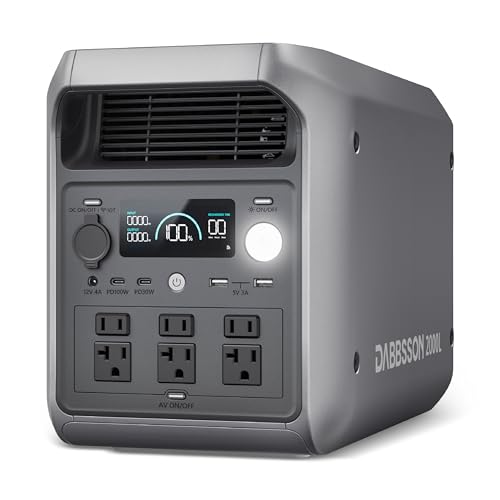
- 2,048Wh capacity and 2,200W continuous output
- 3,300W Power Boost for heavier appliances
- AC, solar, car, and hybrid charging options
Best For: RVers needing extended runtime and high output
Best Compact 1,000Wh Option
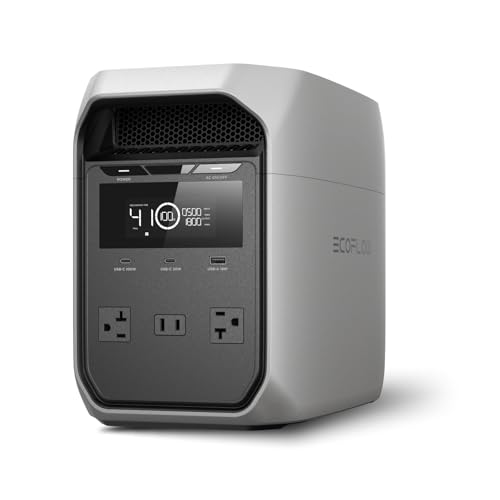
- 1,024Wh battery with 1,800W output
- Charges to 80% in 45 minutes by AC
- 26.7-pound design with UPS and app control
Best For: RVers wanting a lighter, fast-charging power station
Best Quiet High-Output Pick

- 2,048Wh LFP battery with 3,000W output
- 15 ports for charging multiple devices
- As quiet as 30 dB with 10ms UPS switching
Best For: RV groups running many devices or appliances
Best Lightweight RV Pick

- 17.2-pound design with a built-in handle
- 768Wh capacity and 800W running output
- Full AC recharge in about 70 minutes
Best For: RVers carrying lighter loads on short trips
Fast-Charging RV Powerhouse

- 1,024Wh LFP battery with up to 2,600W maximum output
- 0–80% recharge in about 37 minutes
- Quiet operation as low as 26dB
Best For: High-output RV use with fast charging and quiet overnight operation
Large-Capacity RV Backup

- 3,072Wh capacity and 3,600W continuous output
- Built-in TT-30 RV port for direct connection
- Full AC recharge in about 2.2 hours
Best For: Large RVs and extended off-grid stays requiring substantial capacity
Compact RV Companion

- Lightweight 9.5-pound design with 288Wh capacity
- 600W output with 1,500W Power Lifting Mode
- 0–80% charging in about 45 minutes
Best For: Lightweight RV trips and powering personal electronics or small appliances
Lightweight LiFePO4 Pick

- 292Wh capacity with 300W output
- 7.5-pound design and multiple port types
- Rated for over 4,000 charge cycles
Best For: Lightweight RV trips, camping, and small-device backup
Ultra-Compact Value Option
MARBERO M823 300W Power Station

- 4.6-pound body with 237Wh capacity
- Eight outputs, including two AC outlets
- Built-in lanterns with SOS modes
Best For: Lightweight camping, electronics, CPAP, and emergency lighting
Best High-Capacity Pick – DABBSSON 2000L
The DABBSSON 2000L is a strong choice for shoppers seeking portable power stations for RVs with substantial capacity and heavy-load capability. Its 2,048Wh battery, 2,200W continuous output, six AC outlets, and 3,300W Power Boost make it suitable for extended trips and demanding appliances.
Best For: RVers who need long runtime, high output, and flexible charging.
Pros:
- 2,048Wh capacity with a stated runtime of up to 22 hours and 30 minutes.
- Runs heavy-duty devices with 2,200W continuous output and up to 3,300W Power Boost.
- Supports AC, solar up to 800W, 12V car charging, and hybrid dual-input charging.
- Includes a sub-15ms EPS mode, app control, and a five-year warranty when extended.
Cons:
- At 41 pounds, it is less convenient to move than smaller RV power stations.
- The solar panel is optional rather than included.
Choose this model when capacity and appliance support matter more than minimum carry weight. Its fast AC recharge and multiple charging methods add useful flexibility for RV travel and off-grid use.
Best Compact 1,000Wh Option – EcoFlow DELTA 3 Classic
The EcoFlow DELTA 3 Classic offers a practical balance for shoppers comparing portable power stations for RVs. With a 1,024Wh battery, 1,800W output, six outlets, and a 26.7-pound weight, it provides useful capacity without the bulk of larger units.
Best For: RVers who want fast charging, manageable weight, and everyday appliance support.
Pros:
- Delivers 1,800W output with 3,600W surge capacity and X-Boost support.
- Reaches 80% charge in 45 minutes using AC charging.
- LiFePO4 cells are rated for more than 10 years of daily use.
- Offers under-10ms UPS switching and app-based monitoring and scheduling.
Cons:
- Its 1,024Wh capacity is lower than the 2,048Wh models in this roundup.
- Solar panels are optional, and it is not compatible with the specified DELTA 2 or DELTA 3 Series Smart Extra Batteries.
This is a well-rounded option for shorter trips or moderate RV loads. Its quick AC charging and lighter design are especially useful when you want capable backup power without stepping up to a much heavier station.
Best Quiet High-Output Pick – DJI Power 2000
The DJI Power 2000 stands out among portable power stations for RVs by combining a 2,048Wh LFP battery with 3,000W stable output and quiet operation. Its 15 ports can support several travelers’ devices, while the 30 dB low-noise rating is useful for nighttime RV use.
Best For: RV groups needing high output, many ports, and quieter operation.
Pros:
- Runs a broad range of appliances with 3,000W output and claims support for 99% of appliances.
- Reaches 80% charge in 55 minutes.
- Offers 15 ports and can expand to 22.5kWh with separately sold expansion batteries.
- Provides 10ms UPS switching and can operate as quietly as 30 dB.
Cons:
- Weighing about 47.9 pounds, it is relatively heavy for portable use.
- MPPT solar and car-charging modules are not built in and require separate compatible adapters.
- The supplied details list a one-year manufacturer warranty, despite other marketing references to five years.
This model makes sense when appliance capacity and shared charging are priorities. Before buying, budget for the appropriate adapter if you plan to recharge from solar panels or a vehicle.
Best Lightweight RV Pick – EcoFlow RIVER 2 Pro
The EcoFlow RIVER 2 Pro is a convenient entry point for shoppers seeking portable power stations for RVs in a lightweight format. Its 768Wh capacity, 800W output, 11 outlets, and 17.2-pound weight suit smaller loads, electronics, and short off-grid stays.
Best For: RVers prioritizing easy carrying and fast recharging for lighter loads.
Pros:
- Weighs only 17.2 pounds and includes a built-in handle.
- Recharges fully from AC power in about 70 minutes.
- LiFePO4 battery supports more than 3,000 cycles before reaching 80% capacity.
- Provides 11 outlets and supports up to 220W solar input.
Cons:
- Its 768Wh capacity and 800W running output are lower than the larger stations here.
- Solar charging requires an optional panel.
This is the easiest model in the group to carry and store, making it appealing for compact RV setups. Select a larger station if you need to run high-wattage appliances or extend power for several days.
Fast-Charging RV Powerhouse – DJI Power 1000 V2
For RV owners who want substantial output without excessive campsite noise, the DJI Power 1000 V2 is a strong option among portable power stations for RVs. Its 1,024Wh LFP battery, 2,600W maximum output, quiet operation, and rapid 0–80% recharge make it suited to appliances, electronics, and overnight use.
Best For: RVers who need high output, quiet nighttime operation, and fast recharging for camping, travel, or backup power.
Pros:
- Provides up to 2,600W maximum output and can power 99% of appliances listed by the manufacturer.
- Recharges from 0–80% in about 37 minutes.
- Runs as quietly as 26dB and uses a long-life 1,024Wh LFP battery.
- Includes dual 140W USB-C ports and a 10ms UPS function.
Cons:
- Solar and car charging require separate compatible adapters because those modules are not built in.
- At 15kg, it is less convenient to move than smaller RV power stations.
- The included package lists the AC cable but not solar panels or charging adapters.
The DJI Power 1000 V2 balances serious appliance support with low noise and fast grid charging. It is especially appealing for RV setups where power capacity and quiet operation matter more than minimal weight.
Large-Capacity RV Backup – Jackery HomePower 3000
The Jackery HomePower 3000 is built for RVers who prioritize extended runtime and a convenient RV connection. Among portable power stations for RVs, its 3,072Wh capacity, 3,600W continuous output, and built-in TT-30 RV port make it a practical choice for larger loads and longer trips.
Best For: RV owners seeking substantial energy reserves, high output, and plug-and-play connection through a TT-30 port.
Pros:
- Offers 3,072Wh capacity, 3,600W continuous output, and 7,200W surge power.
- Built-in TT-30 RV port provides a direct RV power connection.
- Can fully recharge in about 2.2 hours via AC or 1.7 hours using hybrid AC and DC charging.
- Uses LiFePO4 batteries rated for 4,000 cycles while retaining 70% capacity.
Cons:
- At 59.5 pounds, it is considerably heavier than compact RV power stations.
- Solar panels are optional rather than included.
- Its large capacity may be excessive for short trips or light electronics.
With a dedicated TT-30 port and enough capacity to support household-style essentials, the HomePower 3000 is suited to larger RVs and extended off-grid stays. Its main tradeoff is portability: this is a substantial unit to load and position.
Compact RV Companion – BLUETTI Elite 30 V2
For lightweight camping kits and smaller RV power needs, the BLUETTI Elite 30 V2 offers a portable balance of output and versatility. This compact choice among portable power stations for RVs weighs about 9.5 pounds, provides 288Wh of capacity, and supports AC, solar, and car charging.
Best For: Lightweight RV trips, road travel, CPAP users, and campers powering electronics, small appliances, or emergency devices.
Pros:
- Weighs about 9.5 pounds and provides nine total outlets.
- Delivers 600W continuous output and up to 1,500W in Power Lifting Mode.
- Reaches 80% charge in about 45 minutes and supports eight charging modes.
- Includes a 10ms UPS function and 140W USB-C PD fast charging.
Cons:
- The 288Wh capacity is much smaller than that of larger stations designed for extended RV appliance use.
- Power Lifting Mode does not change the battery’s 288Wh energy capacity.
- The matched PV60L solar panel is mentioned separately and is not listed among the included components.
The Elite 30 V2 is a convenient grab-and-go option when low weight matters. It can handle many personal electronics and selected small appliances, but RVers needing long runtimes for refrigerators or multiple high-draw loads should consider a larger-capacity model.
Lightweight LiFePO4 Pick – Jackery Explorer 300
For shoppers comparing portable power stations for RVs, the Jackery Explorer 300 stands out for its compact design, 292Wh capacity, and versatile port selection. Its 300W output can handle everyday electronics such as laptops, cameras, and drones, while the LiFePO4 battery is rated for more than 4,000 charge cycles.
Best For: RV travelers and campers who prioritize low weight, long battery life, and flexible charging.
Pros:
- Lightweight 7.5-pound design with an integrated carrying handle.
- Offers two AC outlets, USB-C, two USB-A ports, and a 120W car port.
- Supports solar charging and can reach 80% in about 2.8 hours with a 100W panel.
- LiFePO4 chemistry provides a rated service life of more than 4,000 cycles.
Cons:
- Its 300W output is intended for smaller electronics rather than high-demand RV appliances.
- Solar panel is optional.
- Orders require a physical delivery address rather than only a PO Box.
The Explorer 300 is a practical choice when portability and battery longevity matter more than maximum capacity. It is especially well suited to keeping personal electronics and a CPAP machine powered during off-grid trips.
Flexible RV Backup – DYNESS 300W Portable Power Station
The DYNESS 300W portable power station is a balanced option for portable power stations for RVs, offering a 256Wh LiFePO4 battery and a 110V pure sine wave AC outlet. It supports several small appliances and electronics, with charging available from an outlet, car charger, compatible solar panel, or dual-input setup.
Best For: RV and van-life users who want multiple recharge methods and straightforward backup power for smaller devices.
Pros:
- 256Wh LiFePO4 battery provides stable energy storage and long cycle life.
- 300W continuous output can support laptops, routers, mini fridges, and cameras.
- Six output ports include AC, USB-C, USB-A, DC outputs, and a car outlet.
- Can recharge from AC power, a car, solar input, or dual input.
Cons:
- Includes only one AC outlet.
- Solar panel is optional.
- Its 300W output limits use with larger RV appliances.
With its broad charging flexibility and useful mix of ports, the DYNESS is a sensible everyday companion for RV travel and emergency preparedness. Its compact 9.3-by-5-by-6.8-inch form also makes storage easier in a vehicle.
Ultra-Compact Value Option – MARBERO M823 300W Power Station
For RV owners seeking portable power stations for RVs without adding much weight, the MARBERO M823 combines 237Wh of capacity with a 300W output in a 4.6-pound body. It includes two AC outlets, USB ports, DC output, and built-in lights for campsite illumination or emergency use.
Best For: Weight-conscious campers and RV travelers who need versatile charging for personal electronics, CPAP equipment, and lighting.
Pros:
- Very lightweight 4.6-pound design with a compact handheld form.
- Eight output connections include two AC outlets, USB-A, USB-C, and DC output.
- Built-in top and side LED lights offer brightness and SOS modes.
- Supports wall, car, and compatible solar-panel recharging.
Cons:
- Its 237Wh capacity is lower than the other listed options.
- Solar panel is not included.
- Li-ion battery is rated with a 12-month warranty, rather than the longer cycle-life specification noted for the LiFePO4 models.
The M823 is compelling when low carry weight and port variety are priorities. It is best for smaller loads and short off-grid sessions, with the integrated lanterns adding useful campsite and blackout functionality.
How We Picked the Best Portable Power Stations for RVs
We focused on the specifications that matter most in an RV: usable battery capacity, continuous AC output, battery chemistry, recharge flexibility, portability, and suitability for common loads. Lithium iron phosphate (LiFePO4 or LFP) batteries generally offer a longer cycle life and improved durability compared with older lithium-ion designs. We also considered whether each unit supports solar charging, wall charging, USB-C devices, and pure sine wave AC output.
Because RV power needs vary widely, this list includes compact power stations for personal electronics as well as larger units capable of supporting multiple devices and selected high-draw appliances. A power station should not be treated as a replacement for a properly sized shore-power, generator, or RV electrical system.
Quick Comparison
| Best For | Typical Capacity | What to Look For |
|---|---|---|
| Phones, cameras, and lights | 200–400Wh | Low weight, USB-C, compact design |
| Weekend RV trips | 700–1,100Wh | 800W or more of AC output, solar input |
| CPAP and multiple devices | 1,000–2,000Wh | LFP battery, pure sine wave output, fast charging |
| Extended stays and larger loads | 2,000–3,000Wh+ | High inverter output, expandable or solar-ready charging |
Key Buying Factors for Portable Power Stations for RVs
Capacity and Runtime
Watt-hours indicate how much energy a battery stores. Estimate your daily usage by multiplying each device’s wattage by the hours you expect to use it, then add a reserve for conversion losses. A 300Wh unit may be sufficient for phones and lights, while a 1,000Wh or larger model is more practical for CPAP use, laptops, refrigerators, or several days away from hookups.
Output and Compatibility
Check both continuous and peak output. The continuous rating determines which appliances can run normally, while peak capacity helps handle startup surges from motors and compressors. Pure sine wave AC output is preferable for sensitive electronics. Also count the ports you need, including AC outlets, USB-A, USB-C, and 12V DC connections.
Charging, Weight, and Safety
Fast wall charging reduces downtime, while solar input can extend off-grid trips when panels receive adequate sunlight. Larger batteries provide more runtime but can be difficult to move around an RV. Look for a clear display, temperature and overload protection, reliable ventilation, and a battery management system. Never operate a power station in a wet location or where ventilation is blocked.
Who Should Buy Which Portable Power Stations for RVs?
Choose a compact 237Wh–400Wh model if you mainly need emergency phone charging, lighting, cameras, or a small laptop setup. Mid-size 700Wh–1,100Wh stations are a strong fit for weekend RV travelers who want more flexibility without carrying a very heavy battery. Select a 2,000Wh–3,000Wh model if you regularly camp off-grid, run a CPAP for several nights, or need to power multiple devices and moderate appliances.
Before buying, compare the station’s measured output and recharge performance with your RV appliances rather than relying only on maximum marketing ratings. If you plan to run an air conditioner, microwave, water heater, or other high-draw appliance, verify its startup and running wattage and choose a unit with sufficient continuous output and capacity.
