Long outages demand more than a quick phone charge. The right portable power station can keep essential electronics, lights, communication devices, and selected medical equipment running when the grid is down.
This roundup compares 10 options across battery capacity, inverter output, portability, charging flexibility, and emergency-readiness so you can choose a backup that fits your actual outage plan.
Best 10 Portable Power Stations for Long Outages Picks for 2026
Best Lightweight Pick

- 292Wh LiFePO4 battery with 300W output
- About 7.5 pounds with multiple ports
- Over 4,000 rated charge cycles
Best For: Lightweight backup for personal electronics, camping, and CPAP use
Best Extended-Runtime Pick

- 1024Wh LiFePO4 capacity and 1000W output
- Supports lights, routers, and mini fridges
- Up to 300W solar input
Best For: Longer home outages, remote work, RVs, and higher-capacity backup
Best Port Variety
EnginStar 300W Solar Generator

- Eight outputs, including pure sine wave AC
- Compact 296Wh battery and 300W output
- Wall, car, and solar charging options
Best For: Charging multiple small devices during camping, travel, and short outages
Best Compact Feature Set
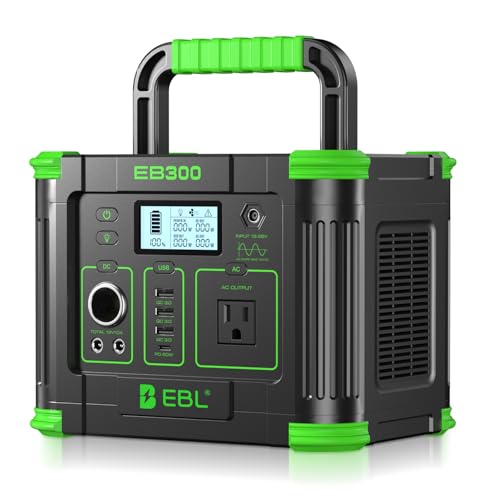
- 288.6Wh capacity with 330W rated output
- Wireless charging, SOS light, and multiple ports
- Wall, car, and solar recharging
Best For: Compact emergency kits, camping, CPAP support, and mixed-device charging
Best Lightweight Budget Pick
Flashfish 200W Portable Power Station
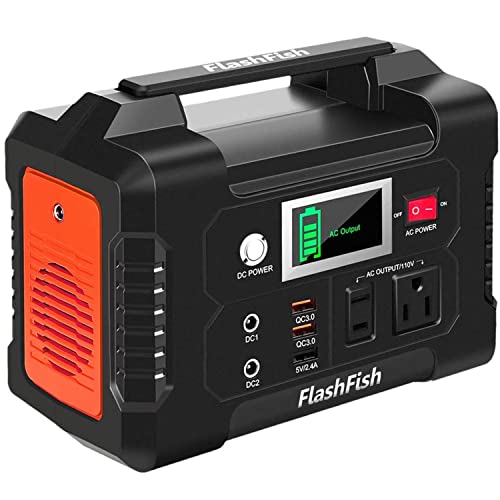
- 151Wh battery with 200W AC output
- Weighs about 4.07 pounds
- Wall, car, and optional solar recharging
Best For: Small electronics, camping, road trips, and short backup needs
Best Compact LiFePO4 Pick

- 192Wh LiFePO4 battery in a 3.9-pound body
- 100W output with UPS functionality
- Built-in LED light with SOS mode
Best For: Essential electronics, emergency lighting, and compact backup
Best with Extra Features
MARBERO M823 300W Power Station

- 237Wh battery and 300W pure sine wave output
- Eight charging and power ports
- 4.6-pound body with built-in LED lights
Best For: Lightweight emergency kits, camping, and small-device backup
Best Long-Life Battery
DaranEner NEOZ2 300W Power Station

- 192Wh LiFePO4 battery rated for 3,500-plus cycles
- 300W pure sine wave output with 600W surge
- 60W USB-C PD and six-device charging
Best For: Durable backup for electronics, CPAP equipment, and camping
Best Lightweight Pick – Jackery Explorer 300
For shoppers seeking portable power stations for long outages, the Jackery Explorer 300 is a compact option for keeping smaller electronics running. Its 292Wh LiFePO4 battery, 300W output, and lightweight design suit basic backup needs, camping, and travel.
Best For: Lightweight emergency backup, camping, laptops, cameras, and CPAP use.
Pros:
- Weighs about 7.5 pounds and has an integrated carry handle.
- Offers two AC outlets, USB-C, two USB-A ports, and a 120W car port.
- LiFePO4 battery is rated for more than 4,000 cycles before reaching 70% capacity.
- Can reach 80% charge in about 2.8 hours with a 100W Jackery solar panel.
Cons:
- The 292Wh capacity and 300W output are intended for smaller devices, not high-draw appliances.
- Solar panel is optional.
The Explorer 300 prioritizes portability and long battery life over maximum runtime. It is a practical choice when you need dependable power for personal electronics rather than whole-home outage coverage.
Best Extended-Runtime Pick – 1000W 1024Wh Power Station
For portable power stations for long outages, this 1024Wh model provides substantially more capacity than compact units. Its 1000W continuous output can support lights, routers, and mini fridges for the supplied estimate of two to three days, depending on usage.
Best For: Home emergency backup, remote work, Starlink, camping, RV use, and longer low-to-moderate power needs.
Pros:
- Provides 1024Wh of LiFePO4 capacity and 1000W continuous output.
- Can power up to five devices at once through AC, USB-C, and USB-A ports.
- Supports up to 300W solar input, with an optional 200W panel rated to charge it in six to eight hours in sunny conditions.
- Six-layer battery management protection addresses overcharge, overload, short circuit, and high temperature.
Cons:
- At about 27.7 pounds, it is considerably less portable than compact power stations.
- The supplied specifications do not identify a solar panel as included.
This model is the strongest capacity choice in the group for maintaining essential electronics through a longer interruption. Its heavier build is the tradeoff for a larger battery and higher output ceiling.
Best Port Variety – EnginStar 300W Solar Generator
The EnginStar 300W is a practical contender among portable power stations for long outages when your priority is flexible device charging. Its 296Wh battery, pure sine wave AC outlets, and eight total outputs make it useful for small electronics and off-grid activities.
Best For: Camping, road trips, RV use, and charging several low-power devices at the same time.
Pros:
- Includes two 110V pure sine wave AC outlets plus USB, USB-C, car, DC, and barrel ports.
- Compact 9 x 5.5 x 7.5-inch design is easy to carry.
- Offers wall, car, and compatible 12–25V solar charging options.
- Includes protections for overload, over-discharge, overcharging, overheating, and short circuits.
Cons:
- The 296Wh capacity and 300W output are not intended for grills, induction cookers, microwaves, refrigerators, or heaters.
- Wall charging takes about seven hours, and the solar panel is sold separately.
- The battery is rated for 1,000 cycles, lower than some LiFePO4 alternatives in this roundup.
EnginStar stands out for connection flexibility in a small package. It works best as a personal-device and camping backup, but its limited capacity makes it less suitable for extended appliance use during a prolonged outage.
Best Compact Feature Set – EBL EB300 330W Power Station
The EBL EB300 combines a compact 288.6Wh battery with useful convenience features, making it a versatile pick among portable power stations for long outages. It can provide backup for phones, TVs, CPAP machines, and other modest loads while remaining easy to store or carry.
Best For: Compact home emergency kits, camping, RV trips, CPAP support, and charging mixed devices.
Pros:
- Delivers 330W of rated output with up to 600W peak surge power.
- Includes AC, USB-A, USB-C, DC, car, and wireless charging options.
- Can recharge from a wall adapter, car charger, or 60–120W solar panels.
- Built-in LED lighting includes an independent SOS mode for emergencies.
Cons:
- The 288.6Wh capacity limits how long it can run larger appliances.
- Solar panels are not listed among the included components.
- Its one-year warranty is shorter than some extended warranty offerings.
With wireless charging, lighting, and a broad port selection, the EB300 is more feature-focused than many similarly sized units. It is a good compact backup, though households needing multi-day appliance support should consider a larger-capacity station.
Best High-Output Pick – Daran 600W LiFePO4 Power Station
For shoppers comparing portable power stations for long outages, the DaranEner 600W model offers a useful balance of output, capacity, and recharge flexibility. Its 288Wh battery, 600W rated output, and 1,200W surge capacity can support devices such as CPAP machines, laptops, lights, and an 80W car refrigerator, provided they stay within the power limits.
Best For: Home emergency backup, RV use, camping, and users who need higher output for compatible appliances.
Pros:
- 600W rated output with 1,200W surge capacity.
- LiFePO4 battery rated for 3,500+ cycles.
- Six ports, including a 100W USB-C PD port and two AC outlets.
- Reaches 80% charge in about two hours from an AC outlet.
Cons:
- Usable capacity is approximately 247.68Wh after conversion losses.
- Solar panel and car charging cable are not included.
- Devices above 600W are not supported.
This is the strongest option here for higher-wattage essentials, but its capacity is still better suited to short-term or selective backup than powering large appliances for extended periods.
Best Lightweight Budget Pick – Flashfish 200W Portable Power Station
If portability is a priority when choosing portable power stations for long outages, the Flashfish E200 keeps the design light and straightforward. Its 151Wh battery and 200W AC output can handle phones, tablets, cameras, lights, fans, and other compatible small electronics, while the soft handle makes it easy to move between a car, campsite, and home.
Best For: Short backup periods, camping, road trips, and charging small electronics without carrying a heavier power station.
Pros:
- Lightweight 4.07-pound design with a soft carrying handle.
- Six total output connections, including AC, DC, and USB ports.
- Supports wall, car, and compatible 60W solar-panel recharging.
- LCD display shows remaining power and charging or output status.
Cons:
- 151Wh capacity is the smallest among these three options.
- Solar panel is sold separately.
- 200W AC output limits use with higher-powered appliances.
The Flashfish is easy to carry and practical for basic device charging, but its modest capacity makes it less suitable for extended outages or sustained loads.
Best Compact LiFePO4 Pick – GO10Y 192Wh Power Station
The GO10Y is a compact choice for portable power stations for long outages when you mainly need to keep essential electronics and lighting available. Its 192Wh LiFePO4 battery, 100W rated AC output, UPS feature, and built-in LED light support basic outage readiness while keeping the unit to about 3.9 pounds.
Best For: Phones, cameras, laptops within the output limit, emergency lighting, and compact home or vehicle backup.
Pros:
- Compact 3.9-pound design with a slim footprint.
- LiFePO4 battery rated for more than 3,000 charging cycles.
- Multiple ports, including two USB-C, two USB-A, and two DC ports.
- UPS function and LED light with brightness and SOS modes.
Cons:
- 100W rated output limits the connected devices.
- 192Wh capacity is not intended for long-running high-power loads.
- Only one AC outlet is provided.
This model stands out for compact emergency readiness: it is easy to store and includes useful lighting and UPS features, though users needing appliance-level output should consider a larger station.
Best with Extra Features – MARBERO M823 300W Power Station
For shoppers comparing portable power stations for long outages, the MARBERO M823 emphasizes easy carrying and broad device compatibility. Its 237Wh battery, 300W pure sine wave output, eight outlets, and built-in lights make it a practical option for phones, laptops, CPAP equipment, and lighting, though its capacity is best suited to essential electronics rather than extended high-wattage use.
Best For: Lightweight emergency kits, camping, CPAP users, and charging several small devices.
Pros:
- Compact 4.6-pound design with a built-in handle.
- 300W output with 375W peak capacity and pure sine wave AC power.
- Multiple AC, USB-A, USB-C, and DC outputs, plus two LED lights.
- Rechargeable from an outlet, car adapter, or compatible solar panel.
Cons:
- 237Wh capacity may provide limited runtime during a long outage.
- Solar panel is not included.
- Not designed for high-power appliances beyond its 300W output rating.
The M823 is a sensible portability-first choice when your outage plan centers on communications, small electronics, CPAP use, and emergency lighting. Its compact size and flexible outputs are useful, but buyers needing longer runtimes should consider a larger-capacity station.
Best Long-Life Battery – DaranEner NEOZ2 300W Power Station
The DaranEner NEOZ2 is a strong candidate among portable power stations for long outages when battery longevity matters. It combines a 192Wh LiFePO4 battery with 300W pure sine wave output, a 60W USB-C port, and six-device charging. Its capacity is modest, but the LiFePO4 cells are rated for 3,500-plus cycles and the unit supports wall, car, and solar recharging.
Best For: Buyers prioritizing battery durability, laptop charging, CPAP use, and compact home or camping backup.
Pros:
- LiFePO4 battery rated for more than 3,500 cycles.
- 300W continuous and 600W peak output with pure sine wave power.
- 60W USB-C PD port and outputs for charging up to six devices.
- Built-in MPPT controller supports compatible solar charging up to 60W.
Cons:
- 192Wh capacity is smaller than some similarly rated 300W stations.
- Solar panel and car charging cables are not included.
- It cannot run appliances exceeding 300W or those with demanding startup surges.
The NEOZ2 makes the most sense for dependable everyday backup rather than powering large appliances through a prolonged outage. Its durable LiFePO4 chemistry, fast USB-C charging, and pure sine wave output give it a useful balance for essential electronics.
Best Capacity Option – DYNESS PPS300-4 256Wh Power Station
For shoppers seeking portable power stations for long outages, the DYNESS PPS300-4 offers the largest stated battery capacity in this group at 256Wh. Its LiFePO4 battery, 300W continuous output, and 600W starting wattage support small appliances, routers, laptops, cameras, and other essential electronics. Multiple recharge methods also make it suitable for home backup, RV use, and off-grid trips.
Best For: Buyers who want more capacity for small appliances, networking equipment, and emergency electronics.
Pros:
- 256Wh LiFePO4 battery provides the highest listed capacity in this selection.
- 300W continuous output with 600W starting wattage and pure sine wave AC power.
- Supports AC, car, and compatible solar-panel recharging.
- Includes a digital display, six output ports, and a two-year manufacturer warranty.
Cons:
- Only one AC outlet is listed.
- Solar panel is optional rather than included.
- Its 300W continuous rating limits use with larger appliances.
The PPS300-4 is the better fit when you want a little more stored energy without moving to a much larger power station. It can cover a useful range of small emergency loads, but its single AC outlet and 300W limit should be considered when planning outage coverage.
How We Picked These Portable Power Stations for Long Outages
We focused on the specifications that matter during extended power failures: usable battery capacity, continuous and surge wattage, battery chemistry, charging options, outlet selection, weight, and portability. LiFePO4 models receive particular attention because their chemistry typically offers a longer cycle life than conventional lithium-ion batteries.
Capacity and output are not the same. Watt-hours indicate how much energy a station stores, while watts indicate how much power it can deliver at once. We also considered whether each model supports solar charging, pass-through operation, USB-C charging, and pure sine wave AC output. These features can improve convenience and compatibility, but actual performance depends on the connected load, temperature, and charging conditions.
Quick Comparison
| What to Compare | Why It Matters | Best For |
|---|---|---|
| 192–296Wh capacity | Lower weight and easier transport | Phones, lights, routers, and short emergencies |
| 300–600W output | Handles more small appliances and tools | Flexible home, camping, and RV backup |
| 1,024Wh capacity | Provides substantially more runtime | Longer outages and higher energy needs |
| LiFePO4 battery | Generally longer service life | Frequent use and preparedness kits |
| Solar and AC charging | Enables multiple recharge methods | Multi-day outages and off-grid use |
Key Buying Factors for Portable Power Stations for Long Outages
Battery Capacity and Runtime
Estimate your essential load before buying. A 10W LED light may run for many hours, while a refrigerator, heated device, or high-powered appliance can consume a smaller battery quickly. A station’s advertised watt-hours are not fully available at the AC outlet because inverter and conversion losses reduce practical runtime.
Inverter Output and Surge Capacity
Check both continuous output and peak or surge output. Motors and compressors can draw extra power when starting, so a station that only matches an appliance’s running wattage may still shut down. Pure sine wave output is a useful choice for sensitive electronics and equipment with AC motors.
Recharge Options
AC charging is usually fastest and most predictable. Solar charging can extend an outage plan, but panel wattage, sunlight, temperature, and the station’s solar input limit charging speed. Confirm whether panels are included and verify connector compatibility before relying on solar power.
Safety, Ports, and Practical Design
Look for overload, short-circuit, over-temperature, and low-battery protection. Count the AC outlets, USB ports, and USB-C power delivery ports you actually need. Weight, handles, display readability, fan noise, and storage temperature also matter when the station will be moved or kept ready for emergencies.
Who Should Buy Which Portable Power Stations for Long Outages?
Choose a compact 192Wh-to-296Wh model if your priorities are phones, lamps, internet equipment, cameras, and occasional small electronics. A 300W class station is a better all-around option for camping, RV use, and modest home backup. Consider the 600W model when you need more flexibility for several devices or appliances with higher startup demands.
If an outage may last multiple days or you need longer runtime for essential equipment, the 1,024Wh LiFePO4 station is the strongest capacity-focused choice in this selection. Before purchasing, list your must-run devices, add their wattage and estimated hours, and leave extra capacity for conversion losses and unexpected needs. No portable station should be used to power whole-home circuits unless it is specifically designed and installed for that purpose.
