The best QLED televisions for gaming combine vibrant quantum-dot color with the responsiveness modern consoles and gaming PCs demand. High refresh rates, variable refresh rate support, low input lag, and strong HDR can make a bigger difference than screen size alone.
We selected 10 models across several budgets and room sizes, including 4K QLED and Mini-LED options from Hisense, TCL, Samsung, and VIZIO. Use the guide below to match panel performance, connectivity, and smart-TV features to the way you play.
Best 10 QLED Televisions for Gaming Picks for 2026
Large-Screen Value Pick

- Large 65-inch 4K QLED display
- Native 144Hz refresh rate for smooth action
- Four HDMI inputs, including eARC
Best For: Gamers wanting a large, versatile screen
Compact Competitive Pick
VIZIO 50-inch Quantum Pro Gaming TV

- Up to 120fps at 4K and 240fps at 1080p
- AMD FreeSync Premium Pro certification
- Active Full Array local dimming and QLED color
Best For: PC and console gamers in smaller spaces
Affordable Mini-LED Pick
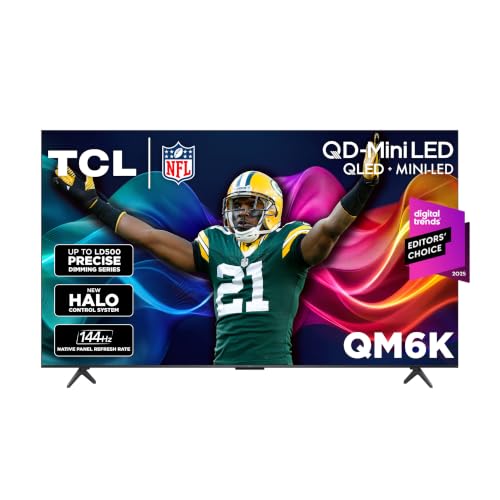
- QD-Mini LED with Quantum Dot color
- 144Hz native refresh and 288Hz VRR gaming mode
- Halo Control targets blooming and black-level issues
Best For: Large-screen gaming and mixed entertainment
Balanced Big-Screen Pick

- 65-inch 4K QLED display with 120Hz refresh rate
- Gaming Hub supports game streaming without a console
- Quantum HDR and 100% color volume target vivid images
Best For: Large-screen gaming and everyday streaming
High-Performance Gaming Pick
TCL QM7L 55-Inch Mini-LED QLED TV

- 144Hz refresh rate with Game Accelerator 288 VRR
- AMD FreeSync Premium Pro supports responsive gameplay
- Mini-LED with up to 2,100+ local dimming zones
Best For: Fast-paced gaming and high-contrast HDR
Compact Budget-Friendly Pick

- Compact 43-inch 4K Hi-QLED display
- Game Mode Plus with AI Smooth Motion and MEMC
- Dolby Vision and HDR10+ Adaptive support
Best For: Small rooms and casual gaming
Compact Color Specialist
Samsung 43-Inch QN70H Neo QLED

- 43-inch 4K Neo QLED Mini LED display
- Quantum Dot color and AI-enhanced upscaling
- 60Hz refresh rate with Game Mode
Best For: Smaller gaming rooms and vivid everyday viewing
Fast-Refresh Big-Screen Pick
Hisense 75-Inch E7 Hi-QLED Mini-LED

- Native 144Hz Game Mode for smoother action
- Mini-LED full-array local dimming
- Dolby Vision IQ and HDR10+ Adaptive support
Best For: Large-screen gaming and cinematic HDR viewing
Premium Console-Ready Choice
Samsung 75-Inch QN80F Neo QLED

- VRR gaming up to 4K 144Hz
- Mini LED contrast and AI 4K processing
- Dolby Atmos and Object Tracking Sound Lite
Best For: Large-screen high-refresh gaming and home entertainment
Premium Performance Pick – Hisense 55-inch U7 Mini-LED Gaming TV
For shoppers comparing QLED televisions for gaming, the Hisense U7 stands out with a native 165Hz refresh rate, Mini-LED backlighting, and a strong brightness specification. Its anti-reflection treatment also makes it practical for brighter rooms.
Best For: Gamers who want premium motion performance, bright HDR, and a compact 55-inch display.
Pros:
- Native 165Hz refresh rate supports smooth gaming and fast-action content.
- Mini-LED Pro backlighting and up to 3,000 local dimming zones target strong contrast.
- Supports Dolby Vision, Dolby Vision IQ, HDR10+, HDR10, and HDR10+ Adaptive.
- Anti-reflection and glare-free screen treatment helps reduce distracting reflections.
Cons:
- The 55-inch screen may be small for a large gaming room.
- Its premium gaming features may be more than casual players need.
The U7 is a feature-rich choice for gamers who prioritize refresh rate, HDR brightness, and local-dimming control. Its built-in 2.1.2-channel audio system with Dolby Atmos support adds convenience, though a dedicated sound system may still appeal to enthusiasts.
Large-Screen Value Pick – TCL 65-inch T7 144Hz QLED TV
The TCL T7 is a practical option among QLED televisions for gaming, combining a spacious 65-inch 4K screen with a native 144Hz refresh rate. Its four HDMI inputs also make it easier to connect consoles, PCs, and home-theater equipment.
Best For: Gamers who want a large display, smooth motion, and broad HDR format support.
Pros:
- Native 144Hz panel is designed for smooth games, sports, and action scenes.
- QLED color covers nearly the entire DCI-P3 color space, according to the supplied notes.
- Supports Dolby Vision, HDR10+, HDR10, and HLG.
- Four HDMI inputs include one with eARC for flexible equipment connections.
Cons:
- The glossy screen finish can be less suitable for rooms with strong reflections.
- Wi-Fi 5 is not the newest wireless standard listed in this roundup.
The T7 balances screen size and gaming-friendly speed with Google TV features, Dolby Atmos processing, and adjustable feet. It is a strong fit when a larger 65-inch panel matters as much as refresh rate.
Compact Competitive Pick – VIZIO 50-inch Quantum Pro Gaming TV
The VIZIO Quantum Pro is a compelling choice among QLED televisions for gaming when desk or bedroom space is limited. It supports up to 120 frames per second at 4K and up to 240 frames per second at 1080p, with AMD FreeSync Premium Pro certification.
Best For: Console and PC gamers who want a compact 50-inch display with high-frame-rate options.
Pros:
- Supports up to 120fps at 4K and 240fps at 1080p when connected to a console or PC.
- AMD FreeSync Premium Pro certification is included for compatible gaming setups.
- Quantum Color QLED, Active Full Array backlighting, and local dimming target vivid contrast.
- Wi-Fi 6E, AirPlay, and built-in Chromecast add convenient connectivity.
Cons:
- This is a 2023 model rather than the newest option in the selection.
- The listed 10-watt-per-channel audio output may favor use with external audio for fuller sound.
- VIZIO OS functionality requires a VIZIO Account.
The Quantum Pro makes the most sense for buyers focused on gaming performance in a smaller room. Its 120Hz 4K support and 240Hz 1080p mode give it flexibility across console and PC use, while the 1,000-nit peak brightness specification supports impactful HDR highlights.
Affordable Mini-LED Pick – TCL 65-inch QM6K QLED TV
The TCL QM6K combines QLED color with Mini-LED backlighting, making it a well-rounded option among QLED televisions for gaming, sports, and streaming. Its native 144Hz refresh rate and Game Accelerator 288 VRR feature focus on smooth fast-action performance.
Best For: Gamers who want a large 65-inch screen with Mini-LED contrast and gaming-focused motion features.
Pros:
- QD-Mini LED combines precise backlighting with Quantum Dot color.
- Native 144Hz refresh rate and Game Accelerator 288 VRR support smooth gaming.
- Halo Control and precise dimming zones are designed to improve blacks and reduce blooming.
- Supports Dolby Vision, HDR10+, HDR10, and HLG.
Cons:
- The glossy screen finish may reflect room lighting.
- The supplied specifications list the backlight configuration as Edge LED despite describing Mini-LED full-array local dimming.
The QM6K is a versatile 65-inch choice for buyers who want gaming speed without giving up cinematic HDR support. Its built-in Onkyo 2.1 speaker system with subwoofer and Google TV platform also make it suitable as an all-purpose living-room display.
Balanced Big-Screen Pick – Samsung Q70D 65-Inch QLED TV
For shoppers comparing QLED televisions for gaming, the Samsung Q70D stands out with a 65-inch 4K display, a 120Hz refresh rate, and Motion Xcelerator 120Hz for smoother action. Its Gaming Hub also supports game streaming directly from the TV, while Quantum HDR and 100% color volume target vivid, consistent picture quality.
Best For: Gamers who want a large, smooth 4K QLED screen with built-in streaming features.
Pros:
- 120Hz refresh rate and Motion Xcelerator 120Hz support smooth on-screen action.
- Quantum Dot technology delivers up to a billion shades with 100% color volume.
- Gaming Hub enables game streaming without requiring a console.
- Quantum Processor 4K provides AI upscaling for sharper lower-resolution content.
Cons:
- The built-in audio system is a 2-channel, 20-watt setup.
- Its edge LED backlight may offer less localized contrast control than a Mini-LED design.
The Q70D is a practical choice when screen size, refresh rate, and Samsung’s smart ecosystem matter most. It combines gaming-oriented motion features with useful everyday extras such as Eye Comfort Mode and Tizen OS.
High-Performance Gaming Pick – TCL QM7L 55-Inch Mini-LED QLED TV
The TCL QM7L is a strong contender among QLED televisions for gaming, pairing SQD Mini-LED backlighting with a 144Hz refresh rate. Its TCL Game Pack adds Game Accelerator 288 VRR, a Game Bar, and AMD FreeSync Premium Pro, while precise local dimming and up to 3,000 nits of brightness support punchy HDR performance.
Best For: Gamers seeking fast refresh, variable-refresh features, and advanced Mini-LED contrast in a 55-inch format.
Pros:
- 144Hz refresh rate supports fluid gameplay and motion.
- Game Accelerator 288 VRR and AMD FreeSync Premium Pro are designed for responsive gaming.
- Up to 2,100+ local dimming zones and Mini-LED backlighting support deep blacks.
- Up to 3,000 nits of brightness and broad HDR support enhance high-dynamic-range scenes.
Cons:
- The 55-inch screen is smaller than the Samsung option in this roundup.
- The glossy finish may reflect bright room lighting.
With its unusually gaming-focused feature set, the QM7L is the most performance-oriented option here. It is especially appealing if high refresh, VRR support, and precise dimming are higher priorities than choosing a larger screen.
Compact Budget-Friendly Pick – Hisense E6 43-Inch Hi-QLED TV
The Hisense E6 is a compact option for shoppers considering QLED televisions for gaming in a bedroom, office, or smaller entertainment space. Its 43-inch 4K display includes Game Mode Plus, AI Smooth Motion with MEMC, and broad HDR support including Dolby Vision and HDR10+ Adaptive, though its native refresh rate is 60Hz.
Best For: Smaller rooms and casual gaming setups that value HDR support and smart Fire TV features.
Pros:
- 43-inch 4K Hi-QLED display fits more compact spaces.
- Game Mode Plus and AI Smooth Motion with MEMC target clearer, smoother action.
- Supports Dolby Vision, HDR10, HDR10+ Adaptive, and HLG.
- Fire TV and Alexa voice control simplify access to apps and content.
Cons:
- The 60Hz refresh rate is lower than the 120Hz and 144Hz options in this roundup.
- Its direct LED backlight does not offer the supplied Mini-LED local-dimming features of the TCL.
The E6 makes sense when space and versatility matter more than maximum gaming speed. It offers a useful combination of compact size, 4K resolution, expansive HDR format support, and Fire TV convenience for casual play and streaming.
Compact Color Specialist – Samsung 43-Inch QN70H Neo QLED
For shoppers seeking QLED televisions for gaming in a smaller room, the 43-inch Samsung QN70H combines 4K resolution with Neo QLED Mini LED technology. Its Quantum Dot color, matte screen finish, and built-in Game Mode make it a practical choice for everyday entertainment and gaming, though its 60Hz refresh rate is less suited to high-frame-rate competitive play.
Best For: Smaller gaming spaces, mixed entertainment, and buyers prioritizing vivid color and compact sizing.
Pros:
- Neo QLED Mini LED technology helps improve contrast between dark scenes and bright highlights.
- 100% color volume with Quantum Dots supports rich, precise colors at different brightness levels.
- 4K upscaling and the NQ4 AI processor enhance lower-resolution content.
- Includes Game Mode and three HDMI ports for connected entertainment setups.
Cons:
- The 60Hz refresh rate is modest compared with gaming TVs offering 120Hz or higher.
- The 43-inch screen may feel small for larger rooms or couch-distance viewing.
The QN70H is a sensible compact option when color, contrast, and everyday 4K picture quality matter more than advanced high-refresh gaming performance. Its smaller footprint also makes it easier to fit into a bedroom, office, or secondary gaming area.
Fast-Refresh Big-Screen Pick – Hisense 75-Inch E7 Hi-QLED Mini-LED
The Hisense E7 is a strong large-screen contender among QLED televisions for gaming, pairing a 75-inch Mini-LED display with a native 144Hz refresh rate. Its AI picture processing, MEMC motion enhancement, and broad HDR support are designed to keep games, sports, and movies clear and fluid.
Best For: Big-screen gaming, fast action, sports viewing, and cinematic HDR entertainment.
Pros:
- Native 144Hz Game Mode supports fluid motion for fast-paced gameplay.
- Mini-LED backlighting with full-array local dimming improves shadow detail and bright highlights.
- Supports Dolby Vision IQ, HDR10+ Adaptive, HDR10, and HLG.
- AI Picture and MEMC automatically help optimize clarity and reduce motion blur.
Cons:
- The 75-inch screen requires substantial wall or furniture space.
- The supplied details do not specify the total number of HDMI ports or gaming-specific input features.
With its 144Hz panel and Mini-LED contrast system, the E7 is particularly appealing for gamers who want a large, smooth display without giving up movie-focused features such as Dolby Vision and Filmmaker Mode. Its AI-driven adjustments also reduce the need for manual picture tuning.
Premium Console-Ready Choice – Samsung 75-Inch QN80F Neo QLED
For buyers wanting a large Samsung display among QLED televisions for gaming, the QN80F combines Mini LED backlighting with VRR support and gaming up to 4K at 144Hz. Its NQ4 AI Gen2 processor also upscales content, while Dolby Atmos and Object Tracking Sound Lite add a more immersive viewing setup.
Best For: Large-screen console or PC gaming, sports, streaming, and buyers who want strong picture processing.
Pros:
- Supports VRR gaming at up to 4K 144Hz for smooth, tear-free visuals.
- Mini LED zones improve contrast and brightness across scenes.
- NQ4 AI Gen2 processing uses 20 neural networks to enhance picture and sound.
- Includes Dolby Atmos support and Object Tracking Sound Lite for spatial audio.
Cons:
- The 75-inch size and roughly 74-pound weight require careful placement or mounting.
- The listed HDR support specifies HDR10+ but does not list Dolby Vision.
- Its glossy screen finish may be less forgiving in rooms with strong reflections.
The QN80F is a well-rounded choice for a dedicated large-screen gaming and entertainment setup. Its 4K 144Hz VRR capability is the standout feature for gaming, while AI upscaling and immersive audio help it perform well with a wider range of content.
How We Picked the Best QLED Televisions for Gaming
We focused on gaming-relevant specifications rather than treating QLED branding as a guarantee of performance. Each model was evaluated by its refresh rate, stated gaming modes, variable refresh rate features, HDR support, HDMI connectivity, panel size, and overall positioning. Mini-LED models received extra consideration because their local dimming systems can improve contrast and HDR highlights, although performance still depends on implementation and viewing conditions.
We also included a range of sizes and prices. A 43-inch display can suit a desk or small bedroom, while 65- and 75-inch televisions are better choices for larger rooms and longer viewing distances.
Quick Comparison
| What to prioritize | Best fit |
|---|---|
| High refresh rate and responsive play | Competitive console or PC gaming |
| Mini-LED backlighting | Bright HDR games and improved contrast |
| Compact 4K size | Desk setups, bedrooms, and smaller spaces |
| Large-screen cinematic gaming | Living rooms and couch-based play |
| Broad smart-TV functionality | Gaming plus streaming and daily entertainment |
Key Buying Factors for QLED Televisions for Gaming
Refresh Rate and VRR
A native 120Hz, 144Hz, or 165Hz panel can make motion appear smoother than a standard 60Hz television. VRR helps synchronize the display with a console or PC’s changing frame rate, reducing tearing and stutter. Check that the television supports the VRR range and gaming resolution you actually use.
HDMI Features and Input Lag
Look for enough HDMI ports for your console, soundbar, and other devices. HDMI 2.1 is especially useful for current-generation consoles and gaming PCs because it can support 4K at higher frame rates, depending on the model. Low input lag in Game Mode is more important than a television’s advertised motion-enhancement number.
HDR, Brightness, and Dimming
QLED displays are known for strong color volume, while Mini-LED models generally offer more precise backlighting and better contrast. HDR10+ and Dolby Vision support can improve compatible games and streaming content, but peak brightness, black-level control, and glare in your room also affect the result.
Size, Viewing Distance, and Audio
Choose a size that fits your seating distance without overwhelming the room. Larger screens are immersive, but a smaller model may be sharper and easier to use at a desk. Built-in speakers are adequate for casual play; a soundbar or headset is preferable for directional audio and stronger impact.
Who Should Buy Which QLED Televisions for Gaming?
Competitive players: Prioritize the highest native refresh rate, reliable VRR, low input lag, and suitable HDMI bandwidth. HDR-focused players: Consider a Mini-LED model with strong local dimming and high brightness. Small-space gamers: A 43- or 50-inch option can provide 4K detail without dominating a desk or bedroom. Living-room gamers: A 65- or 75-inch screen delivers a more immersive console experience, especially when paired with a capable sound system. Mixed-use households: Choose the model whose smart platform, voice controls, streaming support, and picture features best match everyone’s daily use.
