Small studios can be especially sensitive to door gaps. A little air leakage can also let in street noise, hallway light, dust, and odors that interfere with recording, practice, work, or sleep.
This roundup compares 10 studio door seals for small rooms, including under-door sweeps, adhesive foam, silicone strips, and adjustable designs. Use the buying guide below to match the seal type to your door gap, sound-control goals, and installation needs.
Best 10 Studio Door Seals for Small Rooms Picks for 2026
Quick-Fit Door Sweep

- 39-inch trimmable bottom sweep
- Fills gaps up to 1.5 inches
- Peel-and-stick, noise-reducing design
Best For: Bottom-door draft, dust, and noise control
Long-Roll Seal Tape

- 33 feet of cut-to-length material
- Waterproof and thermally insulating
- Suitable for doors, windows, and more
Best For: Long runs and multiple small-room sealing projects
Clear Gap Guard

- Transparent 16-foot sealing strip
- Fits gaps up to 0.8 inches
- Waterproof and easy to cut
Best For: Low-visibility sealing around narrow door and frame gaps
Frame-Fit Seal

- 20-foot cut-to-fit roll
- Seals gaps up to 1 inch
- Designed for edges, jambs, and bottoms
Best For: Discreet perimeter sealing around studio doors
Budget Under-Door Seal
HomeProtect 36-Inch Draft Stopper

- Covers gaps up to 1.5 inches
- Blocks drafts, light, odors, and some noise
- Cut-and-stick installation for doors up to 36 inches
Best For: Affordable sealing beneath interior or exterior doors
Transparent Multi-Surface Seal
Clear Silicone Weather Stripping

- 35mm-wide clear silicone strip
- About 33 feet across a two-pack
- Useful for doors, frames, windows, and glass
Best For: Discreet sealing across multiple small-room surfaces
Two-Pack Silicone Sweep

- Includes two 39-inch silicone sweeps
- Covers gaps up to 1.5 inches
- Helps block drafts, dust, light, bugs, and noise
Best For: Sealing two standard doors or keeping a spare on hand
Flexible Frame Seal

- 20-foot cut-to-fit silicone roll
- Designed for 1/8–1/4-inch gaps
- Helps block drafts, dust, light, and noise
Best For: Small, even gaps around door frames and windows
Heavy-Duty Door Sweep
41-Inch Silicone Draft Stopper
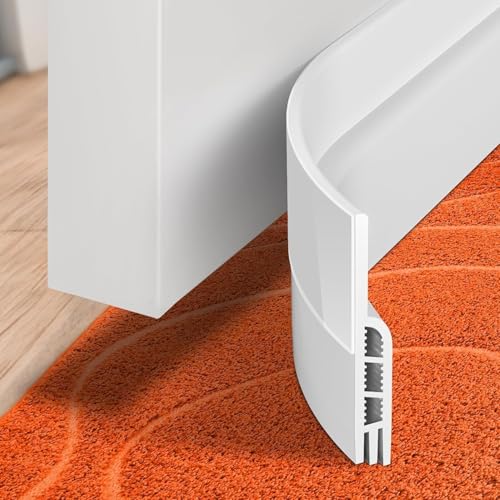
- Covers bottom gaps up to 1 inch
- Helps reduce drafts, noise, and light
- Strong adhesive for interior or exterior doors
Best For: Doors with larger bottom gaps on smooth, level surfaces
Adjustable Privacy Sweep
39-Inch Under-Door Silicone Seal

- Seals gaps from 0 to 1.2 inches
- Helps block light, drafts, and everyday noise
- Flexible design suits uneven thresholds
Best For: Studio doors needing broader gap coverage and privacy
Quick-Fit Door Sweep – Silicone Draft Stopper
For studio door seals for small rooms, this bottom-mounted silicone sweep is a straightforward choice when the main problem is a visible gap beneath the door. Its 39-inch length can be trimmed, and the 1.5-inch maximum gap fill makes it suitable for many interior doors.
Best For: Blocking drafts, dust, heat transfer, and some ambient noise beneath interior or exterior doors.
Pros:
- Thick silicone construction helps block cold air, heat transfer, and dust.
- Installs quickly with a peel-and-stick adhesive backing.
- Can reduce outside sounds through its chambered design.
- Trimmable 39-inch length fits many standard doors.
Cons:
- Designed specifically for the bottom of the door, not the sides or frame.
- White color may be more noticeable on darker doors.
This is a practical pick for renters or small-room users who want fast installation and a substantial bottom seal without drilling. Measure the door gap first, especially if it exceeds the stated 1.5-inch fill capacity.
Long-Roll Seal Tape – EVA Foam Weather Stripping
For studio door seals for small rooms, this 33-foot self-adhesive strip offers plenty of material for a door frame, window, or several smaller gaps. Its flexible EVA construction is intended for sealing, insulation, sound reduction, and light blocking across varied household applications.
Best For: Covering long or irregular door and window gaps when you want a cut-to-length adhesive strip.
Pros:
- 33-foot roll provides substantial coverage for multiple projects.
- Flexible, waterproof material can accommodate larger or uneven gaps.
- Upgraded mesh adhesive is designed for stronger, longer-lasting attachment.
- Can also be used for anti-collision, cushioning, insulation, and sound reduction.
Cons:
- The notes do not specify an exact maximum gap size.
- Black strip may not blend with every door or frame.
- Broad multi-use positioning may require careful measuring and cutting for a neat door installation.
This roll is the versatile option when a small room has more than one draft point or unusually shaped gaps. Clean and dry the surface carefully before applying, then cut only what you need.
Clear Gap Guard – 1.4-Inch Silicone Seal
For studio door seals for small rooms, this transparent silicone strip is useful when you want a low-visibility seal around a door, window, or shower area. The 16-foot roll can be cut to length and is specified for gaps from 0 to 0.8 inches.
Best For: Neat-looking draft, dust, weather, and noise sealing on smaller gaps around doors and frames.
Pros:
- Clear silicone is less visually intrusive than an opaque strip.
- 16 feet of material can be cut to fit individual sections.
- Flexible, waterproof construction supports indoor and outdoor applications.
- Peel-and-stick installation requires no special tools.
Cons:
- Its stated gap range is limited to 0.8 inches.
- At 1.4 inches wide, it may need careful positioning for a clean finish.
- Adhesion depends on a clean, dry surface; cold conditions may require warming the backing.
This is a sensible choice for compact rooms where appearance matters as much as sealing performance. Confirm that your gap falls within the stated range, and prepare the surface thoroughly before installation.
Frame-Fit Seal – Clear T-Shaped Silicone Strip
For studio door seals for small rooms, this clear T-shaped silicone strip is designed for door and window edges, including door jambs and gaps up to 1 inch. Its 20-foot length gives you enough material for a complete frame or multiple sections.
Best For: Sealing door edges, jambs, bottoms, and other frame gaps where a clear, flexible profile is preferred.
Pros:
- T-shaped design is intended to fit around door or window gaps.
- Clear silicone offers a discreet appearance.
- 20-foot length can be cut to fit different openings.
- Helps limit airflow, dust, noise, and seasonal heat loss.
Cons:
- Installation requires a smooth, clean, and dry surface.
- The stated maximum gap is 1 inch.
- Cold-weather application may require warming the adhesive with a hair dryer.
This seal stands out when the gap is along the door perimeter rather than only underneath it. Its flexible silicone profile and clear finish suit bedrooms, closets, bathrooms, and other compact spaces where a subtle installation is desirable.
Budget Under-Door Seal – HomeProtect 36-Inch Draft Stopper
For studio door seals for small rooms, the HomeProtect Door Draft Stopper is a budget-friendly under-door option for blocking drafts, light, odors, and some hallway noise. Its one-sided design fits doors up to 36 inches and covers gaps up to 1.5 inches.
Best For: Renters and small-room users who need an affordable seal for a large gap beneath an interior or exterior door.
Pros:
- Designed to cover gaps up to 1.5 inches.
- Simple cut-and-stick installation; warming the adhesive with a hair dryer may improve grip.
- Helps reduce cold air, light, dust, odors, smoke, and corridor noise.
- Less expensive than many double-sided draft stoppers.
Cons:
- Fits doors up to 36 inches, so wider doors may require another option.
- The single-sided design may provide less coverage than a double-sided stopper.
- Adhesive installation requires a clean, properly prepared door surface.
This is a practical choice when affordability and broad gap coverage matter most. It is especially useful for improving comfort in a small studio without adding a bulky door sweep.
Transparent Multi-Surface Seal – Clear Silicone Weather Stripping
For studio door seals for small rooms, this clear silicone weather stripping is suited to narrow gaps around doors, frames, and windows. The transparent 35mm-wide strip comes in a two-pack with about 33 feet of total material, making it useful for several sealing projects.
Best For: Small studios needing a discreet seal around door frames, windows, glass doors, or other household gaps.
Pros:
- Clear silicone is visually subtle on many surfaces.
- Approximately 33 feet of total strip provides coverage for multiple openings.
- Designed to help block drafts, dust, pollen, wind, and some outside noise.
- Waterproof adhesive is intended for humid and cold conditions.
Cons:
- Requires measuring, cutting, surface cleaning, and careful adhesive application.
- The strip must be pressed firmly and allowed 24 hours to cure.
- Its 35mm width may not suit every door gap or installation area.
This option works well when you want broad coverage with a low-visibility finish. Its long combined length is useful for sealing more than just the studio door, provided the surfaces are prepared carefully.
Two-Pack Silicone Sweep – Grotheory Door Draft Stopper
For studio door seals for small rooms, the Grotheory Door Draft Stopper offers two flexible silicone sweeps for sealing the bottom of doors. Each strip measures about 39 inches long and is designed to help reduce drafts, dust, bugs, light, and noise through gaps up to 1.5 inches.
Best For: Users who want two self-adhesive silicone door sweeps for studio doors, windows, or additional household openings.
Pros:
- Two-pack provides a spare or coverage for two openings.
- Flexible silicone is designed to bend without damaging floors.
- Triple-design construction helps reduce noise, dust, light, and bugs.
- Can be cut to size and applied with the included adhesive.
Cons:
- White finish may be more noticeable than a clear seal.
- Maximum listed gap coverage is 1.5 inches.
- Adhesive installation depends on accurate sizing and surface preparation.
The Grotheory is a versatile pick when you need a pair of bottom-door seals rather than a single stopper. Its flexible silicone construction and 39-inch length make it suitable for many standard interior doors and related gaps.
Flexible Frame Seal – Silicone D-Shaped Gap Strip
For studio door seals for small rooms, this 20-foot silicone strip is a versatile choice for narrow gaps around door frames and windows. Its D-shaped profile is recommended for gaps from 1/8 to 1/4 inch, and the roll can be cut to fit your project.
Best For: Small, relatively even gaps around door frames, windows, cabinets, and other smooth surfaces.
Pros:
- Helps reduce drafts, dust, moisture, light gaps, and everyday noise.
- Flexible silicone compresses smoothly and remains soft across changing temperatures.
- 20-foot cut-to-fit roll supports multiple sealing projects.
- Peel-and-stick installation is straightforward, with an adhesive promoter included for smooth surfaces.
Cons:
- Its recommended gap range is limited to 1/8 to 1/4 inch.
- Surface preparation is important for a lasting adhesive bond.
This is the most adaptable option of the three for sealing small frame gaps rather than the space beneath a door. Choose it when you need one roll for a studio door and nearby window or cabinet gaps.
Heavy-Duty Door Sweep – 41-Inch Silicone Draft Stopper
For studio door seals for small rooms with a noticeable bottom gap, this 41-inch door sweep is designed to cover openings up to 1 inch. Its silicone construction helps limit drafts, noise, light, and temperature loss at the threshold.
Best For: Interior or exterior doors with a bottom gap of up to 1 inch and a smooth, level installation surface.
Pros:
- Fills gaps up to 1 inch beneath a door.
- Helps reduce noise, drafts, heat loss, cold air, and light intrusion.
- Strong adhesive is designed for a secure, long-lasting bond.
- Silicone material is heat- and cold-resistant and suitable for homes with children or pets.
Cons:
- May not adhere well to rough or textured doors or walls.
- A level floor is needed for the sweep to fit properly.
- The adhesive should be left undisturbed for 24 hours after installation.
This sweep is a practical pick when the main problem is air or sound entering under the studio door. Measure the gap and prepare a clean, dry surface before applying it.
Adjustable Privacy Sweep – 39-Inch Under-Door Silicone Seal
For studio door seals for small rooms where privacy and sound control matter, this adjustable silicone sweep covers gaps from 0 to 1.2 inches. Its hollow-arc design helps block air, light, and noise while the flexible material is intended to move smoothly across the floor.
Best For: Interior studio doors with uneven or larger bottom gaps where light, drafts, and everyday noise are concerns.
Pros:
- Adjustable design seals gaps from 0 to 1.2 inches.
- Helps block cold or warm air, light, conversations, footsteps, and outdoor sounds.
- Thickened silicone is flexible, heat- and cold-resistant, and designed not to damage the floor.
- Widened waterproof adhesive backing is intended to resist lifting from friction.
Cons:
- Careful measuring and cutting are required to avoid wasting material.
- Adhesion may be weaker on rough or textured surfaces.
- The adhesive should be pressed firmly and left in place for 24 hours.
Among these options, this sweep offers the broadest stated gap range and the most emphasis on privacy and sound reduction. It is a strong fit for a studio door with an uneven threshold, provided the mounting surface is suitable.
How We Picked These Studio Door Seals for Small Rooms
We focused on practical door-sealing designs that can address the most common problems in compact studios: air movement, visible light around the threshold, dust, odors, and modest noise leakage. The selection includes bottom-of-door sweeps, self-adhesive frame seals, silicone weatherstripping, and adjustable blockers.
Because a door seal cannot make a hollow door or thin wall soundproof, we prioritized products that are easy to size, install, and replace. We also considered material durability, flexibility, compatibility with common door gaps, and whether the design is better suited to renters, permanent installations, or uneven floors.
Quick Comparison
- Best for bottom gaps: Door sweeps and under-door draft stoppers.
- Best for frame gaps: Adhesive foam, silicone D-shaped strips, and T-shaped seals.
- Best for discreet installation: Clear silicone weatherstripping.
- Best for larger or uneven gaps: Adjustable sweeps or wider multi-layer blockers.
- Best for broad coverage: Long rolls that can be trimmed for the sides and top of the frame.
Key Buying Factors for Studio Door Seals for Small Rooms
Measure the Gap First
Measure the opening between the door and floor with the door closed, then check the side and top gaps. A bottom sweep is appropriate when the main leak is beneath the door; it will not fully solve gaps around the frame. Avoid choosing a seal that is so thick the door becomes difficult to close.
Choose the Right Seal Type
Under-door sweeps are quick and useful for drafts, light, dust, and some hallway noise. Adhesive foam is easy to cut and install around a frame, while silicone strips generally offer better moisture resistance and a cleaner long-term fit. T-shaped seals may require a compatible channel or groove, so verify the door design before ordering.
Consider Sound-Control Expectations
Sealing air paths can reduce high-frequency leakage and improve room comfort, but it is not the same as acoustic treatment. For recording or mixing, pair the seal with a solid-core door, wall treatment, rugs, and other measures when possible.
Check Installation and Floor Clearance
Clean and dry adhesive surfaces before applying tape, and allow the adhesive to set according to the product instructions. For a frequently used studio door, select a sweep that glides over the floor rather than dragging heavily. Renters may prefer removable or low-residue options.
Who Should Buy Which Studio Door Seals for Small Rooms?
Choose a bottom-of-door sweep if cold air, hallway light, or a visible floor gap is your main issue. Choose adhesive foam or silicone tape if the leakage is along the jamb or top of the door. Choose a clear seal when appearance matters or the door has glass. Choose an adjustable design if the threshold is uneven or you need a more precise fit.
For the best result, combine a threshold seal with frame weatherstripping when gaps exist in both locations. Recheck the door after installation: it should close and latch normally, without excessive pressure on the seal.
