The Karaoke Machine review question is simple: do you want an all-in-one party speaker that can also handle group singing without extra gear?
For buyers who value portability, multiple mic support, and easy device hookup, this one has a clear pitch.
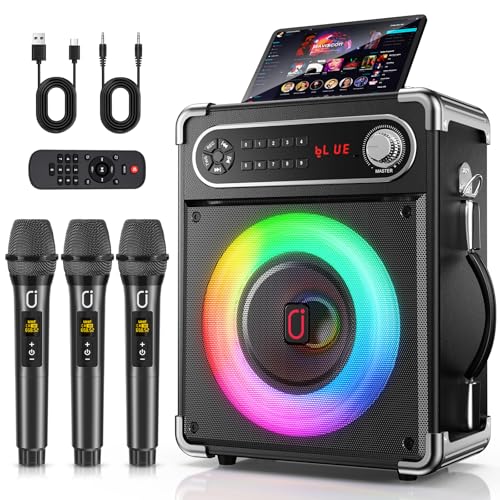
Karaoke Machine Review Summary
This Karaoke Machine review points to a very specific kind of buyer: someone who wants a self-contained karaoke setup with microphones included, not a bare speaker they need to build around.
The listing leans hard into convenience, with three wireless 0-delay microphones, a dual-driver sound design, and controls for bass, treble, echo, and microphone volume.
That combination makes it a practical fit for home parties, family nights, small gatherings, and casual hosting.
It is best for shoppers who want a portable, ready-to-run karaoke system with enough flexibility to connect to phones, TVs, and USB media. It is less compelling if you want a premium hi-fi speaker first and a karaoke machine second, because the product is clearly optimized for singing, group fun, and quick setup.
Review Scorecard
| Category | Score | Rationale |
|---|---|---|
| Karaoke readiness | 9/10 | Three wireless microphones and 0-delay positioning make it strongly geared for group singing. |
| Sound flexibility | 8/10 | Separate bass, treble, echo, and mic volume controls give useful tuning options. |
| Connectivity | 9/10 | Bluetooth, AUX, USB, TF, MIC input, and TV support cover most common use cases. |
| Portability | 8/10 | The listing emphasizes easy carrying and all-in-one convenience for indoor or outdoor use. |
| Party suitability | 8/10 | The dual speaker design and room-filling positioning suggest a strong casual-hosting fit. |
| Setup simplicity | 9/10 | The product is presented as quick to connect without app-heavy friction. |
| Overall value case | 8/10 | The included microphones and broad feature set reduce the need for add-ons. |
Key Features and Specifications of Karaoke Machine
The headline feature is the included microphone bundle.
The listing says this model comes with 3 wireless microphones and describes them as 10ms ultra-low latency units, which matters because karaoke is much less fun when voice and music drift apart.
For families or groups, having multiple mics built in is the main reason this product stands out.
Sound hardware is another core part of the appeal.
The system uses a 5.25-inch woofer paired with a 2-inch tweeter, which is a more deliberate layout than the tiny single-driver speakers often used in compact karaoke products.
In practical terms, that should translate to a fuller low end and clearer vocals than a basic mono speaker.
Connectivity is broad enough to support several common setups:
- Bluetooth for wireless music playback and karaoke use
- AUX for TV hookup or instrument-style connections
- USB and TF card playback for offline media
- MIC input for additional voice use
- TV support for lyric display and home karaoke setups
The physical controls are a meaningful part of the product design.
The listing calls out independent bass, treble, echo, microphone volume, and music volume control, which gives the user more control than a one-knob novelty speaker.
That matters if you want to reduce harshness, add reverb, or balance vocals against music for different rooms and voices.
This is also meant to be a portable entertainment system rather than a fixed home component.
The product copy describes it as lightweight, easy to carry, and suitable for home entertainment, backyard gatherings, and gifts.
Pros and Cons of Karaoke Machine
Pros
- Includes 3 wireless microphones, which is a major advantage for families or group karaoke.
- The 0-delay / 10ms latency claim suggests better lip-sync than many budget karaoke setups.
- Separate bass, treble, echo, and mic volume controls make it easier to tune for different rooms.
- Broad input support means it can work with phones, TVs, USB media, TF cards, and AUX.
- The woofer + tweeter layout is more serious than a basic single-driver portable speaker.
Cons
- The listing is heavily feature-driven, so buyers who want a polished hi-fi speaker may not care about the karaoke extras.
- The feature set may feel excessive if you only need simple Bluetooth playback.
- The product is positioned for casual party use, not for professional PA or stage work.
- Without hands-on notes, there is no evidence here about battery life, durability, or real-world microphone range.
Who Should Buy Karaoke Machine?
Buy this Karaoke Machine if you want a ready-made singing setup rather than a speaker you have to complete with separate mics and accessories.
It makes the most sense for parents, families, casual hosts, and anyone who wants an easy party system for living rooms, backyards, holiday gatherings, or small group events.
It also fits people who like flexibility.
If you plan to connect to a TV for lyrics, play music from a USB stick, or switch between Bluetooth and AUX sources, this model is built around that kind of mixed use.
You should probably skip it if your priority is audiophile sound quality, advanced DJ features, or professional-grade amplification.
It is also not the cleanest choice if you only need a compact speaker for solo listening, because much of what you pay for here is the karaoke-specific hardware.
Karaoke Machine Sound and Setup
Dual-Driver Sound Balance
The 5.25-inch woofer and 2-inch tweeter suggest a more balanced presentation than many entry-level karaoke speakers.
That does not make it a studio monitor, but it does indicate that the product is trying to support both bass presence and vocal clarity instead of leaning too far in either direction.
Microphone Performance for Groups
The strongest selling point is the trio of wireless microphones.
For group singing, that matters more than raw power because it reduces the need to share a single mic or buy extras later.
The low-latency claim also speaks directly to a common karaoke complaint: hearing yourself too late.
Controls That Matter
Bass, treble, echo, and microphone volume controls are exactly the kind of adjustments that make a karaoke machine easier to live with.
A brighter room, a quieter voice, or a more echo-heavy song all benefit from simple tuning, and this product appears to expose those controls directly.
Connectivity for TV and Offline Use
The connection options are broad enough to support everyday family use.
Bluetooth handles casual streaming, AUX supports a TV or wired source, and USB or TF card playback gives you a path when you do not want to rely on internet access.
That makes the system more versatile than a single-purpose party speaker.
Alternatives to Karaoke Machine
If you want a comparable karaoke-first option, look at the Singing Machine karaoke speaker systems if you prefer a recognizable karaoke brand with a wide Amazon footprint.
For buyers who want a more established portable party-speaker approach, the JBL PartyBox line is a credible alternative, especially if music playback matters as much as singing.
If you want a simpler all-in-one home karaoke setup, the ION Audio karaoke speakers are another reasonable comparison point.
If your priority is a mic bundle and plug-and-play convenience, the karaoke speaker with microphones search results can help you compare bundled systems without overpaying for features you do not need.
Is Karaoke Machine Worth It?
Yes, if you want a karaoke-focused portable speaker with multiple wireless microphones and easy source support. The value here comes from the bundled mics, the dual-driver design, and the fact that it is built to work with phones, TVs, and offline media without much setup friction.
It is not the right buy if you want premium listening fidelity, professional PA gear, or a minimalist Bluetooth speaker.
But for family karaoke, casual parties, and flexible home entertainment, the feature set is well aligned with the job.
If that is your use case, this Karaoke Machine looks worth considering.
