Fresh, well-monitored air can support a more comfortable and productive classroom. The best smart air quality monitors for classrooms make it easier to spot rising CO2, particulate matter, humidity, and other indoor-air concerns before they become disruptive.
We selected 10 monitors with different combinations of sensors, displays, alerts, connectivity, and installation options so schools, teachers, and facility teams can choose the right fit for each learning space.
Best 10 Smart Air Quality Monitors for Classrooms Picks for 2026
Best Alexa Air Quality Monitor
Amazon Smart Air Quality Monitor

- Tracks PM2.5, VOCs, CO, humidity, and temperature
- Shows LED status and an Alexa app air quality score
- Supports alerts and Alexa Routines
Best For: Alexa-equipped classrooms needing multi-factor monitoring
Best CO Safety Pick
Kidde Smart CO and IAQ Detector

- Sounds an 85-dB alarm for carbon monoxide
- Monitors IAQ, humidity, and TVOC levels
- Includes plug-in power and AA battery backup
Best For: Classrooms emphasizing CO protection and outage coverage
Best Two-Room Value
Amazon Smart Air Quality Monitor 2-Pack
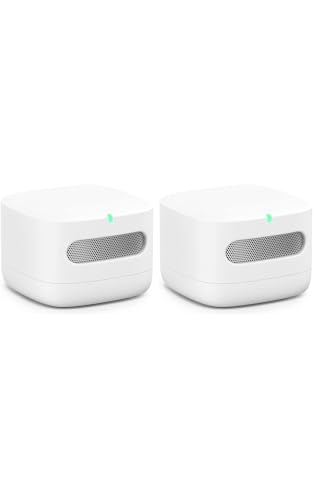
- Includes two matching air quality monitors
- Measures PM2.5, VOCs, CO, humidity, and temperature
- Enables Alexa alerts and device automation
Best For: Schools monitoring two rooms or classroom zones
Best CO2 Display
GoveeLife Smart CO2 Monitor H5140

- Shows CO2, temperature, humidity, and time
- Refreshes readings every five seconds
- Stores up to two years of data with CSV export
Best For: Classrooms focused on visible CO2 and ventilation trends
Most Comprehensive

- Tracks CO₂, particles, TVOC, formaldehyde, temperature, and humidity
- Includes alerts, 90-day history, and CSV export
- Up to six hours of portable battery use
Best For: Detailed classroom air-quality investigations and trend analysis
Best for Simple PM2.5 Tracking
GoveeLife H5106 Air Quality Monitor

- Measures PM2.5, temperature, and humidity
- Refreshes readings every two seconds
- Offers Govee device integration and data export
Best For: Quick particulate monitoring in Govee-equipped classrooms
Best for Facility Managers
CF-60PP SMART Professional Monitor

- Tracks gases, particles, AQI, pollen, temperature, and humidity
- Shows up to 12-hour local color graphs without a phone
- Includes alarms, one-year history, and USB data export
Best For: School-wide monitoring, alerts, and documented air-quality reporting
Best Large-Display Classroom Monitor

- Tracks CO₂, particles, VOCs, temperature, humidity, and AQI
- 7-inch display shows readings at a glance
- Audible threshold alerts with mute function
Best For: Classrooms needing broad, local air-quality visibility
Best Portable Classroom Tester
16-in-1 Smart Air Quality Monitor

- Measures particles, CO₂, TVOC, HCHO, temperature, and humidity
- Refreshes data every 1.5 seconds on a color screen
- Portable design with 4–5 hours of sampling per charge
Best For: Room-to-room checks and flexible school use
Best Connected Classroom Monitor

- NDIR CO₂ sensing with temperature and humidity tracking
- App offers remote readings, history, and alerts
- 10-inch auto-brightness display with desktop or wall mounting
Best For: Schools needing remote CO₂ oversight and ventilation reminders
Best Alexa Air Quality Monitor – Amazon Smart Air Quality Monitor
For classrooms already using Alexa, this monitor offers a straightforward way to track five indoor-air factors: PM2.5, VOCs, carbon monoxide, humidity, and temperature. A color-coded LED provides an at-a-glance signal, while the Alexa app supplies an air quality score and notifications when conditions worsen.
Best For: Classrooms seeking broad air-quality tracking and Alexa-based alerts or automation.
Pros:
- Measures PM2.5, VOCs, carbon monoxide, humidity, and temperature.
- Provides a color-coded LED and an easy-to-understand Alexa air quality score.
- Can notify phones or Echo devices and trigger compatible fans, dehumidifiers, or air purifiers through Routines.
Cons:
- Requires the Alexa app for detailed information and alerts.
- Its smart-home automation features are centered on compatible Alexa devices.
This is a versatile option among smart air quality monitors for classrooms, particularly where staff want several measurements in one device and already use Alexa-compatible equipment.
Best CO Safety Pick – Kidde Smart CO and IAQ Detector
This Kidde unit combines carbon monoxide protection with indoor air quality, humidity, and TVOC monitoring. It plugs into a standard 120V outlet, includes AA battery backup, and sends app notifications while providing an 85-dB alarm when dangerous carbon monoxide is detected.
Best For: Classrooms prioritizing carbon monoxide safety, backup power, and app-based notifications.
Pros:
- Provides an 85-dB CO alarm and alerts for lower CO levels starting at 30–70 ppm.
- Monitors indoor air quality, humidity, and TVOC levels with weekly IAQ trends.
- Uses plug-in power with two included AA backup batteries and carries a 10-year limited warranty.
Cons:
- Some advanced insights, including mold-risk and thermal-comfort analysis, require an optional subscription.
- Uses 2.4 GHz Wi-Fi, which may require compatible network setup.
With its dedicated CO alarm and battery backup, this is a safety-focused choice among smart air quality monitors for classrooms, especially when continuous power and clear emergency alerts matter.
Best Two-Room Value – Amazon Smart Air Quality Monitor 2-Pack
This two-pack makes it easier to monitor separate classroom areas with matching Alexa-enabled devices. Each monitor tracks PM2.5, VOCs, carbon monoxide, humidity, and temperature, then reports readings through a color-coded LED and the Alexa app.
Best For: Schools that want coverage in two rooms or distinct classroom zones with centralized Alexa alerts.
Pros:
- Supplies two monitors for broader room or zone coverage.
- Tracks five key indoor-air factors, including PM2.5, VOCs, CO, humidity, and temperature.
- Supports phone notifications, Echo announcements, and Alexa Routines for compatible devices.
Cons:
- Detailed scores, notifications, and automation depend on the Alexa app and compatible devices.
- The supplied information does not indicate a built-in display for numerical readings.
For schools comparing smart air quality monitors for classrooms, this pack is practical when two locations need similar monitoring and the building already uses Alexa-compatible climate equipment.
Best CO2 Display – GoveeLife Smart CO2 Monitor H5140
For classrooms where ventilation and occupancy can affect carbon dioxide, the GoveeLife H5140 provides a clear, dedicated CO2 reading alongside temperature and humidity. Its 4.82-inch display refreshes every five seconds, while customizable buzzer, app, and email alerts help staff respond when set thresholds are exceeded.
Best For: Classrooms needing visible CO2 tracking, historical data, and customizable alerts.
Pros:
- Uses an SCD4x photoacoustic NDIR CO2 sensor with a stated accuracy of ±(40 ppm + 5%) and a five-second refresh rate.
- Displays CO2, temperature, humidity, and a clock at a glance.
- Tracks up to two years of data and supports CSV export through the app.
- Offers buzzer, app, and email alerts with customizable thresholds.
Cons:
- Requires continuous AC power rather than battery operation.
- CO2 calibration may be required outdoors through the app.
- It does not support air-purifier linkage because purifiers cannot effectively reduce CO2.
Among smart air quality monitors for classrooms, this model stands out when a prominent CO2 display and long-term reporting are more useful than broad pollutant coverage such as PM2.5 or VOC sensing.
Most Comprehensive – BREATHE Airmonitor Plus Gen 2
For schools comparing smart air quality monitors for classrooms, the BREATHE Airmonitor Plus Gen 2 stands out for its broad sensor coverage. It tracks CO₂, PM1, PM2.5, PM10, TVOC, formaldehyde, temperature, and humidity, while its app adds alerts, historical graphs, and data export.
Best For: Classrooms that need detailed pollutant tracking, portable monitoring, and longer-term data review.
Pros:
- Measures eight indoor air quality indicators, including NDIR CO₂, particulate matter, TVOC, and formaldehyde.
- Offers configurable CO₂ and PM2.5 alerts, 90-day app history, and CSV data export.
- Rechargeable battery provides up to six hours of portable use, with USB-C operation for continuous monitoring.
Cons:
- App connectivity requires a 2.4 GHz Wi-Fi network.
- Its extensive readings may be more than needed for classrooms seeking only basic particulate monitoring.
The BREATHE model is a strong choice when ventilation investigations or documented trends matter. It combines a local color display with detailed app-based analysis, making it useful for identifying changes linked to occupancy, cleaning, HVAC operation, or ventilation.
Best for Simple PM2.5 Tracking – GoveeLife H5106 Air Quality Monitor
The GoveeLife H5106 is a straightforward option among smart air quality monitors for classrooms, focusing on PM2.5, temperature, and humidity. Its two-second refresh rate, LED display, and GoveeHome connectivity make changing conditions easy to check during the school day.
Best For: Classrooms that prioritize quick PM2.5 visibility and integration with compatible Govee devices.
Pros:
- Displays PM2.5, temperature, and humidity with data refreshed every two seconds.
- Provides four-level ambient air-quality indication, plus clock and PM2.5 display modes.
- Supports remote monitoring, 13-day online graphs, and exporting data from up to two years of storage.
Cons:
- Does not measure CO₂, VOCs, or formaldehyde.
- Requires continuous Type-C power and has no built-in battery.
- Requires 2.4 GHz Wi-Fi for time display and smart connectivity.
This monitor is best suited to schools looking for a compact, easy-to-read particulate sensor rather than a full pollutant panel. Its strongest advantage is convenient PM2.5 monitoring, especially where compatible Govee purifiers, humidifiers, or other devices are already in use.
Best for Facility Managers – CF-60PP SMART Professional Monitor
The CF-60PP SMART is designed for schools that want both at-a-glance readings and documented indoor air quality data. As one of the more feature-rich smart air quality monitors for classrooms, it shows CO₂, PM1, PM2.5, PM10, TVOC, formaldehyde, AQI, temperature, humidity, and a pollen metric.
Best For: Facility managers who need local trend graphs, configurable alarms, remote notifications, and report-ready data.
Pros:
- Shows multiple pollutant readings and a pollen metric on one screen.
- Displays local color graphs covering periods from four minutes to 12 hours without requiring a phone.
- Supports custom CO₂, PM2.5, and VOC thresholds, local alarms, phone push notifications, USB export, and up to one year of history.
Cons:
- Weighs about one pound, making it less convenient to move between rooms than smaller monitors.
- Remote app features require Wi-Fi, although the local display works without the app.
- Uses an included 9V battery rather than a stated rechargeable battery system.
For schools managing several rooms or investigating recurring ventilation issues, the CF-60PP SMART offers unusually strong on-device visualization and reporting features. Its combination of threshold alarms, cloud trends, and USB export is particularly useful when classroom readings need to support facility decisions.
Best Large-Display Classroom Monitor – 16-in-1 Air Quality Monitor
For classrooms that need broad, at-a-glance monitoring, this 16-in-1 unit tracks CO₂, particulate matter, HCHO, TVOC, temperature, humidity, and AQI. Its 7-inch display and real-time alerts make it a practical choice among smart air quality monitors for classrooms.
Best For: Classrooms, offices, and other shared indoor spaces where staff need many readings visible on one screen.
Pros:
- Tracks CO₂, PM1.0, PM2.5, PM10, HCHO, TVOC, temperature, humidity, AQI, and more.
- Large 7-inch full-view display with adjustable brightness.
- Real-time readings with a built-in buzzer and mute function for threshold alerts.
- Built-in calibration support and selectable 12/24-hour and °F/°C settings.
Cons:
- The supplied notes do not mention Wi-Fi, app access, or remote monitoring.
- Sensor care is required; perfumes and strong odors can affect accuracy.
This is a strong fit when comprehensive local monitoring matters more than app connectivity. The large screen should help teachers quickly check conditions, while calibration support offers added control for ongoing use.
Best Portable Classroom Tester – 16-in-1 Smart Air Quality Monitor
This compact 16-in-1 monitor is suited to schools that want to check multiple rooms or move a tester between classrooms. It updates readings every 1.5 seconds, uses a color HD screen, and supports Type-C charging for flexible indoor use.
Best For: Teachers, facilities staff, or school teams that need a lightweight monitor for classrooms, offices, vehicles, and other spaces.
Pros:
- Monitors PM1.0, PM2.5, PM10, CO₂, TVOC, HCHO, temperature, and humidity.
- High-definition color screen provides continuous, color-coded readings.
- Compact 14.8-ounce design supports handheld or flexible placement.
- Includes Type-C cable and adapter, with approximately 4–5 hours of continuous sampling per charge.
Cons:
- Battery runtime is listed at approximately 4–5 hours, so extended use may require recharging.
- The supplied notes do not mention Wi-Fi, app monitoring, or historical data storage.
Choose this model if portability is central to your classroom monitoring plan. Its broad sensor coverage and fast refresh rate make room-to-room checks convenient, though it is less suited to installations that require continuous remote access.
Best Connected Classroom Monitor – WiFi CO₂ Air Quality Detector
For classrooms where staff want remote visibility, this Wi-Fi monitor focuses on CO₂, temperature, and humidity and connects to a mobile app. Its 10-inch screen, automatic brightness, and adjustable CO₂ alarm make it useful for both in-room awareness and ongoing oversight.
Best For: Classrooms, meeting rooms, and school spaces where remote readings, historical records, and ventilation reminders are valuable.
Pros:
- NDIR CO₂ sensing covers 400–5000 ppm with 1 ppm sensitivity, alongside temperature and humidity readings.
- Wi-Fi app supports remote monitoring, historical records, and remote alerts.
- Large 10-inch display refreshes every second and adjusts brightness automatically.
- Supports desktop or wall-mounted installation and includes a customizable CO₂ threshold alarm.
Cons:
- Measures fewer parameters than the 16-in-1 alternatives, focusing on CO₂, temperature, and humidity.
- It has no internal battery and must remain connected to a power source.
- Wi-Fi and app features require setup and a compatible power location.
This is the most suitable option for schools prioritizing connected CO₂ management rather than broad pollutant measurement. The wall-mounting option and app-based history can support ventilation follow-up, while the large display keeps readings visible in the classroom.
How We Picked the Best Smart Air Quality Monitors for Classrooms
We focused on the measurements that matter most in occupied learning spaces: CO2, PM2.5, PM10, VOCs, temperature, and humidity. We also considered whether a monitor provides continuous readings, audible or visual alerts, mobile notifications, app access, and an easy-to-read display.
Classroom use requires more than a long sensor list. We favored products that can be checked quickly during lessons, placed conveniently on a wall or desk, and used by staff without complicated setup. Options with battery power, plug-in operation, or remote monitoring were included to cover different school layouts and budgets.
Quick Comparison
| What to Compare | Best For |
|---|---|
| CO2 monitoring | Identifying inadequate ventilation and crowded-room buildup |
| PM2.5 and PM10 sensors | Tracking fine particles from outdoor pollution, dust, or activities |
| VOC and formaldehyde detection | Checking for emissions from materials, cleaners, and furnishings |
| Wi-Fi and app alerts | Remote oversight across multiple rooms |
| Large color display | Fast, visible checks by teachers and students |
| Battery or portable operation | Flexible placement and temporary testing |
Key Buying Factors for Smart Air Quality Monitors for Classrooms
Choose the Right Sensors
CO2 is often the most useful classroom indicator because it reflects occupancy and ventilation. PM2.5 is valuable near traffic, construction, workshops, or dusty environments. VOC, temperature, and humidity readings add context, but a larger sensor count does not automatically mean better accuracy.
Check Accuracy and Calibration Needs
Look for products that specify sensor technology, especially NDIR sensing for CO2. Confirm whether the monitor requires periodic calibration and whether its operating range suits your classrooms. Treat readings as guidance for ventilation and maintenance rather than as a substitute for professional assessment.
Prioritize Visibility and Alerts
A large display is useful when staff need an immediate reading without opening an app. Audible alarms, color indicators, push notifications, and threshold settings are helpful when a room needs attention while no one is actively watching the device.
Consider Installation and Management
Plug-in units work well in permanent locations, while battery-powered models are easier to move between rooms. For several classrooms, Wi-Fi access and app-based monitoring can reduce manual checks, but verify network compatibility and data-sharing requirements before buying.
Who Should Buy Which Smart Air Quality Monitors for Classrooms?
For a simple classroom setup: Choose a monitor with a clear screen, dependable CO2 readings, and straightforward alerts. It should be easy for any teacher to interpret.
For school-wide oversight: Select Wi-Fi-connected models with app notifications and consistent placement guidelines so facility teams can compare rooms and respond efficiently.
For rooms with particle concerns: Prioritize PM2.5 monitoring, especially in science rooms, art spaces, workshops, or classrooms affected by outdoor pollution.
For flexible or temporary testing: A portable, battery-capable monitor with several sensors is useful for moving between rooms and identifying patterns before purchasing permanent units.
