Looking for smart home hubs for easy installation? The best options make it simple to connect lights, locks, sensors, speakers, and routines without a complicated setup.
In this roundup, we focus on hubs that balance quick installation, strong device support, and practical features for everyday automation.
Best 10 Smart Home Hubs for Easy Installation Picks for 2026
Wall-Mounted Control Center
Amazon Echo Hub for Easy Smart Home Management

- Wall-mount design with outlet power makes setup simple
- 8-inch customizable dashboard for devices, cameras, and routines
- Supports Wi-Fi, Zigbee, Matter, Thread, Bluetooth, and Sidewalk
Best For: Families and Alexa users who want a simple wall-mounted control panel
Plug-In Automation Starter
Home Assistant Green for Fast Setup

- Home Assistant preinstalled for a simple first setup
- Just plug in power and Ethernet to begin
- Expandable with Z-Wave, Zigbee, and Thread USB add-ons
Best For: People who want the easiest entry into Home Assistant with local control
Compact Sensor Hub
Tapo H100 Smart Hub with Built-In Chime

- Low-power hub for Tapo sensors, switches, and buttons
- Supports up to 64 Tapo devices
- Built-in chime plus up to 90 dB siren
Best For: Tapo users who want an easy-to-set-up hub for sensors and alerts
All-In-One SmartThings Gateway
Aeotec Smart Home Hub for Easy Setup
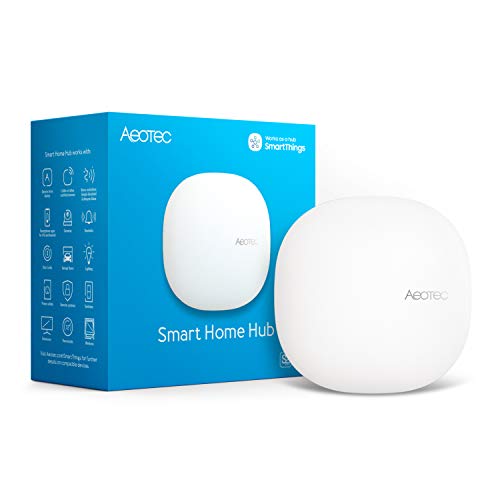
- App-based setup in minutes with Wi-Fi or Ethernet
- Supports Matter, Zigbee, Z-Wave, Alexa, and Google Home
- Many automations run locally for faster response
Best For: Buyers who want a flexible SmartThings hub with broad protocol support
Easy, Broad Compatibility Hub
Lutron Caseta Smart Hub for simple setup and wide compatibility
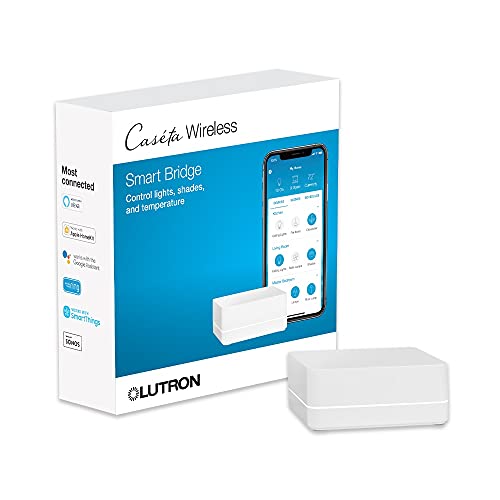
- Plug-in installation with app-guided setup
- Works with Alexa, HomeKit, Google, Ring, and Sonos
- Supports up to 75 Caseta devices
Best For: Simple Lutron lighting control with broad voice assistant support
Multi-Protocol Automation Hub
Aqara M200 hub with Matter, Zigbee, Wi‑Fi, IR, and PoE

- Supports Matter Controller, Thread Border Router, and Matter Bridge
- Flexible setup with Wi-Fi, PoE, Zigbee, and IR
- Local automations help deliver fast response times
Best For: Mixed-device homes that need multi-protocol control
Sensor-Rich IR Hub
SwitchBot Hub 2 with sensors, IR control, and Matter support

- Measures temperature, humidity, and light
- Controls IR devices and includes two smart buttons
- Works with Alexa, Google Home, Apple Home, and Matter
Best For: Compact control of IR devices plus basic home sensing
Compact Multi-Protocol Hub
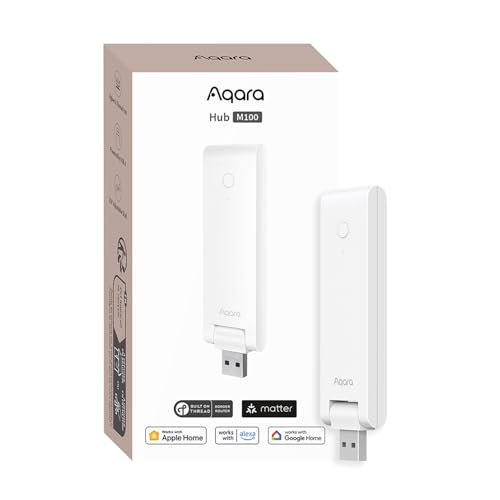
- USB-A powered and easy to place
- Supports Aqara Zigbee, Thread, and Matter bridging
- Local automations for fast, reliable response
Best For: Compact Aqara setups needing simple installation and Matter support
All-in-One Control Center

- Screen, knob, and buttons make control easy
- Supports 100,000+ IR appliances and SwitchBot devices
- Works as a Matter bridge for compatible products
Best For: Families wanting a visible, hands-on hub with straightforward control
Local Automation Powerhouse

- Local automations run on the hub for reliability
- Supports Z-Wave, Zigbee, Matter, and Bluetooth
- No mandatory monthly subscription
Best For: Advanced users building a flexible, locally controlled smart home
Wall-Mounted Control Center – Amazon Echo Hub for Easy Smart Home Management
If you want smart home hubs for easy installation, the Amazon Echo Hub is built around that idea. It mounts on the wall near an outlet, gives you an 8-inch dashboard for devices and cameras, and supports Wi-Fi, Bluetooth, Zigbee, Matter, Sidewalk, and Thread devices in one place.
Best For: Families and Alexa users who want a simple wall-mounted control panel for everyday smart home management.
Pros:
- Easy wall-mount installation with power from a nearby outlet
- Customizable dashboard to organize devices, routines, and camera views
- Works with thousands of Alexa-compatible devices across multiple protocols
- Built-in controls for security, media, and routines
Cons:
- In-wall cable pass-throughs and PoE adapter are sold separately
- Tabletop stand is sold separately
- Advanced Ring event summaries require an Alexa+ and compatible Ring subscription
The Echo Hub stands out if you want a clean, dedicated smart home controller rather than another phone-only app experience. Its strength is straightforward installation and broad device support, making it a practical pick for a central wall hub.
Plug-In Automation Starter – Home Assistant Green for Fast Setup
Home Assistant Green | Smart Home hub with Advanced Automation | Official Home Assistant Hardware
Check Price On AmazonHome Assistant Green is one of the most practical smart home hubs for easy installation if you want Home Assistant without a complicated hardware build. It arrives with Home Assistant already installed, and setup is as simple as plugging in the included power supply and Ethernet cable.
Best For: People who want the easiest entry into Home Assistant with local control and room to expand later.
Pros:
- Home Assistant is already installed for a quick start
- Only needs power and Ethernet to get running
- Small, fanless, silent design for home use
- Can be expanded with Z-Wave, Zigbee, and Thread USB devices
Cons:
- Expansion devices are sold separately
- Focused on Ethernet rather than built-in wireless hub connectivity
- Best suited to users willing to work within the Home Assistant ecosystem
This hub is a strong fit if you value local data, low power use, and a low-friction setup. It keeps the hardware simple while leaving plenty of room to grow as your automation needs get more advanced.
Compact Sensor Hub – Tapo H100 Smart Hub with Built-In Chime
The Tapo H100 is a compact option if you are comparing smart home hubs for easy installation and want a simple central point for Tapo accessories. It uses a low-power wireless protocol for sensors, switches, and buttons, and it doubles as a built-in chime for alerts.
Best For: Tapo users who want an easy-to-set-up hub for sensors, automations, and alerting.
Pros:
- Low-power hub helps extend compatible device battery life
- Supports up to 64 Tapo devices per hub
- Built-in chime and high-decibel siren for alerts
- Stable long-range connectivity designed to reduce interference
Cons:
- Requires 2.4GHz Wi-Fi for setup and use
- Works within the Tapo ecosystem rather than as a broad universal hub
- Tapo H100 cannot directly connect to Tapo smart plugs or lighting
For a Tapo-centered smart home, this hub keeps things straightforward and efficient. It is especially appealing if you want better sensor coverage, built-in alert sounds, and a low-power backbone for connected accessories.
All-In-One SmartThings Gateway – Aeotec Smart Home Hub for Easy Setup
The Aeotec Smart Home Hub is a versatile choice if you want smart home hubs for easy installation without giving up broad compatibility. It supports Wi-Fi or Ethernet setup through the SmartThings app and can connect thousands of devices across Matter, Z-Wave, Zigbee, Wi-Fi, Alexa, and Google Home ecosystems.
Best For: Buyers who want a flexible SmartThings hub with broad protocol support and quick app-based setup.
Pros:
- Set up in minutes using the SmartThings app
- Supports both Wi-Fi and Ethernet connectivity
- Works with Matter, Z-Wave, Zigbee, Wi-Fi, Alexa, and Google Home
- Many automations can run locally for speed and reliability
Cons:
- Designed for North America
- Z-Wave Plus support is limited to the V3 model
- Best value depends on whether you use the SmartThings ecosystem
This hub is a solid pick if you want one device to unify many smart home brands and standards. Its app-guided setup makes it approachable, while the broad compatibility helps it scale with your home.
Easy, Broad Compatibility Hub – Lutron Caseta Smart Hub for simple setup and wide compatibility
If you want smart home hubs for easy installation, the Lutron Caseta Smart Hub is a straightforward option built around a simple plug-in setup. It connects to your router, uses the Lutron app for guided setup, and works with a wide range of major platforms, making it a practical choice for expanding lighting and related automations without a complicated install.
Best For: Homeowners who want an easy-to-set-up hub for Lutron Caseta lighting and broad voice assistant compatibility.
Pros:
- Plugs into an outlet and connects to your Wi-Fi router
- Compatible with Alexa, Apple HomeKit, Google Assistant, Ring, Sonos, and more
- Supports up to 75 Caseta devices for gradual expansion
- Clear Connect technology is designed not to interfere with Wi-Fi devices
Cons:
- Caseta dimmers and switches are sold separately
- Designed primarily for Lutron Caseta devices
Overall, this hub stands out for its simple setup and wide ecosystem support, especially if your main goal is lighting control. It is a strong fit when you want reliable smart home basics without adding network complexity.
Multi-Protocol Automation Hub – Aqara M200 hub with Matter, Zigbee, Wi‑Fi, IR, and PoE
For shoppers comparing smart home hubs for easy installation, the Aqara Hub M200 offers a flexible setup with Wi-Fi and PoE options, plus support for Zigbee, Thread, Matter, and IR. It is aimed at users who want one hub to bring together many device types while keeping automations local for faster, more reliable response.
Best For: Users who want a feature-rich hub that can bridge multiple protocols and support local automations.
Pros:
- Supports Matter Controller, Thread Border Router, and Matter Bridge functions
- Works with Zigbee, Wi-Fi, IR, and PoE for flexible installation
- Supports local execution of automations for faster response times
- Can integrate Aqara devices with Apple HomeKit, Alexa, Google Home, and Home Assistant
Cons:
- Some Matter exposure details vary by app and device type
- Power adapter is not included
The M200 is a strong pick if you want more than a basic bridge and value protocol flexibility. Its local automation support and built-in IR features make it especially useful for mixed-device homes.
Sensor-Rich IR Hub – SwitchBot Hub 2 with sensors, IR control, and Matter support
If you want smart home hubs for easy installation with extra everyday usefulness, the SwitchBot Hub 2 adds temperature, humidity, and light sensing alongside IR control. It supports 2.4GHz Wi-Fi, helps link SwitchBot devices to the network, and includes two smart buttons for quick control, which makes setup feel practical rather than overly technical.
Best For: Anyone who wants a compact hub that doubles as an IR remote, environmental sensor, and simple control panel.
Pros:
- Built-in temperature, humidity, and light sensors
- Controls infrared appliances like TVs and air conditioners
- Includes two smart buttons for quick actions or scenes
- Supports Matter for certain SwitchBot devices and works with Alexa, Google Home, and Apple Home
Cons:
- Supports 2.4GHz Wi-Fi only
- Maximum supported devices are limited to 6
This hub is a smart fit for homes that want a small, useful control center instead of a larger automation box. It combines remote control, sensing, and ecosystem compatibility in one compact unit.
Compact Multi-Protocol Hub – Aqara M100
If you want smart home hubs for easy installation, the Aqara Smart Hub M100 is a simple pick for adding Aqara Zigbee and Thread devices without a bulky setup. Its USB-A power option, small footprint, and adjustable shaft make placement flexible, while Matter bridging helps it work with major ecosystems like Apple Home, Amazon Alexa, and Home Assistant.
Best For: Users who want a compact, easy-to-place hub for Aqara devices and Matter integration.
Pros:
- USB-A power makes setup easy with common adapters, power banks, PCs, or routers.
- Supports Aqara Zigbee and Thread devices, plus Matter bridging to popular platforms.
- Local automations help keep responses fast and reliable even without cloud access.
- Wi-Fi 6 and WPA3 add modern wireless support and security.
Cons:
- Supports only Aqara Zigbee devices, not third-party Zigbee devices.
- Requires a separate 5V 0.5A power adapter, which is not included.
- Needs to stay continuously powered during use.
The M100 is a practical hub if your priority is a compact device that is easy to place and straightforward to integrate. It is best suited to Aqara-focused setups that also want Matter compatibility and local automation.
All-in-One Control Center – SwitchBot Hub 3
For smart home hubs for easy installation, the SwitchBot Hub 3 stands out because it combines hub functions with a built-in screen, knob, and physical buttons. It also supports infrared control for a wide range of appliances and works with SwitchBot devices and Matter-compatible third-party products, so you can centralize control without a complicated setup.
Best For: Households that want a visible, hands-on hub with simple everyday control.
Pros:
- Built-in IPS screen shows home status, temperature, humidity, weather, and more.
- Dial and buttons make control easy for kids, seniors, and guests.
- Supports 100,000+ infrared appliances plus SwitchBot devices and Matter products.
- Can trigger scenes using temperature, humidity, and light readings.
Cons:
- Requires 2.4GHz Wi-Fi for pairing and use.
- Only supports infrared devices, not RF devices like garage door openers.
- Some Apple Home setup steps require all devices to be on the same 2.4GHz network.
The Hub 3 is a strong option if you want an approachable hub that feels more like a home control panel than a hidden box. Its interface and broad IR support make it especially useful for families and mixed-device homes.
Local Automation Powerhouse – Hubitat C-8 Pro
If you are comparing smart home hubs for easy installation but want advanced control too, the Hubitat Elevation C-8 Pro is built for reliable local automation. It supports multiple protocols, including Z-Wave, Zigbee, Matter, and Bluetooth, and it keeps core automations running on the hub itself for faster response and better privacy.
Best For: Advanced users who want a powerful hub with local automations and broad device support.
Pros:
- Local processing helps automations stay fast and reliable even during an internet outage.
- Supports Z-Wave, Zigbee, Matter, and selected Bluetooth devices.
- Works with 1,000+ compatible devices across 100+ brands.
- No mandatory monthly subscription for core hub features.
Cons:
- Designed more for customization than for plug-and-play simplicity.
- Some features and integrations may require configuration.
- Advanced automation tools may be more than casual users need.
The C-8 Pro is best if you want a hub that can grow with a complex smart home. It is less about basic setup simplicity and more about giving you strong local control, flexible automations, and broad compatibility.
How We Picked the Best Smart Home Hubs for Easy Installation
We prioritized hubs that are straightforward to set up, widely compatible, and useful for both beginners and growing smart homes. That means clear app onboarding, common wireless standards, and enough flexibility to support future devices without requiring a full rebuild later.
Quick Comparison
The simplest hubs are usually best if you want basic control, voice assistant integration, and quick pairing. More advanced options are better if you need local automation, deeper customization, or support for protocols like Zigbee, Z-Wave, Matter, and IR control.
Key Buying Factors for Smart Home Hubs for Easy Installation
Compatibility
Check which ecosystems and standards the hub supports. If you already use Alexa, Google Home, Apple Home, SmartThings, Zigbee, Z-Wave, or Matter, choose a hub that can connect cleanly to what you own today.
Setup Time and App Experience
The best Smart Home Hubs for Easy Installation usually guide you through pairing in a few steps, with clear device discovery and simple room assignment. A clean app matters as much as the hardware.
Wireless and Wired Requirements
Some hubs need only Wi-Fi, while others may benefit from Ethernet or a dedicated connection for better reliability. Also confirm whether your home Wi-Fi band, router, or network settings match the hub’s requirements.
Automation and Local Control
If you want faster routines and less dependence on the cloud, look for local automation support. This is especially helpful for lights, sensors, and security-related actions.
Extra Features
Built-in chimes, IR control, environmental sensors, or screens can add convenience, but only pay for features you’ll actually use.
Who Should Buy Which Smart Home Hubs for Easy Installation?
Choose a simple app-first hub if you’re new to smart home gear and want the easiest path to setup. Pick a more advanced hub if you’re planning a larger system, want cross-platform flexibility, or prefer local automations. If your main goal is to expand slowly and avoid headaches, focus on hubs with broad compatibility and a short installation process.
