The best digital pianos for music production combine expressive key action with reliable MIDI control, useful sounds, and studio-friendly connectivity. The right choice depends on whether you prioritize authentic piano feel, deep synthesis, portability, or an all-in-one workstation.
We compare 10 standout Yamaha, Roland, and Casio models across different budgets and production styles, so you can find a keyboard that fits your workflow without paying for features you will not use.
Best 10 Digital Pianos for Music Production Picks for 2026
Flagship Expressive Control

- 400-note polyphony across three engines
- Polyphonic aftertouch for nuanced control
- Expanded Softsynth Plugin for DAW use
Best For: Advanced producers seeking expressive 88-key synthesis control
Stage Piano Production Hub

- V-Piano modeling with full polyphony
- Nine sliders and eight encoder knobs
- USB MIDI and DAW compatibility
Best For: Advanced producers needing realistic piano sounds and tactile control
Sound Design Powerhouse

- Multiple advanced sound engines
- Over 7,000 onboard sounds
- Sampling and 16 RGB performance pads
Best For: Producers focused on synthesis, sampling, and layered arrangements
Accessible Weighted Workstation
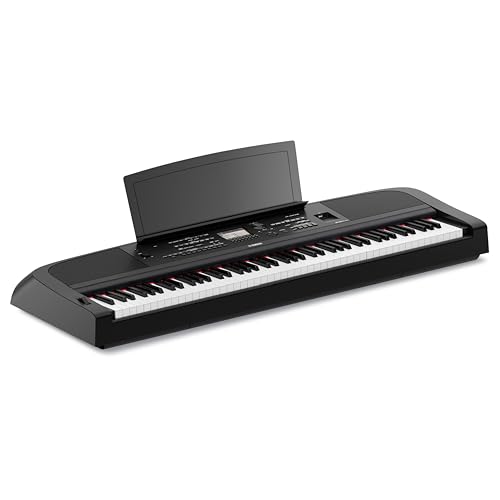
- 88 weighted keys with hammer action
- 630 Voices and 263 accompaniment Styles
- USB, Bluetooth, and microphone input
Best For: Home musicians wanting piano feel and accessible production features
Flagship Expression

- PureAcoustic modeling with Piano Designer customization
- PHA-50 hybrid keyboard for an acoustic-style feel
- Bluetooth audio/MIDI and DAW compatibility
Best For: Professional players and producers seeking premium piano expression
Versatile Studio Value

- 700 tones, rhythms, recording, and editable DSP effects
- Weighted 88-key action in a 25.1-pound slim body
- Wireless MIDI/audio via included WU-BT10 adapter
Best For: Portable producers who want broad sound-creation options
Balanced Production Pick

- PHA-4 action with progressive hammer response and escapement
- SuperNATURAL piano engine plus varied instrument sounds
- Bluetooth audio/MIDI and USB for music-creation software
Best For: Intermediate to advanced players building a focused production setup
Reliable Starter

- 88 weighted, touch-sensitive keys
- USB and Logic Pro support
- Includes sustain pedal and power supply
Best For: Beginners and home producers wanting simple, expressive piano performance
Compact Production Pick

- SuperNATURAL Piano sound engine
- USB/MIDI and Bluetooth connectivity
- Realistic 88-note acoustic-style keyboard
Best For: Quiet practice and DAW production with an authentic piano feel
Expanded Voice Choice

- Weighted 88-key action
- 24 built-in instrument Voices
- USB and Smart Pianist app support
Best For: Producers wanting realistic piano action with broader onboard sounds
Flagship Expressive Control – Yamaha Montage M8X
For producers who want a full-range controller and advanced synthesis platform, the Yamaha Montage M8X is a powerful choice among digital pianos for music production. Its 88-key action, polyphonic aftertouch, three sound engines, and DAW-oriented softsynth plugin support are suited to detailed performance and sound design.
Best For: Advanced producers and performers who need expressive 88-key control, deep synthesis, and extensive polyphony.
Pros:
- 400-note total polyphony across three engines supports complex arrangements.
- Polyphonic aftertouch enables independent pressure control for held notes.
- AN-X engine provides analog-style synthesis with sophisticated modulation.
- Expanded Softsynth Plugin helps replicate the MONTAGE M workflow in a DAW.
Cons:
- Its flagship feature set may be more than casual players need.
- The 61.9-pound metal-cased instrument is substantial to move or install.
The Montage M8X stands out when expressive keyboard technique and synthesis depth matter more than simplicity. It is best approached as a complete production centerpiece rather than a basic piano controller.
Stage Piano Production Hub – Roland RD-2000 EX
The Roland RD-2000 EX combines premium stage-piano sounds with hands-on control, making it a strong option for digital pianos for music production. Its V-Piano modeling, SuperNATURAL engine, USB MIDI, and extensive front-panel controls support both recording and live sound shaping.
Best For: Advanced players and producers who want realistic piano modeling plus immediate mixer-style control.
Pros:
- V-Piano modeling delivers richly detailed tone with full polyphony.
- Includes German Concert and Essential Upright V-Piano expansions.
- Nine sliders and eight encoder knobs provide deep real-time control.
- Supports DAWs through MIDI and USB MIDI.
Cons:
- Its advanced control layout may take time to master.
- At 62 pounds, it is not especially portable for a stage piano.
The RD-2000 EX is particularly compelling for musicians who split their work between piano performance and production. Its dedicated controls make it easier to adjust sounds and parameters without relying entirely on a computer.
Sound Design Powerhouse – Roland FANTOM 6 EX
The Roland FANTOM 6 EX is a production-focused synthesizer for creators who prioritize sound variety, sampling, and DAW integration over weighted piano action. Among digital pianos for music production, it offers a compact 61-key synth-action format with multiple sound engines and more than 7,000 onboard sounds.
Best For: Producers, composers, and performers building layered electronic, orchestral, and sampled arrangements.
Pros:
- Includes ACB, ZEN-Core, V-Piano, SuperNATURAL, and Virtual ToneWheel engines.
- More than 7,000 onboard sounds cover a broad production palette.
- Advanced sampling supports one-shot, pitched, and multisample playback.
- 16 RGB pads can trigger sounds, clips, and other performance elements.
Cons:
- Its 61 synth-action keys are less piano-like than an 88-key weighted instrument.
- The extensive feature set may feel overwhelming for beginners.
The FANTOM 6 EX is a better fit for users who view a keyboard as a complete composition workstation. Its broad engines, effects, sampling tools, and performance interface offer substantial room for creative expansion.
Accessible Weighted Workstation – Yamaha DGX-670B
The Yamaha DGX-670B offers a more approachable entry into digital pianos for music production, pairing 88 weighted keys with 630 Voices, USB connectivity, and Bluetooth. It is designed primarily around piano playing and accompaniment, but its varied sounds and microphone input can also support home recording and songwriting.
Best For: Beginners, home musicians, and songwriters who want weighted piano action with versatile accompaniment features.
Pros:
- Weighted action provides a more piano-like playing experience.
- Yamaha CFX sampling delivers a detailed concert-grand piano sound.
- 630 Voices and 263 accompaniment Styles support varied arrangements.
- USB, Bluetooth, headphone, and microphone connections add flexibility.
Cons:
- It is less production-oriented than dedicated synthesizer workstations.
- The stand and bench are sold separately.
- Its 67.7-pound weight limits portability.
The DGX-670B is most useful when authentic piano feel and easy accompaniment matter more than deep synthesis. It can support basic home production while remaining friendly for practice, performance, and learning.
Flagship Expression – Roland FP-90X
For producers who want a premium playing experience alongside DAW connectivity, the Roland FP-90X is a compelling choice among digital pianos for music production. Its PureAcoustic Piano Modeling, customizable Piano Designer controls, and PHA-50 hybrid keyboard are built for expressive acoustic-piano performance.
Best For: Professional players and producers prioritizing realistic piano feel, deep sound shaping, and Bluetooth MIDI integration.
Pros:
- PureAcoustic modeling provides expressive piano dynamics from pianissimo to fortissimo.
- PHA-50 hybrid wood-and-molded keys deliver an acoustic-style playing experience.
- Bluetooth audio and MIDI support connection to mobile devices, MIDI software, and DAWs.
- Large sound library and Piano Designer offer broad tonal customization.
Cons:
- At 69.2 pounds, it is less convenient to move than lighter portable models.
- Bluetooth headphones are not supported.
- Its flagship feature set may exceed the needs of casual players.
The FP-90X is best suited to a serious production setup where the piano action and onboard acoustic-piano sound matter as much as software integration. Its speaker system also makes it practical for playing without external monitors.
Versatile Studio Value – Casio Privia PX-S3100
The Casio Privia PX-S3100 combines a slim, stage-ready design with extensive sounds and rhythms, making it a flexible option among digital pianos for music production. Its 88 weighted keys, 700 tones, editable DSP effects, and wireless MIDI/audio adapter support both performance and creative experimentation.
Best For: Producers and performers who want a lightweight, feature-rich piano with many sounds, rhythms, and app connections.
Pros:
- 88 weighted keys feature textured ebony-and-ivory feel and duet mode.
- Offers 700 expressive tones, built-in rhythms, recording features, and editable DSP effects.
- WU-BT10 adapter enables wireless MIDI and audio connections to compatible apps and devices.
- At 25.1 pounds, the slim design is easier to transport than many full-size digital pianos.
Cons:
- The extensive menu of tones and rhythms may require more setup time than a simpler piano.
- Its weighted action and feature set may not match the flagship feel of the Roland FP-90X.
The PX-S3100 is a strong all-purpose production instrument when portability and variety are priorities. It can cover piano parts, electronic textures, rhythm-based ideas, and wireless app workflows in one compact package.
Balanced Production Pick – Roland FP-30X
The Roland FP-30X offers a practical middle ground for players building a home or mobile setup with digital pianos for music production. It pairs an 88-key PHA-4 keyboard with escapement, Roland’s SuperNATURAL piano engine, onboard effects, and Bluetooth audio/MIDI connectivity.
Best For: Intermediate to advanced players who want realistic piano action and straightforward connections to music-creation apps.
Pros:
- PHA-4 keyboard provides progressive hammer action and escapement.
- SuperNATURAL sound engine includes piano, electric piano, organ, strings, and synthesizer sounds.
- Bluetooth audio/MIDI and USB support integration with music creation and editing software.
- 22-watt stereo speakers and dual headphone outputs suit practice and shared sessions.
Cons:
- It has fewer listed sounds and customization features than the FP-90X.
- The supplied notes describe it as portable, but the listed dimensions may still require dedicated space.
- Its feature set is aimed more at focused playing and production than extensive workstation-style sequencing.
The FP-30X makes sense for producers who want dependable Roland piano response without stepping up to the FP-90X’s flagship feature set. It is especially useful when a realistic keyboard and simple app or DAW connectivity are the main requirements.
Reliable Starter – Yamaha P71
The Yamaha P71 is a straightforward choice among digital pianos for music production, especially if you want full-size weighted keys and simple controls without a crowded feature set. Its USB connection, headphone output, built-in speakers, and Logic Pro support make it practical for home recording and focused practice.
Best For: Beginners and producers who prioritize an acoustic-style keyboard feel, simple operation, and layered piano-and-string sounds.
Pros:
- 88 touch-sensitive weighted keys provide expressive acoustic-piano-style playing.
- USB connectivity and Logic Pro support suit basic DAW recording workflows.
- Dual Mode blends two Voices, while 10 built-in Voices offer useful variety.
- Includes a sustain pedal and power supply.
Cons:
- Its streamlined design offers fewer onboard controls and sounds than more feature-rich models.
- Warranty coverage is tied to purchases from authorized Yamaha retailers in the specified region.
The P71 is a sensible production foundation when playing feel matters more than extensive onboard editing. It keeps the workflow uncluttered while still providing the core connections and expressive control needed for piano parts.
Compact Production Pick – Roland FP-10
The Roland FP-10 combines an 88-note acoustic-style keyboard with USB/MIDI connectivity, making it a strong option among digital pianos for music production. Its SuperNATURAL Piano sound engine, headphone output, Bluetooth connectivity, and DAW compatibility support both quiet practice and computer-based recording.
Best For: Beginners and experienced players who need realistic piano response, silent practice, and direct connection to a computer or DAW.
Pros:
- SuperNATURAL Piano tones deliver responsive acoustic-piano-style sound.
- 88-note keys feature authentic acoustic feel and an ivory-style surface.
- USB/MIDI connectivity works with GarageBand, computers, and DAW software.
- Headphone output, built-in speakers, and Bluetooth add flexible practice options.
Cons:
- The matching KSCFP10 stand is optional and sold separately.
- The supplied notes identify it as beginner-level, so advanced production features may be limited compared with dedicated controllers.
The FP-10 is particularly versatile for producers who also want a convincing standalone piano. It supports a quiet workflow with headphones while retaining the connectivity needed for recording and software-based production.
Expanded Voice Choice – Yamaha P225
The Yamaha P225 adds a broad selection of built-in sounds and app integration to the weighted-key foundation expected from digital pianos for music production. Its CFX concert grand voice, 24 instrument Voices, USB connection, and portable design make it useful for sketching arrangements, practicing parts, and recording keyboard performances.
Best For: Players who want weighted piano action plus more onboard instrument variety and mobile control through Yamaha’s Smart Pianist and Rec’n’Share apps.
Pros:
- Weighted action uses heavier low keys and lighter high keys for an acoustic-style response.
- Includes Yamaha CFX Full Concert Grand sound and 24 instrument Voices.
- USB connectivity supports app-based control and production-oriented workflows.
- Includes a music rest, sustain foot switch, and power adapter.
Cons:
- The supplied connectivity details list USB but do not specify traditional MIDI ports.
- Its corded-electric design still requires access to power when used away from home.
The P225 is a well-rounded choice when a piano needs to cover more than one role. It offers realistic weighted playing for piano parts while its additional Voices and app support make arranging and sharing ideas more flexible.
How We Picked the Best Digital Pianos for Music Production
We focused on instruments that can serve as serious MIDI controllers and playable piano instruments. Key action, velocity response, polyphony, sound quality, USB and traditional MIDI connectivity, onboard controls, and DAW integration all influenced the selection. We also considered portability, built-in speakers, stage readiness, and value for home studios.
This list includes conventional digital pianos for realistic acoustic-piano parts as well as workstation and stage keyboards for producers who need synthesis, sequencing, layering, and hands-on control.
Quick Comparison
- Best for advanced production: Yamaha Montage M8X and Roland FANTOM 6 EX.
- Best for stage and studio flexibility: Roland RD-2000 EX.
- Best all-around home piano: Yamaha DGX-670B or Roland FP-90X.
- Best portable weighted-key options: Yamaha P-225, Casio Privia PX-S3100, and Roland FP-30X.
- Best affordable starters: Yamaha P-71 and Roland FP-10.
Key Buying Factors for Digital Pianos for Music Production
Key Action and Playing Response
Weighted 88-key actions are usually the best fit for piano-led production, classical practice, and expressive dynamics. Graded hammer action can make the instrument feel more natural, while lighter synth-action keys are faster for leads, pads, and rapid sound design. Polyphonic aftertouch, available on select high-end models, can add expressive control beyond standard velocity and aftertouch.
Connectivity and DAW Control
Check for USB MIDI, five-pin MIDI, audio over USB, and sustain or expression inputs. USB audio can simplify recording, while dedicated knobs, sliders, pads, and transport controls may speed up work in a DAW. If you use external hardware, traditional MIDI connections are especially useful.
Sounds, Layering, and Production Features
Dedicated digital pianos excel at acoustic-piano tones, while workstation models offer broader synthesis, sequencing, sampling, and arrangement tools. Consider whether you need hundreds of tones and onboard rhythms or simply a convincing piano sound feeding virtual instruments.
Size, Speakers, and Monitoring
Portable models are easier to move and fit into compact rooms, but premium actions can be heavier. Built-in speakers are convenient for practice; studio monitors or headphones generally provide more accurate production monitoring.
Who Should Buy Which Digital Pianos for Music Production?
Choose the Yamaha Montage M8X or Roland FANTOM 6 EX if sound design, sequencing, and deep workstation control matter most. Choose the Roland RD-2000 EX for demanding live performance combined with studio versatility.
Choose the Yamaha DGX-670B or Roland FP-90X if you want a convincing home piano that can also handle MIDI production. Choose the Yamaha P-225, Casio PX-S3100, or Roland FP-30X for a practical balance of portability, weighted action, and useful features.
Choose the Yamaha P-71 or Roland FP-10 if you primarily need an affordable 88-key controller with an authentic piano-style response. Before buying, confirm your computer connections, available space, preferred key feel, and whether you need onboard sounds or plan to use software instruments.
