Reflections from windows, doors, and bare walls can make spoken-word recordings sound harsh, boxy, or echo-heavy. The right curtain or acoustic blanket can soften those surfaces while also improving light control and privacy.
We compare 10 acoustic curtains for podcasting, focusing on coverage, construction, mounting options, thermal and blackout performance, and practical studio use.
Best 10 Acoustic Curtains for Podcasting Picks for 2026
Best Overall Curtains
NICETOWN Quilted Studio Blackout Curtains

- Three-layer, 500gsm quilted construction
- Two 52-by-96-inch grommet panels
- Blackout, thermal insulation, and machine washable
Best For: Home studios needing window coverage, light control, and moderate sound absorption
Best Portable Blanket
AMUFON Extra-Large Acoustic Studio Blanket

- Two large 96-by-80-inch sound blankets
- Nine grommets and straps per blanket
- Folds for storage and multi-purpose use
Best For: Temporary podcast rooms, doors, windows, and movable recording setups
Best Adjustable Curtain
RYB HOME Three-Layer Soundproof Curtains

- Two panels with 104-inch total width
- Detachable felt liner for sound absorption
- Blackout and thermal-insulating construction
Best For: Podcast windows needing adjustable light and sound treatment
Best Heavy-Duty Coverage
Aodyow Extra-Large Acoustic Blanket Panels

- Two 96-by-80-inch blanket panels
- 19.4-pound dense, durable construction
- Nine grommets and straps per panel
Best For: Large podcast rooms and studios needing substantial flexible coverage
Studio Coverage Pick
Large Sound Dampening Blankets

- Two large panels for doors, windows, or walls
- Cotton-centered three-layer sound-dampening design
- Grommets and reinforced webbing simplify hanging
Best For: Flexible home-studio, podcast, and voice-over setups
Heavyweight Window Option
Grey Quilted Blackout Curtains

- 500gsm quilted three-layer fabric
- 100% blackout and UV protection
- Thermal insulation with supplemental noise absorption
Best For: City-apartment studios needing blackout and window coverage
Best Door-Fit Pick
TroyStudio Thick Soundproof Blanket

- Door-oriented 37.5-by-86.6-inch size
- Dense cotton filling dampens echo and reverb
- Includes permanent and temporary mounting options
Best For: Standard doorways and temporary vocal booths
Best Wide-Coverage Set
VEVOR Sound Dampening Blankets

- Two large 96-by-80-inch acoustic blankets
- Three-layer design dampens echoes and reflections
- Grommets and straps allow flexible installation
Best For: Large windows, doors, and room sections
Best Portable Barrier
Gray Acoustic Soundproof Curtain
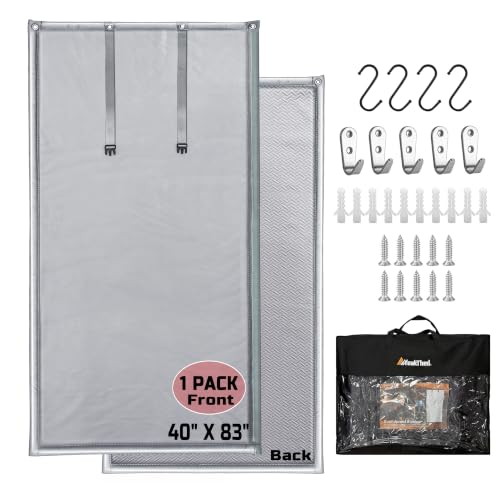
- Compact 40-by-83-inch door and window coverage
- Mass-loaded vinyl core with polyester felt exterior
- Reinforced grommets support quick, portable setup
Best For: Small rooms and temporary podcasting setups
Best Overall Curtains – NICETOWN Quilted Studio Blackout Curtains
For shoppers comparing acoustic curtains for podcasting, the NICETOWN panels offer a conventional curtain setup with a heavy, quilted construction. The three-layer, 500gsm polyester design is intended to absorb some ambient sound while also providing full blackout coverage and thermal insulation.
Best For: Home studios, podcast rooms, bedrooms, and renters who want easy-to-install curtains with light and temperature control.
Pros:
- Three-layer quilted construction with a cotton interlayer for sound absorption and insulation.
- Two 52-by-96-inch panels provide broad window coverage and use eight silver grommets per panel.
- Blocks sunlight and UV rays completely, while the machine-washable fabric supports routine care.
- Designed to reduce road noise, neighbor sounds, and wind noise in home studio settings.
Cons:
- These curtains reduce and absorb noise but are not presented as a complete soundproofing system.
- The 96-inch length may require careful measuring before purchase.
- They are not water resistant.
Choose this pair if you want acoustic assistance alongside blackout, privacy, and all-season insulation. They are a practical window treatment for a podcast room, though additional acoustic treatment may still be needed for room echo or significant outside noise.
Best Portable Blanket – AMUFON Extra-Large Acoustic Studio Blanket
Among acoustic curtains for podcasting, this AMUFON option is better understood as a portable sound-dampening blanket than a traditional drape. Its large 96-by-80-inch format can cover a door or window, helping reduce echoes and reverberation while also blocking light.
Best For: Podcasters who need flexible coverage for doors, windows, walls, home offices, or temporary recording spaces.
Pros:
- Extra-large 96-by-80-inch size offers broad coverage for doors and windows.
- Dense non-woven fabric blended with synthetic cotton is designed to absorb sound waves and vibrations.
- Nine metal grommets and straps support hanging from poles or attachment to doors, windows, or walls.
- Folds for portability and can also serve as a blackout curtain, furniture protector, or pet barrier.
Cons:
- Hooks, screws, and other mounting accessories are not included.
- Its 9.7-pound-per-blanket weight may require sturdy mounting hardware.
- The notes mention a temporary odor after shipping that may require ventilation.
This is a versatile choice when a podcast setup changes locations or needs oversized coverage. Its blanket format is less streamlined than standard curtains, but the portability and multiple hanging options make it useful for temporary sound control.
Best Adjustable Curtain – RYB HOME Three-Layer Soundproof Curtains
These RYB HOME panels are a practical pick for acoustic curtains for podcasting when you want a traditional blackout curtain with a removable felt layer. The detachable middle liner can absorb some unwanted noise, while the 104-inch total width helps cover a broad window area.
Best For: Podcast rooms that need adjustable window coverage, blackout performance, and thermal insulation in a conventional curtain format.
Pros:
- Includes two panels with a 104-inch total width and 84-inch length.
- Three-layer construction includes a detachable felt liner intended to absorb noise.
- Blackout fabric blocks harsh light and UV rays while helping balance room temperature.
- Grommet installation is straightforward, and the felt liner can be removed before washing.
Cons:
- The manufacturer notes that the curtains are not 100% soundproof.
- Noise-reduction results can vary with the room and listener.
- The felt liner must be detached before machine washing.
The removable liner gives this pair more flexibility than a permanently layered curtain, especially if washing or lighter coverage is occasionally preferred. It is best used to soften some sound and control light rather than replace dedicated acoustic panels or isolation construction.
Best Heavy-Duty Coverage – Aodyow Extra-Large Acoustic Blanket Panels
For podcasters seeking acoustic curtains for podcasting with substantial coverage, the Aodyow two-pack provides oversized 96-by-80-inch blanket panels. The dense construction is designed to reduce echoes and outside noise, while the grommets and straps allow installation on walls, doors, windows, or poles.
Best For: Larger podcast rooms, recording studios, and users who prioritize heavy-duty, flexible sound-dampening coverage.
Pros:
- Two extra-large 96-by-80-inch panels provide extensive coverage.
- The 19.4-pound total package uses dense non-woven fabric and synthetic cotton for sound absorption.
- Each panel includes nine metal grommets and straps for flexible hanging options.
- Can help reduce indoor echoes and reverberation while also blocking light.
Cons:
- The heavy blanket format may need sturdy poles, hooks, or wall hardware.
- Hooks and screws are not included.
- It is bulkier than a standard curtain and may be less convenient for everyday opening and closing.
This Aodyow set makes sense when you need broad, durable coverage rather than a lightweight decorative window treatment. Its weight and flexible mounting options suit a dedicated recording area, but plan the installation before hanging the panels.
Layered Room Control – Linen Soundproof Blackout Curtains
For podcasting spaces that also need darkness and temperature control, these acoustic curtains for podcasting combine a linen-textured front with a detachable felt liner and blackout construction. They may help absorb some ambient noise, but they are not a substitute for dedicated acoustic treatment or full soundproofing.
Best For: Home podcasters who want noise reduction, blackout coverage, and thermal insulation in a conventional curtain panel.
Pros:
- Three-layer design includes a detachable felt liner intended to absorb annoying noise.
- Blackout construction blocks harsh light and UV rays for controlled recording conditions.
- Insulating design can help moderate summer heat and winter chill.
- Two 52-by-84-inch panels include grommets for straightforward installation.
Cons:
- The manufacturer notes that the curtains are not 100% soundproof.
- Noise-reduction results can vary by room and listener.
- The felt liner should be detached before machine washing.
The removable liner is a useful feature for balancing acoustic support with easier care. Choose this set when blackout and room comfort matter as much as reducing reflections and moderate outside noise.
Studio Coverage Pick – Large Sound Dampening Blankets
These acoustic curtains for podcasting are more studio-oriented than decorative window treatments. The two large panels use a three-layer composite with a high-density cotton middle and can hang on walls, doors, or windows to help reduce ambient noise and echo around a recording setup.
Best For: Podcasters, voice-over creators, and streamers who need flexible sound-dampening panels for a home studio, door, or window.
Pros:
- Two panels measure approximately 41.33 by 70.86 inches for broad coverage.
- Three-layer construction combines polyester, sound-absorbing cotton, and a light-blocking inner layer.
- Reinforced webbing and metal grommets support wall, door, or window installation.
- Machine-washable, double-stitched panels are designed for repeated use.
Cons:
- They reduce ambient noise but do not provide total sound isolation.
- The blanket-like format may look less traditional than standard curtains.
- They are heavier and less suited to buyers seeking lightweight decorative panels.
With multiple hanging and placement options, this set is practical when you need to reposition treatment around a microphone or recording area. It is especially useful for temporary or multipurpose studio setups.
Heavyweight Window Option – Grey Quilted Blackout Curtains
For a podcast room facing a street or noisy neighbors, these acoustic curtains for podcasting use heavyweight quilted fabric to absorb some ambient sound while blocking light and helping regulate temperature. They are conventional window curtains, so their acoustic benefit is best viewed as supplemental room treatment.
Best For: Home studios and city apartments where blackout performance, thermal insulation, and moderate noise reduction are priorities.
Pros:
- Heavy-duty 500gsm polyester uses a quilted cotton interlayer and backing.
- Blocks sunlight and UV rays to create a controlled recording environment.
- Thermal construction helps limit cold drafts and summer heat.
- Two 52-by-84-inch panels have eight silver grommets each for rods up to 1.5 inches.
Cons:
- Designed for noise reduction and absorption, not complete soundproofing.
- At 84 inches long, coverage depends on the height and width of the window.
- The fabric should be protected from sharp objects to preserve its appearance.
The thick quilted build makes this a strong fit for windows where light and temperature are as disruptive as outside noise. Consider pairing it with other acoustic measures if clearer vocal recordings are the main goal.
Best Door-Fit Pick – TroyStudio Thick Soundproof Blanket
For podcasting spaces where door gaps contribute to echo and outside noise, this TroyStudio blanket is a practical acoustic curtains for podcasting option. Its 37.5-by-86.6-inch door-oriented size, dense cotton filling, and included mounting hardware make it suited to permanent or temporary setups.
Best For: Podcasters treating a standard doorway, vocal booth, or small recording area.
Pros:
- Door-focused dimensions and heavy 9.6-pound construction.
- Dense cotton filling helps reduce reverb and echo.
- Includes screws and hooks for longer-term mounting plus hook-and-loop strips for temporary use.
- Also blocks light and provides thermal insulation.
Cons:
- One panel covers less area than a multi-panel curtain set.
- The manufacturer recommends ventilation before use for odor-sensitive users.
- Its utilitarian blanket design may be less decorative than standard curtains.
This is a flexible choice when the main acoustic problem is a doorway. It can also be hung from a ceiling for a temporary vocal booth or drum enclosure, though it is equally useful as a moving blanket.
Best Wide-Coverage Set – VEVOR Sound Dampening Blankets
For larger podcast rooms, these VEVOR acoustic curtains for podcasting provide broad coverage with two 96-by-80-inch sound-dampening blankets. The three-layer construction is intended to absorb indoor echoes and reduce reflections while also blocking light.
Best For: Covering large windows, doors, or room sections in studios and home offices.
Pros:
- Two large blankets provide wide coverage with fewer seams.
- Recycled cotton filling and a polyester woven surface help absorb echoes and reflections.
- Grommets and woven straps support hanging from hooks, screws, or curtain rods.
- Quilted, double-stitched construction is designed for repeated hanging.
Cons:
- The product notes that sound insulation is limited and primarily protective.
- It should be kept dry to help prevent odors and material damage.
- The large panels weigh about 18.5 pounds as listed, so sturdy mounting is important.
Choose this set when coverage and flexible placement matter more than a fitted curtain look. It can help control reflections around a podcast setup, but expectations should remain focused on dampening rather than complete sound isolation.
Best Portable Barrier – Gray Acoustic Soundproof Curtain
This compact gray barrier is a portable option for acoustic curtains for podcasting, especially when you need to cover a door or window without a permanent installation. Its 40-by-83-inch format combines a mass-loaded vinyl core with polyester felt and includes reinforced grommets for hanging.
Best For: Small podcast rooms, temporary recording setups, and users who need a portable door or window barrier.
Pros:
- Compact 40-by-83-inch size suits doors and smaller openings.
- Mass-loaded vinyl core is layered between durable polyester felt.
- Reinforced metal grommets support quick hanging without complex tools.
- Blackout design and foldable construction suit studios and temporary setups.
Cons:
- One 40-inch-wide panel offers less coverage than the VEVOR set.
- The supplied notes do not include mounting hardware beyond the grommets.
- Its gray barrier appearance may be less suitable for decorative rooms.
This is a sensible pick for mobile or changing recording spaces. The portable design makes it easy to store and transport, while the layered construction can help address unwanted noise, echo, and light around a focused recording area.
How We Picked the Best Acoustic Curtains for Podcasting
We focused on products designed to cover common reflection points in home studios, including windows, doors, walls, and room dividers. Our comparison considers material thickness, layer construction, surface coverage, grommet placement, blackout performance, thermal insulation, and how easily each option can be installed or repositioned.
These products are best viewed as acoustic treatment for reducing high-frequency reflections and some room ambience—not as complete soundproofing systems. Results depend on the room, mounting method, and how much reflective surface the curtain covers.
Quick Comparison
| Best For | Look For | Typical Advantage |
|---|---|---|
| Windows | Blackout, thermal layers, suitable length | Controls reflections, daylight, and temperature |
| Doors and openings | Large dimensions and sturdy grommets | Creates a flexible barrier over hard surfaces |
| Wall coverage | Extra-large blankets or multiple panels | Reduces reflections across broad areas |
| Portable setups | Manageable weight and easy hanging | Simple to move between recording locations |
Key Buying Factors for Acoustic Curtains for Podcasting
Coverage and Placement
Measure the surface before choosing a panel. A curtain should cover the window, doorway, or wall area fully, with enough width for folds. For podcasting, prioritize surfaces behind or beside microphones where early reflections are most noticeable.
Thickness and Construction
Dense, multilayer curtains and heavy acoustic blankets generally absorb more sound energy than thin decorative drapes. Look for stated dimensions, fabric weight, multiple layers, or high-density construction rather than relying on the word “soundproof” alone.
Mounting Hardware
Grommets make panels easier to hang from curtain rods, hooks, or cables. Confirm that the hardware can support the product’s weight, especially for extra-large blankets. A close fit around an opening helps limit sound leakage and drafts.
Blackout and Thermal Performance
Blackout fabric is useful for video podcasts, while thermal insulation can make a studio more comfortable near cold windows or exterior doors. These features are valuable extras, but they do not replace dedicated bass traps or wall absorbers.
Who Should Buy Which Acoustic Curtains for Podcasting?
Choose a standard soundproof curtain if you need a cleaner-looking solution for a window and also want blackout or temperature control. Choose an extra-large acoustic blanket for doors, broad walls, or temporary room separation where coverage matters more than appearance.
Choose a grommeted panel when you frequently open, close, or relocate the treatment. Choose a smaller heavy-duty panel when portability and easier installation matter. For the best results, combine curtains with a rug, soft furnishings, and strategically placed acoustic panels to address reflections throughout the recording space.
