Doors are often the weak point in an otherwise treated room. The right acoustic panel or removable sound barrier can reduce reflections, soften voices, and make a home office, studio, or media room more comfortable.
This roundup compares ten panel and barrier options by coverage, thickness, installation method, and intended use so you can choose a practical fit without overbuying.
Best 10 Acoustic Door Panels Picks for 2026
Leaf-Textured Decor
White Peel-and-Stick Acoustic Panels

- Decorative leaf-textured polyester panels
- Self-adhesive, tool-free installation
- Useful on doors, walls, or ceilings
Best For: Targeted decorative echo absorption
Door-Focused Coverage
Arrowzoom Black Acoustic Tile Set

- Twenty 12-inch tiles cover 20 square feet
- Thick 0.78-inch sound-absorbing material
- Trim-to-fit peel-and-stick installation
Best For: Large interior doors and studio spaces
Thick DIY Pick
12-Inch High-Density Acoustic Panels

- Thicker 0.47-inch polyester panels
- Chamfered edges support custom patterns
- Self-adhesive, tool-free installation
Best For: Custom acoustic layouts in studios, offices, and home theaters
High-Coverage Door Option
12-Pack Self-Adhesive Acoustic Panels
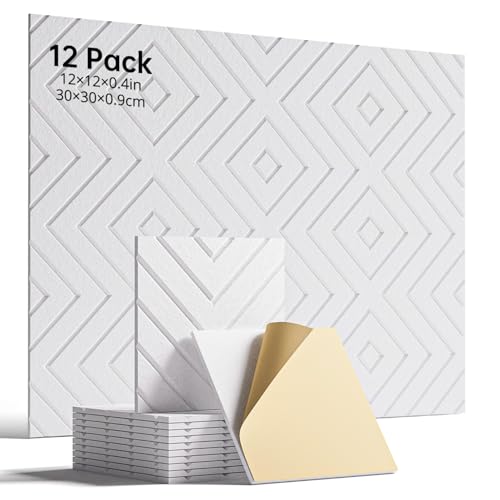
- 12 square feet of coverage
- Listed NRC up to 0.92
- Cuttable, self-adhesive polyester panels
Best For: Doors, offices, studios, and customized acoustic treatment
Largest Coverage Set
22-Pack Sound-Absorbing Panels
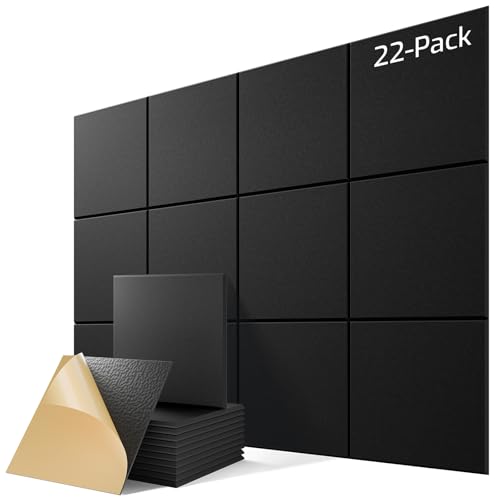
- Covers approximately 21.27 square feet
- Peel-and-stick installation on smooth surfaces
- Targets echo and reverberation
Best For: Larger rooms, studios, media spaces, and broad wall or door coverage
High-Density Brick Panels
Self-Adhesive Acoustic Door Panels

- Peel-and-stick installation
- 20 panels cover about 20 sq. ft.
- Decorative 3D brick polyester design
Best For: Quick DIY treatment for doors, studios, offices, and home theaters
Deep Pyramid Foam

- Thick 2-inch polyurethane foam
- 24 sq. ft. of coverage
- Flame-retardant pyramid design
Best For: Studios, podcast rooms, gaming setups, and home theaters
Peel-and-Stick Fiber Panels
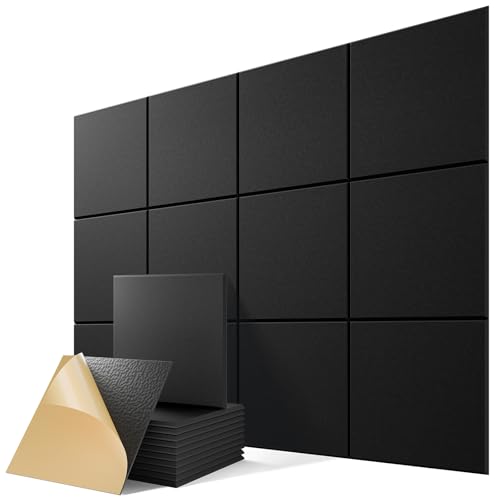
- Tool-free self-adhesive installation
- 12-inch polyester fiber panels
- Designed to reduce echo and improve speech clarity
Best For: Home offices, bedrooms, video calls, and small recording spaces
Leaf-Textured Decor – White Peel-and-Stick Acoustic Panels
These decorative acoustic door panels combine a leaf-textured look with a peel-and-stick installation. The 6-pack uses 100% polyester fiber to help absorb reflections and echoes in a home office, studio, media room, or other interior space.
Best For: Buyers who want lightweight, decorative acoustic treatment for doors or walls without drilling or separate adhesive.
Pros:
- Leaf-textured white design adds a decorative accent.
- Self-adhesive backing simplifies installation.
- Can be arranged on doors, walls, or ceilings.
- Made from non-toxic, odorless polyester fiber described as safe for children and pets.
Cons:
- The 6-pack provides less coverage than larger tile sets.
- At about 0.4 inches thick, it is intended for sound absorption rather than complete soundproofing.
This is a practical choice when appearance and easy installation matter as much as echo control. Its limited pack size makes it better suited to targeted treatment than covering an entire door or room.
Door-Focused Coverage – Arrowzoom Black Acoustic Tile Set
Designed specifically for interior doors, these acoustic door panels provide 20 square feet of modular coverage in 12-inch square tiles. Their 0.78-inch thickness helps absorb mid-to-high-frequency reflections, flutter echo, and room reverb.
Best For: Home offices, gaming rooms, podcast spaces, and studios needing substantial, customizable door treatment.
Pros:
- Twenty tiles offer approximately 20 square feet of coverage.
- Peel-and-stick backing avoids the need for separate spray adhesive.
- Tiles can be trimmed around handles, locks, and door edges.
- Black square design supports grid or custom layouts.
Cons:
- Requires a clean, dry, smooth surface and an adhesion test before installation.
- Panels reduce reflections and echo but are not a complete soundproof door system.
Among these acoustic door panels, this set is one of the most door-oriented options. The generous coverage and trim-to-fit format make it suitable for covering a larger door while maintaining a uniform appearance.
Full-Door Barrier – TroyStudio Soundproofing Blanket
This heavy, door-sized acoustic blanket measures 37.5 by 86.6 inches and combines dense cotton filling with dirt-resistant Oxford cloth. It is intended to reduce noise and echo while also blocking light and helping with thermal insulation.
Best For: Standard-size doors, bedrooms, recording spaces, rehearsal rooms, and temporary or permanent acoustic separation.
Pros:
- Large format is designed to fit standard-size doors.
- Weighted cotton filling supports noise reduction and sound absorption.
- Includes screws and hooks for long-term mounting plus hook-and-loop strips for temporary use.
- Can also be used as a room divider, vocal booth enclosure, or drum-cage partition.
Cons:
- At 9.6 pounds, it is considerably heavier than adhesive tile panels.
- Temporary hook-and-loop mounting may be less suitable for long-term use.
- The manufacturer advises ventilation for odor-sensitive users.
This blanket is a better fit than rigid acoustic door panels when full-door coverage, light blocking, and removable installation are priorities. Its weight and mounting hardware should be considered before purchasing.
High-Density Absorption – Soundsbay Striped Panels
These self-adhesive acoustic door panels use high-density polyester fiber and a minimalist vertical-stripe design. The 12-pack provides 11.6 square feet of coverage for targeted treatment on doors, walls, ceilings, recording spaces, or home theaters.
Best For: Buyers seeking compact, modern-looking panels with a stated NRC 0.92 rating for focused sound absorption.
Pros:
- High-density 150 kg/m³ polyester construction.
- Manufacturer states an NRC 0.92 rating for sound absorption.
- Self-adhesive backing enables installation without tools.
- Vertical-stripe design works as a decorative accent in offices and living spaces.
Cons:
- The 12-pack covers 11.6 square feet, so larger doors may require multiple packs.
- At 0.4 inches thick, it is a sound-absorption treatment rather than a complete soundproofing system.
This set balances a clean appearance with dense construction and simple installation. Its stated acoustic rating is appealing for targeted echo control, but buyers should plan coverage carefully for a full door.
Thick DIY Pick – 12-Inch High-Density Acoustic Panels
These 12-inch acoustic door panels and wall panels use 100% polyester with a thicker, denser construction than traditional sound-absorbing panels. The 45-degree chamfered edges and self-adhesive backing make them a practical choice for building a custom acoustic treatment layout.
Best For: Studios, podcast rooms, gaming spaces, home theaters, offices, and decorative DIY wall treatments.
Pros:
- Thicker 0.47-inch panels with a high-density polyester construction.
- Chamfered design supports flexible patterns and custom arrangements.
- Self-adhesive installation requires no tools and includes removable tape.
- Eight 12-by-12-inch panels cover approximately 7.6 square feet.
Cons:
- The eight-pack provides less coverage than larger panel packs.
- For stronger sound absorption, the product recommends covering the installation area fully.
This set combines decorative flexibility with a slightly thicker panel profile. It is a good fit when you want acoustic door panels or wall panels that can be arranged around a room’s existing decor.
High-Coverage Door Option – 12-Pack Self-Adhesive Acoustic Panels
For shoppers comparing acoustic door panels, this 12-pack offers 12 square feet of coverage and a high-density polyester structure. The herringbone texture, neutral color choices, and self-adhesive backing make it suitable for both acoustic treatment and understated wall or door decor.
Best For: Doors, home offices, podcast rooms, recording studios, conference rooms, and home entertainment spaces.
Pros:
- High-density 100% polyester construction with a listed NRC of up to 0.92.
- Provides 12 square feet of coverage per pack.
- Self-adhesive installation is designed for smooth walls and does not require tools.
- Panels can be shaped and cut for customized placement.
Cons:
- At 0.4 inches thick, these panels are thinner than the first product in this roundup.
- The product does not list a manufacturer warranty.
This is a versatile choice when coverage and flexible placement matter. Its stated acoustic rating and door-compatible design make it especially appealing for targeted treatment on doors, walls, or ceilings.
Largest Coverage Set – 22-Pack Sound-Absorbing Panels
This 22-pack is a strong option for acoustic door panels and broader room treatment, with 21.27 square feet of total coverage. The 0.4-inch polyester panels use peel-and-stick backing for installation on smooth walls, ceilings, doors, and windows.
Best For: Home offices, media rooms, podcast studios, recording spaces, conference rooms, bedrooms, and gaming rooms.
Pros:
- Largest pack in this roundup, covering approximately 21.27 square feet.
- Self-adhesive backing supports quick, tool-free installation.
- Designed to reduce echo, reverberation, and standing waves.
- Recommended coverage of 20–30% of a wall helps guide acoustic planning.
Cons:
- The 0.4-inch thickness may provide less physical depth than thicker panel designs.
- The product does not list a manufacturer warranty.
Choose this set when treating a larger surface is more important than minimizing pack size. Its broad coverage and installation flexibility make it practical for creating a more consistent acoustic treatment layout across a room.
High-Density Brick Panels – Self-Adhesive Acoustic Door Panels
These acoustic door panels combine a peel-and-stick installation with a decorative 3D brick pattern. The 20-piece polyester set is designed to absorb echoes and everyday noise on doors, walls, windows, or ceilings, making it a practical option for studios, offices, and home theaters.
Best For: DIY acoustic treatment where easy installation and a brick-style appearance matter.
Pros:
- Self-adhesive backing requires no separate tape or spray adhesive.
- High-density polyester construction is designed to reduce echoes and reverberation.
- 20 panels provide approximately 20 square feet of coverage.
- Odorless, non-toxic, and eco-friendly polyester material.
Cons:
- The panels are only about 0.36 to 0.4 inches thick, so they may offer less treatment depth than thicker foam options.
- Coverage is limited to approximately 20 square feet per pack.
Choose this set when you want acoustic door panels that install quickly and contribute to room decor. Its thin profile and brick design make it especially suitable for visible treatment on doors and other hard surfaces.
Deep Pyramid Foam – 2-Inch Acoustic Door Panels
For shoppers prioritizing deeper sound absorption, these 2-inch pyramid foam panels provide a more substantial profile than thin acoustic door panels. The 24-pack is intended to reduce echo and reverberation in recording, gaming, podcasting, office, and home theater spaces.
Best For: Home studios and rooms where thicker foam and strong echo control are more important than included adhesive.
Pros:
- 2-inch thickness offers a deeper acoustic treatment profile.
- Pyramid surface increases area for sound diffusion and absorption.
- 24 panels provide approximately 24 square feet of coverage.
- Flame-retardant polyurethane foam is designed for durability and safety.
Cons:
- Adhesive or mounting tape is not included.
- Designed for sound absorption rather than complete soundproofing or external-noise isolation.
- The pyramid texture may be more visually prominent than flat panels.
This is a strong fit if your main goal is controlling reflections and reverberation with a thicker panel. Plan your mounting method separately, since construction adhesive or nano double-sided tape is required for installation.
Peel-and-Stick Fiber Panels – Compact Acoustic Door Panels
These 12-inch polyester fiber acoustic door panels offer a simple peel-and-stick approach for reducing echo and improving speech clarity. Their slim 0.4-inch profile works on smooth doors, walls, ceilings, and windows in home offices, bedrooms, media rooms, and recording spaces.
Best For: Renters and homeowners seeking an uncomplicated acoustic treatment for smooth surfaces.
Pros:
- Self-adhesive backing supports quick, tool-free installation.
- High-density polyester fiber is designed to absorb noise and reverberation.
- Suitable for doors, ceilings, walls, and windows.
- Can support clearer speech for video calls, podcasts, and voice recording.
Cons:
- The 12-pack provides less coverage than the 20- and 24-panel options in this roundup.
- At approximately 0.4 inches thick, it may provide less low-frequency treatment than thicker panels.
- Adhesive installation is intended for smooth surfaces.
Consider this pack when ease of installation and a clean, understated treatment are the priorities. For more complete room control, the manufacturer recommends treating roughly 20% to 30% of wall surface area.
How We Picked These Acoustic Door Panels
We focused on products that can be used on or around doors, including self-adhesive foam panels, high-density polyester panels, thicker pyramid foam, and full-size acoustic blankets. The comparison considers panel thickness, coverage per package, installation convenience, surface compatibility, and how easily each option can be removed or repositioned.
Because “soundproof” is often used loosely in product listings, these products should be viewed primarily as sound-absorption and sound-control solutions. They can reduce echo and reflected noise, but they will not fully block loud sound through a hollow or poorly sealed door.
Quick Comparison
| Best For | Recommended Type | Main Advantage | Watch For |
|---|---|---|---|
| Small recording or streaming areas | Self-adhesive foam panels | Simple installation and flexible placement | May leave residue or damage finishes |
| Door-surface treatment | Door-specific panel packs | Convenient size and coverage planning | Measure the door before ordering |
| Maximum absorption | 2-inch pyramid foam | More effective low-to-mid frequency absorption than thin foam | Requires more clearance and careful mounting |
| Renters or temporary setups | Acoustic blanket or removable treatment | Can cover a large area without permanent adhesive | Bulkier and less decorative |
Key Buying Factors for Acoustic Door Panels
Coverage and Dimensions
Measure the door’s flat surface, then compare it with the total square footage in each pack. Twelve-inch panels are easy to arrange, but several small packs may cost more than one larger barrier. Leave room for handles, hinges, and trim.
Thickness and Material
Thicker foam generally absorbs more sound than thin panels, especially in the mid and lower vocal range. Polyester fiber panels can offer a cleaner decorative appearance, while foam is usually lighter and easier to cut or arrange.
Mounting Method
Self-adhesive backing is convenient but can be risky on painted, wood, or finished doors. For reversible installation, consider removable strips, hook-and-loop fasteners, or a hanging blanket system. Test any adhesive in an inconspicuous area first.
Sound Absorption Versus Sound Blocking
Panels improve room acoustics by absorbing reflections. To block sound passing through a door, also address gaps with weatherstripping, a door sweep, and—when appropriate—a heavier door or full-coverage barrier.
Who Should Buy Which Acoustic Door Panels?
Choose self-adhesive foam panels if you want an affordable treatment for a studio, podcast corner, gaming room, or home office and can accept permanent mounting. Choose thicker pyramid foam when reducing reflections is more important than maintaining a slim profile.
Choose polyester fiber panels if appearance, durability, and a more finished look matter. Choose a soundproofing blanket if you rent, need broad door coverage, or want to remove the treatment when the room serves another purpose. For the best overall result, combine door treatment with edge sealing and thoughtful placement on nearby walls.
