Last updated on September 30th, 2026
The wall behind your speakers can contribute to reflections that make music, dialogue, and recordings sound less clear. The right panels can help tame those reflections, but thickness and placement matter more than pack size alone.
These 10 options span compact foam tiles, larger wall panels, and thicker fiberglass designs. Use the buying guide below to match coverage and mounting needs to your room.
Best 10 Acoustic Panels Behind Speakers Picks for 2026
Broad Coverage Pick
Knightsacoustic 96-Pack Foam Wedges

- 96 tiles cover up to 96 sq. ft.
- Wedge profile targets room reflections.
- Thickness listings conflict; no adhesive included.
Best For: Large wall areas behind speakers
Deep Foam Coverage

- 50 tiles; listed 2-inch thickness.
- Designed to reduce echo and reverb.
- No adhesive; dimensions conflict in details.
Best For: A deeper foam treatment area
Pyramid Foam Pick

- 36 tiles cover up to 36 sq. ft.
- 2-inch foam; stated 30 kg/m³ density.
- Flame-retardant; adhesive not included.
Best For: Focused reflection control behind speakers
Framed Panel Pick
ATS Acoustics 24-by-48-Inch Panel
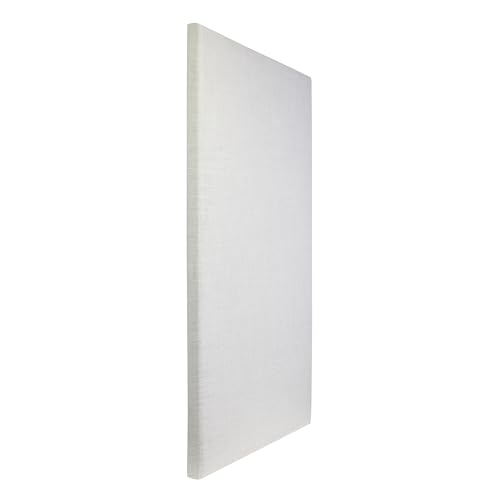
- Mineral wool core; NRC rated 1.0.
- Finished fabric face and wood frame.
- Hardware included; 8 sq. ft. per panel.
Best For: A finished, single-panel speaker-wall treatment
Large-Format Foam Pick
Art3d 2-Inch Wedge Foam Panels

- Four 48 x 24-inch panels
- 2-inch wedge-shaped PU foam
- Adhesive stickers included
Best For: Broad speaker-wall coverage with wedge foam
Thick Framed Pick
ATS Acoustics 4-Inch Absorbing Panel

- 4-inch mineral wool core
- Listed NRC of 1.15
- Wood frame; mounting hardware included
Best For: A thick, framed absorber with a stated NRC
Peel-and-Stick Decor Pick
TONOR Striped Polyester Wall Panels

- Four 47.2 x 23.6-inch panels
- Self-adhesive striped design
- 0.72-inch polyester construction
Best For: Decorative coverage with peel-and-stick setup
Removable Wall-Mount Pick

- Four fabric-wrapped fiberglass panels
- 2-inch thickness
- Template and nails included
Best For: Listeners who want removable, mechanically mounted treatment
Best Heavy-Duty Pick

- Four stated 48 x 24-inch panels
- 2-inch foam can be trimmed
- Compressed for shipping
Best For: Broad, customizable wall coverage
Adhesive-Backed Pick
Moukey 2.4-Inch Fiberglass Panels

- Four approximately 24 x 12-inch panels
- 2.4-inch fiberglass core
- Self-adhesive backing; extra glue recommended
Best For: Thick treatment with adhesive installation
Broad Coverage Pick – Knightsacoustic 96-Pack Foam Wedges
If you need acoustic panels behind speakers across a wide wall area, this 96-pack provides up to 96 square feet of 12-by-12-inch wedge foam. It is intended to absorb reflections and reduce room echo, not block sound from leaving the room.
Best For: Covering larger wall areas behind speakers in studios, theaters, or game rooms.
Pros:
- 96 tiles allow flexible placement over a broad area.
- Wedge foam is designed to manage echo and reverberation.
- Compressed panels are designed to recover their shape after unpacking.
Cons:
- Adhesive is not included.
- The title specifies 1-inch foam, while the supplied details list 2-inch thickness; verify before ordering.
Choose this pack for coverage and layout flexibility, but confirm the thickness if panel depth matters to your setup.
Deep Foam Coverage – 50-Pack 2-Inch Studio Wedges
For acoustic panels behind speakers where you want more foam depth than a 1-inch tile, this 50-pack is listed with a 2-inch profile and 12-by-12-inch faces. Its purpose is to manage echoes and reverberation rather than soundproof the room.
Best For: Building a 2-inch-thick foam treatment area in a recording space or theater.
Pros:
- 50 tiles offer up to 50 square feet of coverage when placed edge to edge.
- 2-inch foam provides more material depth than thinner foam tiles.
- Flexible tiles can be installed on walls, doors, or ceilings.
Cons:
- Adhesive is not included.
- The supplied details list an inconsistent 12-by-2-inch face measurement; verify dimensions before ordering.
This is a practical foam option when tile depth is a priority, provided you budget for mounting supplies and check the listed dimensions.
Pyramid Foam Pick – 36-Pack 2-Inch Pyramid Panels
These pyramid acoustic panels behind speakers offer a straightforward way to treat a focused section of wall. The pack includes 36 tiles measuring 12 by 12 by 2 inches, with a textured surface intended to manage reflections and reverb.
Best For: Focused wall treatment in a studio, podcast room, or home theater.
Pros:
- Covers up to 36 square feet when installed edge to edge.
- 2-inch foam has a stated density of 30 kg/m³.
- Flame-retardant foam is specified for indoor acoustic treatment.
Cons:
- No adhesive backing is included.
- Designed for acoustic treatment, not soundproofing.
The defined dimensions and density make this an easy pack to plan around; choose a mounting method suited to your wall.
Framed Panel Pick – ATS Acoustics 24-by-48-Inch Panel
ATS Acoustics Sound Absorbing Acoustic Panel 24" x 48" x 2" Beveled Edge (Ivory)
Check Price On AmazonIf you prefer one finished panel instead of many foam tiles, this ATS Acoustics model is an option for acoustic panels behind speakers. Its 24-by-48-by-2-inch construction combines a mineral wool core, wood frame, and ivory jute burlap covering to absorb unwanted room reflections.
Best For: A single, finished-looking treatment area behind a speaker setup.
Pros:
- Specified Noise Reduction Coefficient (NRC) of 1.0.
- Solid wood internal frame and full wood back.
- Includes mounting hardware and an installation template.
Cons:
- One panel covers 8 square feet; wider layouts may require multiple panels.
- At 8.3 pounds, it is heavier than individual foam tiles.
This is the most self-contained mounting option here, particularly if you want a fabric-covered panel and a documented absorption rating.
Large-Format Foam Pick – Art3d 2-Inch Wedge Foam Panels
If you want broad coverage with acoustic panels behind speakers, this Art3d four-pack provides 48 x 24-inch wedge foam panels designed to reduce echo and reflections. The 2-inch polyurethane foam is a practical option when you want to cover a sizable wall area with relatively few pieces.
Best For: Larger speaker-wall areas where foam panels and included adhesive stickers suit the installation.
Pros:
- Four large panels provide broad coverage.
- Wedge profile is designed to reduce reflected sound and echo.
- Includes double-sided stickers and installation instructions.
Cons:
- Wedge foam has a distinctly studio-style appearance.
- No measured absorption rating is provided in the supplied specifications.
Choose this set for its panel size and straightforward setup, rather than for a specific verified acoustic rating.
Thick Framed Pick – ATS Acoustics 4-Inch Absorbing Panel
ATS Acoustics Sound Absorbing Acoustic Panel 24" x 48" x 4" Beveled Edge (Black)
Check Price On AmazonFor acoustic panels behind speakers when you prefer a substantial, framed panel, the ATS Acoustics model combines a 4-inch mineral wool core with a wood frame and full wood back. Its listed NRC is 1.15, and the 24 x 48-inch panel is intended to control reverb and echo.
Best For: Buyers seeking a thick, fabric-covered panel with a stated absorption rating and included mounting hardware.
Pros:
- 4-inch mineral wool core and listed 1.15 NRC.
- Solid wood internal frame and full wood back.
- Includes a mounting template and hardware.
Cons:
- At 14 pounds, it is heavier than the listed Art3d foam set.
- One panel covers a 24 x 48-inch area; a wider setup may require additional panels.
This is the most clearly specified option here for buyers prioritizing a thick absorber; check the number of panels needed for your speaker-wall layout.
Peel-and-Stick Decor Pick – TONOR Striped Polyester Wall Panels
If easy installation matters most for acoustic panels behind speakers, TONOR’s four self-adhesive polyester panels peel and stick to the wall. Each measures 47.2 x 23.6 inches, with a striped finish that can double as room decor.
Best For: Buyers who want broad, decorative wall coverage without separate mounting tape or hardware.
Pros:
- Self-adhesive backs simplify installation.
- Four large panels can be cut to fit a space.
- Striped design offers a decorative alternative to wedge foam.
Cons:
- At 0.72 inches thick, these are thinner than the other listed options.
- No measured absorption rating is provided in the supplied specifications.
These panels are a convenient choice for a tidy speaker-wall treatment, though their stated features alone do not establish how they compare acoustically with thicker panels.
Removable Wall-Mount Pick – 2-Inch Fiberglass Panels
If you want acoustic panels behind speakers without committing to adhesive, this four-pack uses supplied mounting hardware for a removable wall installation. Its 2-inch fiberglass core and fabric wrap are intended to absorb room reflections and echo.
Best For: Listeners who prefer mechanically mounted panels they can take down later.
Pros:
- Four 2-inch-thick fiberglass panels.
- Includes a mounting template and nails.
- Removable installation offers flexibility when rearranging a room.
Cons:
- Mounting with nails puts holes in the wall.
- Listing details conflict on panel dimensions: the title says 23.6 by 11.8 inches, while a details field says 23.6 by 23.6 inches.
Choose these if secure, removable mounting matters more than a no-holes installation; verify the panel size before planning your layout.
Best Heavy-Duty Pick – 48 x 24-Inch Wedge Panels
For a broad area of acoustic panels behind speakers, this four-pack of 48-by-24-inch, 2-inch-thick foam panels is designed to reduce echo, flutter echo, and unwanted reflections. The wedges can also be cut to fit a particular wall layout.
Best For: Buyers who want large, trimmable foam panels for targeted wall treatment.
Pros:
- Large stated panel size covers more wall per piece.
- Foam can be cut to size.
- Listing describes the material as fire-retardant.
Cons:
- Panels ship compressed; the listing advises allowing 24–48 hours to reach their original size, despite also claiming rapid recovery.
- No mounting method is specified in the supplied details.
These are a practical option when coverage and easy trimming are priorities. Plan for possible recovery time before installing them.
Adhesive-Backed Pick – Moukey 2.4-Inch Fiberglass Panels
If you prefer adhesive-backed acoustic panels behind speakers, this Moukey four-pack combines a 2.4-inch fiberglass core with a polyester fabric wrap. Each panel measures approximately 24 by 12 inches and is intended to absorb reverberation and echo.
Best For: Buyers who want thick panels with a built-in adhesive backing.
Pros:
- 2.4-inch stated thickness.
- Self-adhesive backing simplifies initial placement.
- Flat polyester-fiber backing provides an adhesive surface.
Cons:
- The manufacturer recommends adding construction adhesive for a more stable hold, so the built-in adhesive may not be sufficient on its own.
- Adhesive installation is less convenient to reposition than removable hardware.
Consider these when you want thicker fiberglass treatment and are comfortable with adhesive mounting; decide on placement before attaching them.
How We Picked the Best Acoustic Panels Behind Speakers
We compared the listed panel materials, dimensions, thicknesses, pack sizes, and mounting approaches with the needs of a speaker setup. The selection includes small foam tiles for flexible layouts, larger panels for broad coverage, and thicker fiberglass options worth considering when lower-frequency absorption matters. We did not treat “soundproof” in a product name as proof that a panel blocks sound from leaving a room; these products are primarily for managing reflections inside it.
Quick Comparison: Acoustic Panels Behind Speakers
For flexible layouts: The 12-by-12-inch foam packs make it easier to work around shelves, outlets, and uneven wall space. Compare their 1- and 2-inch thicknesses as well as the total area you plan to cover.
For fewer pieces to mount: The 48-by-24-inch foam and ATS panels cover more wall with each piece. The ATS options offer a choice of 2- or 4-inch thickness.
For compact, thicker panels: The smaller fiberglass panel packs, including the Moukey panels, may suit a targeted area where a full-size panel will not fit. Check each listing for mounting details before ordering.
Key Buying Factors
Placement and Coverage
Start with the wall directly behind and around the speakers, especially when they sit close to it. A centered group of panels is often more useful than scattering the same coverage across the room. Measure the available wall area, account for speaker stands and furniture, and plan the layout before choosing a pack count. If your listening position is affected by strong side-wall or ceiling reflections, panels behind the speakers alone may not address everything you hear.
Thickness and Material
Thin foam can help with higher-frequency reflections, but it is not a substitute for thick absorption when bass buildup is the main issue. Two-inch panels are a more substantial starting point than thin decorative material; 4-inch fiberglass panels offer a thicker option where space and budget allow. Material labels alone do not establish performance: check for credible absorption data, such as frequency-specific test results, if precise treatment is your goal.
Mounting and Expectations
Confirm whether adhesive, mounting hardware, or a separate frame is required, and check that the method suits your wall finish and the panel’s weight. A small air gap may improve a panel’s effectiveness, but it also increases its depth into the room. Acoustic panels absorb some sound within a room; they will not meaningfully soundproof a shared wall on their own.
Who Should Buy Which Acoustic Panels Behind Speakers?
Choose smaller foam tiles if you need an adaptable, budget-conscious layout and mainly want to reduce noticeable brightness or flutter echo. Choose larger 2-inch panels if you have clear wall space and want broad coverage with fewer seams. Consider thicker fiberglass panels if you want more substantial absorption and can accommodate their size and mounting requirements. For persistent bass problems, measure the room or consider dedicated bass trapping rather than relying only on Acoustic Panels Behind Speakers.
