Last updated on October 9th, 2026
A good acoustic testing microphone helps you measure what your room and speakers are actually doing, rather than relying on guesswork. But the right choice depends on your software, audio interface, and whether you need room analysis or an AVR’s guided setup.
These 10 options span calibrated USB microphones, XLR measurement mics, mobile-friendly models, and receiver-specific replacements. Use the guide below to narrow the field by connection type, calibration, and compatibility.
Best 10 Acoustic Testing Microphone Picks for 2026
Best for Room Measurements

- XLR omnidirectional measurement mic
- Individual calibration response graph
- Stand mount, windscreen, and case included
Best For: Room measurements with an XLR-based system
Best for DriveRack Users

- Made for DriveRack real-time analysis
- Flat frequency response
- Omnidirectional XLR design
Best For: DriveRack-based reference measurements
Best USB Setup

- USB with driverless installation
- Unique calibration file with SPL sensitivity
- Tripod, cable, and windscreen included
Best For: USB-based room and speaker tuning
Best for High-SPL Measurements

- 20 Hz–20 kHz stated linear response
- 132 dB SPL maximum
- Omnidirectional XLR microphone
Best For: XLR reference measurements at higher sound levels
Best XLR Option
Superlux ECM999 Measurement Microphone

- 20 Hz–20 kHz ±2 dB specified response
- Handles up to 132 dB SPL
- Needs phantom power and a separate XLR cable
Best For: Room and speaker measurements with existing XLR gear
Best for MultEQ-X
Audyssey ACM1-X Calibrated Microphone

- Individually matched calibration file
- Designed for MultEQ-X room correction
- Requires a compatible AVR and paid app access
Best For: Audyssey AVR owners using MultEQ-X
Mobile Measurement Pick
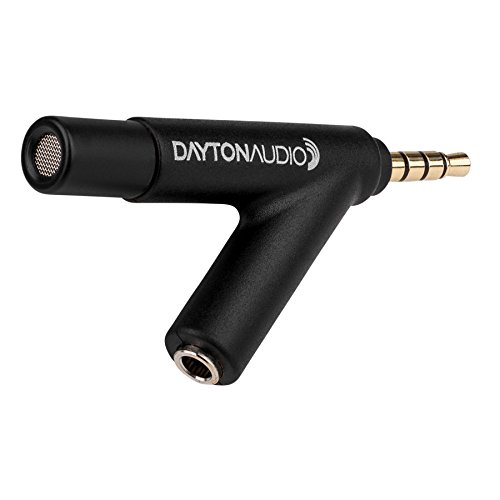
- 3.5 mm TRRS mobile connection
- Omnidirectional measurement mic
- Pass-through jack and kickstand
Best For: Measurements with a compatible phone or tablet
USB Software Pick

- USB connection for PC setups
- Unique calibration file included
- Tripod, clip, windscreen, and cable
Best For: PC-based measurement with compatible software
Onkyo Receiver Pick
Onkyo-Compatible Calibration Mic
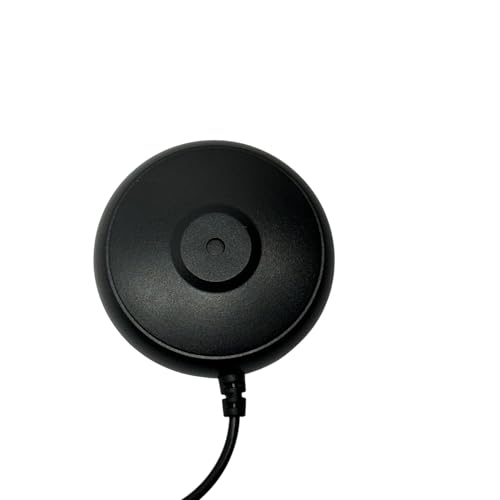
- For listed Onkyo receiver series
- Supports speaker and room calibration
- Helps measure levels and distances
Best For: Calibration on a compatible Onkyo AV receiver
Best for Room Measurements – Dayton Audio EMM-6
The Dayton Audio EMM-6 is an XLR acoustic testing microphone made for room acoustic analyzers and audio measurement systems. Its omnidirectional pickup and included individual calibration response graph make it a practical choice for measuring a home theater or listening room.
Best For: Room measurements with an XLR-based audio measurement system.
Pros:
- Includes a unique calibration response graph.
- Low-noise FET input is designed to reduce low-frequency distortion.
- Comes with a stand mount, foam windscreen, and transport case.
Cons:
- XLR connection requires a compatible measurement setup; it is not a USB plug-and-play mic.
Choose the EMM-6 if you want an XLR measurement mic with its own calibration information and useful carrying accessories.
Best for DriveRack Users – dbx RTA-M
dbx RTA-M Driverack Series Reference Microphone black 7.00 x 3.50 x 12.00 inches
Check Price On AmazonThe dbx RTA-M is an XLR acoustic testing microphone intended for the DriveRack real-time analyzer, including the DriveRack PA. Its flat frequency response and omnidirectional pattern suit reference measurements within that setup.
Best For: DriveRack users who need a matching reference microphone.
Pros:
- Designed for the DriveRack real-time analyzer.
- Flat frequency response supports reference measurements.
- Omnidirectional pickup captures sound from all directions.
Cons:
- Uses XLR rather than a direct USB connection.
- The supplied details do not list an individual calibration file.
The RTA-M is the most straightforward fit here when your measurement workflow centers on a dbx DriveRack.
Best USB Setup – miniDSP UMIK-1
The miniDSP UMIK-1 is a USB acoustic testing microphone for audio system tuning. Its driverless installation across Windows, Mac, Linux, and iDevices, plus compatibility with software including REW, Dirac Live, and Smaart, makes it appealing if you prefer a USB measurement workflow.
Best For: Software-based speaker and room tuning through USB.
Pros:
- Includes a unique calibration file with sensitivity data for SPL monitoring.
- Supports a broad range of operating systems and acoustic software.
- Includes a mini tripod, USB cable, and windscreen.
Cons:
- USB connection is not suited to an XLR-only measurement input.
- iPad use requires a CameraKit adapter.
Pick the UMIK-1 when USB connectivity, supplied calibration data, and broad software compatibility matter most.
Best for High-SPL Measurements – PreSonus PRM1
The PreSonus PRM1 is an XLR acoustic testing microphone with an omnidirectional quarter-inch electret-condenser capsule. Its stated linear response from 20 Hz to 20 kHz and 132 dB SPL maximum give buyers useful specifications for evaluating a measurement setup.
Best For: XLR-based reference measurements where a stated 132 dB SPL maximum matters.
Pros:
- Specified linear frequency response from 20 Hz to 20 kHz.
- Omnidirectional pickup for reference measurements.
- Rated for a maximum of 132 dB SPL.
Cons:
- Requires an XLR-compatible setup rather than connecting directly by USB.
- The supplied details do not list an individual calibration file.
The PRM1 is worth considering if you want a reference mic with clearly stated response and maximum-SPL specifications.
Best XLR Option – Superlux ECM999 Measurement Microphone
The Superlux ECM999 is an acoustic testing microphone for measuring rooms, checking speakers, and setting up a home theater. Its omnidirectional pickup and specified 20 Hz–20 kHz ±2 dB response make it a practical choice if you already have an XLR measurement setup.
Best For: Home-theater users and sound technicians with an interface or measurement system that supplies phantom power.
Pros:
- Specified flat 20 Hz–20 kHz ±2 dB response for acoustic measurements.
- Handles sound pressure levels up to 132 dB SPL.
- Includes a carrying case, mic clip, and windscreen.
Cons:
- Requires 12–52 V phantom power and an XLR cable; the cable is not included.
- Calibration-file details may require checking the packaging slip or contacting the seller.
Choose this model when XLR connectivity fits your existing gear. Before buying, account for the missing cable and confirm how to obtain the calibration details you need.
Best for MultEQ-X – Audyssey ACM1-X Calibrated Microphone
The Audyssey ACM1-X is an acoustic testing microphone built for compatible AV receivers using the MultEQ-X app. Each mic is individually analyzed and assigned a unique calibration file, making it a focused choice for Audyssey room-correction measurements rather than a general-purpose measurement mic.
Best For: Owners of supported Audyssey MultEQ AV receivers who plan to calibrate through MultEQ-X.
Pros:
- Individual calibration file is matched to each microphone.
- Omnidirectional pickup supports room-acoustics measurements.
- MultEQ-X provides control over calibration settings for supported AVRs.
Cons:
- Designed exclusively for use with MultEQ-X and compatible AVRs.
- MultEQ-X requires a Microsoft Store download and an in-app purchase.
Its appeal is the mic-specific calibration within the Audyssey workflow. Check your receiver’s compatibility and the app requirement before choosing it.
Best USB-C Kit – ZXQDRE Calibrated Measurement Microphone
This ZXQDRE USB-C acoustic testing microphone pairs a serial-number-matched calibration file with driverless setup on Windows, Mac, and Linux. It is intended for room correction, speaker analysis, and system tuning with software such as Room EQ Wizard (REW).
Best For: Buyers who want a computer-connected measurement mic and accessories for room or speaker tuning.
Pros:
- Includes an individual calibration file for the microphone.
- Driverless USB setup supports Windows, Mac, and Linux; compatible with REW and miniDSP processors.
- Kit includes a 2 m USB-C cable, mini tripod, windscreen, and carrying case.
Cons:
- USB connection makes it a computer-based option rather than an XLR mic.
- The included stand is a mini tripod, which may not suit every measurement position.
The included accessories make it convenient to start measuring without assembling a separate mic kit. Pick it if USB-C and your preferred measurement software fit your setup.
Mobile Measurement Pick – Dayton Audio iMM-6
Dayton Audio iMM-6 Calibrated Measurement Microphone for iPhone, iPad Tablet and Android,Black
Check Price On AmazonThe Dayton Audio iMM-6 is an acoustic testing microphone for measuring sound with a compatible phone or tablet. Its 3.5 mm TRRS connection and compact design make it a practical choice when you want to work without a computer.
Best For: Mobile acoustic measurements on devices with a compatible 3.5 mm TRRS headset jack.
Pros:
- Omnidirectional precision condenser microphone designed for measurement.
- Works with listed Apple, Android, and Windows Phone devices that have a TRRS jack.
- Headphone/line-out pass-through supports test signals or listening.
- Kickstand elevates and angles the device and microphone capsule.
Cons:
- Requires a compatible 3.5 mm TRRS headset jack.
- Listed as a single-channel microphone.
Choose the iMM-6 if your measurement setup centers on a compatible mobile device; check its jack before buying.
USB Software Pick – miniDSP UMIK-2
The miniDSP UMIK-2 is a USB acoustic testing microphone for PC-based measurement workflows. It includes a unique calibration file and is listed as plug-and-play compatible with software including REW and Dirac platforms.
Best For: PC users working with compatible acoustic measurement software.
Pros:
- Includes a unique calibration file.
- USB connection supports a plug-and-play setup.
- Comes with a mini tripod, mic clip, windscreen, and USB cable.
- Listed as compatible with REW and Dirac platforms.
Cons:
- Requires a USB-based setup rather than a 3.5 mm headset jack.
- Listed for PC hardware, so confirm compatibility with your intended device.
The included mounting accessories and calibration file make this the more complete option of the three for a compatible computer-based setup.
Onkyo Receiver Pick – Onkyo-Compatible Calibration Mic
This Onkyo-compatible calibration mic serves a narrower acoustic testing microphone need: running a compatible AV receiver’s speaker and room setup. Its 3.5 mm connection is intended for the listed TX-RZ, TX-SR, TX-NR, and HT-R receiver series.
Best For: Owners of compatible Onkyo receivers who need a microphone for receiver-guided calibration.
Pros:
- Designed for listed Onkyo TX-RZ, TX-SR, TX-NR, and HT-R series receivers.
- Supports speaker calibration and room acoustic measurements.
- Helps the receiver measure speaker levels and distances for automatic adjustment.
Cons:
- Intended for compatible Onkyo receivers, not a general-purpose PC or phone measurement setup.
- Check your exact receiver model and calibration system before ordering.
Pick this mic for the specified receiver-calibration task rather than standalone acoustic analysis.
How We Picked These Acoustic Testing Microphones
We focused on products intended for room measurement, speaker analysis, or compatible receiver calibration. The selection covers USB and USB-C models that simplify computer-based testing, XLR microphones for existing audio-interface setups, a mobile-oriented option, and microphones made for specific AV receiver workflows. We also considered the value of an individual calibration file, connection requirements, and whether a mic is practical for the software a buyer plans to use. These are buying criteria, not a claim that every model was tested side by side.
Quick Comparison by Setup
- Computer-based room measurements: The miniDSP UMIK-1 and UMIK-2 are USB choices; the USB-C measurement microphone is another option if its calibration file and your software meet your needs.
- Audio-interface workflows: The Dayton Audio EMM-6, dbx RTA-M, PreSonus PRM1, and Superlux ECM999 use the XLR-style measurement-mic approach. Check interface and power requirements before buying.
- Mobile measurements: The Dayton Audio iMM-6 is aimed at phone and tablet use; confirm that your device, adapter, and measurement app support it.
- Receiver-guided calibration: The Audyssey ACM1-X is for select compatible AVRs, while the Onkyo calibration mic is a receiver-specific replacement. Neither should be treated as a universal measurement mic.
Key Buying Factors for an Acoustic Testing Microphone
Choose the Connection Before the Brand
A USB mic incorporates the audio connection and is often the simplest starting point for laptop-based measurements. An XLR mic requires a suitable audio interface and, typically, phantom power. A 3.5 mm receiver mic may fit a particular AVR yet be unsuitable for general-purpose measurement software. Verify connectors, power, operating-system support, and any required adapters as a complete chain.
Check Calibration File and Software Support
An individual calibration file can help account for a specific microphone’s frequency response, but it matters only if your measurement software can load the supplied format. Confirm that the file matches the exact unit you receive. For room measurements, also check whether the software calls for a different calibration file or orientation when the mic points upward instead of toward the speaker.
Plan for Repeatable Placement
A stable stand is more useful than holding a mic by hand. Measure at ear height, keep the orientation consistent with your calibration file, and repeat positions around the listening area when your software or AVR asks for them. Results also depend on background noise, playback level, and correct input settings—not just the microphone.
Who Should Buy Which Acoustic Testing Microphone?
Choose a compatible USB model if you want a straightforward path into computer-based room analysis. Pick an XLR option if you already have a suitable interface or need it within an existing measurement rig. Consider the iMM-6 for a supported mobile setup. If your immediate goal is to replace a missing receiver calibration mic, prioritize the exact AVR compatibility list over general measurement specifications; a receiver-specific mic may be the better fit for that one job.
