If you’re looking to enhance your audio setup without spending a fortune, you’ve come to the right place. Choosing the right audio interface can greatly improve your sound quality, whether you’re a musician, podcaster, or gamer. With so many options under $500, it can be overwhelming to find the perfect fit for your needs. Let’s explore some of the best choices available and what makes them stand out.
Focusrite Scarlett Solo 4th Gen USB Audio Interface

If you’re a guitarist or vocalist looking to elevate your recording game without breaking the bank, the Focusrite Scarlett Solo 4th Gen USB Audio Interface is your go-to solution. With a 120dB dynamic range and top-tier converters, it delivers studio-quality sound right at your fingertips. The improved Air mode enhances your vocals and guitars, adding presence and harmonic richness for impactful recordings. Plus, you’ll get industry-leading software like Pro Tools Intro+, Ableton Live Lite, and Cubase LE, alongside the Hitmaker Expansion for essential effects. This all-encompassing package equips you with everything needed for recording, mixing, and mastering your music effortlessly.
Best For: Musicians, vocalists, and producers seeking an affordable, high-quality recording solution.
Pros:
- Studio-quality sound with a 120dB dynamic range and top-tier converters.
- Improved Air mode enhances vocals and guitars for richer recordings.
- Comprehensive software package includes industry-leading tools for recording, mixing, and mastering.
Cons:
- Limited input options may not suit more complex setups.
- No MIDI connectivity, which could be a drawback for some musicians.
- May require additional accessories (like a microphone and cables) for complete functionality.
Focusrite Scarlett Solo 3rd Gen USB Audio Interface

The Focusrite Scarlett Solo 3rd Gen USB Audio Interface is an ideal choice for solo artists, including guitarists and vocalists, looking to capture studio-quality recordings without breaking the bank. With high-performing mic preamps and switchable Air mode, you’ll enjoy enhanced brightness and clarity in your sound. Two high-headroom instrument inputs prevent clipping, ensuring your guitars and basses sound pristine. Plus, it supports up to 24-bit/192kHz recording quality, delivering professional results for music and podcasts. The included software package, featuring Pro Tools Intro+ and Ableton Live Lite, provides essential tools for immediate music creation, making it a smart investment for creators.
Best For: The Focusrite Scarlett Solo 3rd Gen USB Audio Interface is best for solo artists, including guitarists and vocalists, seeking affordable studio-quality recording solutions.
Pros:
- High-performing mic preamps enhance sound brightness and clarity.
- Supports professional recording quality up to 24-bit/192kHz.
- Includes a comprehensive software package for immediate music creation.
Cons:
- Limited to two inputs, which may not suit larger setups.
- No MIDI connections for integrating electronic instruments.
- Requires USB power, which may limit portability in certain situations.
Focusrite Scarlett 2i2 4th Gen USB Audio Interface
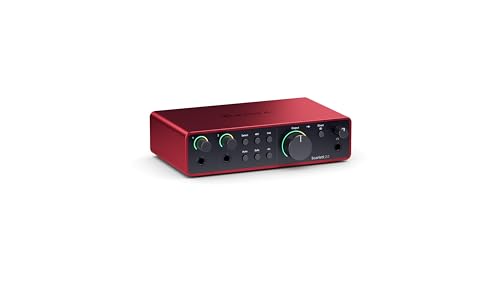
For musicians and content creators seeking high-quality audio at an affordable price, the Focusrite Scarlett 2i2 4th Gen USB Audio Interface is an excellent choice. With a 120dB dynamic range and the same converters used in Focusrite’s flagship models, you’ll achieve studio-quality sound. Features like Auto Gain make it easy to set mic or guitar levels, while Clip Safe prevents unwanted clipping. The Air mode adds presence and richness to your recordings. Plus, it comes bundled with exceptional software like Pro Tools Intro+ and Ableton Live Lite, ensuring you have everything needed for seamless recording, mixing, and mastering right out of the box.
Best For: Musicians, podcasters, and content creators looking for an affordable, high-quality audio interface for recording and mixing.
Pros:
- High-fidelity sound with a 120dB dynamic range, ensuring studio-quality recordings.
- User-friendly features like Auto Gain and Clip Safe simplify the recording process.
- Includes a comprehensive software bundle for recording, mixing, and mastering.
Cons:
- Limited to two inputs, which may not be sufficient for larger recording setups.
- Some users may find the bundled software options limited compared to higher-tier packages.
- Requires a computer to function, which may not suit all users’ preferences.
M-AUDIO M-Track Duo USB Audio Interface for Recording and Streaming

Ideal for budding musicians and streamers, the M-AUDIO M-Track Duo USB Audio Interface offers a user-friendly experience with its dual combo XLR/Line/Instrument inputs and phantom power. This compact interface delivers 48kHz audio resolution, making it perfect for recording, streaming, and podcasting. You’ll appreciate the USB/Direct switch for zero latency monitoring, ensuring you hear your performance in real-time. It’s compatible with various devices and DAWs, including Logic Pro and GarageBand, so you can easily integrate it into your setup. Weighing just 0.3 kg, it’s portable and ready for on-the-go creativity. Enjoy stellar sound quality without breaking the bank!
Best For: Budding musicians, streamers, and podcasters seeking a portable and affordable audio interface for high-quality recordings.
Pros:
- Compact design makes it easy to transport for on-the-go recording and streaming.
- Dual inputs with phantom power allow for versatile connectivity with microphones and instruments.
- Zero latency monitoring ensures real-time audio feedback during recordings.
Cons:
- Limited maximum sample rate of 48 kHz may not meet the needs of professional users requiring higher fidelity.
- Only one headphone output could be a limitation for collaborative sessions.
- Compatibility may require adapters for certain iOS devices, which may not be included.
M-AUDIO M-Track Solo USB Audio Interface for Recording and Streaming
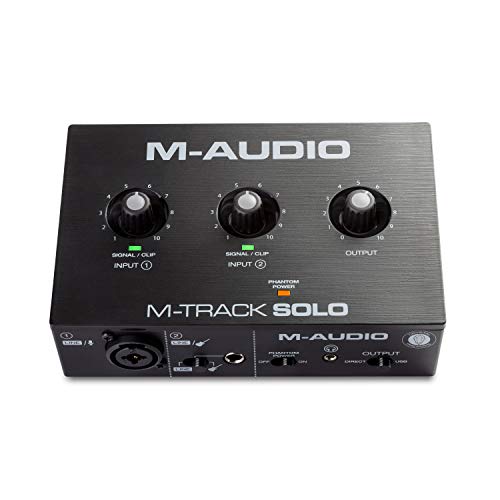
Designed specifically for beginners and budget-conscious content creators, the M-AUDIO M-Track Solo USB Audio Interface is perfect for anyone looking to elevate their recording and streaming experience. It’s compatible with both Mac and PC, delivering 48kHz audio resolution for high-quality recordings. With one combo XLR/Line input featuring phantom power and a dedicated Line/Instrument input, you can easily record vocals, guitar, and more. The zero-latency monitoring, facilitated by the USB/Direct switch, guarantees you hear everything in real-time. Plus, the included MPC Beats Software provides essential tools to enhance your music production journey.
Best For: Beginners and budget-conscious content creators looking to enhance their recording and streaming experience.
Pros:
- High-quality 48kHz audio resolution for clear recordings.
- Zero-latency monitoring for real-time audio feedback.
- Includes MPC Beats Software for enhanced music production capabilities.
Cons:
- Limited to one combo XLR/Line input which may restrict simultaneous recording options.
- Basic features may not satisfy advanced users seeking extensive functionality.
- Plastic build may feel less durable compared to higher-end models.
MAONO USB Audio Interface for PC (PS22 Lite Black)

The MAONO USB Audio Interface PS22 Lite Black stands out with its high-resolution recording capabilities, making it a top choice for podcasters and streamers who demand clarity and realism in their audio. With 24-bit/192kHz recording and a dynamic range of 106dB, it captures every detail. You can easily connect both condenser and dynamic microphones, benefiting from 48V phantom power and a dedicated instrument input for guitars. Its compact design fits in your hand, while the included ProStudio Routing Software enhances your streaming experience. Plus, it’s compatible with popular DAWs, ensuring seamless integration into your workflow.
Best For: The MAONO USB Audio Interface PS22 Lite Black is best for podcasters, streamers, and musicians seeking high-quality audio recording and streaming capabilities.
Pros:
- High-resolution recording at 24-bit/192kHz with a dynamic range of 106dB for exceptional audio clarity.
- Supports both condenser and dynamic microphones with 48V phantom power and has a dedicated instrument input for guitars.
- Compact, user-friendly design with plug-and-play functionality and included ProStudio Routing Software for enhanced streaming.
Cons:
- Limited to USB connectivity, which may not suit users with older equipment requiring different connections.
- The compact size may make it easy to misplace if not stored properly.
- May require additional software setup for optimal use, which could be challenging for complete beginners.
Audio Interface 2X2 24-bit/192kHz for Studio Quality Recording
For musicians and content creators seeking high-quality recordings without breaking the bank, the Audio Interface 2X2 24-bit/192kHz offers an impressive combination of affordability and professional-grade performance. With its seamless USB C connectivity, you can plug it into your laptop and start recording immediately—no drivers required. Enjoy studio-grade audio with crystal-clear fidelity and a wide dynamic range, thanks to high-performance converters. The elegant design features illuminated gain knobs for easy adjustments in dim lighting. Plus, with integrated phantom power and zero-latency monitoring, this portable interface is perfect for capturing vocals and instruments on the go.
Best For: Musicians and content creators looking for an affordable yet professional-grade audio interface for high-quality recordings.
Pros:
- Studio-grade audio quality with 24-bit/192kHz fidelity for clear and dynamic recordings.
- Seamless USB C connectivity enables immediate use without the need for drivers or bulky power supplies.
- Portable design makes it perfect for on-the-go recording, ideal for laptop users and mobile creators.
Cons:
- Limited to 2 channels, which may not suffice for larger recording setups or full band recordings.
- Integrated phantom power may not support all microphone types, limiting compatibility with certain devices.
- No built-in effects or processing, requiring additional software for sound enhancement during recordings.
M-AUDIO M-Track Duo HD Audio Interface

With its 24-bit/192kHz audio resolution, the M-AUDIO M-Track Duo HD Audio Interface is perfect for both aspiring musicians and seasoned professionals who need high-quality sound without breaking the bank. This compact 2-in/2-out USB-C device features two combo inputs for various instruments and a headphone output with independent level control. You’ll benefit from zero-latency monitoring and switchable +48V phantom power for condenser mics, ensuring every detail is captured. Plus, it includes a robust software bundle to enhance your music production experience. Its lightweight, rugged design makes it an ideal choice for home studios or on-the-go recording sessions.
Best For: Aspiring musicians and seasoned professionals seeking high-quality audio recording and streaming capabilities at an affordable price.
Pros:
- High audio resolution of 24-bit/192kHz for studio-quality sound.
- Compact and lightweight design makes it portable and easy to use in various settings.
- Comprehensive software bundle included, enhancing music production and content creation.
Cons:
- Limited to 2-in/2-out configuration, which may not suffice for larger setups.
- USB-C only may require adapters for older devices lacking this connection type.
- The included software bundle may have a learning curve for beginners unfamiliar with these programs.
Universal Audio Volt 1 USB Audio Interface
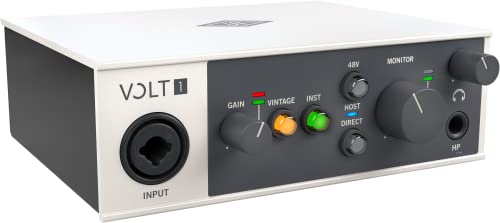
Elevating your recording experience, the Universal Audio Volt 1 USB Audio Interface is perfect for musicians and producers seeking professional-quality sound on a budget. You’ll capture stunning 24-bit/192 kHz audio with crystal clear converters and enjoy the rich tones of UA’s classic 610 preamps with Vintage mode. Record and mix effortlessly using the award-winning LUNA Digital Audio Workstation, along with UAD plug-ins trusted by professionals. Its compatibility with MacOS, Windows, and iOS devices makes it ideal for mobile recording, while learning resources help enhance your skills. Get ready to achieve album-ready sound quality wherever you go!
Best For: Musicians and producers seeking affordable, professional-quality sound for recording and mixing.
Pros:
- High audio quality with 24-bit/192 kHz capture and classic 610 preamps.
- User-friendly with award-winning LUNA Digital Audio Workstation and trusted UAD plug-ins.
- Versatile compatibility with MacOS, Windows, and iOS devices for mobile recording.
Cons:
- Requires external power supply and specific adapters for certain devices.
- Limited inputs may not suit larger recording setups.
- Learning curve for beginners unfamiliar with digital audio workstations and plug-ins.
FIFINE Gaming Audio Mixer with XLR Microphone Interface

The FIFINE Gaming Audio Mixer stands out as an exceptional choice for gamers and content creators seeking to enhance their audio quality without breaking the bank. This compact mixer features an XLR input that supports condenser microphones, delivering superior sound. With four independent channels, you can easily manage your microphone, line in, and headphone outputs. The customizable sound effects and voice changing modes add a fun twist to your streams. Plus, the RGB lighting not only looks cool but elevates your live streaming experience. With plug-and-play compatibility for both Mac and Windows, it’s a versatile tool for any audio setup.
Best For: Gamers and content creators looking for an affordable audio mixer to enhance their streaming and recording quality.
Pros:
- Superior Sound Quality: XLR input supports condenser microphones for enhanced audio clarity.
- Customizable Features: Four independent channels and customizable sound effects keep streams engaging and dynamic.
- Vibrant Aesthetics: RGB lighting adds a visually appealing element to live broadcasts.
Cons:
- Limited Compatibility: Not compatible with USB microphones, which may restrict some users.
- Compact Size: Smaller dimensions may lead to limited physical controls for advanced users.
- Learning Curve: New users may need time to familiarize themselves with the mixer’s features and controls.
Factors to Consider When Choosing an Audio Interface Under 500
When you’re choosing an audio interface under $500, you’ll want to take into account several key factors. Sound quality, input and output options, and portability can make a big difference in your setup. Also, think about software compatibility and the quality of preamps to guarantee you get the best performance for your needs.
Sound Quality Performance
Sound quality plays an essential role in your recordings, so choosing the right audio interface under $500 can make a significant difference. Look for interfaces that support high-resolution recording, like 24-bit/192kHz, to capture professional-grade sound and detail. Pay attention to the dynamic range; an interface with around 120dB can help you record a wider spectrum of sounds without distortion. High-quality preamps are important too, as they enhance the clarity and brightness of vocals and instruments. Consider features like switchable Air modes, which can add presence and impact to your recordings. Finally, verify the converters are high-quality, as they’re crucial for maintaining fidelity when converting analog signals to digital.
Input and Output Options
Choosing the right audio interface under $500 involves not just sound quality but also understanding the input and output options available. Look for a mix of inputs, like combo XLR/line/instrument types, which offer flexibility for recording vocals and instruments. Evaluate the output options, ensuring you have adequate headphone and stereo outputs that fit your monitoring setup. Check for phantom power on XLR inputs, as it’s essential for powering condenser microphones. Direct monitoring capabilities are a must, allowing for zero-latency while recording—this helps you hear your performance in real-time. Finally, assess whether the interface supports multiple input channels simultaneously; this is critical for capturing multiple instruments or vocalists at once.
Portability and Design
Portability and design are essential factors to evaluate in an audio interface under $500, especially for musicians and podcasters on the move. You’ll want an interface that’s lightweight and easy to transport, ensuring it fits comfortably in your backpack. A compact design often means a streamlined setup with minimal cables and plug-and-play functionality, allowing you to connect quickly to your laptop or mobile device. Look for models that incorporate USB-C connections for faster data transfer and improved power efficiency. Additionally, consider interfaces with rugged enclosures that can withstand wear and tear, making them perfect for frequent travel or outdoor recording sessions. These features will enhance your overall recording experience without adding unnecessary bulk.
Software Compatibility and Support
When you’re selecting an audio interface under $500, software compatibility should be at the forefront of your decision-making process. Make sure the interface supports popular Digital Audio Workstations (DAWs) like Pro Tools, Ableton Live, and Cubase to maximize your production capabilities. Look for options that come with bundled software packages, offering essential effects and mastering tools right out of the box. It’s also important to check if the interface works with both Mac and Windows operating systems, as well as mobile devices for added versatility. Consider interfaces that support low-latency drivers, like ASIO, to enhance real-time monitoring. Finally, verify that the interface provides regular firmware updates and reliable customer support for any software compatibility issues.
Preamp Quality and Features
Software compatibility is just one piece of the puzzle; preamp quality considerably impacts your recording experience. High-quality preamps can elevate your recordings by providing clarity and warmth, while lower noise levels and greater dynamic range guarantee a professional sound. When choosing an audio interface, look for switchable phantom power to support condenser microphones that need 48V for peak performance. Pay attention to the gain range, too—interfaces with gain above 50dB are ideal for low-output microphones, capturing detailed sound. Additionally, features like “Air Mode” can enhance the presence and brightness of vocals and instruments, adding a polished touch. Prioritize these preamp qualities to make the most of your recording sessions.
Latency and Monitoring Capabilities
While choosing an audio interface under $500, latency and monitoring capabilities are essential factors to take into account. Latency refers to the delay between input and output, and lower latency is significant for real-time monitoring during recordings. Look for interfaces with direct monitoring features that let you hear your input signal instantly, avoiding delays from your computer’s processing. Zero-latency monitoring is possible with a direct monitoring switch, allowing you to listen to your performance directly from the interface. Additionally, keep an eye on the interface’s sample rate and bit depth; higher specifications lead to better audio clarity. Don’t forget to evaluate headphone output options, as independent level control and quality preamps enhance the overall monitoring experience.
Build Quality and Durability
Choosing an audio interface isn’t just about sound quality and features; build quality and durability play a significant role too. If you plan to transport your interface frequently, look for rugged enclosures that can withstand the rigors of travel. High-quality components and materials enhance longevity, so prioritize those options. User reviews can provide valuable insight into how well an interface holds up, so check for feedback on durability. Additionally, consider models with protective features like reinforced connectors and internal shock mounts to prevent damage from drops. Finally, verify the interface comes with a warranty covering manufacturing defects, giving you peace of mind about its build quality and durability. Your investment deserves reliable performance in any environment.
Price and Value Proposition
When you’re looking for an audio interface under $500, it’s crucial to weigh the price against the audio quality and features it offers. Aim for models that support 24-bit/192kHz for professional-grade recordings. Don’t overlook bundled software and plugins; these can enhance your recording and mixing experience considerably. Also, consider the number of inputs and outputs—more channels give you the flexibility to record multiple instruments or vocalists simultaneously. Additional features like zero-latency monitoring and built-in preamps can elevate your recording without extra costs. Finally, take time to analyze customer reviews and ratings to verify the device meets your expectations, whether you’re a beginner or an advanced user. The right choice balances quality and value effectively.
