Choosing a speaker management processor can feel complicated when specifications, routing options, and control software vary widely. The right model can make crossover setup, equalization, delay, and system protection much easier to manage.
This roundup compares 10 beginner-friendly speaker management processors for DJs, small venues, karaoke systems, installers, and live-sound users who want useful control without unnecessary complexity.
Best 10 Beginner-Friendly Speaker Management Processors Picks for 2026
Best Overall
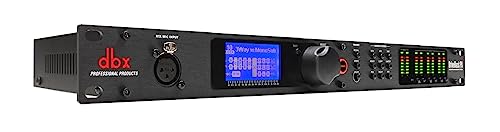
- Guided Setup Wizard and AutoEQ
- Feedback suppression and limiting
- Control from mobile and desktop platforms
Best For: Beginners tuning full-range or multi-way PA systems
Best Budget-Style Controls
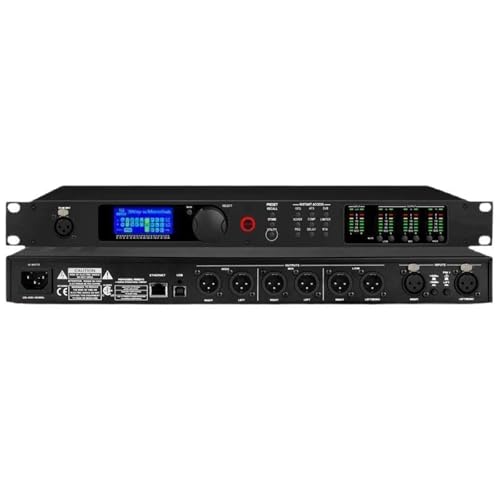
- LCD and dedicated parameter buttons
- Graphic and 8-band parametric EQ
- Crossover, delay, and noise-gate tools
Best For: Beginners wanting visible controls for DJ and performance setups
Best Bluetooth Option

- Eight inputs and eight outputs
- Bluetooth-equipped DSP model
- Freestanding design
Best For: Buyers needing high channel count with Bluetooth
Best Multi-Zone Choice

- Four inputs and eight outputs
- Intuitive no-training software
- Remote access from anywhere
Best For: Multi-zone systems managed through centralized software
Commercial Control

- 6 inputs and 4 balanced outputs
- Switchable mic/line and RCA connectivity
- Compact rack-style installation chassis
Best For: Commercial audio systems needing flexible source and zone connections
Accessible Digital Tuning
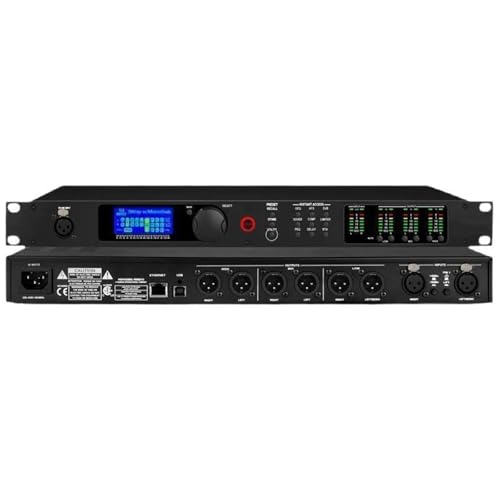
- 2 inputs and 6 outputs
- LCD screen with dedicated control buttons
- EQ, crossover, delay, and anti-howling tools
Best For: DJ, home entertainment, and small event systems
App-Based OEM Integration

- 2 or 4 inputs with 8 outputs
- 31-band parametric EQ and adjustable crossovers
- High-level inputs plus Android and Apple app tuning
Best For: Automotive audio upgrades using OEM systems
Karaoke Control Pick

- Independent microphone and music controls
- Bluetooth 5.3 plus optical, RCA, USB, and XLR connectivity
- Built-in feedback suppression and PC tuning software
Best For: Beginner karaoke and small performance systems
System-Tuning Pick

- 2 inputs and 6 outputs for flexible routing
- EQ, crossover, limiting, delay, and feedback suppression
- Rack-mount design for PA and installation systems
Best For: Beginner PA operators learning full speaker management
Simple Karaoke Pick

- Automatic feedback suppression for karaoke vocals
- Three microphone channels with 6.35 mm connections
- 5.1-channel output with separate subwoofer connection
Best For: Home karaoke users wanting simple vocal and bass control
Best Overall – dbx DriveRack PA2
The dbx DriveRack PA2 is a strong choice for beginners seeking a speaker management processor with guided setup. Its Setup Wizard, AutoEQ, feedback suppression, and mobile control simplify common system-tuning tasks for compatible PA configurations.
Best For: Beginners building full-range, two-way, or three-way speaker systems who want guided setup and broad control options.
Pros:
- Setup Wizard and streamlined AutoEQ support easier configuration.
- AFS feedback suppression and dbx limiting help manage live-system issues.
- Supports full-range, 2-way, and 3-way crossover setups.
- Can be controlled from Android, iOS, Mac, and Windows devices.
Cons:
- Its many EQ, crossover, delay, and alignment controls may take time to learn.
- Maximum sample rate is 48 kHz.
For users who value guided operation without giving up detailed speaker tuning, the PA2 offers one of the most approachable feature sets in this group.
Best Budget-Style Controls – 2×6 Audio Processor
This 2-input, 6-output audio processor suits beginners who prefer visible, hands-on controls. Its LCD screen, dedicated buttons, PC setup, equalization, crossover, delay, and noise-gate functions cover essential speaker-management tasks for DJ, studio, and performance use.
Best For: Users who want front-panel status information and PC-adjustable processing for entertainment or live-performance systems.
Pros:
- LCD displays presets, channels, and related parameters.
- Provides graphic and 8-band parametric equalization.
- Includes speaker crossover, limiting, time adjustment, and delay functions.
- Noise gate can help address noise and hissing.
Cons:
- The supplied notes do not specify supported operating systems or software platforms.
- Its 2-input, 6-output layout may not suit larger or more complex systems.
The display and physical controls make this a practical starting point for buyers who want core processing features without relying entirely on a mobile interface.
Best Bluetooth Option – DS18 DSP8.8BT
DS18 DSP8.8BT 8-Channel in and 8-Channel Out Digital Sound Processor with Bluetooth (Renewed)
Check Price On AmazonThe renewed DS18 DSP8.8BT is a compact-looking option for shoppers considering beginner-friendly speaker management processors with Bluetooth connectivity. It provides eight channels in and eight out, while its renewed status and limited warranty are important factors to weigh.
Best For: Buyers who need an 8-in/8-out processor and specifically want Bluetooth in a freestanding unit.
Pros:
- Offers eight input and eight output channels.
- Includes Bluetooth connectivity in the DSP8.8BT model.
- Freestanding mounting can simplify placement.
Cons:
- This is a renewed product.
- It carries a 90-day limited warranty.
- The supplied notes do not list EQ, crossover, delay, or control-software features.
Its channel count and Bluetooth capability are appealing, but buyers who need clearly documented beginner-oriented setup tools should confirm the included controls and software before purchasing.
Best Multi-Zone Choice – AquaControl AQM408
The AQM408 is designed for multi-zone speaker processing and may appeal to beginners who want a centralized matrix processor. Its AquaControl software is described as intuitive and requiring no training, while remote access supports management from anywhere.
Best For: Multi-zone installations where remote access and software-led control are priorities.
Pros:
- Provides four inputs and eight outputs for matrix-style routing.
- AquaControl software is described as intuitive and requiring no training.
- Supports remote access from anywhere in the world.
Cons:
- The supplied notes do not detail EQ, crossover, delay, or limiting functions.
- At 8.55 pounds and 1.75 inches high, it is a substantial rack-style unit.
- The notes do not specify supported operating systems or connection methods.
The AQM408 stands out for easy software access and multi-zone flexibility, though shoppers wanting detailed, documented tuning tools may need to verify the feature set before deciding.
Commercial Control – dbx ZonePRO 640
The dbx ZonePRO 640 is a practical choice among beginner-friendly speaker management processors for commercial audio installations that need straightforward zone routing and dependable connectivity. It provides six inputs and four balanced outputs in a compact rack-style chassis.
Best For: Commercial audio systems requiring multiple source inputs and balanced Euroblock outputs.
Pros:
- Six total inputs, including switchable mic/line and RCA sources
- Four balanced Euroblock outputs for installation-oriented systems
- Compact 19-inch-wide, 1.75-inch-high enclosure
Cons:
- Provides fewer outputs than the other processors in this roundup
- RCA inputs support a lower maximum level than the Euroblock connections
The ZonePRO 640 emphasizes commercial installation flexibility rather than a long list of published tuning features. Its input mix and balanced outputs make it a sensible fit when system connectivity is the primary concern.
Accessible Digital Tuning – 2-In/6-Out Audio Processor
This 2-in/6-out digital processor is designed for users seeking beginner-friendly speaker management processors with visible front-panel controls. Its LCD screen, dedicated buttons, and computer-software support make setup and adjustment more approachable for DJ, studio, entertainment, and conference applications.
Best For: DJs, home entertainment users, and small performance or conference systems wanting guided control over speaker processing.
Pros:
- Six outputs support speaker crossover and multi-output system setups
- LCD screen displays presets, channels, and related parameters
- Includes graphic and 8-band parametric equalization, delay, and limiting functions
Cons:
- Only two inputs are provided
- The supplied notes do not specify detailed input/output connector types
With an LCD interface and computer adjustment, this model offers a hands-on way to explore crossover, equalization, delay, and anti-howling functions. It is particularly appealing when visual feedback matters during setup.
App-Based OEM Integration – Hifonics HSP-4.8DSP
Hifonics HSP-4.8DSP 2 or 4 Input / 8 Output Digital Signal Processor with 31 Band Parametric EQ
Check Price On AmazonThe Hifonics HSP-4.8DSP suits shoppers comparing beginner-friendly speaker management processors for automotive audio. It combines flexible high-level and RCA inputs with eight outputs, app-based tuning, adjustable crossovers, delay alignment, and a 31-band parametric EQ.
Best For: Automotive upgrades that need high-level OEM integration, detailed equalization, and mobile tuning.
Pros:
- Supports two or four inputs and provides eight outputs
- High-level inputs can connect to OEM systems without RCA outputs
- Android and Apple apps support tuning, with Bluetooth reception enhanced by an external antenna
Cons:
- Its automotive voltage range and connection options may not suit commercial PA installations
- Mobile app tuning may require more setup familiarity than front-panel controls
The HSP-4.8DSP stands out for automotive compatibility and mobile control. Its high-level inputs, extensive EQ, and eight-output architecture provide room for system expansion, while the compact enclosure supports discreet mounting.
Karaoke Control Pick – QST K-1 Digital Preamp
The QST K-1 is a practical choice for beginners seeking a speaker management processor for karaoke, church, stage, or home use. It combines independent microphone and music controls with Bluetooth 5.3, optical input, feedback suppression, and multiple output options.
Best For: Beginner karaoke and small performance setups that need microphone control, wireless playback, and basic speaker management.
Pros:
- Independent microphone and music control simplifies karaoke setup.
- Built-in feedback suppression helps reduce microphone howling.
- Offers Bluetooth 5.3, optical, RCA, USB, XLR, and multi-band parametric EQ features.
- Includes remote control and USB PC software for more advanced configuration.
Cons:
- Designed for 120V power only.
- The unit is relatively deep at 19 inches, so rack or shelf space is needed.
- Advanced tuning may require using the included computer software.
With its karaoke-focused controls and accessible connectivity, the K-1 is a strong beginner-friendly option for users who want more control than a basic mixer provides. Its rack-style design and software support also leave room for more detailed system tuning.
System-Tuning Pick – DriveRack PA2 Audio Processor
LXJZXQXA 1PCS DriveRack PA2 Professional Audio Digital Audio Processor, 2‑Input 6‑Output
Check Price On AmazonThe DriveRack PA2 is aimed at beginners who want a structured speaker management processor for PA optimization. Its 2-input, 6-output layout provides room for crossover management, EQ, limiting, feedback suppression, and alignment delay in live sound or installation systems.
Best For: New PA operators building a flexible wired system around amplifiers, subwoofers, mixing consoles, or studio monitors.
Pros:
- 2-input, 6-output configuration supports flexible signal routing.
- Combines EQ, crossover, limiting, feedback suppression, and alignment delay tools.
- Provides 31-band graphic EQ, parametric EQ, and digital audio processing.
- Rack-mount metal-and-steel chassis suits permanent or touring setups.
Cons:
- Uses wired XLR connectivity rather than wireless playback features.
- Its broad professional feature set may take time for first-time users to learn.
- It is not waterproof or water resistant.
The PA2 makes the most sense when system control matters more than built-in music playback. Its six outputs and dedicated speaker-management tools give beginners a clear platform for learning crossover, EQ, and protection settings as their PA grows.
Simple Karaoke Pick – X5 Digital Audio Processor
The X5 is a beginner-friendly speaker management processor for karaoke users who want straightforward controls and dedicated microphone handling. It provides adjustable music and microphone equalization, automatic feedback suppression, three microphone channels, and a 5.1-channel output interface with a separate subwoofer connection.
Best For: Home karaoke setups and users who want accessible vocal effects, multiple microphone inputs, and direct subwoofer connectivity.
Pros:
- Independent adjustable effects are designed for easy operation.
- Automatic feedback suppression helps prevent howling.
- Three microphone channels use 6.35 mm hybrid connections.
- Includes 7-band music EQ, 15-band microphone EQ, and a separate subwoofer output.
Cons:
- The supplied notes do not specify wireless, optical, or USB connectivity.
- Microphone level adjustment uses a flat screwdriver rather than a clearly described digital control.
- Only limited physical specifications are supplied, making installation planning less certain.
The X5 is a focused choice for karaoke rather than a general-purpose live-sound processor. Its dedicated microphone channels, automatic feedback control, and separate subwoofer output make it approachable for users prioritizing vocals and simple room playback.
How We Picked These Beginner-Friendly Speaker Management Processors
We focused on processors that combine practical signal-management features with approachable controls. The selection includes dedicated loudspeaker management systems, multi-output DSP units, zone processors, karaoke-oriented models, and car-audio-style signal processors. We considered input and output flexibility, crossover capability, equalization, delay, feedback control, display or software access, connectivity, and suitability for first-time users.
Because “beginner-friendly” depends on the system, we also looked for products that can serve different use cases. A DJ may prioritize fast setup and speaker protection, while a venue installer may need zone routing and remote configuration.
Quick Comparison
| Best For | What to Look For |
|---|---|
| Small PA systems | Simple 2-in/6-out routing, presets, crossover tools, and limiter controls |
| Multi-zone installations | Independent outputs, matrix routing, and reliable configuration software |
| DJ and live sound | Fast access to EQ, feedback control, delay, and speaker protection |
| Karaoke and vocal systems | Microphone processing, anti-feedback features, Bluetooth, or optical inputs |
| Car-audio applications | Compact DSP routing, multiple outputs, and detailed parametric EQ |
Key Buying Factors
Input and Output Count
Check how many sources and speaker channels your system requires now, then allow room for expansion. A 2-in/6-out processor is often enough for a stereo source feeding subwoofers and multiple top-speaker channels. Larger systems may benefit from 8-output designs or matrix routing.
Crossover and Speaker Protection
Look for adjustable high-pass and low-pass filters, selectable crossover slopes, polarity controls, limiters, and delay. These features help blend subwoofers and full-range speakers while reducing the risk of overdriving drivers.
Control Method
LCD screens can make basic adjustments possible from the rack, while PC software is generally better for detailed configuration. Bluetooth may be convenient, but confirm whether it supports full editing or only playback and limited control.
Equalization and Feedback Control
Parametric EQ offers precise correction, whereas graphic EQ can be easier for quick changes. For microphones and karaoke, dedicated anti-feedback processing can be more useful than extensive speaker-tuning features.
Presets and Usability
Beginners should favor clear menus, sensible presets, and a bypass or lock function. Save a working configuration before experimenting, and label outputs so future adjustments are less error-prone.
Who Should Buy Which Beginner-Friendly Speaker Management Processors?
Choose a DriveRack-style loudspeaker management system if you want an organized solution for a conventional PA with speaker protection and guided setup. A multi-output DSP with PC configuration is a better fit when you need detailed routing, several amplifier channels, or custom tuning.
Zone processors are suited to fixed installations with different volume or source requirements in separate areas. Karaoke-focused processors make more sense when microphone effects and feedback suppression are central to the system. Car-audio DSP models can be attractive for compact installations requiring extensive EQ, but verify connector types, power requirements, and application compatibility before buying.
For most first-time users, prioritize straightforward routing, adequate outputs, accessible software, and reliable limiters over the highest possible feature count. The best processor is the one you can configure confidently and operate safely during a real event.
