The best digital mixing consoles for home studios make it easier to record microphones, instruments, streaming audio, and playback sources from one compact workspace. The right model can simplify monitoring while giving you useful control over levels, effects, and routing.
Our selection covers compact four- and six-channel mixers, larger consoles for multi-microphone setups, and USB-equipped options designed for recording, podcasting, DJ work, and home music production.
Best 10 Digital Mixing Consoles for Home Studios Picks for 2026
Reliable Analog Control

- 10 inputs with USB connectivity
- SPX effects and one-knob compression
- Rugged metal chassis
Best For: Hands-on home recording and small studio setups
Connected Digital Workflow
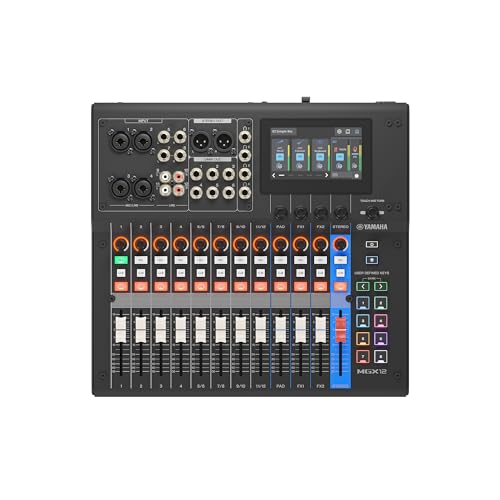
- 18 channels with dual USB-C
- Touchscreen, DSP, and scene recall
- Bluetooth and microSD connectivity
Best For: Feature-rich home studios and content production
Computer-Free Recording

- Eight-channel digital mixer
- Direct USB flash-drive recording
- Four-band EQ and 16 effects
Best For: Podcasts, livestreams, and compact home studios
Compact High-Resolution Hub

- Four channels with combo inputs
- USB-C, Bluetooth, and loopback
- 24-bit/192 kHz interface with effects
Best For: Small home studios, podcasts, and live streaming
Compact Streaming Pick

- Six-channel mixer with Bluetooth and USB recording
- XLR inputs with +48V phantom power
- Slim design for podcasts, streaming, and karaoke
Best For: Compact home-studio and streaming setups
Flexible Mid-Size Workhorse
Pyle PMXU128BT 12-Channel Mixer

- Twelve channels with eight XLR/combo inputs
- USB recording interface and Bluetooth streaming
- 16 DSP effects with 7-band EQ and LED metering
Best For: Expanding home studios and multi-source recording
Maximum Input Capacity

- Sixteen channels with XLR and 1/4-inch inputs
- USB, Bluetooth, and flash-drive recording support
- Per-channel EQ, effects, monitoring, and faders
Best For: Large home-studio rigs, bands, and live production
Expanded Studio Console
FULUODE CT-120S 12-Channel Mixer

- 12 channels for microphones and instruments
- USB recording, Bluetooth 5.0, and MP3 playback
- 48V phantom power, reverb, and LED display
Best For: Multi-input home studios, karaoke, and small live setups
Mid-Size Performance Mixer
FULUODE CT-80S 8-Channel Console

- Eight channels for home studio and live applications
- USB recording, Bluetooth, MP3 playback, and reverb
- 48V phantom power with a slim 1.77-inch design
Best For: Home recording, karaoke, rehearsals, and small performances
Reliable Analog Control – Yamaha MG10XU
For home studios that want straightforward hands-on control, the Yamaha MG10XU is a practical choice among digital mixing consoles for home studios. Its 10 inputs, USB connectivity, SPX digital effects, D-PRE preamps, three-band EQ, high-pass filters, and one-knob compressors cover common recording and rehearsal needs in a compact chassis.
Best For: Home recordists, singer-songwriters, small ensembles, and users who prefer physical mixer controls with built-in effects.
Pros:
- USB connectivity and SPX digital effects support computer-based recording and processing.
- D-PRE preamps, three-band EQ, and high-pass filters provide useful tone-shaping control.
- One-knob compressors simplify control of vocals, guitars, bass, and drums.
- Rugged powder-coated metal chassis is suited to regular handling.
Cons:
- It has 10 channels, offering less capacity than the larger consoles in this roundup.
- The unit uses corded power and weighs 7.7 pounds.
- Its listed frequency is 48 kHz.
The MG10XU is a sensible fit when dependable physical controls and familiar Yamaha processing matter more than touchscreen operation or extensive digital automation.
Connected Digital Workflow – Yamaha MGX12
The Yamaha MGX12 is a feature-rich option for digital mixing consoles for home studios, combining 18 channels with dual USB-C audio interfacing, Bluetooth input, a microSD card slot, and a 4.3-inch touchscreen. Its DSP, latency-free monitoring, scene recall, and included Steinberg software make it especially versatile for modern computer-based workflows.
Best For: Home studios, content creators, and musicians who need broad connectivity, digital control, and integrated recording software.
Pros:
- 18 channels provide substantial input capacity for complex home setups.
- Dual USB-C interfaces, Bluetooth, and microSD expand recording and playback options.
- Built-in DSP supports professional sound processing and latency-free monitoring.
- Touchscreen, Auto Gain, Clip Safe, and Scene Recall simplify operation.
Cons:
- At 14.7 pounds, it is less portable than the smaller mixers listed here.
- Its larger feature set may be more than a basic recording setup requires.
- The supplied notes specify a one-year warranty but do not identify update support.
The MGX12 stands out for users who want a more centralized digital production hub, particularly when multiple inputs and streamlined scene-based control are priorities.
Computer-Free Recording – XTUGA DM80
The XTUGA DM80 targets creators who want accessible digital mixing consoles for home studios, podcasting, livestreaming, and rehearsal recording. It offers eight channels, 24-bit/48 kHz computer recording, direct USB recording, a color display, 45 mm faders, four-band EQ, a noise gate, and 16 built-in effects.
Best For: Podcasters, streamers, voiceover users, and home musicians who value direct USB recording and practical monitoring controls.
Pros:
- Records directly to a USB flash drive without requiring a computer.
- Four-band EQ with sweepable mids supports detailed source shaping.
- Built-in noise gate, mute controls, and LED meters assist live operation.
- Sixteen adjustable effects provide reverb and delay options for vocals and instruments.
Cons:
- Eight channels provide less input capacity than the Yamaha MGX12.
- Computer recording is specified at 24-bit/48 kHz rather than higher listed rates.
- The supplied notes list no warranty.
The DM80 is a practical creator-focused mixer when quick USB recording, visible metering, and built-in effects are more important than a larger channel count.
Compact High-Resolution Hub – Zenolix RM04
For smaller setups, the Zenolix RM04 is a compact entry among digital mixing consoles for home studios. This four-channel mixer combines two XLR/6.35 mm combo inputs, Bluetooth, USB-C connectivity, onboard recording, loopback, 48 V phantom power, and a stated 24-bit/192 kHz USB interface.
Best For: Singer-songwriters, podcasters, streamers, DJs, and home users who need a small mixer with flexible input and monitoring options.
Pros:
- Two combo inputs include 48 V phantom power, with HI-Z on channel 1.
- USB-C, Bluetooth, USB playback, and onboard recording support varied workflows.
- High/mid/low EQ, pan, FX send, and 99 reverb effects offer extensive tone control.
- Loopback and dual headphone outputs suit streaming and monitoring tasks.
Cons:
- Four channels limit expansion for larger ensembles or multi-microphone sessions.
- At 3.08 kg, it is heavier than some similarly compact desktop mixers may be.
- Warranty support is listed as seller contact rather than a stated manufacturer warranty.
The RM04 makes sense when desk space and connectivity flexibility are key, provided four channels meet the demands of the intended recording or streaming setup.
Compact Streaming Pick – XTUGA CT60 Digital Mixer
The XTUGA CT60 is a practical choice among digital mixing consoles for home studios when you need a compact board for recording, podcasting, streaming, or casual DJ work. It combines Bluetooth playback, USB recording, MP3 support, six channels, and +48V phantom power in a slim design.
Best For: Home creators who want a small mixer for podcasts, streams, karaoke, and basic studio recording.
Pros:
- Bluetooth, USB, MP3, WAV, and WMA playback and recording support
- Balanced XLR inputs, insert points, and +48V phantom power
- Slim chassis with sealed rotary knobs for dust resistance
- Works with phones, tablets, computers, and MP3 players
Cons:
- Six channels provide less expansion room than the larger mixers here
- Supplied dimensions appear inconsistent, so verify the physical size before buying
The CT60 makes the most sense when portability and straightforward connectivity matter more than a high channel count. Its built-in playback and USB interface cover many home-studio workflows without requiring extra equipment.
Flexible Mid-Size Workhorse – Pyle PMXU128BT 12-Channel Mixer
The Pyle PMXU128BT gives home studios more input capacity and routing flexibility than a compact mixer. As one of the digital mixing consoles for home studios with 12 channels, it offers USB computer connectivity, Bluetooth streaming, multiple input types, 16 DSP effects, and a 7-band EQ.
Best For: Home musicians, podcasters, and small production setups that need several microphones or sound sources connected at once.
Pros:
- Twelve-channel layout with eight XLR/combo inputs
- USB soundcard and audio interface for Mac or PC recording
- Bluetooth input for phones, tablets, and MP3 players
- Includes 16 DSP effects, a 7-band EQ, and LED level metering
Cons:
- Larger and heavier than the compact six-channel option
- Its broad control set may take longer for beginners to learn
Choose the PMXU128BT if your home setup is growing or you regularly combine microphones, instruments, playback devices, and effects. Its extensive I/O and monitoring features make it a versatile centerpiece for recording and live-oriented projects.
Maximum Input Capacity – 16-Channel USB Audio Mixer
This 16-channel console is aimed at home studios and small live setups that need substantial input capacity. It combines XLR and 1/4-inch connections, USB recording and playback, Bluetooth, per-channel controls, 3-band EQ, and reverb and delay effects.
Best For: Larger home-studio rigs, small bands, live streams, podcasts, and events with many connected sources.
Pros:
- Sixteen channels support multiple microphones and instruments
- USB, Bluetooth, computer, flash-drive, and phone connectivity
- Per-channel gain, FX, PFL, EQ, fader, and peak controls
- Includes headphone monitoring plus reverb and delay effects
Cons:
- Its 16-channel format may be excessive for a simple desktop setup
- The supplied notes do not identify a specific model name or listed frequency specifications
For buyers comparing digital mixing consoles for home studios, this model stands out for channel count and hands-on control. It is best suited to users who expect to connect several sources now rather than upgrading from a smaller board later.
Compact USB Mixer – BOMGE BM-05 5-Channel Digital Mixer
For shoppers comparing digital mixing consoles for home studios, the BOMGE BM-05 is a compact option with five channels, USB-B recording, Bluetooth playback, and 48V phantom power. Its headphone monitoring, basic EQ, and echo or delay effects suit small recording, streaming, and podcasting setups.
Best For: Home users who need a small mixer for microphones, instruments, computer audio, recording, or live streaming.
Pros:
- Three XLR inputs with switchable 48V phantom power for condenser microphones.
- USB-B connection supports computer, phone, or tablet mixing and recording.
- Includes headphone monitoring, Bluetooth playback, USB-A MP3 playback, and echo or delay effects.
- Compact 1.8-by-5.9-by-7.4-inch design with RCA and 6.35mm outputs.
Cons:
- Bluetooth, USB, and channel 4/5 functions cannot be used simultaneously.
- Phone connection requires a USB OTG adapter for data transfer.
- Bluetooth operates within a stated 1.5-foot range.
The BM-05 offers a useful feature mix in a small footprint, but its simultaneous-use limitations are worth considering before building a more involved home studio signal chain.
Expanded Studio Console – FULUODE CT-120S 12-Channel Mixer
The FULUODE CT-120S is a larger choice among digital mixing consoles for home studios, with 12 channels, USB recording, Bluetooth 5.0, MP3 playback, reverb, and 48V phantom power. Its broad input count is suited to setups that connect several microphones or instruments at once.
Best For: Home studios, karaoke rooms, small bands, conferences, and live setups needing more input capacity.
Pros:
- Provides 12 input channels for multi-source mixing.
- Includes 48V phantom power for compatible condenser microphones.
- Supports USB recording, MP3 playback, Bluetooth 5.0, and reverb.
- Features a large LED display and a slim 1.57-inch body.
Cons:
- At 20.08 inches wide and 4.3 kg, it requires more desk space than a compact mixer.
- The supplied specifications list a 35-day warranty.
- It is specified for 110V power with an American plug.
Choose the CT-120S when channel count matters more than portability. Its USB, wireless, and effects features add flexibility, while the larger chassis makes it better suited to a dedicated workspace.
Mid-Size Performance Mixer – FULUODE CT-80S 8-Channel Console
For buyers seeking digital mixing consoles for home studios without moving up to a 12-channel board, the FULUODE CT-80S provides eight channels, USB recording, Bluetooth, MP3 playback, reverb, and 48V phantom power. It is designed for studio, karaoke, band, and live-music applications.
Best For: Users who need more inputs than a mini mixer for home recording, karaoke, rehearsals, or small performances.
Pros:
- Eight-channel layout offers room for multiple microphones or instruments.
- Includes 48V phantom power, reverb, USB recording, and MP3 playback.
- Built-in Bluetooth 5.0 supports wireless audio playback.
- Ultra-thin 1.77-inch design with a large LED display.
Cons:
- Its 15.75-inch width and 3.3 kg weight make it less portable than a mini mixer.
- The supplied details specify 110V power with an American plug.
- The listed output connector specification is USB, so buyers should confirm their desired hardware connections.
The CT-80S strikes a middle ground between compact mixers and larger consoles. It is a practical fit when eight inputs and built-in playback features are more useful than the smallest possible footprint.
How We Picked the Best Digital Mixing Consoles for Home Studios
We focused on the features that matter most in a home recording environment: usable input counts, microphone compatibility, phantom power, USB connectivity, multitrack or stereo recording support, onboard effects, monitoring controls, and overall setup flexibility. We also considered whether each console suits a specific use case, such as vocal recording, live streaming, podcasting, rehearsal capture, or small-session production.
Because specifications and included software can vary by seller or revision, confirm the current listing before buying—particularly the number of simultaneous USB channels, bundled programs, and exact input configuration.
Quick Comparison
| Best For | Look For | Recommended Size |
|---|---|---|
| Solo recording and streaming | USB audio, one or two mic inputs, headphone monitoring | 4–6 channels |
| Small bands and podcasts | Multiple XLR inputs, phantom power, aux or monitor outputs | 8–12 channels |
| Multitrack home production | Multichannel USB interface and compatible recording software | 8+ channels |
| DJ and playback-focused setups | Bluetooth, media playback, effects, and stereo inputs | 4–12 channels |
Key Buying Factors for Digital Mixing Consoles for Home Studios
Input Count and Connection Types
Count your microphones, instruments, keyboards, and playback devices before choosing a mixer. XLR/combo inputs are more versatile than line-only channels, while stereo inputs are useful for keyboards, phones, and music players. Leave spare channels for future expansion.
USB Recording and Computer Integration
USB can mean simple stereo recording or genuine multitrack computer integration. If you want to edit each microphone separately in a DAW, verify that the console sends individual channels rather than only a stereo mix. Check operating-system compatibility and whether drivers or bundled software are included.
Phantom Power, Effects, and Monitoring
+48V phantom power is important for many condenser microphones, but it may be global rather than individually switchable. Reverb, echo, and other effects are useful for streaming and vocals, while headphone volume, monitor outputs, and low-latency monitoring help prevent distracting delays during recording.
Size, Noise, and Workflow
A compact mixer saves desk space, but a larger control surface may be easier to operate during a session. Look for clear metering, accessible mute and level controls, and a layout that matches how you work. For quiet home studios, review user feedback for reports of hum, fan noise, or USB stability.
Who Should Buy Which Digital Mixing Consoles for Home Studios?
Choose a four- or six-channel model if you mainly record one or two performers, stream, or need a flexible desktop mixer. Move to an eight- or 12-channel console for multiple microphones, small ensembles, podcasts with several guests, or a more permanent studio setup. A 16-channel option makes the most sense when you need substantial routing capacity and expect your equipment list to grow.
Prioritize multichannel USB when separate track editing is central to your workflow. If you primarily need convenient playback, live mixing, or streaming, Bluetooth and onboard effects may be more valuable than advanced DAW routing. In every case, match the console’s inputs and recording architecture to your actual setup rather than buying channels you will not use.
