Choosing the right encoder can simplify a 4K live-production setup, whether you are sending camera feeds over NDI, streaming directly to a platform, or routing video through SDI and HDMI.
We compared nine hardware options across connectivity, codec support, resolution, portability, and workflow flexibility to help you match the encoder to your production requirements.
Best 9 Hardware Streaming Encoders for 4K Workflows Picks for 2026
Best Broadcast-Ready Encoder
Blackmagic Streaming Encoder 4K
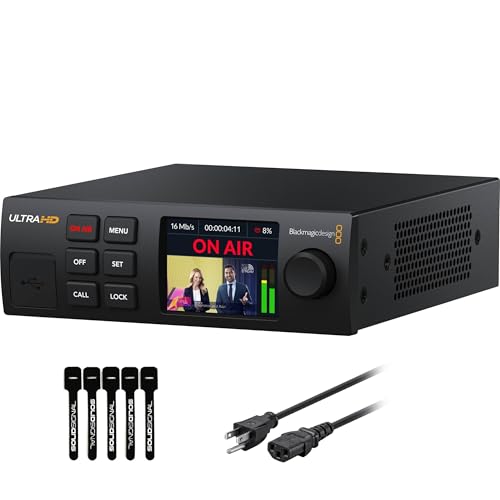
- 2160p60 H.264/H.265 streaming
- 12G-SDI with standards conversion
- Ethernet and mobile auto-failover
Best For: SDI-based broadcast and live-event productions
Best Compact NDI Encoder
ZowieBox 4K HDMI NDI Encoder/Decoder

- 4K HDMI passthrough
- NDI|HX3/HX2/HX support
- SRT, RTMP(S), and RTSP streaming
Best For: Portable gaming, PTZ, and HDMI-to-IP setups
Best for Secure Remote Production
Teradek Serv 4K HDR Streaming Solution

- 4Kp60 HDR and 10-bit 4:2:2
- HEVC/AVC with 256-bit encryption
- Local and cloud multi-viewer streaming
Best For: Professional sets and remote production collaboration
Integrated NDI Bundle

- Native NDI HX3 capture and decode
- HDMI, RTSP, RTMP, and SRT output options
- PoE-powered, plug-and-play IP workflow
Best For: NDI-based live production and mobile AV setups
Portable Production Switcher
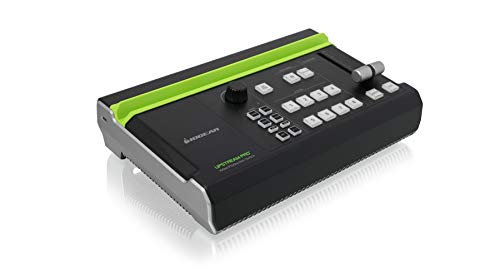
- Three HDMI inputs with one 4K input
- Direct H.264 recording to USB
- No-PC streaming with audio inputs
Best For: Mobile multi-camera productions and live events
Compact 4K IP Encoder

- 2160p30 HDMI encoding with H.265 and H.264
- HDMI and UVC input switching
- USB-C powered at a listed 4W
Best For: Flexible, low-power 4K IP streaming installations
Camera-to-NDI Starter Kit

- 4K NDI HX3 camera and decoder bundle
- CS mount for flexible lens choices
- RTMP, RTSP, and SRT with HDMI output
Best For: Compact POV capture and IP video setups
Hybrid Signal Hub
HDMI + SDI NDI ZowieBox Bundle

- Handles HDMI and 3G SDI sources
- Converts signals to and from NDI
- Supports SRT, RTMP, RTMPS, and RTSP
Best For: Mixed HDMI, SDI, and NDI production systems
Portable 4K60 Production Encoder

- 4K60 HDMI encoding, decoding, and loop-out
- NDI HX3/HX2 with low 2–3 frame latency
- Standalone RTMP, RTMPS, SRT, and RTSP streaming
Best For: Portable 4K60 production and PTZ-enabled workflows
Best Broadcast-Ready Encoder – Blackmagic Streaming Encoder 4K
For hardware streaming encoders for 4K workflows, the Blackmagic Design Streaming Encoder 4K is a strong fit when you need direct SDI connectivity, standards conversion, and dependable network flexibility without a dedicated encoding PC. It supports H.264 and H.265 streaming up to 2160p60 through SRT or RTMP.
Best For: Broadcast, live-event, and production teams using SDI sources that need 4K streaming, monitoring, automation, and connection failover.
Pros:
- Encodes H.264 or H.265 up to Ultra HD 2160p60 through SRT or RTMP.
- 12G-SDI input, loop output, and Teranex standards conversion support flexible source and target formats.
- Gigabit Ethernet and USB-C smartphone tethering provide automatic connection failover.
- Includes SDI and HDMI monitoring, webcam outputs, captions, timecode, REST API control, and camera-production features.
Cons:
- Its SDI-focused feature set may be more than simple HDMI or basic streaming setups require.
- Remote camera control, tally, and talkback depend on compatible Blackmagic equipment.
This is the most feature-rich option here for a structured broadcast workflow. Its standards conversion and failover features are especially useful when keeping a live 4K production on air matters more than minimizing equipment complexity.
Best Compact NDI Encoder – ZowieBox 4K HDMI NDI Encoder/Decoder
The ZowieBox is a compact choice among hardware streaming encoders for 4K workflows, combining HDMI passthrough, NDI conversion, and standalone streaming in a small aluminum enclosure. It can encode or decode video for flexible IP and HDMI setups, with support for SRT, RTMP(S), and RTSP.
Best For: Gamers, mobile crews, PTZ-camera operators, and small production teams that need a portable HDMI-to-IP device with NDI support.
Pros:
- Captures up to 4K with zero-lag HDMI passthrough for console and live-source workflows.
- Supports NDI|HX3, NDI|HX2, and NDI|HX conversion alongside SRT, RTMP(S), and RTSP.
- Can operate as an encoder or decoder, including up to 4K@30fps and 1080p@60fps decoding.
- Offers web control, PoE, USB-C power, a tripod mount, tally, and PTZ-related configuration options.
Cons:
- Encoder and decoder modes cannot run simultaneously.
- Full NDI signals are not supported.
- USB capture-card functionality is not currently supported.
Choose the ZowieBox when portability and network-video flexibility are priorities. It is particularly appealing for gaming and compact HDMI installations, but its mode limitations should be checked against a more demanding NDI workflow.
Best for Secure Remote Production – Teradek Serv 4K HDR Streaming Solution
The Teradek Serv 4K is designed for high-quality collaborative production rather than basic platform streaming. For hardware streaming encoders for 4K workflows, it stands out with 4K HDR, 10-bit 4:2:2 color, HEVC and AVC compression, encrypted delivery, and local or cloud viewing.
Best For: Camera crews, video villages, and distributed production teams that need color-accurate 4K monitoring and secure remote collaboration.
Pros:
- Streams up to 4Kp60 HDR with 10-bit 4:2:2 color for detailed, color-accurate monitoring.
- Supports both HEVC and AVC compression with 256-bit encryption.
- Delivers to up to four local devices without internet and to unlimited remote viewers through Teradek TV or a browser.
- Includes voice chat, messaging, user management, and integrations including Frame.io.
Cons:
- The listed supported internet service is Teradek, so it is less directly oriented toward broad consumer-platform streaming.
- Its camera-mounted production design and collaboration features may be unnecessary for simple one-person broadcasts.
The Serv 4K is the specialized pick for production monitoring and remote review. Its combination of 4K HDR quality, secure transmission, and built-in collaboration tools makes it well suited to professional sets and distributed teams.
Integrated NDI Bundle – ZowieBox + 4K NDI POV Camera
For hardware streaming encoders for 4K workflows, this Zowietek bundle combines a 4K NDI POV camera with an NDI encoder/decoder. It can transmit native NDI HX3 video, decode the camera feed to HDMI, and also support standalone network streaming protocols.
Best For: Professional live streaming, conferencing, education, esports, and mobile production setups needing an integrated camera-to-display IP workflow.
Pros:
- Native NDI HX3 capture and decoding in one bundle.
- Outputs decoded video over HDMI to displays, switchers, or capture cards.
- Supports RTSP, RTMP, and SRT for standalone streaming.
- PoE power and automatic stream detection simplify deployment.
Cons:
- The bundle is more specialized than a standalone HDMI encoder.
- The camera is not water resistant.
- Its listed capture format is MP4, which may limit recording-format flexibility.
This is a strong choice when an NDI-based 4K capture and monitoring chain matters more than a simple point-to-point streaming setup. Autofocus and multiple output paths add practical flexibility for production environments.
Portable Production Switcher – IOGEAR Upstream Pro
The IOGEAR Upstream Pro is a portable production switcher for hardware streaming encoders for 4K workflows where live switching, recording, and streaming need to happen without a PC. It combines three HDMI inputs with audio connections and direct USB recording.
Best For: Mobile productions and small live events that need multi-camera switching, audio mixing, recording, and direct streaming from one device.
Pros:
- Provides three HDMI inputs, including one 4K input.
- Supports direct H.264 recording to USB storage.
- Streams directly to YouTube, Facebook, Twitch, and other platforms.
- Includes microphone and RCA left/right audio inputs.
Cons:
- Only one HDMI input is specified for 4K, while two are specified for 1080p.
- Its 4K operation is listed at 30 frames per second.
- At 1.9 kg, it may be less convenient for highly portable setups than smaller encoders.
Choose this model if production control is as important as encoding. It is less focused on pure 4K distribution, but its switching, audio, recording, and no-PC streaming features can reduce the need for separate production hardware.
Compact 4K IP Encoder – DDMALL HEM-4K
The DDMALL HEM-4K is a compact option for hardware streaming encoders for 4K workflows, accepting up to 2160p at 30Hz and encoding over a broad selection of IP protocols. Its USB-C power and HDMI-to-UVC switching support flexible installation and streaming configurations.
Best For: Compact 4K streaming rigs needing SRT, HLS, RTMP/RTMPS, RTSP, or UVC connectivity with low power consumption.
Pros:
- Supports 2160p at 30Hz HDMI input and encoding output.
- Offers H.265 and H.264 encoding with SRT and HLS support.
- Can switch between HDMI and UVC video sources.
- Uses USB-C power and consumes a listed 4W.
Cons:
- 4K operation is specified at 30Hz rather than higher frame rates.
- Its many interfaces and protocols may require more setup than a basic streaming device.
- The manufacturer lists a one-year warranty.
This encoder stands out for installations where size, protocol choice, and remote control matter. SD card or NAS recording, DDNS access, and reserved interfaces also give it expansion potential beyond basic platform streaming.
Camera-to-NDI Starter Kit – 4K ZowieCAM + ZowieBox
Zowietek 4K HDMI NDI Video Encoder/Decoder, ZowieBox + Zowietek 4K NDI POV Box Camera (CS), ZowieCAM
Check Price On AmazonFor hardware streaming encoders for 4K workflows, this bundle combines a 4K NDI POV camera with a ZowieBox encoder/decoder. It creates a practical capture-to-display setup with NDI HX3, HDMI output, PoE support, and independent RTMP, RTSP, and SRT streaming.
Best For: Live events, teaching, meetings, esports, and mobile productions needing a flexible POV camera and local HDMI monitoring.
Pros:
- Combines 4K NDI HX3 capture and decoding in one package.
- CS-mount camera supports multiple lens options.
- Can stream independently while sending NDI to the ZowieBox for local HDMI output.
- PoE support and plug-and-play NDI discovery help simplify setup.
Cons:
- The bundle is less suitable if you already have a preferred camera.
- Its workflow centers on NDI HX3 rather than a broader range of NDI formats.
This is a strong choice when a complete camera-and-encoder package is more useful than a standalone converter. The CS mount and parallel streaming/output options add flexibility for compact IP video systems.
Hybrid Signal Hub – HDMI + SDI NDI ZowieBox Bundle
This bundle suits hardware streaming encoders for 4K workflows that mix HDMI and SDI sources. It supports conversion from both signal types to NDI, NDI playback to HDMI or SDI, and standalone streaming protocols for varied broadcast and professional AV systems.
Best For: Production teams integrating HDMI cameras, SDI equipment, NDI sources, and network streaming in one workflow.
Pros:
- Includes both a 4K HDMI NDI ZowieBox and a 3G SDI NDI ZowieBox.
- Converts HDMI and SDI signals to NDI.
- Supports NDI playback to HDMI and SDI outputs.
- Provides SRT, RTMP, RTMPS, and RTSP support with PoE.
Cons:
- The included SDI unit is specified as 3G SDI rather than 4K SDI.
- The bundle may provide more connectivity than a single-format setup requires.
Choose this package when interoperability is the priority. Its combined HDMI, SDI, NDI, pass-through, and loopout capabilities make it a versatile bridge for mixed production environments.
Portable 4K60 Production Encoder – ZowieBox Pro 4K60 HDMI NDI
For demanding hardware streaming encoders for 4K workflows, the ZowieBox Pro combines 4K60 HDMI encoding and decoding, zero-latency loop-out, NDI 6, and standalone network streaming. Its touchscreen, dual-stream encoding, and AI edge features make it suited to portable and professional production.
Best For: Mobile production, gaming, events, education, churches, and PTZ workflows that need 4K60 HDMI, NDI, and direct streaming without a PC.
Pros:
- Supports up to 4K60 HDMI input and output with zero-latency loop-out.
- Provides NDI|HX3/HX2 encoding and decoding with 2–3 frame latency.
- Streams independently using RTMP, RTMPS, SRT, or RTSP.
- Includes a touchscreen, tally light, dual-stream encoding, and AI PTZ tracking features.
Cons:
- It cannot encode and decode simultaneously.
- It does not support Full NDI or NDI|HB.
- Some AI tracking features depend on compatible PTZ cameras.
The ZowieBox Pro is the most feature-rich option here for users who need 4K60, low-latency monitoring, and PC-free streaming in a compact unit. Its NDI limitations should be checked against the rest of the production system before purchase.
How We Picked the Best Hardware Streaming Encoders for 4K Workflows
We focused on practical capabilities that affect real-world live production rather than headline resolution alone. The comparison considers input types, supported protocols, maximum frame rates, encoding formats, network options, monitoring and pass-through features, portability, and whether a computer is required. We also separated devices designed for straightforward RTMP streaming from more specialized NDI, SRT, HDR, SDI, and cloud-production tools.
Because these products serve different environments, the best choice depends on your cameras, network, destination platform, and required reliability. A compact HDMI encoder may suit a single-camera creator, while a professional production team may need SDI, redundant connectivity, 10-bit color, or local and cloud streaming options.
Quick Comparison
- Best for straightforward 4K streaming: Blackmagic Design Streaming Encoder 4K, with SDI and SRT/RTMP support.
- Best for NDI-focused systems: ZowieBox models, which convert HDMI or SDI sources into network video workflows.
- Best for premium HDR production: Teradek Serv 4K, with 4Kp60, 4:2:2 10-bit color, HEVC, and AVC support.
- Best for portable switching: IOGEAR Upstream Pro, which combines multiple HDMI inputs with built-in production controls.
- Best for a compact budget setup: DDMALL Compact 4K HDMI Encoder, provided its feature set matches your streaming platform.
Key Buying Factors for Hardware Streaming Encoders for 4K Workflows
Inputs and Signal Compatibility
Check whether your source uses HDMI, SDI, or both. HDMI is common for mirrorless cameras and consumer equipment, while SDI is more suitable for longer cable runs and professional cameras. Also verify resolution, frame-rate, and signal-format compatibility before buying.
Protocols, Codecs, and Destinations
RTMP and RTMPS are widely supported by streaming platforms. SRT is useful when the network is unreliable, and NDI is valuable for routing video across a local production network. H.264 offers broad compatibility; HEVC can deliver better efficiency but may require compatible receiving hardware or services.
4K Frame Rate, Color, and Latency
“4K” does not always mean 4K at 60 frames per second. Confirm the maximum frame rate you need, along with HDR, 10-bit, chroma subsampling, and latency requirements. Sports and fast-moving production benefit most from higher frame rates and responsive monitoring.
Network and Workflow Features
Wired Ethernet is generally preferable for stable 4K streaming. Mobile connectivity can add flexibility for field work, while loop-through, pass-through, UVC output, touch controls, and local recording can reduce the need for extra equipment.
Who Should Buy Which Hardware Streaming Encoders for 4K Workflows?
Choose a Blackmagic or compact HDMI model if you want a focused encoder for a conventional single-source broadcast. Choose a ZowieBox configuration if your studio relies on NDI, needs camera integration, or must bridge HDMI and SDI sources into an IP workflow. The Teradek Serv 4K is the stronger fit for professional crews handling HDR, high-quality color, and local or cloud delivery. If you need multiple HDMI inputs and basic switching in a portable package, consider the IOGEAR Upstream Pro. Finally, prioritize the ZowieBox Pro if built-in controls and advanced edge-production features are more important than keeping the setup minimal.
