When it comes to podcasting, selecting the right XLR microphone can make all the difference in sound quality. You want something that captures your voice clearly and minimizes unwanted noise. The market is filled with options, but not all microphones are created equal. In this guide, you’ll find the top picks that cater to various needs and budgets, ensuring you make an informed choice for your podcasting setup. Let’s explore these standout options.
RØDE NT1 5th Gen Large-Diaphragm Studio Condenser Microphone

If you’re looking for a high-quality microphone that seamlessly blends quality and versatility for podcasting, the RØDE NT1 5th Gen is an excellent choice. This large-diaphragm studio condenser microphone boasts both XLR and USB outputs, making it perfect for any setup. You’ll love its warm, silky sound, low self-noise, and impressive SPL handling. Plus, with RØDE’s ultra-low-noise Revolution Preamp, your recordings will achieve crystal-clear quality, thanks to high-resolution analog-to-digital conversion up to 192kHz. Built from high-grade aluminum, it’s durable enough to withstand rigorous sessions, ensuring you’ll have a reliable partner in your podcasting journey.
Best For: Podcasters, musicians, and content creators seeking a versatile and high-quality microphone for various recording applications.
Pros:
- Excellent sound quality with a warm, silky character and low self-noise.
- Versatile connectivity options with both XLR and USB outputs.
- Durable construction designed to withstand rigorous recording sessions.
Cons:
- May require additional equipment (like an audio interface) for optimal use with XLR output.
- Higher price point compared to entry-level microphones.
- USB functionality may not be necessary for all users, limiting its appeal for some.
RØDE NT1 Signature Series Large-Diaphragm Condenser Microphone
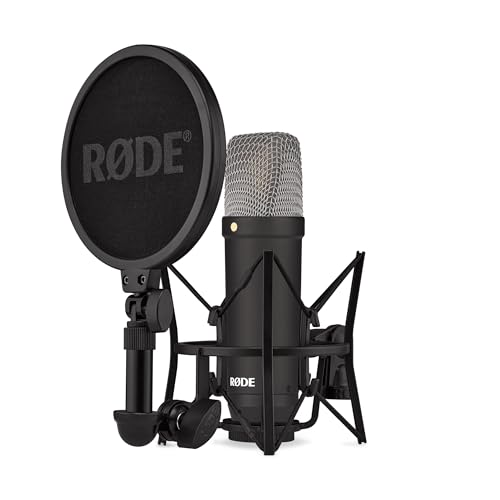
The RØDE NT1 Signature Series Large-Diaphragm Condenser Microphone is an exceptional choice for podcasters seeking studio-quality sound without the studio noise. With its 1-inch true condenser capsule, you’ll enjoy a smooth frequency response, capturing rich bass and sparkling highs. Its incredibly low noise level at just 4dBA makes it one of the quietest options available. The cardioid polar pattern focuses on your voice while minimizing background sounds. Plus, it comes with a shock mount, pop filter, and premium XLR cable for seamless recording. Built to last, it’s backed by a 10-year warranty, ensuring reliability in your podcasting journey.
Best For: The RØDE NT1 Signature Series is best for podcasters and musicians seeking high-quality audio recording with minimal background noise.
Pros:
- Exceptional low noise level at just 4dBA, making it one of the quietest studio microphones available.
- Includes essential accessories like a shock mount, pop filter, and premium XLR cable for enhanced usability.
- Durable construction with a 10-year warranty, ensuring long-term reliability.
Cons:
- Requires an XLR connection, which may necessitate additional equipment like an audio interface.
- The cardioid polar pattern may not capture sound from multiple directions, limiting its versatility in certain setups.
- Slightly heavier at 313 grams compared to some other condenser microphones, potentially affecting portability.
Shure SM7B Vocal Dynamic Microphone for Podcasting and Streaming

For podcasters and streamers seeking studio-quality audio, the Shure SM7B Vocal Dynamic Microphone stands out with its exceptional warmth and clarity. This versatile mic excels in various applications, from vocals to close-miking instruments, making it a favorite among top creators. Its dynamic cartridge and wide frequency response deliver natural sound, while the built-in pop filter minimizes breathiness. The cardioid pattern effectively rejects off-axis audio, ensuring clean recordings. With a rugged build and professional XLR connectivity, the SM7B lets you customize EQ and gain for tailored sound. Plus, the detachable windscreen enhances your recording experience seamlessly.
Best For: Podcasters, streamers, and musicians looking for professional-grade audio quality in their recordings.
Pros:
- Exceptional warmth and clarity for vocals and instruments.
- Durable construction with electromagnetic shielding to minimize interference.
- Customizable EQ and gain settings for tailored sound control.
Cons:
- Requires an XLR connection, necessitating additional audio equipment.
- May need a preamp for optimal performance, adding to overall cost.
- Slightly heavier than other microphones, which may affect mounting options.
FIFINE USB/XLR Dynamic Microphone for Podcast Recording and Streaming

Designed with both beginners and experienced podcasters in mind, the FIFINE USB/XLR Dynamic Microphone offers an impressive blend of versatility and performance. Weighing just 600 grams, its compact design fits easily on your desk. With a frequency response of 50Hz-16KHz and a unidirectional polar pattern, it effectively captures your voice while minimizing background noise. The USB plug-and-play feature simplifies setup, while the XLR connection enhances audio flexibility. You’ll appreciate the RGB lighting and handy controls, including a mute button and volume knob for real-time adjustments. Perfect for podcasting, gaming, or singing, this mic meets various audio needs seamlessly.
Best For: The FIFINE USB/XLR Dynamic Microphone is best for podcasters, gamers, and content creators seeking high-quality audio performance with user-friendly features.
Pros:
- Versatile Connectivity: Offers both USB plug-and-play and XLR options for enhanced flexibility.
- Active Noise Cancellation: Unidirectional polar pattern effectively reduces off-axis noise for clearer recordings.
- User-Friendly Controls: Features a mute button, volume knob, and RGB lighting for easy adjustments and customization.
Cons:
- No XLR Cable Included: Requires a separate purchase for full XLR functionality.
- Limited RGB Functionality on XLR: RGB and function keys are inactive when using XLR connection.
- Weight and Size: At 600 grams, it may not be the most portable option for on-the-go recording.
FIFINE XLR/USB Gaming Microphone Set for Streaming and Podcasting

Looking for a versatile microphone that seamlessly shifts between gaming and podcasting? The FIFINE XLR/USB Gaming Microphone Set, model AMPLIGAME AM8T, has you covered. This dynamic mic boasts a cardioid polar pattern, ensuring crystal-clear sound while minimizing background noise. With USB and XLR connectivity, it’s compatible with PCs, mixers, and streaming software like OBS. Plus, the included boom arm and customizable RGB lighting enhance your setup. Enjoy real-time monitoring through the headphone jack and easily control your volume. With a 4.6-star rating from over 5,100 reviews, this mic stands out as a top choice for creators.
Best For: Streamers and podcasters looking for a high-quality microphone that offers versatility and ease of use.
Pros:
- Dynamic cardioid pattern effectively reduces background noise for clearer audio.
- USB and XLR connectivity provides flexibility for various setups and devices.
- Customizable RGB lighting and included boom arm enhance aesthetics and functionality.
Cons:
- XLR cable not included, requiring an additional purchase for XLR connectivity.
- Limited frequency response may not capture the full range of certain audio sources.
- Weight may require a more robust desk setup to prevent tipping.
Audio-Technica AT2020 Cardioid Condenser Studio Microphone
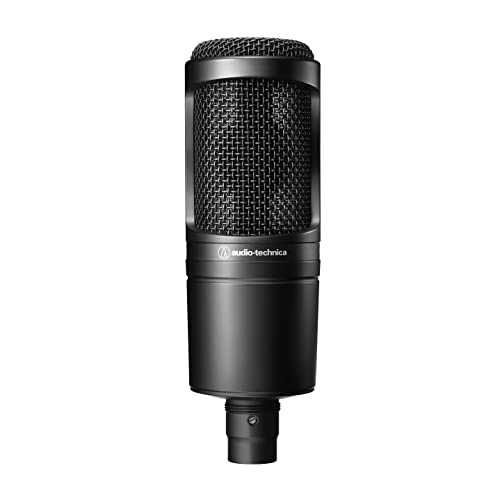
The Audio-Technica AT2020 Cardioid Condenser Studio Microphone stands out as an excellent choice for podcasters seeking professional-quality sound without breaking the bank. With its custom-engineered low mass diaphragm, you’ll enjoy extended frequency response and superior transient response, making your voice crisp and clear. The cardioid polar pattern effectively reduces pickup of unwanted sounds from the sides and rear, ensuring your voice remains the focus. Ideal for project or home studio applications, this microphone boasts high SPL handling and a wide dynamic range, providing unmatched versatility for all your recording needs. Plus, its robust XLR connector guarantees reliable connectivity.
Best For: Podcasters and home studio enthusiasts seeking professional-quality sound at an affordable price.
Pros:
- High SPL handling and wide dynamic range provide versatility for various recording applications.
- Cardioid polar pattern effectively isolates the desired sound source, reducing background noise.
- Custom-engineered low mass diaphragm delivers extended frequency response and superior transient response for crisp audio.
Cons:
- Requires an XLR interface, which may necessitate additional equipment for some users.
- Not ideal for capturing ambiance or multiple sound sources due to its directional nature.
- May be sensitive to plosive sounds without a proper pop filter.
RØDE PodMic USB Broadcast Microphone for Podcasting and Streaming

For podcasters and streamers seeking a reliable microphone that delivers professional-quality sound without the hassle, the RØDE PodMic USB Broadcast Microphone is an excellent choice. This versatile dynamic mic offers both XLR and USB-C connectivity, making it compatible with mixers and computers. You’ll appreciate its rich, full-bodied sound, built-in pop filter, and internal shock mount that minimize unwanted noise. Plus, with a robust all-metal design, it’s built to last. The zero-latency headphone output guarantees seamless recording, while the powerful APHEX® digital signal processing elevates your audio quality. With a solid customer rating, it’s a trusted option for any content creator.
Best For: Podcasters, streamers, and content creators looking for a versatile microphone that delivers professional-quality sound with ease.
Pros:
- Dual connectivity options (XLR and USB-C) for versatile use with mixers or direct to computers.
- Built-in pop filter and internal shock mount minimize unwanted noise for clearer audio.
- Rugged all-metal construction ensures durability and reliability for long-term use.
Cons:
- Heavier design at 1.9 pounds may not be ideal for on-the-go use.
- Requires proper setup to fully utilize the XLR output capabilities.
- Limited color options available, as it only comes in black.
FIFINE K688 Podcast Microphone Kit (USB/XLR Dynamic Microphone)

Designed for podcasters seeking versatility and high-quality sound, the FIFINE K688 Podcast Microphone Kit stands out with its dual USB/XLR connectivity. This dynamic microphone delivers authentic sound integrity with an impressive SPL of 130dB, ensuring your voice shines while minimizing background noise. The included boom arm provides sturdy support, reducing vibrations for cleaner recordings. You’ll appreciate the intuitive controls, including a tap-to-mute button and gain knob, enhancing your session management. Plus, the windscreen and shock mount help eliminate harsh sounds. Whether you’re gaming, streaming, or recording, the FIFINE K688 is an excellent choice for achieving professional sound quality.
Best For: Podcasters, gamers, and streamers seeking a versatile and high-quality microphone for professional recordings.
Pros:
- Dual connectivity options (USB and XLR) for flexible use across different setups.
- High sound quality with a sound pressure level of 130dB, ensuring clear and natural audio.
- Sturdy boom arm design that reduces vibrations and enhances audio clarity during recordings.
Cons:
- Limited control features when using XLR, requiring an external mixer or audio interface for adjustments.
- C-clamp may not fit all desk thicknesses, limiting installation options.
- Requires careful positioning within the 2 to 6 inches recommended distance for optimal sound capture.
MAONO USB/XLR Podcast Dynamic Microphone Kit (HD300T)

If you’re diving into the world of podcasting or live streaming, the MAONO USB/XLR Podcast Dynamic Microphone Kit (HD300T) is a standout choice. With dual outputs, you can easily connect it to your computer or professional audio setup. Its dynamic capsule minimizes background noise, while the cardioid pickup pattern guarantees your voice shines through. You’ll appreciate the built-in headphone jack for zero-latency monitoring and adjustable volume control. The sturdy metal design, complete with a shock mount and pop filter, assures stability and clarity. This kit includes everything you need to get started, making it perfect for beginners and pros alike.
Best For: Beginners and professionals in podcasting, live streaming, voiceovers, and music recording looking for a versatile and high-quality microphone solution.
Pros:
- Delivers rich, natural sound quality with minimal background noise thanks to its dynamic capsule and cardioid pickup pattern.
- Easy plug-and-play setup with dual USB and XLR outputs, making it adaptable for various audio configurations.
- Includes essential accessories like a shock mount and pop filter to enhance audio clarity and reduce unwanted noise.
Cons:
- The adjustable monitoring volume control is only available in USB mode, limiting functionality when using XLR.
- The robust metal design may be heavier and less portable for on-the-go recording needs.
- While it includes a variety of components, some users may prefer additional accessories for specific recording environments.
MAONO XLR/USB Condenser Microphone (A04 Gen2)

The MAONO XLR/USB Condenser Microphone (A04 Gen2) stands out as an excellent choice for podcasters seeking versatility and high-quality sound. With dual XLR and USB connectivity, it’s compatible with various devices, including PCs, mixers, and mobile phones. You’ll appreciate the studio-quality audio, featuring a 192kHz/24bit sampling rate and a cardioid polar pattern that minimizes background noise. Its advanced MAONO Link software allows you to customize gain and noise reduction levels for peak clarity. Plus, with included accessories like a shock mount and pop filter, you’re set up for professional recordings right away.
Best For: Podcasters and content creators looking for a versatile microphone that delivers studio-quality sound in various recording environments.
Pros:
- Dual XLR and USB connectivity offers compatibility with multiple devices.
- High resolution sampling rate and cardioid polar pattern ensure clear audio capture with minimal background noise.
- Includes essential accessories like a shock mount and pop filter for enhanced recording quality.
Cons:
- Requires phantom power for optimal performance in XLR mode, which may limit usability with some devices.
- XLR cable is not included, requiring an additional purchase for XLR connectivity.
- Not compatible with Xbox, restricting its use for gamers on that platform.
Factors to Consider When Choosing an XLR Microphone for Podcasting
When choosing an XLR microphone for your podcast, you’ll want to focus on several key factors. Sound quality, connectivity options, and build quality will all impact your recording experience. Plus, considering your budget and the right polar pattern can make a big difference in achieving the sound you want.
Sound Quality Importance
Sound quality stands as a cornerstone of successful podcasting, greatly impacting how listeners engage with your content. Clear audio is essential for conveying your messages effectively, so you want a microphone with a low self-noise level—ideally around 4dBA or lower—to minimize background distractions. Look for a frequency response ranging from 20Hz to 20kHz; this guarantees a balanced capture of both low and high vocal frequencies, enriching your sound. Cardioid polar patterns are also vital, as they focus on your voice while rejecting noise from other directions. Finally, consider high SPL handling capabilities to accommodate varying vocal dynamics, so louder sounds won’t distort, maintaining the integrity of your recordings.
Connectivity Options Available
Choosing the right connectivity option for your XLR microphone can greatly enhance your podcasting experience, especially if you want to achieve professional sound quality. Most XLR microphones require an audio interface or mixer, giving you control over audio levels and ensuring high-quality sound. Some models offer dual connectivity, allowing you to switch between XLR and USB outputs for added flexibility in your recording setup. Remember, when using XLR connections, you might need phantom power for condenser microphones, which isn’t necessary for dynamic ones. XLR connections are durable and transmit balanced audio signals, minimizing interference from external noise. If you’re new to podcasting, USB options may be easier, thanks to their plug-and-play nature.
Build Quality Considerations
Although you might be tempted to focus solely on sound quality, the build quality of an XLR microphone is equally important for a successful podcasting experience. Durability is key, especially during rigorous recording sessions and frequent transportation. Look for microphones made from high-grade materials like aluminum, often featuring finishes such as nickel plating or ceramic coating to resist wear. A robust design enhances audio clarity, incorporating internal shock mounts and pop filters to minimize vibrations and plosive sounds. Keep in mind that weight and dimensions affect stability; a heavier mic might need a sturdier stand to prevent tipping. Finally, check for a warranty, as it reflects the manufacturer’s confidence in the microphone’s build quality and longevity.
Budget and Pricing
With a solid understanding of build quality, it’s time to tackle the financial side of selecting an XLR microphone for podcasting. Start by establishing a clear budget, as prices range from around $100 for entry-level models to over $1,000 for professional options. While higher-priced mics often deliver superior sound, many great mid-range choices under $300 excel for podcasting. Don’t forget to factor in additional costs, like an audio interface or mixer, which can add $100 to $500 to your setup. Budget for essential accessories like shock mounts, pop filters, and cables, which may total $50 to $200. Investing slightly more in a durable microphone can save you money long-term by minimizing replacements or upgrades.
Polar Pattern Selection
How do you guarantee your podcast sounds professional? One essential factor is selecting the right polar pattern for your XLR microphone. Cardioid microphones are often the best choice for podcasting, as they capture sound primarily from the front while minimizing noise from the sides and rear. This focus helps ascertain your voice is clear and prominent. On the other hand, omni-directional microphones pick up sound equally from all directions, which can introduce unwanted background noise. If you’re conducting interviews, a bi-directional microphone might be useful since it captures sound from both the front and back, but be cautious of surrounding noise. Understanding these polar patterns is key to achieving high-quality audio and enhancing your podcasting experience.
Included Accessories and Features
When choosing an XLR microphone for podcasting, it’s crucial to contemplate the included accessories and features that can enhance your recording experience. Look for microphones that come with a shock mount and pop filter, as these help minimize unwanted noise and plosives. A premium XLR cable is another important accessory; it improves audio quality and guarantees a solid connection to your audio interface or mixer. Additional controls like gain knobs or mute buttons can give you more flexibility during recording. Some models even offer built-in headphone monitoring jacks, allowing you to hear real-time audio feedback. Finally, an adjustable boom arm or stand can make positioning easier, helping you capture clearer audio without handling noise.
Brand Reliability and Support
Choosing an XLR microphone for podcasting means you should prioritize brand reliability and support. Look for brands that offer a substantial warranty period, as this shows their confidence in product durability. Extensive customer support is essential, too; you’ll want easily accessible resources like manuals and responsive service channels. Research brand reputation through customer reviews and ratings, since higher ratings typically indicate consistent quality and satisfaction among users. Brands with a history of innovation are more likely to provide superior features and sound quality, enhancing your podcasting experience. Finally, opt for manufacturers with a solid track record in the audio industry, as established companies are more likely to produce reliable, professional-grade equipment suited for your needs.
Versatility for Applications
Versatility is key when selecting an XLR microphone for podcasting. You should look for a mic that supports both XLR and USB connectivity, making it compatible with different recording setups. A cardioid polar pattern is essential as it isolates your voice while minimizing background noise, ensuring clear audio. Pay attention to the microphone’s SPL handling capability; it should accommodate louder sounds without distortion. Additionally, a low self-noise level is vital for capturing crisp recordings, especially when podcasting. Finally, choose a microphone that’s versatile enough for various applications, like voiceovers, music recording, and streaming. This way, you’ll maximize the utility of your investment and enhance your podcasting experience.
