Choosing an in-ear monitor setup should make performances easier, not more complicated. The best beginner-friendly in-ear monitor systems give you clear sound, simple pairing, and enough reliability to stay focused on the music.
Whether you need a basic one-to-one setup or a system that can support rehearsals and small gigs, the right pick depends on latency, range, battery life, and how easy it is to operate under pressure.
Best 10 Beginner-Friendly In-Ear Monitor Systems Picks for 2026
Budget-Friendly Stereo Pick
LEKATO MS-1 2.4GHz Wireless IEM
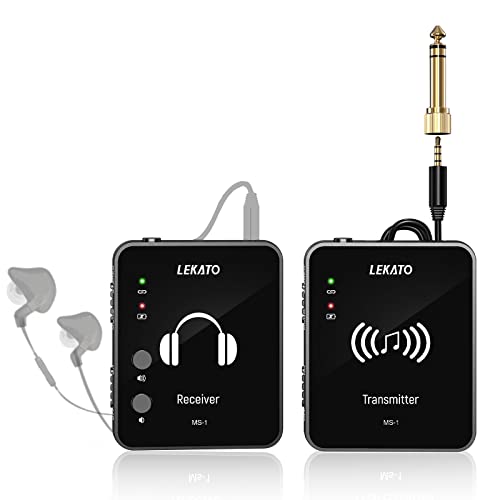
- Auto-pairing keeps setup simple.
- Supports stereo and mono switching.
- Works with up to 6 sets at once.
Best For: Small bands and first-time wireless IEM users
Portable Touring Option
Xvive U4 Wireless In-Ear Monitor Set
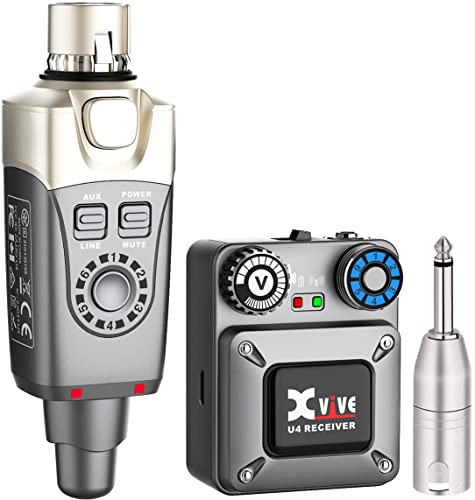
- Less than 5ms latency for monitoring.
- Over 90 feet of working range.
- Rechargeable units last up to 5 hours.
Best For: Small venues, touring players, and simple onstage monitoring
Easy-Setup Upgrade

- Under 4.5ms latency in mono mode.
- Battery lasts up to 6-8 hours.
- LEDs show battery level and volume.
Best For: Singers and trainees who want simple setup with extra controls
Multi-Performer Hub
Phenyx Pro PTM-33-4B 4-Channel IEM

- Four-channel mono monitoring system.
- Supports up to 4 standalone mixes.
- Includes rack kit and 4 receivers.
Best For: Four-person bands and worship teams needing multiple mixes
Easy Setup 2.4G IEM with Charging Case
LEKATO MS-20 Wireless Monitor System

- Auto-pairing and OTG support simplify setup.
- Charging case supports up to 30 hours of use.
- 2.4GHz link offers low-noise, low-latency monitoring.
Best For: New users wanting a simple wireless IEM setup for practice and live use.
Multi-Receiver UHF Stage IEM

- One transmitter and four receivers are included.
- IR sync helps simplify receiver setup.
- UHF PLL design supports stable, low-latency monitoring.
Best For: Small groups that need a complete multi-receiver monitoring kit.
Beginner Practice Wireless IEM

- Automatic pairing reduces setup hassle.
- Under-5ms latency supports real-time practice.
- Lightweight clip-on design suits solo users.
Best For: Guitar beginners and solo players needing simple personal monitoring.
Easy Stage Start
XTUGA J02S 2.4G Stereo in Ear Monitor System

- 2.4GHz wireless with under 4.5ms latency
- One-key mute plus mono/stereo switching
- Up to 10 hours battery and 50m range
Best For: New users who want a simple wireless IEM setup with multi-receiver support
Channel Scan Simplicity
Xvive U45 Wireless in Ear Monitor System

- 5.8GHz true diversity wireless with channel scan
- 24-bit/48kHz audio and 20Hz-20kHz response
- USB-C charging with up to 5 hours battery life
Best For: Beginners who want easy channel setup and stable monitoring for smaller venues
Plug-and-Play Value
A98T 2.4GHz Wireless IEM System
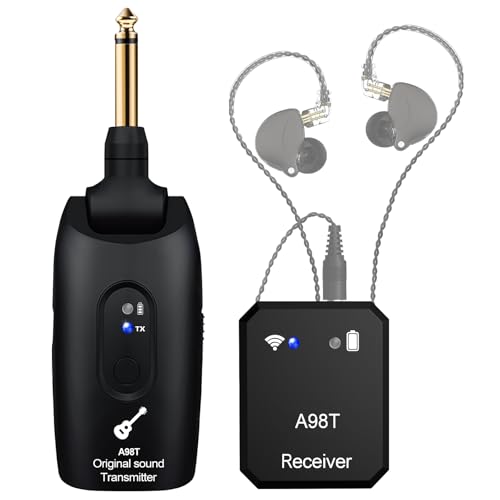
- Sub-4ms latency with 2.4GHz wireless audio
- 6.35mm plug and 270° rotatable transmitter
- Up to 5 hours of battery life per charge
Best For: New musicians who want a flexible, easy-to-connect IEM system for multiple instruments
Budget-Friendly Stereo Pick – LEKATO MS-1 2.4GHz Wireless IEM
If you want beginner-friendly in-ear monitor systems without a complicated setup, the LEKATO MS-1 is built around simple pairing and straightforward operation. It supports stereo transmission, up to 6 sets working at once, and a 2.4GHz link designed for low-noise, low-latency monitoring in small to medium spaces.
Best For: Small bands, church teams, and first-time users who want easy wireless IEM setup.
Pros:
- Auto-pairing helps make setup simple for beginners.
- Supports true stereo transmission with one-key stereo/mono switching.
- Up to 6 sets can work simultaneously for group practice.
- Built-in rechargeable battery lasts more than 5 hours.
Cons:
- 100-foot range is listed for open areas only.
- Earbuds are not mentioned in the supplied notes.
Overall, the MS-1 is a practical starter option if you value easy pairing and basic stereo monitoring over advanced stage features. It keeps the learning curve low while still covering the core needs of rehearsals and smaller gigs.
Portable Touring Option – Xvive U4 Wireless In-Ear Monitor Set
The Xvive U4 is a beginner-friendly in-ear monitor system that focuses on fast setup, portable use, and reliable basic monitoring. With 2.4GHz operation, less than 5ms latency, and support for 6 channels, it gives performers a simple wireless path for clubs, stages, and rehearsal spaces.
Best For: Musicians who want a compact, easy-to-use wireless IEM set for small venues and onstage monitoring.
Pros:
- Less than 5ms latency supports distraction-free performance.
- Over 90 feet of working range suits small clubs and venues.
- 6-channel support adds flexibility in shared spaces.
- Rechargeable transmitter and receiver both offer up to 5 hours of battery life.
Cons:
- Battery life is limited to about 5 hours per charge.
- Only one receiver is included in the set.
For players who want a straightforward wireless monitor solution they can take anywhere, the U4 is easy to understand and quick to deploy. Its compact design and low latency make it a sensible pick for smaller live setups.
Easy-Setup Upgrade – LEKATO MS-02 Low-Latency IEM
The LEKATO MS-02 is aimed at users who want beginner-friendly in-ear monitor systems with a bit more refinement. It combines auto-pairing, low-latency wireless transmission, and an easy mono/stereo switch, while adding battery and volume indicators that make daily use more convenient.
Best For: Singers, trainees, and small ensembles that want simple setup with extra control and clearer status feedback.
Pros:
- Upgraded latency is listed at under 4.5ms in mono mode.
- Supports one transmitter to multiple receivers, up to 4 pairs.
- 6-8 hours of battery life is listed after a full charge.
- LED indicators show battery level and volume, and the receiver has 5-level volume adjustment.
Cons:
- Earbuds are not included and must be purchased separately.
- Open-area range is listed at 100 feet, which may not match real-world indoor use.
The MS-02 is a strong choice if you want a simple wireless monitor system that still offers useful extras like status LEDs and quick mute control. It stays approachable for new users while adding a few quality-of-life features for rehearsals and performances.
Multi-Performer Hub – Phenyx Pro PTM-33-4B 4-Channel IEM
The Phenyx Pro PTM-33-4B is a more advanced wireless in-ear monitor system built for multiple performers who need separate mixes. It uses a 4-channel UHF mono design with loop outputs and IR sync, making it a practical option for bands, church teams, and rehearsal setups that want a centralized monitoring station.
Best For: Four-person bands, worship teams, and users who need multiple personal mixes from one transmitter.
Pros:
- Supports up to 4 standalone mixes with no delay in sound.
- 4×25 UHF frequencies help reduce interference.
- Interference-free line-of-sight range is listed at 140-164 feet.
- Includes rackmount kit, antenna set, and four bodypack receivers.
Cons:
- Mono monitoring only, not stereo.
- More complex and feature-heavy than basic starter systems.
This system makes sense when a beginner setup is no longer enough and you need a centralized solution for several performers at once. It is best suited to users who want scalable monitoring and are comfortable with a more professional rack-based workflow.
Easy Setup 2.4G IEM with Charging Case – LEKATO MS-20 Wireless Monitor System
If you want beginner-friendly in-ear monitor systems that keep setup simple, the LEKATO MS-20 is built around plug-and-play convenience. It offers auto-pairing, OTG phone support, and a compact charging case, making it a practical pick for rehearsals, small gigs, studio use, and first-time wireless monitoring.
Best For: New users who want an easy-to-run wireless IEM setup for practice, live use, or recording.
Pros:
- Auto-pairing keeps setup straightforward once the transmitter and receivers are linked.
- OTG support lets you connect directly to smartphones and USB-C devices.
- Up to 30 hours of usage time with the included charging case is handy for practice and gigs.
- 2.4GHz transmission, low noise, and low latency support real-time monitoring.
Cons:
- Earphones are not included, so you’ll need your own in-ear monitors.
- Range is listed at 150 feet in open areas, which may be less in real-world settings.
For beginners, the MS-20 stands out more for simplicity and portability than for advanced routing features. It’s a solid starting point if you want a wireless IEM system that gets you monitoring quickly without a complicated setup.
Multi-Receiver UHF Stage IEM – 4-Pack Mono Monitoring System
Among beginner-friendly in-ear monitor systems, this UHF mono package makes sense if you need a ready-made setup for several performers. It includes one transmitter and four bodypack receivers, plus in-ear earphones, so it’s geared toward straightforward group monitoring for bands, church teams, and event use.
Best For: Bands, churches, and small teams that need multiple receivers in one package.
Pros:
- Includes 1 transmitter, 4 receivers, and 4 in-ear earphones in the box.
- IR sync is designed to make receiver setup quicker and easier.
- UHF operation with PLL technology is built for stable signal performance.
- Up to 330 feet of open-space coverage gives performers room to move.
Cons:
- It is a mono monitoring system, so it is not aimed at stereo use.
- The notes warn that thick walls, glass, and metal can reduce longer-range performance.
This is a practical pick when your priority is connecting several people with a single transmitter. It is less about portability and more about giving a small group a dependable, easy-to-manage monitoring package.
Beginner Practice Wireless IEM – JOYO JW-07 2.4G Monitor
If you’re shopping for beginner-friendly in-ear monitor systems for personal practice, the JOYO JW-07 is positioned as a simple entry point for guitar players and other new users. It uses automatic pairing, offers low-latency monitoring, and keeps the system compact for practicing, studio work, or live use.
Best For: Guitar beginners and solo players who want an easy wireless monitor for practice.
Pros:
- Automatic pairing helps reduce setup hassle for first-time users.
- Low latency under 5ms supports real-time practice feedback.
- 2.4GHz transmission includes anti-interference frequency hopping for stability.
- Compact transmitter clip and 62 g receiver keep the system lightweight.
Cons:
- Battery life is over 8 hours, which is shorter than some competing systems.
- One transmitter does not support multiple receivers.
The JW-07 is best viewed as a straightforward personal monitoring tool rather than a full band solution. For a beginner who mainly needs dependable practice monitoring, its simple pairing and low-latency design are the main strengths.
Easy Stage Start – XTUGA J02S 2.4G Stereo in Ear Monitor System
If you want beginner-friendly in-ear monitor systems that still feel stage-ready, the XTUGA J02S is a straightforward place to start. Its 2.4GHz design, low latency, and one-key controls make it easier to get up and running for live gigs, church use, rehearsal spaces, or basic studio monitoring.
Best For: New users who want a simple wireless IEM setup with long range, quick mute control, and support for multiple receivers.
Pros:
- Mono ultra-low latency under 4.5ms helps keep monitoring tightly synced.
- One-key mute and instant mono/stereo switching simplify live adjustments.
- Up to 10 hours of battery life with a 3-hour fast charge.
- One transmitter can send to multiple receivers, with up to 6 sets in the same environment.
Cons:
- Uses a 2.4GHz wireless design, so placement and environment still matter.
- Noisy or crowded RF situations may still require careful setup.
- Best suited to users who can work within its mono/stereo workflow.
The J02S stands out as a practical starter choice because it combines a long 50m range with simple controls and multi-receiver flexibility. For beginners who want fewer complications without giving up useful performance features, it offers a balanced entry into wireless monitoring.
Channel Scan Simplicity – Xvive U45 Wireless in Ear Monitor System
The Xvive U45 is a strong option for beginner-friendly in-ear monitor systems because it keeps the workflow simple while still delivering reliable wireless audio. With 5.8GHz operation, channel scan mode, and compact battery-powered components, it’s built for players who want a cleaner path into wireless monitoring for rehearsals, studio use, or small live sets.
Best For: Beginners who want an easy channel setup and stable wireless monitoring for home, rehearsal, or small-stage use.
Pros:
- Channel Scan mode helps find the best available wireless channel quickly.
- 5.8GHz true diversity connection is designed for a solid RF link over 100 ft.
- 24-bit/48kHz audio with 20Hz-20kHz response supports clear detail.
- USB-C charging and dual cables make powering both units convenient.
Cons:
- Battery life is up to 5 hours, which is shorter than some alternatives.
- The transmitter channel must be matched manually after scanning.
- Range is more modest than systems built for larger stages.
Overall, the U45 is a practical pick if you want a less intimidating wireless setup with a helpful scan feature. It balances clear sound and simple operation well, making it a sensible entry point for first-time IEM users.
Plug-and-Play Value – A98T 2.4GHz Wireless IEM System
The A98T is a beginner-friendly in-ear monitor system for players who want a simple plug-and-play setup without a steep learning curve. Its 2.4GHz wireless connection, sub-4ms latency, and rotatable transmitter make it easy to adapt for practice, stage use, or studio monitoring across different instruments.
Best For: New musicians who want a flexible, easy-to-connect wireless IEM system for guitar, bass, and general practice or live use.
Pros:
- Less than 4ms latency supports tight real-time monitoring.
- 2.4GHz wireless audio is designed for smooth, interference-free use.
- 6.35mm plug and 270° rotatable transmitter improve setup flexibility.
- Built-in battery provides up to 5 hours of use per charge.
Cons:
- Battery life may be limited for longer performances without charging breaks.
- Best fit is more general-purpose rather than feature-heavy pro workflows.
- Users who need maximum runtime may want to compare alternatives.
For beginners, the A98T’s appeal is its simple physical setup and broad compatibility across instruments. If you want a no-fuss wireless monitoring system that still covers the basics well, this is an easy model to consider.
How We Picked These Beginner-Friendly In-Ear Monitor Systems
We prioritized systems that are approachable for first-time users, with straightforward setup, stable wireless performance, and practical features like auto-pairing, rechargeable power, and clear transmitter/receiver layouts. We also weighed whether each option makes sense for solo practice, band rehearsals, and live use.
Quick Comparison
For simple personal monitoring, compact 2.4GHz sets are often the easiest starting point. If you need multiple performers on one system, look for kits with extra receivers or multi-channel support. UHF models can be a stronger fit when you want more routing flexibility, while 5.8GHz options may appeal to users who value a different wireless band for crowded environments.
Key Buying Factors for Beginner-Friendly In-Ear Monitor Systems
Setup Simplicity
Look for plug-and-play systems with auto-pairing and clearly labeled components. Beginners usually benefit most from gear that reduces menu diving and minimizes cabling mistakes.
Latency and Sound Stability
Low latency matters because even small delays can feel distracting in live monitoring. A stable signal is just as important, especially in rehearsal spaces with wireless congestion.
Mono Vs. Stereo
Mono systems are usually easier and more affordable, while stereo systems provide better placement and a more natural mix. If you are just starting out, either can work well as long as the monitor mix is clean.
Battery Life and Charging
Long battery life helps reduce stress during rehearsals and gigs. Charging cases, rechargeable receivers, and easy power indicators are especially helpful for beginners building a routine.
System Size and Use Case
Solo players can usually start with a one-transmitter, one-receiver setup. Bands and multi-performer setups may need systems with extra receivers or expanded channel options, depending on how many people need monitor feeds.
Who Should Buy Which Beginner-Friendly In-Ear Monitor Systems?
If you want the easiest path into Beginner-Friendly In-Ear Monitor Systems, start with a simple 2.4GHz stereo kit for practice, small gigs, or personal monitoring. If you are in a band and need multiple users, choose a system that supports more receivers or channels. If you expect more demanding live environments, UHF or higher-capacity options may be worth the extra complexity. The best choice is the one that matches your setup today while leaving a little room to grow.
