Great live mixes start with dependable monitoring. The right system helps singers, drummers, and band leaders hear detail clearly without fighting stage volume.
Below, we break down 10 of the best in-ear monitor systems for stage use so you can compare range, latency, mono vs. stereo, and setup style before you buy.
Best 10 In-Ear Monitor Systems for Stage Use Picks for 2026
Rack-Ready Band Monitor
Phenyx Pro PTM-33-4B Wireless IEM System

- 4-channel mono system for multiple performers
- UHF design with 4x25 frequencies
- Rackmount kit and loop outputs simplify setup
Best For: Four-piece bands and worship teams needing multiple wireless mixes
Compact Tour-Friendly Pick
Xvive U4 2.4GHz Wireless IEM Set
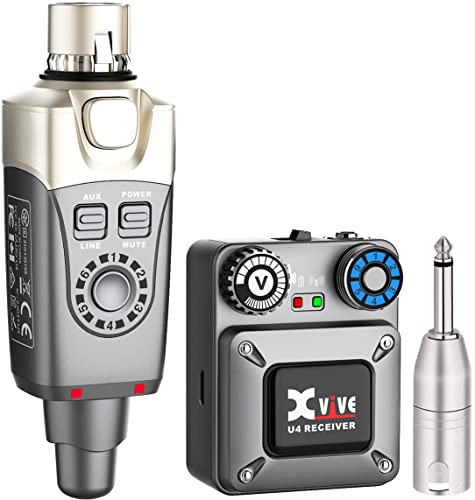
- Less than 5ms latency for clean monitoring
- Over 90 ft range suits small venues
- Rechargeable system with 6 channels
Best For: Solo acts and small bands needing a portable monitor system
Long-Range Stage System
XTUGA RW2080 UHF 4-Bodypack IEM

- UHF design with delay-free monitoring
- Up to 300 ft wireless range
- Includes 4 bodypacks and rackmount kit
Best For: Larger stages and studio use that need long-range wireless monitoring
Stereo IEM with Display
Donner CV-3 2.4G Stereo Wireless IEM

- 192kHz audio with 110dB SNR
- Mono/stereo switch with less than 6ms latency
- Color screen receiver and up to 10 hours battery life
Best For: Single performers and small live setups that want stereo monitoring
Stage-Ready Mono IEM
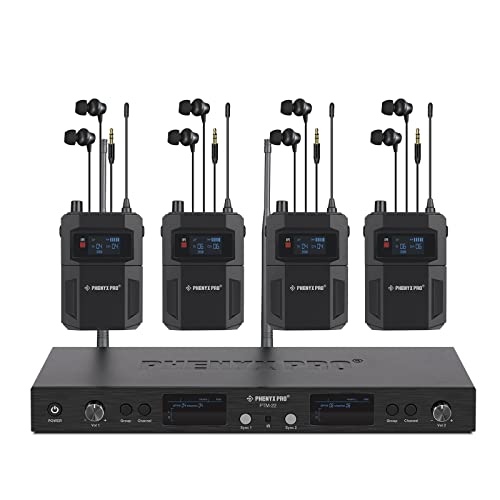
- Mono monitoring reduces phase-related blur
- 2-channel UHF system with 4 bodypacks
- Rack-mountable design with loop outputs
Best For: Bands and worship teams needing a simple mono stage monitor system
Compact Practice IEM

- 2.4GHz wireless with automatic pairing
- Low latency under 5ms for monitoring
- 8+ hour battery life for practice sessions
Best For: Guitarists and solo users needing an easy practice monitor
Flexible Stereo IEM

- True stereo or mono monitoring modes
- UHF 900MHz with 89 tunable frequencies
- EQ, limiter, PAD, and lock controls
Best For: Performers who want adjustable stereo monitoring on stage
Stage-Ready UHF IEM
300ft 902-927MHz Wireless Monitor
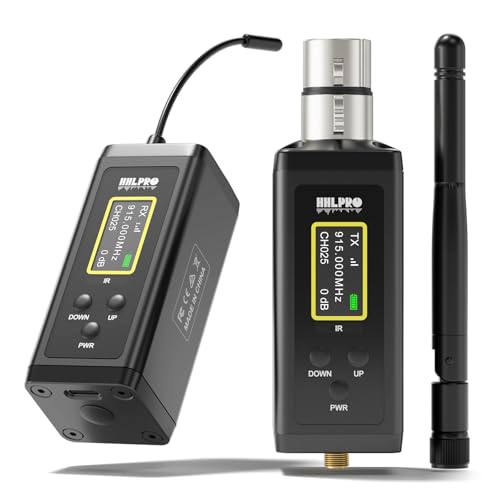
- 902-927MHz UHF helps reduce interference.
- <5ms latency supports tight live timing.
- 50 channels and 300 ft range for stage use.
Best For: Bands and worship teams in crowded RF venues.
Clean 5.8GHz Monitoring
Xvive U45 Wireless IEM for Rehearsal and Live Use

- 5.8 GHz true diversity wireless connection.
- Channel scan mode simplifies setup.
- 24-bit/48kHz audio with USB-C charging.
Best For: Rehearsal, home practice, and compact live gigs.
Compact 2.4G Stereo IEM
LEKATO MS-02 Upgraded Multi-Receiver Monitor

- Sub-4.5ms mono latency for responsive monitoring.
- One transmitter supports up to 4 receivers.
- 6-8 hour battery life with 100 ft range.
Best For: Small bands, church teams, and daily practice.
Rack-Ready Band Monitor – Phenyx Pro PTM-33-4B Wireless IEM System
If you need in-ear monitor systems for stage use that can handle a full band, this Phenyx Pro setup is built around a practical 4-channel workflow. It gives you four groups of left/right inputs and loop outputs, so a small mixer can feed multiple performers with no-delay monitoring and a clean mono mix.
Best For: Four-piece bands, church worship teams, and stage crews that want rack-mountable wireless monitoring with multiple receivers.
Pros:
- 4-channel transmitter supports up to 4 standalone mixes
- UHF wireless design with 4×25 frequencies for interference avoidance
- 140-164 ft line-of-sight range for clutter-free stage movement
- Rackmount kit and 16.5-inch studio-style format help with touring setups
Cons:
- Mono monitoring only, so it is not intended for stereo IEM use
- Range can be reduced by thick walls, glass, or metal blocks
- Requires AAA/AA battery support for the included bodypacks
This is a solid pick if your priority is simple, multi-user stage monitoring with easy integration into a live rig. It focuses less on advanced audio features and more on dependable wireless monitoring for bands and worship environments.
Compact Tour-Friendly Pick – Xvive U4 2.4GHz Wireless IEM Set
The Xvive U4 is a straightforward option if you want in-ear monitor systems for stage use without a large rack or complicated setup. Its 2.4GHz design is made for quick deployment, with low latency, a compact receiver/transmitter pair, and a working range that suits small clubs and stage spots.
Best For: Solo performers, small bands, and mobile rigs that need a simple wireless monitor system for compact venues.
Pros:
- Less than 5ms latency for distraction-free monitoring
- Over 90 feet of working range for small venues
- 6 channels for flexible use in different setups
- Rechargeable transmitter and receiver with up to 5 hours of battery life
Cons:
- Range is better suited to clubs and compact stages than large venues
- Battery life is shorter than some recharge-focused alternatives
- Comes as a 1 receiver / 1 transmitter set, so it is not a multi-bodypack package
For players who want a travel-friendly monitor setup, this Xvive system keeps the essentials simple. It is best when portability and quick setup matter more than expanding to a larger multi-performer rig.
Long-Range Stage System – XTUGA RW2080 UHF 4-Bodypack IEM
If you want in-ear monitor systems for stage use with more reach than many compact wireless options, the XTUGA RW2080 leans into UHF performance and a long working distance. It is designed for stable tabletop stage monitoring, with delay-free operation and multiple adjustable frequencies for more flexible live use.
Best For: Larger stages, studios, and users who want a UHF system with four bodypacks and long wireless coverage.
Pros:
- UHF design offers delay-free operation compared with 2.4GHz systems
- Up to 300 feet of wireless range for wider coverage
- 2×40 adjustable frequencies help support interference-free multi-system use
- Metal transmitter, ABS bodypacks, and rackmount kit add durability and pro appeal
Cons:
- Mono monitoring setup, so it is not a stereo-focused system
- Uses a 902-928MHz band, which may matter depending on your setup needs
- Bulkier than minimalist two-piece systems
This system makes sense when range and expandability are higher priorities than compact size. The four bodypacks and stable UHF signal give it a strong fit for stage teams that need dependable coverage.
Stereo IEM with Display – Donner CV-3 2.4G Stereo Wireless IEM
The Donner CV-3 is a flexible choice for in-ear monitor systems for stage use when you want both monitoring clarity and easy receiver control. Its 2.4GHz link, low-latency audio, and switchable mono/stereo modes make it useful for vocals, instruments, rehearsals, and live performance.
Best For: Players and engineers who want a compact stereo-capable IEM with an easy-to-read receiver display.
Pros:
- 192kHz sampling and 110dB SNR for clear audio output
- Less than 6ms latency keeps monitoring tight
- Mono and stereo switching adds flexibility for different sources
- Color screen receiver makes functions and audio info easy to read
- Up to 10 hours of battery life supports longer sessions
Cons:
- 100-foot wireless range is more modest than long-range UHF systems
- 2.4GHz operation may be less ideal in crowded wireless environments
- Single receiver package is better for one performer than a full band system
Overall, this is a well-rounded option if you value usability and sound quality in a compact package. It is especially appealing for rehearsal rooms and smaller live setups where stereo monitoring and battery life matter.
Stage-Ready Mono IEM – Phenyx Pro PTM-22 4-Pack
If you want a practical in-ear monitor system for stage use, the Phenyx Pro PTM-22 focuses on clean mono monitoring, easy expansion, and dependable UHF performance. Its 2-channel transmitter, 4 bodypacks, and daisy-chain loop outputs make it a flexible fit for bands, churches, and live setups that need clear monitoring without a lot of stage clutter.
Best For: Bands, churches, pastors, conference hosts, and live performers who want a simple mono wireless monitor setup.
Pros:
- Mono monitoring helps avoid phase issues and keeps the mix focused and clear.
- Dual-channel transmitter with loop outputs supports daisy-chaining to additional channels.
- UHF 900MHz operation with 2×50 selectable frequencies and up to 164 ft coverage.
- Rack-mountable metal build plus carry case makes it easier to set up and transport.
Cons:
- Mono-only monitoring may not suit users who prefer stereo imaging.
- Setup is geared more toward multi-user stage systems than casual personal listening.
- Some buyers may not need four included bodypacks.
Overall, the PTM-22 is a straightforward stage monitoring choice when reliability and simplicity matter more than advanced sound shaping. It is built for performers who want consistent wireless monitoring and an organized stage layout.
Compact Practice IEM – JOYO JW-07 2.4G
The JOYO JW-07 is a compact wireless in-ear monitor system built more for practice and personal monitoring than big-stage deployment. With 2.4GHz wireless operation, automatic pairing, low latency under 5ms, and over 8 hours of battery life, it suits players who want a simple way to monitor and record practice sessions.
Best For: Guitar players, DJs, and solo musicians who want an easy wireless monitoring tool for practice or small sessions.
Pros:
- Low latency under 5ms helps keep monitoring responsive.
- Automatic pairing keeps setup simple for quick use.
- 48kHz/16bit audio clarity is aimed at practice and monitoring.
- Over 8 hours of battery life supports longer sessions.
Cons:
- One transmitter does not support multiple receivers.
- 40-60 ft open-space range is shorter than many stage-focused systems.
- Better suited to practice and smaller setups than full band monitoring.
As an entry-friendly wireless IEM, the JW-07 is best when convenience and portability matter most. It offers the basics for monitoring with quick pairing and low-latency performance, but it is not designed for larger multi-receiver stage rigs.
Flexible Stereo IEM – Phenyx Pro PTM-10
For in-ear monitor systems for stage use, the Phenyx Pro PTM-10 stands out with true stereo monitoring, selectable frequencies, and tools that help refine your mix. It is aimed at performers who want more control over what they hear, with stereo or mono mode options, limiter and EQ functions, and stable UHF transmission for stage, studio, and speech applications.
Best For: Performers, vocalists, drummers, speakers, and bands that want a more adjustable stereo monitor system.
Pros:
- True stereo monitoring with mono/stereo mode selection for different needs.
- UHF 900MHz operation with 89 tunable frequencies and support for up to 5 systems.
- EQ, balance, limiter, PAD, and lock functions provide more control over the monitor mix.
- 160 ft range and rack-mountable metal transmitter suit professional setups.
Cons:
- Includes one bodypack receiver, so larger groups need additional systems.
- Stereo monitoring may be more than some users need for simple vocal or speech monitoring.
- More features can mean a slightly more involved setup than basic entry-level systems.
The PTM-10 is a strong fit when you want more shaping options and the added space of stereo monitoring. It balances pro-friendly controls with the reliability and coverage needed for live work.
Stage-Ready UHF IEM – 300ft 902-927MHz Wireless Monitor
If you need in-ear monitor systems for stage use that stay steady in crowded RF environments, this UHF option is built around practical live-performance needs. The dedicated 902-927MHz band, sub-5ms latency, and auto-scan setup make it a solid fit for players who need a dependable cue mix without fighting interference.
Best For: Drummers, bassists, vocalists, and worship teams working in busy venues where wireless stability matters.
Pros:
- Dedicated 902-927MHz UHF band helps reduce dropouts in crowded wireless spaces.
- <5ms latency keeps timing tight for drummers and other rhythm players.
- 50 channels and one transmitter to unlimited receivers support whole-band use.
- 300 ft range and auto-scan/one-touch sync make setup and movement easier.
Cons:
- Mono design only, so it is not aimed at stereo monitoring setups.
- Battery life is listed at 5-8 hours, which may require charging for longer days.
- Best fit is live monitoring rather than a feature-heavy studio system.
This is a practical choice if your priority is stable stage monitoring with simple setup and enough range for active performers. The rugged metal build and included case also make it easier to take from rehearsal to gig without much fuss.
Clean 5.8GHz Monitoring – Xvive U45 Wireless IEM for Rehearsal and Live Use
For in-ear monitor systems for stage use where clean audio and straightforward wireless operation matter most, the Xvive U45 keeps the focus on core performance. Its 5.8 GHz true diversity connection, channel scan mode, and 24-bit/48kHz audio make it a sensible pick for rehearsal rooms, studios, and smaller live setups.
Best For: Musicians who want a simple wireless monitor link for rehearsal, home practice, or compact live gigs.
Pros:
- 5.8 GHz true diversity wireless design aims for a reliable RF connection.
- Channel Scan Mode helps find a better wireless channel before you play.
- 24-bit/48kHz audio and 20Hz-20kHz response support detailed monitoring.
- USB-C charging with up to 5 hours of battery life keeps it portable.
Cons:
- Range is listed at 100 ft, so it is less suited to larger stages than longer-range systems.
- Battery life tops out at about 5 hours, which may be limiting for long shows.
- It is a more basic package with fewer extras than some stage-oriented kits.
The U45 is a good fit when you want dependable monitoring without a complicated setup. It is especially appealing for players who value clear audio, easy channel selection, and a compact system for repeated use.
Compact 2.4G Stereo IEM – LEKATO MS-02 Upgraded Multi-Receiver Monitor
If you want in-ear monitor systems for stage use in a compact, easy-to-carry format, the LEKATO MS-02 is built for small to medium setups. It offers upgraded sub-4.5ms latency in mono mode, one transmitter to multiple receivers, and a lightweight clip-on design that works well for rehearsals and live monitoring.
Best For: Small bands, church teams, singers, and practice setups that need a lightweight multi-receiver IEM.
Pros:
- Upgraded <4.5ms mono latency is designed for responsive monitoring.
- One transmitter to up to 4 receivers supports group use.
- 6-8 hour battery life and LED indicators add convenience on longer sessions.
- 100 ft open-area range and one-key mute help keep operation simple.
Cons:
- Earbuds are not included, so you must buy those separately.
- 100 ft range is suitable for smaller spaces, not larger stages.
- The system is compact and practical, but not built around premium extras.
This model makes sense if you need a low-latency monitoring solution for a small group without adding much bulk. Its multi-receiver support and simple pairing are useful for everyday rehearsal and modest live applications.
How We Picked These In-Ear Monitor Systems for Stage Use
We focused on stage practicality first: wireless reliability, sound quality, transmission band, operating range, and how easy each system is to set up and use under live conditions. We also considered whether a system is better suited to small club gigs, rehearsals, worship teams, or larger stages.
Quick Comparison
At a glance, the main differences come down to channel count, mono or stereo operation, and wireless platform. UHF systems are often preferred for traditional stage work and longer-range needs, while 2.4GHz and 5.8GHz options can be appealing for simpler setup and portable use. If multiple performers need separate mixes, look closely at transmitter capacity and receiver count.
Key Buying Factors for In-Ear Monitor Systems for Stage Use
Wireless Band and Range
Choose a band that fits your venue size and local RF environment. UHF can offer stronger long-range performance in crowded stage setups, while 2.4GHz models are often easier to deploy but may face more interference in busy wireless environments.
Mono Vs. Stereo
Mono is usually enough for vocals, click, and general band monitoring. Stereo gives more separation and a more natural mix, which can be helpful for keys, playback, and detailed stage listening.
Latency and Stability
Low latency matters because even small delays can feel distracting while singing or playing. Stable connection is just as important as spec-sheet speed, especially in venues with multiple wireless devices.
Receiver Design and Practical Use
Bodypack size, screen visibility, battery life, and clip durability all affect day-to-day use. Look for controls that are easy to manage on stage without accidental changes.
System Capacity
If you need to monitor a full band, make sure the transmitter can support the number of bodypacks you need and that the mix routing fits your workflow.
Who Should Buy Which In-Ear Monitor Systems for Stage Use?
Singers and small bands often do well with simple, reliable wireless IEM kits that are quick to set up. Drummers, MDs, and players who need precision may prefer stereo systems with better mix control. If you are equipping a church, rental rig, or multi-performer stage, prioritize UHF options, expandable channel counts, and rugged hardware over the absolute cheapest choice.
For rehearsal rooms and portable gigs, a compact 2.4GHz or 5.8GHz model can be a smart value pick. For larger stages and more demanding live use, the strongest choice is usually a system built for dependable RF performance, easy frequency management, and consistent sound at show volume.
