Practicing synthesis does not require a full studio setup. Compact keyboards, pocket instruments, and portable sound makers can make daily sessions more accessible, engaging, and easy to fit into a busy routine.
This roundup compares 10 approachable options for different practice styles, including hands-on synthesis, MIDI-based learning, rhythm building, and playful ear training. Consider your preferred workflow, connectivity needs, and sound-design goals before choosing.
Best 10 Music Synthesizers for Practice Picks for 2026
Compact Sound Design Pick

- Compact alloy-steel body
- MIDI connectivity
- Lightweight 0.65 kg design
Best For: Portable sound-design practice
Connected Practice Controller
M-VAVE K5 25-Key MIDI Controller

- 25 velocity-sensitive mini keys
- Pads, knobs, and touch strips
- Bluetooth and USB connectivity
Best For: Virtual-synth and DAW practice
Stylus Practice Favorite
Bowie Stylophone Limited Edition
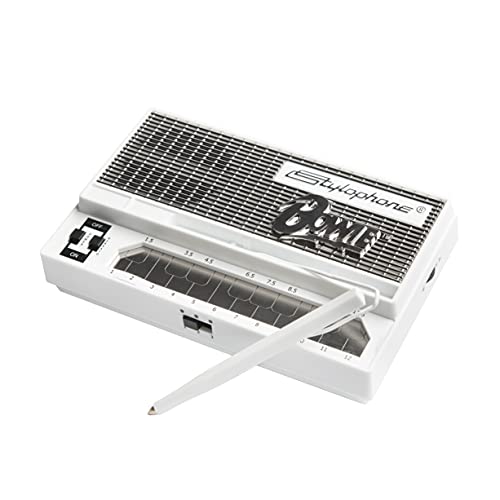
- Compact battery-powered design
- Three synth and bass modes
- Simple stylus-based interface
Best For: Portable beginner experimentation
Guided Learning Companion

- 100 songs in six genres
- Visual note maps and letter diagrams
- Three progressive learning levels
Best For: Structured Otamatone practice
Best Portable FM Practice Synth

- Portable, battery-powered design with built-in speaker
- Six-operator FM engine with 32 algorithms and 128 presets
- Effects, arpeggiator, sequencer, and multiple MIDI connections
Best For: Portable FM practice and sound-design exploration
Best Pocket Synth for Beginners

- Compact 8.8-ounce instrument with built-in speaker
- Three octaves and optional vibrato in a retro analog-style sound
- Stylus control with headphone and computer-recording connectivity
Best For: Beginner practice and portable retro-sound experiments
Best Rhythm Practice Companion

- Four drum kits and four bass sounds for beat building
- Click track and tempo lock support timing practice
- Record layers, mute sounds, and create multiple patterns
Best For: Portable rhythm practice and pattern-based beat making
Best Playful Pick

- Touch-sensitive stem with roughly four octaves per setting
- Wah and vibrato controls encourage expressive practice
- Headphone, speaker, and amplifier connectivity
Best For: Beginners and musicians who want unconventional, fun practice
Best Feature-Rich Portable

- Six-operator FM engine with 128 factory presets
- Arpeggiator, sequencer, effects, and color display
- USB-C, Bluetooth MIDI, and 3.5mm MIDI connectivity
Best For: Producers and guitarists practicing synthesis and MIDI workflows
Best for Hands-On Sound Design

- Portable analogue synth with built-in speaker
- LFO, filter, envelope, PWM, and analogue delay
- CV/Gate outputs and expressive touch controls
Best For: Hands-on learners exploring analogue synthesis and modulation
Compact Sound Design Pick – PHARA-O MINI Mini Synthesizer
For shoppers comparing music synthesizers for practice, the Behringer PHARA-O MINI is a compact option focused on hands-on sound design. Its small footprint, lightweight build, and MIDI connector make it convenient for a practice setup where space matters.
Best For: Portable synth practice and compact sound-design setups.
Pros:
- Compact 9.21 x 6.1 x 2.56-inch design
- Lightweight 0.65 kg construction
- Includes MIDI connectivity
- Glossy black alloy-steel body
Cons:
- Small format may offer less physical playing space than a keyboard controller
- The supplied details do not specify built-in speakers or included accessories
The PHARA-O MINI makes the most sense for learners who want a dedicated, space-conscious synthesizer for exploring sounds rather than a full-sized practice keyboard.
Connected Practice Controller – M-VAVE K5 25-Key MIDI Controller
The M-VAVE K5 is a versatile choice among music synthesizers for practice, especially when you plan to work with software instruments. It combines 25 velocity-sensitive keys with pads, knobs, Bluetooth, and scale-oriented features for guided practice and production.
Best For: Software-synth practice, beat making, and portable music production.
Pros:
- 25 velocity-sensitive mini keys
- Eight RGB backlit velocity-sensitive drum pads
- Eight assignable rotary encoders and touch strips
- Bluetooth operation with a claimed battery life of about 16 hours
Cons:
- It controls compatible software rather than functioning as a standalone synthesizer
- 25 mini keys provide a limited range for two-handed practice
- Requires compatible devices or music-production software for its broader features
Choose the K5 if your practice routine includes virtual synthesizers, DAWs, or beat production. Its broad device and software compatibility adds flexibility, while the compact layout keeps it easy to carry.
Stylus Practice Favorite – Bowie Stylophone Limited Edition
The Bowie Stylophone offers an approachable way to explore music synthesizers for practice through a compact, stylus-based design. It is battery-powered and provides three modes for classic analog synth and bass sounds, making it suited to short, informal practice sessions.
Best For: Beginners seeking a portable, simple instrument with a distinctive playing method.
Pros:
- Compact 7.09 x 4.16 x 1.82-inch format
- Battery-powered for portable use
- Three modes for analog synth and bass sounds
- Distinctive stylus design and limited-edition Bowie styling
Cons:
- The stylus interface may feel less familiar than conventional keys
- Its compact layout is not designed for broad keyboard-range practice
- The supplied details do not specify battery life
The Bowie Stylophone is a fun introductory pick for experimenting with pitch and electronic sounds. It works best as a portable practice instrument or creative add-on rather than a replacement for a full keyboard.
Guided Learning Companion – Otamatone Beginner's Songbook
Although it is a book rather than hardware, the Otamatone Beginner’s Songbook can support practice alongside music synthesizers for practice and other beginner instruments. Its visual note maps, progressive levels, and 100 familiar songs provide a structured way to build pitch, rhythm, and technique without reading standard notation.
Best For: Otamatone beginners who want a structured, no-staff practice resource.
Pros:
- Includes 100 songs across six genres
- Uses visual note maps with letter names and rhythm guidance
- Three progressive levels support step-by-step learning
- Covers holding, pitch control, vibrato, and other techniques
Cons:
- Designed for HAMEE Otamatone Original and Deluxe models, not general synthesizers
- It does not include an instrument
- Published in English
This songbook is a useful practice supplement for Otamatone owners who prefer learning through recognizable songs and visual instructions. It is not a synthesizer-buying option, but it can add structure to a beginner’s routine.
Best Portable FM Practice Synth – M-VAVE FM Synthesizer
For musicians seeking music synthesizers for practice, the M-VAVE FM Synthesizer combines a compact, battery-powered design with 27 silicone keys, a built-in speaker, and 128 presets. Its six-operator FM engine, effects, arpeggiator, and sequencer provide plenty of room for exploring sound design and rhythm ideas.
Best For: Portable practice, learning classic FM synthesis, and sketching ideas without a full studio setup.
Pros:
- Battery operation, built-in speaker, and compact 9.6-ounce design support practice anywhere.
- Six operators and 32 algorithms offer substantial FM sound-shaping flexibility.
- Includes 128 presets, six effects, an arpeggiator, and a 16-step sequencer.
- USB MIDI, Bluetooth MIDI, and 3.5mm MIDI connections support flexible setups.
Cons:
- The 27-key silicone keyboard is compact rather than full-sized.
- Its broad FM feature set may take time for beginners to learn.
This is the most capable choice here for structured practice and experimentation. It offers more synthesis and sequencing depth than the pocket instruments, while remaining easy to carry.
Best Pocket Synth for Beginners – Stylophone Original
The original Stylophone is a simple, highly portable option for anyone comparing music synthesizers for practice. Instead of conventional keys, you play its touch-sensitive metal surface with the connected stylus, making it a compact way to work on note patterns and musical ideas.
Best For: Beginners, casual practice, retro-sound fans, and musicians who want an instrument that fits in a pocket.
Pros:
- Small battery-powered design weighs just 8.8 ounces and includes a built-in speaker.
- Stylus-based touch surface is straightforward and distinctive to play.
- Offers three octaves, optional vibrato, and an iconic analog-style retro sound.
- Headphone and 3.5mm connectivity support quieter practice and computer recording.
Cons:
- The stylus interface is less like a traditional piano keyboard.
- It runs on three AA batteries, which are not specified as included.
The Stylophone favors accessibility and character over deep programming. It is a strong practice companion for short sessions, melodic experimentation, and players who enjoy its unusual playing method.
Best Rhythm Practice Companion – Stylophone Beat Drum Machine
For practice sessions focused on timing and arrangement, the Stylophone Beat adds a compact rhythm machine to the music synthesizers for practice category. Its stylus interface provides four drum kits and four bass sounds, while pattern recording and layering encourage hands-on beat building.
Best For: Rhythm practice, beat-making, layering patterns, and adding grooves to portable music sessions.
Pros:
- Includes four drum kits and four bass sounds in a compact format.
- Click track and tempo lock help support consistent timing practice.
- Can record multiple layers, mute sounds, and save multiple patterns.
- Built-in speaker and wired headphone support make it suitable for mobile use.
Cons:
- It is a drum machine rather than a melodic synthesizer with a piano-style keyboard.
- Three AA batteries are required and are not included.
- The supplied notes list a USB connector but do not describe broader MIDI features.
The Stylophone Beat is best viewed as a rhythm-focused practice tool rather than a standalone keyboard synth. Its click track, pattern recording, and layering features make it useful for developing groove and timing.
Best Playful Pick – Otamatone Deluxe
If you want music synthesizers for practice that feel approachable and unconventional, the Otamatone Deluxe is a fun choice. Its touch-sensitive stem lets you slide between notes, while the expressive face and stem controls add wah and vibrato effects.
Best For: Beginners, casual practice, family music-making, and musicians seeking a portable novelty instrument.
Pros:
- Touch-sensitive stem offers roughly four octaves across each pitch setting.
- Wider neck supports more precise playing than the standard version.
- 3.5mm stereo jack works with headphones, speakers, and amplifiers.
- Includes batteries, an auxiliary cable, a strap, and an English manual.
Cons:
- Its playful design may not suit traditional keyboard-focused practice.
- Note control is based on sliding along the stem rather than conventional keys.
The Deluxe is best viewed as an entertaining instrument for building familiarity with pitch, expression, and performance rather than as a conventional synthesizer workstation.
Best Feature-Rich Portable – M-VAVE FM-1
For music synthesizers for practice with deeper sound-design potential, the M-VAVE FM-1 combines a six-operator FM engine with a compact 27-key silicone keyboard. Its presets, sequencing tools, effects, and multiple MIDI connections support practice at home, in a studio, or on the move.
Best For: Producers, guitarists, and learners who want portable FM synthesis, sequencing, and MIDI-based practice.
Pros:
- Six-operator FM synthesis provides 32 algorithms and 128 factory presets.
- Includes a seven-mode arpeggiator, 16-step sequencer, and six effects.
- USB-C, Bluetooth BLE MIDI, and 3.5mm MIDI connectivity support varied setups.
- Rechargeable battery offers up to 12 hours of play according to the supplied notes.
Cons:
- The compact 27-key layout may feel limited for traditional keyboard practice.
- Its extensive FM controls may take time for beginners to learn.
The FM-1 is a strong fit when practice includes sound creation, sequencing, or integration with a DAW and other MIDI equipment.
Best for Hands-On Sound Design – Stylophone GENX-2
The Stylophone GENX-2 suits music synthesizers for practice when you want to learn by shaping sound directly. Its stylus-controlled keyboard, expression strip, LFO, filter, envelope, pulse-width modulation, and analogue delay make experimentation central to the playing experience.
Best For: Beginners and electronic musicians who want portable, hands-on analogue synthesis practice.
Pros:
- Battery operation and a built-in speaker support portable practice.
- Includes an LFO, resonant low-pass filter, attack/decay envelope, and PWM controls.
- Expression strip enables pitch bends, LFO modulation, and filter sweeps.
- CV and Gate outputs connect it to modular and semi-modular equipment.
Cons:
- The stylus-based keyboard differs substantially from a conventional keyboard.
- Its two-octave range may be restrictive for some full-range practice routines.
The GENX-2 is a particularly engaging option for learning how envelopes, filters, modulation, and delay affect a sound in real time.
How We Picked These Music Synthesizers for Practice
We focused on instruments that make regular practice practical: accessible controls, portable designs, built-in speakers or flexible connectivity, useful preset libraries, and features that support experimentation. The selection includes true synthesizers, MIDI controllers, rhythm tools, and beginner-oriented electronic instruments because “practice” can mean learning notes, developing timing, exploring synthesis, or building production skills.
We also considered the likely learning curve. Instruments with straightforward layouts and immediate sound feedback suit beginners, while models with filters, modulation, effects, or CV/Gate connections offer more room to grow. Products with headphones, USB, Bluetooth, or battery power can be especially useful when space and volume are limited.
Quick Comparison
| Practice priority | Best type to consider | Why it helps |
|---|---|---|
| Learning keyboard technique | USB MIDI keyboard | Provides familiar keys and works with software instruments |
| Sound-design fundamentals | Portable analog or FM synthesizer | Encourages hands-on work with oscillators, filters, and presets |
| Rhythm and timing | Compact drum machine | Makes repetition and groove practice more engaging |
| Casual, travel-friendly practice | Pocket synthesizer | Offers quick sessions with minimal setup |
| Playful beginner exploration | Stylus or novelty instrument | Reduces intimidation and encourages frequent use |
Key Buying Factors for Music Synthesizers for Practice
Keyboard Feel and Playing Method
Key size, key count, velocity response, and action affect how naturally you can practice melodies and chords. A controller with a larger or semi-weighted keybed may be preferable for keyboard technique, while stylus-driven and touch-based instruments prioritize expression over conventional fingering.
Sound Engine and Controls
Preset-focused instruments are quick to start with, but hands-on controls make synthesis concepts easier to understand. Look for accessible filter, envelope, modulation, effect, or algorithm controls if learning sound design is a priority. FM models can provide substantial depth, though they may require more patience than simple analog-style layouts.
Connectivity, Power, and Monitoring
Check whether the instrument supports USB, Bluetooth, MIDI, CV/Gate, headphones, or an internal speaker. Battery operation is valuable for portable practice, while USB compatibility matters if you plan to use a computer or tablet. Confirm the required cables and whether an adapter is included.
Practice Features and Expandability
Drum pads, arpeggiators, preset storage, songbooks, built-in rhythms, and visual displays can help maintain momentum. If your interests may expand into recording or live performance, prioritize MIDI, audio output, or other connections that will remain useful later.
Who Should Buy Which Music Synthesizers for Practice?
Choose a MIDI keyboard if your main goal is learning keyboard skills or controlling virtual instruments. Pick a pocket or portable synthesizer if you want immediate, screen-free sound exploration in short sessions. A model with deeper synthesis controls suits learners who want to understand sound shaping, while a drum machine is the better fit for timing, grooves, and beat-making.
Beginner players who want a low-pressure musical experience may prefer a stylus-based or novelty instrument, especially if conventional keys feel intimidating. For the best long-term value, select the option that matches how you will actually practice: frequent five-minute sessions are more valuable than an advanced instrument that stays unused.
