The best music synthesizers for stage use combine reliable performance controls, expressive sound shaping, and practical connectivity in a package that can handle rehearsals, travel, and live shows.
Our 2026 roundup spans full-size performance keyboards, analog polyphonic and monophonic synths, portable FM instruments, and compact budget-friendly options. Use the guide below to match features, workflow, and portability to your stage setup.
Best 10 Music Synthesizers for Stage Use Picks for 2026
Best All-Around Stage Workstation

- 61-key portable synth-action keyboard
- Over 3,800 ZEN-Core sounds
- Eight-track sequencer and USB-C
Best For: Gigging musicians needing broad sounds and portable sequencing
Best Analog Polyphonic Option

- Analog polyphonic synthesizer design
- USB connectivity
- Two-year warranty listed
Best For: Performers seeking a dedicated analog polyphonic instrument
Best for Computer-Integrated Live Sets

- 128-note polyphony
- Class-compliant USB audio/MIDI
- Motif sound engine with layered voices
Best For: Performers integrating a keyboard with computer-based music
Best Compact Performance Synth

- 37 velocity-sensitive full-size keys
- 24-voice polyphony and split/layer
- 16-band vocoder and arpeggiator
Best For: Expressive synth players wanting vocoder and sound-design controls
Classic Analog Control

- Portable monophonic analog design with two wavefolding VCOs
- 32 full-size keys with velocity and aftertouch
- Sequencer, arpeggiator, presets, MIDI, USB-C, and CV
Best For: Hands-on live performers who want expressive Moog analog sound
Portable FM Versatility

- 4-operator FM engine for dynamic, expressive sounds
- 37-key mini keyboard with initial touch
- Battery power, built-in speakers, looper, and 32 voice memories
Best For: Mobile players and compact stage setups
Polyphonic Stage Centerpiece
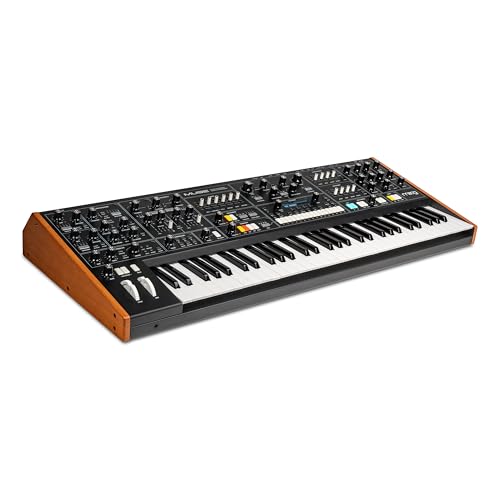
- Eight-voice analog architecture with dual filters and stereo VCAs
- 61 keys with performance-focused knob-per-function controls
- Chord memory, arpeggiator, sequencer, and Diffusion Delay
Best For: Players needing rich polyphonic analog textures on stage
Portable FM Performer
M-VAVE Wireless FM Synthesizer

- Six-operator FM engine with 32 algorithms and 128 presets
- Battery-powered with built-in speaker and compact 27-key layout
- USB, Bluetooth, and 3.5mm MIDI connectivity
Best For: Mobile performers and compact live rigs
Guitar-Rig FM Specialist

- Six-operator FM engine with 128 presets and SYSEX import
- Up to 12 hours of stated battery play time
- Triple MIDI connectivity plus effects and sequencing
Best For: Guitarists and producers adding FM sounds to live rigs
Compact Sequencing Synth
M-VAVE FM-1 Portable Synthesizer

- Six-operator FM synthesis with 32 algorithms and 128 presets
- Built-in speaker and rechargeable battery for portable playing
- 16-step sequencer, arpeggiator, effects, and simultaneous MIDI connections
Best For: Portable performers who need sequencing and MIDI control
Best All-Around Stage Workstation – Roland JUNO-D6
The Roland JUNO-D6 is a practical choice among music synthesizers for stage use when you want broad sound coverage, quick access to performance favorites, and a portable 61-key format. Its ZEN-Core engine provides more than 3,800 onboard sounds, while USB-C connectivity supports computer and mobile workflows.
Best For: Gigging musicians who need versatile sounds, sequencing, and a lightweight keyboard.
Pros:
- 61-key synth-action design weighs 12.8 pounds for easier transport.
- Includes acoustic and electric pianos, organs, synths, and other live-performance sounds.
- Offers an eight-track sequencer, sample import, and USB-C audio/MIDI connectivity.
Cons:
- Included components list only the synthesizer.
- Synth-action keys may not suit players seeking a weighted piano-style feel.
The JUNO-D6 stands out as a flexible stage instrument with a strong onboard library and useful creative tools. Its compact design and USB-C mobile-battery support are especially convenient for live musicians.
Best Analog Polyphonic Option – Sequential Take 5
The Sequential Take 5 is a focused option for musicians comparing music synthesizers for stage use and looking for an analog polyphonic instrument. The supplied specifications identify a USB connection, basswood body, black finish, and a 19.3-pound weight.
Best For: Players who prioritize a dedicated analog polyphonic synthesizer format for performance setups.
Pros:
- Designed as an analog polyphonic synthesizer.
- Includes USB connectivity for compatible setups.
- Backed by a listed two-year warranty.
Cons:
- The supplied notes do not specify key count, voice count, or onboard sounds.
- At 19.3 pounds, it is less portable than the lightest options in this roundup.
The Take 5 may appeal to performers who want an analog polyphonic centerpiece rather than a broadly documented workstation. Confirm the detailed controls and performance features before buying if your stage rig requires specific connections or functions.
Best for Computer-Integrated Live Sets – Yamaha MX61
The Yamaha MX61 is a strong candidate among music synthesizers for stage use when computer integration and dependable polyphony matter. Its Motif sound engine, 128-note polyphony, and class-compliant USB audio/MIDI make it suitable for live playing as well as sequence-based setups.
Best For: Keyboardists combining live performance with computer-based audio, MIDI, or 16-track sequencing.
Pros:
- 128-note polyphony helps support layered live performances and full 16-track sequences.
- Class-compliant USB provides plug-and-play audio and MIDI connectivity.
- Motif sound engine supports layered and zoned voices, with vintage-style effects modeling.
Cons:
- The listed one-year warranty applies under specific authorized-retailer and regional conditions.
- Software remote-control compatibility varies by computer platform and application.
The MX61 is particularly compelling for performers who want one USB cable to handle stereo audio and 16 channels of MIDI. Its 61-key layout and 14.9-pound weight also balance stage coverage with reasonable portability.
Best Compact Performance Synth – Korg KingKORG NEO
The Korg KingKORG NEO brings expressive sound shaping to music synthesizers for stage use with 37 full-size velocity-sensitive keys, 24-voice polyphony, and split/layer functionality. Its XMT engine, extensive oscillator and filter choices, vocoder, and arpeggiator give performers plenty of real-time tonal options.
Best For: Synth players who want expressive leads, layered parts, vocoder effects, and hands-on sound design in a compact format.
Pros:
- Velocity-sensitive full-size keys support expressive performance.
- Offers three oscillators, 138 oscillator types, and 18 filters.
- Includes a 16-band vocoder, effects, split/layer functions, and an eight-step arpeggiator.
Cons:
- 37 keys provide less range than the 61-key models in this roundup.
- The supplied dimensions list a 48.4-inch width despite the compact key count, so verify fit for your setup.
The KingKORG NEO is a feature-rich performance synth for players who value characterful modeled sounds and vocal processing. Its 24-voice polyphony and split/layer capability help it cover multiple stage roles, though its 37-key range may require a second keyboard for some performers.
Classic Analog Control – MOOG Messenger
For musicians seeking music synthesizers for stage use, the MOOG Messenger combines a portable format with full-size, semi-weighted keys, velocity, and aftertouch. Its knob-per-function layout, presets, sequencing, and broad connectivity make it practical for hands-on live performance.
Best For: Performers who want a powerful monophonic analog synth with expressive keys and extensive real-time control.
Pros:
- Two wavefolding VCOs, sync, frequency modulation, and a sub-oscillator deliver a broad, bass-forward analog palette.
- 32 full-size keys include velocity and aftertouch for expressive performance.
- Built-in 64-step sequencer, arpeggiator, 256 presets, MIDI, USB-C, and CV connectivity support stage and studio setups.
Cons:
- Monophonic architecture limits simultaneous note and chord playing.
- At 27.6 inches wide and 5.14 kg, it may be less convenient for compact rigs.
The Messenger is a strong choice when tactile analog control and low-end character matter more than polyphony. Its expressive keyboard and live-friendly sequencing give it flexibility beyond a basic monosynth.
Portable FM Versatility – Yamaha REFACE DX
The Yamaha REFACE DX is a compact option among music synthesizers for stage use, especially when portability and quick access matter. Its 4-operator FM engine, mini keyboard, built-in speakers, battery power, and phrase looper suit rehearsals, mobile performances, and compact setups.
Best For: Players who need a lightweight, portable FM synthesizer for practice, ideas, and smaller performance rigs.
Pros:
- Four-operator FM sound engine provides dynamic, expressive tones.
- 37-key mini keyboard offers a compact playing surface with initial touch.
- Battery operation, built-in speakers, phrase looper, and 32 voice memory locations support mobile use.
Cons:
- Mini keys may feel less substantial than full-size stage keyboards.
- Its 32 voice memory locations provide less storage than the other listed options.
The REFACE DX prioritizes portability over full-size stage-controller features. It is a sensible pick for performers who value battery-powered convenience, onboard sound, and a compact footprint.
Polyphonic Stage Centerpiece – MOOG Muse
For performers comparing music synthesizers for stage use, the MOOG Muse offers an eight-voice analog platform with 61 keys and performance-focused controls. Its dual filters, stereo processing, chord memory, arpeggiator, and polyphonic sequencer make it suited to layered live parts and evolving textures.
Best For: Stage and studio players who need rich analog polyphony, broad hands-on control, and sequencing depth.
Pros:
- Eight analog voices use two VCOs, a modulation VCO, dual VCFs, and stereo VCAs per voice.
- 61-key layout, knob-per-function controls, chord memory, and arpeggiator support performance.
- Stereo Diffusion Delay and a 64-step polyphonic sequencer add depth and generative possibilities.
Cons:
- At 32 pounds and 39 inches wide, it is comparatively demanding to transport.
- Its extensive controls and menus may require more setup time than a simpler synthesizer.
The Muse is the most expansive stage-oriented option here for players who need chords, layered analog movement, and deep real-time editing. Its size and weight favor a dedicated performance centerpiece rather than a lightweight touring instrument.
Portable FM Performer – M-VAVE Wireless FM Synthesizer
For musicians comparing music synthesizers for stage use, the M-VAVE Wireless Portable FM Synthesizer emphasizes portability and quick access to classic digital tones. Its battery operation, built-in speaker, 27-key silicone keyboard, effects, arpeggiator, and multiple MIDI connections make it suitable for compact live setups and mobile performance.
Best For: Portable performers, buskers, and musicians who want a self-contained FM sound module with flexible MIDI connectivity.
Pros:
- Battery-powered design with a built-in speaker for cable-free practice or small performances.
- Six-operator FM engine, 32 algorithms, 128 presets, and FM SYSEX sound-bank import.
- Built-in effects, seven arpeggiator modes, and a 16-step sequencer support live sound shaping.
- USB MIDI, Bluetooth MIDI, and 3.5mm MIDI IN can be used simultaneously.
Cons:
- The compact 27-key silicone keyboard may not suit players who need a full-size stage keyboard.
- Its plastic construction and very light weight may feel less substantial in demanding touring setups.
This model is a practical choice when portability and onboard features matter more than a traditional keyboard format. The built-in speaker and battery simplify mobile use, while the FM engine and MIDI options give it useful flexibility in a larger stage rig.
Guitar-Rig FM Specialist – M-VAVE FM-1 Synthesizer
The M-VAVE FM-1 is one of the more guitar-friendly music synthesizers for stage use, combining a six-operator FM engine with a portable battery-powered format. Its presets, effects, sequencer, and triple MIDI connectivity make it useful for adding synth parts to guitar rigs, DAWs, or compact performance systems.
Best For: Guitarists, producers, and performers who need a portable FM synth that can integrate with pedals, MIDI controllers, and DAWs.
Pros:
- Six-operator FM synthesis, 32 algorithms, 128 presets, and FM SYSEX import provide broad digital sound options.
- Includes a seven-mode arpeggiator, 16-step sequencer, and six built-in effects.
- USB-C, Bluetooth BLE MIDI, and 3.5mm MIDI IN support simultaneous connections.
- Rechargeable 2000mAh battery is rated for up to 12 hours of play, and the built-in speaker mutes with headphones.
Cons:
- The 27-key silicone keyboard is compact and may feel limited for conventional two-handed playing.
- Its FM-focused architecture may be less suitable for players seeking analog-style synthesis.
The FM-1 stands out for stage players who want a small sound module that can sit alongside a guitar rig or travel in a case. Its color TFT display and dedicated controls also make preset selection and parameter adjustment more approachable during setup and performance.
Compact Sequencing Synth – M-VAVE FM-1 Portable Synthesizer
For shoppers seeking music synthesizers for stage use in a small, self-contained format, this M-VAVE FM-1 combines portable operation with hands-on sequencing. The six-operator FM engine, built-in speaker, rechargeable battery, TFT display, and controller mode give it practical uses in rehearsals, travel, and compact live setups.
Best For: Performers and creators who want a battery-powered FM synthesizer with onboard sequencing and flexible MIDI control.
Pros:
- Six operators, 32 algorithms, 128 presets, and SYSEX import cover classic FM-style sounds.
- Rechargeable battery and built-in speaker allow use without an amp or power cable.
- 27 full-size silicone keys, six effects, a seven-mode arpeggiator, and a 16-step sequencer offer hands-on control.
- USB, Bluetooth, and 3.5mm MIDI work simultaneously, with controller and sound-module modes.
Cons:
- The compact keyboard layout is not a replacement for a full-size stage keyboard.
- Built-in speaker output is best suited to personal monitoring or small-scale use rather than large venues.
This FM-1 is a sensible pick for performers who value portability and pattern creation. It offers enough sequencing, effects, and MIDI flexibility to contribute to a live setup while remaining easy to carry and use away from mains power.
How We Picked the Best Music Synthesizers for Stage Use
We focused on the traits that matter most in live performance: dependable keybeds, fast access to sounds and controls, useful preset libraries, practical connectivity, and a form factor that suits your rig. We also considered synthesis type, polyphony, portability, onboard sequencing or arpeggiation, and whether each instrument is better suited to layered parts, leads, bass, textures, or sound design.
The selection includes established performance keyboards from Roland, Yamaha, and Korg; premium analog instruments from Sequential and Moog; and portable FM models from Yamaha and M-VAVE. Because musicians have different budgets and workflows, no single synthesizer is ideal for every stage.
Quick Comparison
- Best all-around stage flexibility: Roland JUNO-D6 and Yamaha MX61BK.
- Best for hands-on analog performance: Sequential Take 5 and Moog Muse.
- Best for monophonic leads and bass: Moog Messenger.
- Best for compact FM sound design: Yamaha Reface DX.
- Best for broad workstation-style variety: Korg KingKORG NEO.
- Best for budget portability: the M-VAVE FM synthesizer options.
Key Buying Factors for Live Synthesizers
Keyboard, Polyphony, and Playing Feel
A 61-key instrument gives you useful range without taking up the space of a full 88-key keyboard. Check whether the keybed offers velocity sensitivity and aftertouch if you rely on expressive pads, leads, or filter sweeps. Polyphony matters when sustaining chords with layered sounds; monophonic synths are more focused on bass and lead lines.
Controls and Sound Access
For live work, dedicated knobs, buttons, patch navigation, and performance controls can be more valuable than deep menus. Look for an interface that lets you change sounds quickly and adjust cutoff, resonance, effects, or modulation without interrupting your playing.
Connections, Power, and Portability
Confirm that the instrument has the outputs, MIDI, USB, pedal connections, and sustain support your rig requires. Battery operation and built-in speakers can help with rehearsal or mobile performance, while a robust power supply and sturdy chassis are priorities for frequent gigging.
Sound Library and Synthesis Engine
Analog synths excel at immediate, tactile tones; FM instruments offer bright, precise, and complex sounds; and performance keyboards typically provide broader preset coverage. Choose the engine that complements your band, set list, and existing equipment.
Who Should Buy Which Music Synthesizers for Stage Use?
Choose Roland or Yamaha if you need one dependable keyboard for varied set lists, layered sounds, and straightforward stage control. Choose Korg when broad timbral variety and performance-oriented synthesis are priorities.
Choose Sequential or Moog if hands-on analog response, distinctive character, and expressive sound shaping matter more than maximum preset breadth. The Muse suits players who need analog polyphony, while the Messenger is a focused choice for bass and lead work.
Choose the Yamaha Reface DX or an M-VAVE model if portability, FM synthesis, or a lower-cost secondary instrument is the priority. Before buying, confirm the key count, output format, power requirements, and connectivity match your mixer, amplifier, or MIDI setup.
