Finding the right personal sound amplifier can make conversations, television, and everyday interactions easier to follow without adding unnecessary complexity. The best choice depends on comfort, control layout, microphone performance, and how often you need to recharge or replace batteries.
We compared 10 popular options across wearable designs, pocket amplifiers, directional microphones, rechargeable models, and bone-conduction technology. Use the guide below to narrow the list by routine, listening environment, and personal preferences.
Best 10 Personal Sound Amplifiers for Daily Routines Picks for 2026
High-Gain Everyday Pick

- Up to 50+ dB ambient sound gain
- Earbuds, headphones, case, and batteries included
- Up to 80 hours of battery life
Best For: Portable everyday listening with flexible wearing options
Long-Running Pocket Option
Williams Sound PockeTalker Ultra DUO

- 20–40 dB acoustic gain
- External volume and tone controls
- Up to 100 hours of battery life
Best For: TV listening, conversations, and events with adjustable tone
Rechargeable Easy-Control Pick
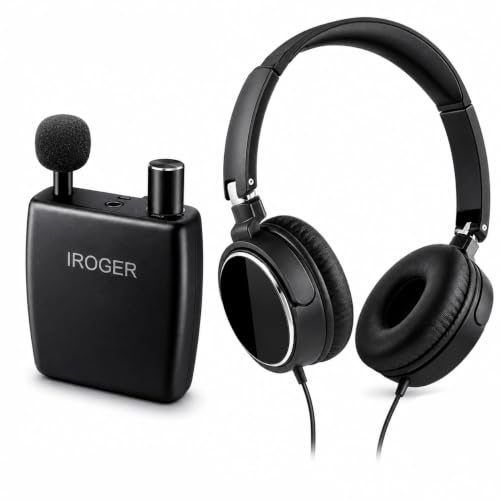
- Automatic gain control adapts to surroundings
- One knob controls power and volume
- Up to 120 hours after about a one-hour charge
Best For: Simple, extended-use listening at home or on the go
Open-Ear Comfort Pick
Aurimi Bone Conduction Amplifier

- Open-ear bone conduction keeps canals unobstructed
- Ultralight 0.88-ounce design
- Rechargeable battery lasts up to 10 hours
Best For: Comfort-focused listening during conversations, TV, and outdoor activities
Portable TV & Conversation Pick

- Amplifies TV and conversations through ambient sound capture
- Includes headphones, earbuds, belt clip, and AAA battery
- Up to 30 hours of battery life with moderate to heavy use
Best For: Portable everyday listening at home or on the go
Hands-Free Conversation Pick
ConvoAssist Wireless Amplifier

- Dual wireless microphones support conversations with two people
- Automatically connects and recharges from its case
- Up to 8 hours of listening per charge
Best For: Focused conversation and TV dialogue listening
Most Versatile Wired Pick

- Three removable microphones support varied listening distances
- Tone and volume controls enable sound customization
- Includes headphones, earbud, cables, belt clip, and batteries
Best For: Flexible TV, meeting, and conversation listening
Rechargeable Everyday Clarity

- Automatic gain control with up to 65dB maximum gain
- Directional microphone focuses on voices in front
- One-hour charge provides up to 120 hours of use
Best For: Daily conversations, travel, and simple rechargeable listening
Conversation-Focused Listening
Williams Sound Pocketalker Ultra

- Up to 40dB amplification with separate tone and volume controls
- Microphone placement helps target desired sounds
- Includes headphones, earbud, batteries, and five-year warranty
Best For: Conversations, television listening, and flexible handheld use
Long-Range TV and Conversation Support
IceHeat Rechargeable Sound Amplifier
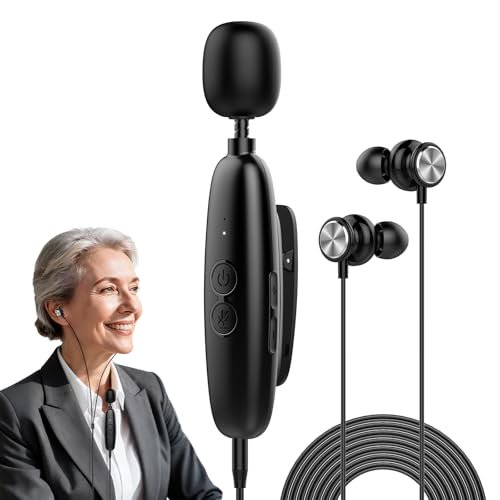
- Up to 50dB gain for everyday listening
- Seven-level tone control for sound adjustment
- Captures audio from up to 30 feet
Best For: TV viewing, family gatherings, and across-room listening
High-Gain Everyday Pick – SuperEar SE7500
For shoppers comparing personal sound amplifiers for daily routines, the SuperEar SE7500 offers flexible listening at home or away. It provides up to 50+ dB of ambient sound gain, adjustable volume, discreet earbuds, and included headphones for conversations, television, meetings, and outdoor listening.
Best For: Seniors and adults who want a portable amplifier with multiple listening options and long battery life.
Pros:
- Up to 50+ dB of ambient sound gain with adjustable volume control.
- Includes discreet earbuds, headphones, batteries, and a carry case with belt clip.
- Offers up to 80 hours of battery life and automatic shut-off.
Cons:
- Uses two AAA batteries rather than a rechargeable battery.
- Sound amplification is not described as having automatic environmental adjustment.
The SE7500 is a practical choice when flexibility matters. Its included accessories and long battery life make it easy to use for everyday conversations, TV listening, travel, and social activities.
Long-Running Pocket Option – Williams Sound PockeTalker Ultra DUO
The Williams Sound PockeTalker Ultra DUO is a straightforward choice among personal sound amplifiers for daily routines, especially when TV listening and conversations are priorities. Its external volume and tone controls, removable microphone, and included headset and earbud support several listening setups.
Best For: Users who prefer a pocket-style amplifier with separate volume and tone adjustments for speech, television, and events.
Pros:
- Provides 20–40 dB of acoustic gain with external volume and tone controls.
- Includes a listening headset, single earbud, microphone, and TV listening cord.
- Offers up to 100 hours of battery life and a five-year manufacturer warranty.
Cons:
- Two AAA batteries are required and are not included.
- Its listed noise control is “None,” which may be less suitable for noisy surroundings.
This model emphasizes control and endurance rather than rechargeable convenience. The removable microphone and multiple listening accessories make it adaptable for home viewing, conversations, speeches, and similar activities.
Rechargeable Easy-Control Pick – I8-Pro Sound Amplifier
For people seeking personal sound amplifiers for daily routines without complicated controls, the I8-Pro uses a single knob for power and volume. Its directional microphone is designed to focus on the speaker in front of you, while automatic gain control adjusts amplification as surroundings change.
Best For: Users who want rechargeable-style convenience, simple operation, and extended use for conversations at home or while traveling.
Pros:
- Automatic gain control adjusts amplification as the environment changes.
- Directional microphone focuses on the person speaking in front of you.
- Charges in about one hour and can last up to 120 hours on a charge.
- Includes a two-year manufacturer warranty and lifetime repair service.
Cons:
- The supplied details list the power source as battery powered and do not specify the charging cable or accessories included.
- Noise control is listed as none, despite the directional microphone.
The I8-Pro stands out for its one-knob operation and unusually long stated runtime. It is a strong fit for shoppers who value straightforward controls and automatic adjustment over a larger accessory package.
Open-Ear Comfort Pick – Aurimi Bone Conduction Amplifier
The Aurimi bone conduction amplifier offers an open-ear approach to personal sound amplifiers for daily routines. It delivers audio through the cheekbones while leaving the ear canals open, making it suitable for conversations, TV, home relaxation, and outdoor activities where situational awareness is useful.
Best For: Users who prefer an ultralight open-ear design without smartphone apps, Bluetooth pairing, or complicated setup.
Pros:
- Bone conduction design keeps the ear canals open for situational awareness.
- Ultralight 0.88-ounce design is intended for all-day comfort.
- Rechargeable operation with simple button controls and up to 10 hours of battery life.
- Includes a USB charging cable and user manual.
Cons:
- Its stated 10-hour runtime is shorter than several battery-powered alternatives.
- Open-ear audio may provide less isolation from surrounding sounds.
The Aurimi is best suited to shoppers who prioritize comfort and an open-ear fit. Its no-app setup keeps operation simple, while the rechargeable design supports everyday use between charges.
Portable TV & Conversation Pick – SuperEar SE5000
The SuperEar SE5000 is a practical choice among personal sound amplifiers for daily routines, especially for watching TV, following family conversations, or listening around the home. Its handheld design, tactile volume wheel, belt clip, and included headphones and earbuds make it straightforward to use in different settings.
Best For: Seniors and adults who want portable amplification for TV, conversations, and everyday activities.
Pros:
- Amplifies ambient sound for TV, conversations, and general listening without a wireless TV connection.
- Includes stereo headphones, discreet earbuds, a belt clip, and a AAA battery.
- Tactile volume control and up to 30 hours of battery life with moderate to heavy use.
- Lightweight pocket-sized design with a swivel microphone.
Cons:
- It captures sound through its microphone rather than connecting directly or wirelessly to a television.
- Requires a disposable AAA battery.
The SE5000 emphasizes simple controls and flexible carrying options. It is a sensible fit for users who prefer a traditional handheld amplifier and need sound support across several daily activities.
Hands-Free Conversation Pick – ConvoAssist Wireless Amplifier
ConvoAssist takes a more targeted approach to personal sound amplifiers for daily routines by using wireless microphones that clip onto speakers and transmit voices to earbuds or headphones. Its automatic connection and charging case are designed to reduce setup steps for conversation and TV dialogue listening.
Best For: People who want clearer one-on-one or two-person conversations and prefer a rechargeable wireless setup.
Pros:
- Two wireless microphones can transmit voices from two speakers at once.
- Automatically powers on and connects when removed from the case, with no app or pairing buttons.
- Works with compatible in-ear or over-ear headphones and includes wired earbuds with multiple tip sizes.
- Provides up to 8 hours of listening per charge, with additional recharges from the case.
Cons:
- Its microphone-based setup requires speakers to wear or clip on the transmitters.
- Listening time is limited to up to 8 hours per charge.
ConvoAssist is the most streamlined option here for focused conversations. The dual-microphone design and automatic charging workflow may appeal to users who want less manual setup than a traditional pocket amplifier.
Most Versatile Wired Pick – Joanbro 50dB Sound Amplifier
The Joanbro amplifier stands out among personal sound amplifiers for daily routines because it includes three microphone configurations for different distances and environments. Adjustable tone and volume controls, noise reduction features, and included headphones and cables support uses ranging from conversations to long-distance TV listening.
Best For: Users who want flexible microphone placement for TV, meetings, group conversations, and other listening situations.
Pros:
- Offers three removable microphone types, including 2-meter and 6-meter cable options.
- Provides up to 50 dB of additional acoustic gain with noise cancellation and automatic gain control.
- Tactile tone and volume controls allow sound adjustments for different listening needs.
- Includes headphones, an earbud, belt clip, cables, fastening strap, and two AAA batteries.
Cons:
- The longer microphone configurations involve cables, which may be less convenient than wireless designs.
- Requires two AAA batteries.
- Users need to position the microphone near the sound source and adjust settings manually.
This model is a strong choice when microphone placement matters more than a cable-free experience. Its included accessories and multiple configurations make it adaptable, though the wired setup requires more planning than the wireless alternative.
Rechargeable Everyday Clarity – Directional Sound Amplifier
For shoppers comparing personal sound amplifiers for daily routines, this rechargeable model emphasizes simple controls, speech-focused listening, and long battery life. Its automatic gain control adjusts amplification in real time, while the directional microphone is designed to focus on voices in front of you.
Best For: Seniors and adults who want a compact amplifier for conversations, errands, travel, and everyday listening.
Pros:
- Automatic gain control and up to 65dB maximum sound gain support consistent amplification.
- Directional noise-canceling microphone helps prioritize voices in front of the user.
- One-knob operation makes power and volume adjustments straightforward.
- One-hour charging provides up to 120 hours of use, with a two-year warranty and lifetime repair service.
Cons:
- The supplied details list the product as having no noise control, despite describing a directional microphone.
- Its plastic construction and standard design may be less discreet than specialized hearing devices.
Overall, this is a practical choice when rechargeable convenience and uncomplicated operation matter most. The pocket-friendly design also suits users who want amplification available at home or while traveling.
Conversation-Focused Listening – Williams Sound Pocketalker Ultra
The Williams Sound Pocketalker Ultra is a strong option among personal sound amplifiers for daily routines when you want to direct the microphone toward a conversation, television, or other desired sound. Separate tone and volume controls allow fingertip adjustments, and the included accessories support several listening setups.
Best For: One-on-one conversations, small groups, television listening, car conversations, and users who prefer a handheld amplifier with included accessories.
Pros:
- Amplifies sound by up to 40dB and includes separate tone and volume controls.
- Placing the microphone near the desired sound can help reduce distracting background noise.
- Package includes headphones, a single earbud, neck lanyard, microphone extension cord, and 20 AAA batteries.
- Five-year manufacturer warranty adds long-term support.
Cons:
- It is battery powered and requires AAA batteries rather than built-in rechargeable charging.
- The manufacturer states that it is not a hearing aid and recommends a licensed audiologist for severe hearing impairment.
Choose this model if flexible, targeted listening is more important than a rechargeable format. Its handheld design and generous accessory bundle make it especially useful for varied home and social situations.
Long-Range TV and Conversation Support – IceHeat Rechargeable Sound Amplifier
For people seeking personal sound amplifiers for daily routines, the IceHeat model combines rechargeable power with simple tone and volume adjustment. It is designed to capture clear audio from up to 30 feet, making it suited to television listening and conversations across a room.
Best For: TV viewing, family gatherings, restaurant conversations, church services, travel, phone calls, and outdoor listening.
Pros:
- Up to 50dB gain supports louder listening for everyday activities.
- Seven-level tone control helps tailor sound to different listening preferences.
- Rechargeable lithium-ion battery avoids routine disposable battery replacement.
- Designed to capture audio from up to 30 feet for room-to-room or across-table listening.
Cons:
- The supplied notes do not specify charging time or total battery runtime.
- Only a one-year manufacturer warranty is listed.
- The product details identify one included amplifier but do not list headphones or earbuds.
This model is worth considering if you want rechargeable operation and a wider range of tone adjustment for TV or social settings. Its stated 30-foot pickup range gives it a practical advantage for listening across a room.
How We Picked the Best Personal Sound Amplifiers for Daily Routines
We focused on features that matter during ordinary listening rather than treating maximum amplification as the only measure of value. Our comparison considers microphone directionality, volume and tone controls, headphone or earbud compatibility, battery type, portability, comfort, and ease of operation.
We also looked for practical differences between pocket-style units, wearable devices, wireless microphone systems, and bone-conduction designs. Because these products are intended for everyday assistance—not diagnosis or treatment—buyers should consider a hearing evaluation if hearing difficulty is persistent, sudden, or accompanied by pain, dizziness, or ringing.
Quick Comparison
| Best For | Look For | Most Convenient Design |
|---|---|---|
| Conversations at home | Clear voice pickup and simple controls | Wearable or pocket amplifier |
| TV and one-to-one listening | Headphone comfort and tone adjustment | Amplifier with wired headphones |
| Travel and daily carrying | Compact size, durable clip, and long battery life | Pocket-style model |
| Hands-free use | Wireless microphones and rechargeable case | Wireless listening system |
| Open-ear comfort | Minimal ear blockage and stable fit | Bone-conduction design |
Key Buying Factors for Personal Sound Amplifiers for Daily Routines
Amplification and Sound Control
Higher gain is not automatically better. Look for adjustable volume and, when useful, tone controls that can make voices easier to distinguish from background sound. A directional microphone may help in conversations when noise comes from the sides or behind you, while aggressive amplification can make household sounds uncomfortable.
Comfort and Fit
Consider whether you prefer earbuds, over-ear headphones, a neck-worn device, or a pocket unit with a clipped microphone. Check the included accessories and choose a design that will remain comfortable during the length of your usual listening sessions.
Battery and Charging
Rechargeable models reduce the need to keep replacement batteries available, but they require regular charging. Battery-powered amplifiers can be convenient for travel or backup use. Confirm expected runtime, charging method, and whether the product can be used while charging.
Controls and Noise Handling
Large, clearly marked controls are valuable for users who want quick adjustments. Features such as noise reduction, tone selection, or a remote microphone can improve usability, but they may add setup steps. Favor the simplest control scheme that meets your routine.
Who Should Buy Which Personal Sound Amplifiers for Daily Routines?
For Straightforward Daily Conversations
Choose a simple pocket or wearable amplifier with an adjustable volume dial, a clear microphone, and comfortable headphones or earbuds. This is usually the best starting point for users who value reliability over advanced features.
For TV, Reading, and Seated Listening
Prioritize headphone comfort, tone adjustment, and enough battery life for extended sessions. A model with a focused microphone can be useful when the sound source is directly in front of you.
For Active Users and Caregivers
Rechargeable designs with compact charging accessories can reduce maintenance. Wireless microphone systems may be worthwhile when the speaker is several feet away or when the user wants less visible wiring.
For Users Sensitive to Earbuds
Consider over-ear headphones or bone-conduction hardware, depending on fit and compatibility. Test comfort gradually, and stop using any device that causes pain, pressure, or worsening symptoms. Ultimately, the best Personal Sound Amplifiers for Daily Routines are the ones that remain comfortable, simple to control, and suited to the environments where you listen most.
