Last updated on October 10th, 2026
Passive speakers can make a desktop setup more flexible: you choose the amplifier, place the speakers where they sound best, and upgrade components separately. The catch is that every pair needs external power from a compatible amp or receiver.
These nine options span compact, slim, and traditional bookshelf designs. Here’s how to narrow them down by desk space, placement, and the gear you already own.
Best 9 Passive Speakers for Desktop Picks for 2026
Small-Desk Pick

- 5.1-inch-tall cabinets
- 3-inch woofer and concentric tweeter
- Amplifier and speaker wire required
Best For: Space-limited desks with an existing amplifier
Wire-Included Pick

- Includes 80 feet of 20-gauge wire
- 3.5-inch woofer
- Needs a 4-ohm-compatible amplifier
Best For: Amplifier owners who want speaker wire in the box
Bass-Focused Pick

- Claimed bass extension to 60Hz
- 3.5-inch woofer and silk horn tweeter
- Amplifier and speaker wire required
Best For: Desktop listeners prioritizing claimed bass extension
Home Theater Crossover

- 5.25-inch drivers and 0.75-inch tweeters
- Wall-mountable bookshelf pair
- Requires external amplification
Best For: Roomier desks and future home theater setups
Compact Wood-Finish Pick
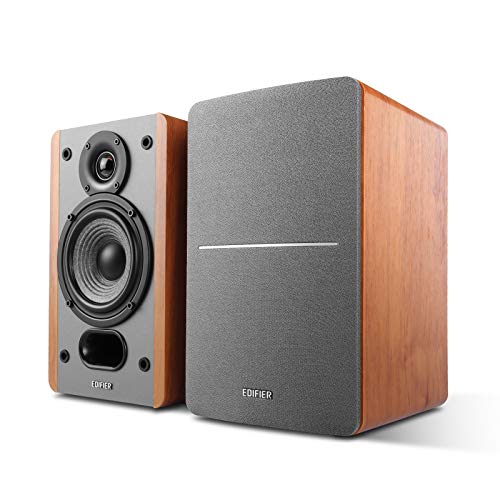
- 4-inch drivers and silk-dome tweeters
- Built-in wall-mount brackets
- Speaker wires included; amplifier required
Best For: Compact desks with an external amplifier
Best Traditional Bookshelf Pair

- 4-inch woofer and silk-dome tweeter
- Sealed cabinet with dedicated crossover
- 6-ohm pair; separate amplifier required
Best For: Traditional desktop stereo setups with room for bookshelf cabinets
Best Slim Placement
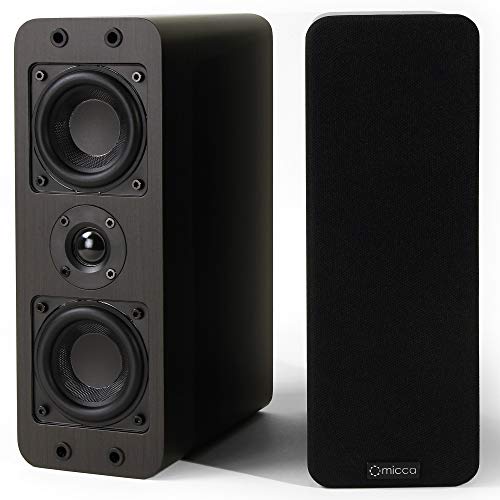
- Slim cabinet works vertically or horizontally
- Dual 3-inch woofers per speaker
- Optional brackets for wall mounting
Best For: Flexible placement beside or beneath a desktop monitor
Best Wall-Mountable Satellite Pair

- Wall-mount kit included
- 2.75-inch woofer and 2-inch tweeter
- Amplifier needed; speaker wire not included
Best For: Freeing desk space with wall-mounted passive speakers
Small-Desk Pick – Micca COVO-S Compact Speakers
If desk space is tight, the Micca COVO-S is a compact option among passive speakers for desktop use. Each speaker measures 5.1 inches tall and 4.2 inches wide, but you will need an amplifier or receiver to drive the pair.
Best For: Small desks where a compact stereo pair matters more than deep bass.
Pros:
- Small footprint fits crowded desks.
- 3-inch wool-fiber woofer and concentric 0.75-inch tweeter.
- Can also be used with optional wall-mount brackets.
Cons:
- Requires a separate amplifier or receiver; it cannot connect directly to a computer.
- Speaker wire is not included.
- Rated bass extension reaches 90Hz, so expect limited low bass.
The COVO-S makes sense when placement is your main constraint. Budget for the amplifier and wire before treating it as a complete desktop setup.
The Saiyin DS6700MPlus is a convenient choice among passive speakers for desktop setups if you already have an amplifier. Its included 80 feet of 20-gauge oxygen-free copper speaker wire removes one extra purchase from the setup.
Best For: Buyers with an amplifier who want speaker wire included for a desktop or surround-sound installation.
Pros:
- Includes a pair of speakers, 80 feet of speaker wire, and screw kits.
- 3.5-inch woofer paired with a tweeter.
- Supports desktop stereo or home-theater surround use with an amplifier.
Cons:
- External amplifier is not included.
- No Bluetooth connectivity.
- Its 4-ohm impedance calls for an amplifier that supports a 4-ohm load.
The included cable is the practical distinction here. Check your amplifier’s 4-ohm compatibility before ordering; a computer alone cannot power these passive speakers.
For shoppers comparing passive speakers for desktop listening, the Saiyin DS6700M stands out for its claimed bass extension down to 60Hz. It pairs a 3.5-inch woofer with a silk horn tweeter and has a black woodgrain finish.
Best For: Desks or shelves where claimed low-frequency reach and flexible placement are priorities.
Pros:
- Claimed bass response down to 60Hz from the 3.5-inch woofer.
- Silk horn tweeter is designed for even dispersion.
- Can sit on a desk or shelf, with hooks included for wall placement.
Cons:
- Requires an external amplifier.
- Speaker wires are not included.
- No Bluetooth connectivity.
This pair is worth considering if its stated 60Hz reach appeals to you, but that specification is not a substitute for listening. Allow room in your budget for an amplifier and speaker wire.
Home Theater Crossover – Polk Audio T15
The Polk Audio T15 is a pair of passive speakers for desktop use if you have room for a larger bookshelf cabinet and an amplifier or AV receiver to drive them. Each speaker pairs a 5.25-inch driver with a 0.75-inch tweeter, and the pair can later serve as part of a home theater setup.
Best For: Desks with space for bookshelf speakers and buyers who may expand into a Polk home theater system.
Pros:
- 5.25-inch driver and 0.75-inch tweeter in each speaker.
- Integrated keyhole slots offer a wall-mount option.
- Can be used as front or rear speakers in a surround setup.
Cons:
- Needs an amplifier or AV receiver; speaker wire connects to the receiver.
- At 10.63 inches high and 7.25 inches deep, it takes more room than a compact desktop speaker.
Choose the T15 if desktop listening is one stop on a broader home-audio plan. Check your desk space and amplification before buying.
The Edifier P12 is a compact option among passive speakers for desktop setups, with a 4-inch bass driver and 19 mm silk-dome tweeter in each wood-finish cabinet. It needs an amplifier or receiver, though speaker wires are included.
Best For: Buyers who want a smaller bookshelf pair for a desk and the option to wall-mount it later.
Pros:
- 4-inch drivers and bass-reflex ports support a compact bookshelf design.
- Built-in wall-mount brackets provide another placement option.
- Speaker wires are included.
Cons:
- An amplifier or receiver is required and sold separately.
- Its 6-ohm impedance is worth checking against your amplifier’s supported speaker range.
The P12 makes sense when desk space matters but you still want a conventional passive speaker pair. Budget for the amplifier before choosing it over powered desktop speakers.
The RIOWOIS DS6810M offers passive speakers for desktop listening with 4-inch woofers, silk-dome horn tweeters, and terminals that accept banana plugs, U-type connectors, or bare wire. Its rear bass-reflex port and included port-blocking foam give you a way to adjust bass for your placement.
Best For: Buyers who want several speaker-wire connection options and plan to fine-tune placement or bass on a desk.
Pros:
- Terminals support banana plugs, U-type connectors, and bare wire.
- Includes foam for blocking the rear ports to reduce bass.
- Wall-mount kits are included as an alternative to tabletop placement.
Cons:
- Requires an amplifier or receiver, and speaker wires are not included.
- Rear ports make placement worth experimenting with, particularly near a wall.
This pair is worth considering if connection flexibility matters to your desktop system. Account for the separate amplifier and wires, and leave time to test port placement.
Best Traditional Bookshelf Pair – Dayton Audio Classic B40
The Dayton Audio Classic B40 is a conventional choice among passive speakers for desktop setups when you have room for a 9.5-inch-tall cabinet. Each speaker pairs a 4-inch woofer with a 1-inch silk-dome tweeter, while the sealed enclosure is designed for controlled bass.
Best For: Desktop listeners who want a compact, traditional stereo pair and already have—or plan to buy—a compatible amplifier.
Pros:
- Dedicated crossover and two-way driver design.
- Sealed cabinet is designed to reduce bass distortion.
- Gold-plated binding posts and removable grilles offer setup flexibility.
Cons:
- Requires a separate amplifier or receiver; Dayton recommends 10–50W.
- At 5.7 inches wide and 9.5 inches tall each, the pair needs more desk space than a slim or satellite-style option.
Choose the B40 if you prefer a familiar bookshelf-speaker layout and can accommodate its footprint. Its 6-ohm rating is worth checking against your amplifier before buying.
Best Slim Placement – Micca OoO
For passive speakers for desktop use where cabinet shape matters, the Micca OoO offers a slim, 11-by-3.9-inch face that can sit vertically or horizontally. Each speaker uses two 3-inch woofers and a 0.75-inch silk-dome tweeter in a ported enclosure.
Best For: Desks that benefit from narrow vertical speakers or a flexible horizontal placement option.
Pros:
- Slim form supports vertical or horizontal placement.
- Dual woofers in a ported enclosure are specified to provide usable bass down to 60Hz.
- Can also be wall-mounted with optional brackets.
Cons:
- As a passive pair, it needs an external amplifier.
- Its 11-inch long dimension still needs planning, particularly when placed horizontally.
The OoO is the placement-flexible pick rather than a conventional compact box. Measure the space beside or beneath your monitor and factor in the amplifier before committing.
Best Wall-Mountable Satellite Pair – RIOWOIS DS6500M
The RIOWOIS DS6500M is worth considering among passive speakers for desktop setups when you would rather mount the speakers than keep both cabinets on the work surface. The pair includes a wall-mount kit, and each speaker combines a 2.75-inch woofer with a 2-inch tweeter.
Best For: Desktop areas where wall mounting can free up surface space and a compatible amplifier is available.
Pros:
- Wall-mount accessories are included.
- Separate woofer and tweeter provide a two-driver design.
- Wood-grain styling offers an alternative to a plain cabinet.
Cons:
- Requires an amplifier or receiver and does not include speaker wire.
- No Bluetooth function.
- Its small 2.75-inch woofer may not suit buyers prioritizing deep bass.
This pair makes the most sense when mounting convenience is the priority. Check the available wall space and plan for wiring and amplification before purchase.
How We Picked the Best Passive Speakers for Desktop
We focused on passive speaker pairs that could plausibly work at a desk, from compact models to larger bookshelf designs for roomier setups. We considered cabinet size and shape, published impedance or power information where available, placement flexibility, and whether a model might also serve in a small-room stereo or surround system. Manufacturer specifications are a starting point, not a substitute for listening; we did not treat claimed bass extension or power ratings as a guarantee of sound quality.
Quick Comparison: Start with Your Desk
For a crowded desk, compare the Micca COVO-S and slim Micca OoO first. If you have room beside a monitor for conventional bookshelf cabinets, look at the Polk Audio T15, Dayton Audio Classic B40, Edifier P12, and Saiyin 2-way model. The Saiyin 4Ω pair is worth considering only after checking your amplifier’s supported speaker load. The two RIOWOIS pairs offer additional choices if you’re building a desktop system that may also serve a record player or home-theater setup; check each listing’s dimensions and connection requirements before ordering.
Key Buying Factors for Passive Speakers for Desktop Use
Amplifier Compatibility
Passive speakers do not plug directly into a computer’s headphone jack or USB port. You need an amplifier or receiver between your audio source and the speakers, plus speaker wire. Check the speaker’s impedance against the amplifier’s supported range, especially for a 4Ω model. Power figures can be measured in different ways, so prioritize compatibility and clean output over chasing the largest wattage number.
Size, Placement, and Listening Distance
Measure the available width, height, and depth before buying, leaving room for cables and any front or rear clearance the design requires. A compact cabinet is easier to position near a monitor; a larger one may need stands or more desk depth. Aim tweeters toward seated ear height, keep left and right speakers roughly symmetrical, and avoid blocking your screen. Wall-mount provisions can help when desk space is scarce, but confirm the mount and hardware requirements.
Bass and System Cost
Small speakers can sound balanced at close range, but cabinet size limits deep bass. If strong low frequencies matter, budget for a compatible subwoofer or choose a setup with room for larger cabinets. Remember to include an amp, cables, and possibly stands in the total price. If you want a single-box, plug-and-play purchase, powered speakers may be simpler.
Who Should Buy Which Passive Speakers for Desktop?
Choose a compact or slim pair when screen clearance and desk space are the priorities. Choose a traditional bookshelf pair when you can give the speakers more separation and want them to double as room speakers. Consider a wall-mountable option if your desk is narrow, and verify mounting details before purchase. If you already own an amplifier, match its impedance support and available space first; if you don’t, price the complete system before deciding whether Passive Speakers for Desktop listening are the right value.
